Trial by jury in a small state
Andrea Farrugia reflects on bias, independence and jury trials in Malta
There was a steady stillness in the air, with round eyes fixed on xeroxes in white. Behind closed doors, it felt that a day’s fleet had settled, as if time stopped there. I was there, as a law student, as a pretend juror in a pretend jury. I was the foreman, which meant I took time to iron the memory of the trial into smooth facts so that each juror, after hours of deliberation, could affirm their opinions into either a ‘guilty’ or a ‘not guilty’. Then, the words worked their way out, and the judgment followed.
Trial by jury is part of the Maltese legal tradition. It is nearly impossible to remove, in spite of the controversy which a high-profile trial may rouse within the public to scapegoat the system once it delivers judgment. Indeed, after the 2004 case of ‘Ir-Repubblika ta’ Malta vs Meinrad Calleja’ ended in acquittal, then prime minister Eddie Fenech Adami remarked that the time was right to revise the justice system.
Twenty-one years since, the trial by jury remains, although changes with respect to amending gender discrimination substantially affected the method with which jurors are chosen. We can thank the case of ‘Zarb Adami vs Malta’ for prompting reform. It is important to note that the course correction was made to patch one such effect of a small state, namely that Zarb Adami was consecutively placed on the list for 31 years involuntarily, and whose 1997 failure to appear in court rendered a discriminatory fine.
The effects of a small state are not immediately noticeable. Articles 604 and 605 of the Criminal Code does not have a mechanism which tries to correct the many problems that arise from it. Let’s focus on one. When I was the foreman in a student’s moot court, we had to forget our technical knowledge of the law and put on the layman’s hat. When a layman becomes a juror, they have to forget their friends and colleagues, past and present.
This feature was not immediate to me as a student, but it dawned on me as we were revising the facts of the case, and
I accidentally made a superlative instead of a comparative remark which tipped the scales enough to change the opinion of one juror. I quickly made a round robin to correct this mistake yet felt perhaps it wasn’t an accident then.
Chance presents us with a choice here: either we take one biased juror out of nine, or one biased judge out of one
It could be that the accused was being judged harshly, or notwithstanding the facts some sort of prejudice emerged among all of us. Hume was correct to say that reason is a slave to the passions. Then, it became too obvious. What if this was a real jury, and I was in the same position, and the accused is someone I knew in my past?
In other European countries, a similar form of citizen participation exists. One such example is the creation of ‘lay judges’. Today the German legal system makes use of the ehrenamtliche Richter or ‘volunteer judge’. Section 45 of the Deutsches Richtergesetz (German Judges Law) states accordingly that a “volunteer judge” must be “independent to the same extent as a professional judge”.
Our system has jurors aided by the ‘professional judge’ during the course of the trial, especially when the law requires further clarification.
Yet, speaking of the word which the German law uses; ‘independence’, it is always presumed that a judge ought to act without prejudice, malice, or influence from others.
For this reason, in Micallef vs Malta, the test of impartiality was made to identify any possible bias stemming from the family ties between the lawyer and the judge, a phenomenon common to any small state.
This ‘independence’ in a small state fails only when taken for granted. If the goal of a jury system is to represent ‘the people’ so to speak, and on an island, no man is an…, how does one make sure that past experiences and memories don’t influence their opinion, and potentially that of the other jurors?
That system of ‘lay judges’ too is not without scrutiny. Just recently in 2019, Norway abolished theirs. Indeed, the process of citizen participation in its various forms is what creates controversy. As it is often pointed out, supreme courts, courts of cassation, and any other high court does not involve any kind of citizen participation.
Then, it becomes important to justly treat our jury system not with the same passionate words we may accuse the very jurors to be under the influence of. It is true that when famous actors or athletes face accusations which fly in the face of their public image, public perception of the trial may skew judgment.
When I was called to read the votes of the jury, I quickly thought of the pretend victim, and the gravity of the fake crime he was on the receiving end of, and what I would do if he was someone I knew, as the words worked their way out, and: “guilty, 8-1”.
In a real trial by jury, there would be no guarantees of evading personal bias, if it is so expected in a small state. Except, chance presents us with a choice here; either we take one biased juror out of nine, or one biased judge out of one. You be the judge.
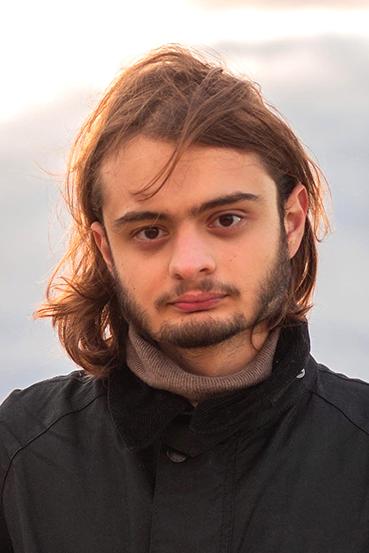
Andrea Farrugia is a third-year law student and the winner of ELSA Malta’s Legally Speaking Competition 2026.