Truth of the day after
Nuclear warfare and humanity’s existential reckoning
“We share the same biology/regardless of ideology/believe me when I say to you/I hope the Russians love their children too” – Sting, Russians (1985).
In November 1983, a television film unsettled the American conscience. The Day After, broadcast to over 100 million viewers, did not offer the usual Cold War fantasies of strategic triumph. It showed, instead, the raw, unbearable aftermath of nuclear war: radiation sickness, scorched earth and the collapse of civil society. No winners, only a deafening silence.
President Ronald Reagan viewed the film in private at Camp David. In his diary, he wrote: “It is very effective and left me greatly depressed.” The film haunted him. It helped spark a profound shift in his thinking on nuclear weapons and may have played a role in the thawing of US-Soviet relations that would come to define the later years of his presidency.
In a 1984 speech, Reagan asked the world to imagine a simple encounter: “Just suppose… that an Ivan and an Anya could find themselves… sharing a shelter from the rain with a Jim and Sally...”
They would not debate ideology, he said. They would talk about their children, their jobs, their hopes. Maybe they would part as friends. “Above all,” Reagan said, “they would have proven that people don’t make wars.”
It was a striking departure from the language of mutually assured destruction. It was also a philosophical challenge: that, at the level of persons – not states, peace is the default. War, by contrast, is an artificial rupture imposed by fear, propaganda and abstraction.
Reagan’s Ivan and Anya, like Sting’s song, remind us that enemies are constructed. That the face of the “other” often looks more like us than we care to admit. And that, if we fail to remember this, we may bring about a catastrophe of our own making.
Nuclear war is not just geopolitics by other means. It is the potential end of the human story. A large-scale exchange would unleash firestorms, contaminate the biosphere and plunge the planet into a nuclear winter. Even a limited conflict could kill millions and disrupt global agriculture, triggering famine far from the battlefield.
The doctrine of deterrence – the idea that having the bomb prevents its use – remains a paradox. It relies on permanent brinkmanship, on leaders never erring, never miscalculating, never facing false alarms. It offers stability – until the day it doesn’t.
History reminds us how close we’ve come to catastrophe. In 1983, Soviet lieutenant colonel Stanislav Petrov received an alert from the USSR’s early warning system that five US missiles were en route. Protocol required him to report the warning, likely triggering a retaliatory strike. But Petrov judged it a false alarm and disobeyed orders. He was right. The world never knew how close it came.
That same year, on the other side of the divide, US Air Force General Leonard Perroots chose not to escalate when he noticed unusual Soviet military activity during a NATO exercise. He, too, refrained from interpreting it as a prelude to war. His restraint may have averted a spiral toward actual conflict.
Two men, unknown to most, may have saved the world through nothing more than calm judgement and moral instinct. Nuclear deterrence worked that day not because of policy but because of people.
Nuclear deterrence worked that day not because of policy but because of people- Alan Xuereb
This is what The Day After showed. Not strategy but aftermath. Not policy but pain. It was fiction but it spoke truth.
In an address to the United Nations in 1987, Reagan mused: “I occasionally think how quickly our differences worldwide would vanish if we were facing an alien threat from outside this world.”
Of course, the “alien threat” is a metaphor, so far. The true threat was already here: the bomb and our willingness to accept its presence. Reagan’s rhetorical move was to shift perspective. To see earth not as a patchwork of sovereign rivalries but as a single, fragile home.
Reagan’s eventual relationship with Soviet leader Mikhail Gorbachev became historic. At the 1986 Reykjavik summit, the two came close to agreeing on the total elimination of nuclear weapons. Though the deal fell through over missile defence disagreements, it led to the 1987 INF Treaty – the first to eliminate an entire class of nuclear arms.
These were not mere negotiations. They were a moral reckoning. Both leaders, shaped by war, memory and responsibility, grasped the stakes. Gorbachev, too, was haunted by the human cost, once declaring: “A nuclear war cannot be won and must never be fought.”
Just three years after Reykjavik, another momentous meeting took place, this time in Maltese waters. The Malta summit of December 1989 brought Gorbachev and Reagan’s successor, George H. W. Bush, face to face on ships off Marsaxlokk Bay. It was hailed as the symbolic end of the Cold War – “from Yalta to Malta”, as some called it – marking the reversal of the post-war division of Europe.
While no formal treaties were signed, the summit marked a philosophical shift. Gorbachev described the meeting as the beginning of a new era, while Bush spoke of “peace that lasts”.
In the shadow of World War II, with Yalta as a memory and Malta as a promise, it represented the hope that reason and dialogue might finally triumph over fear and arms.
Malta may be far from the nuclear superpowers but we are not outside history. Climate change, cyberwarfare and renewed geopolitical tensions have revived anxieties once thought buried with the Cold War. The Doomsday Clock now stands closer to midnight than ever before.
Let us remember that peace is not merely the absence of war. It is the refusal to accept that annihilation is a political option. The Day After asked what we would do when it is too late. But the real question, always, is what we will do the day before!
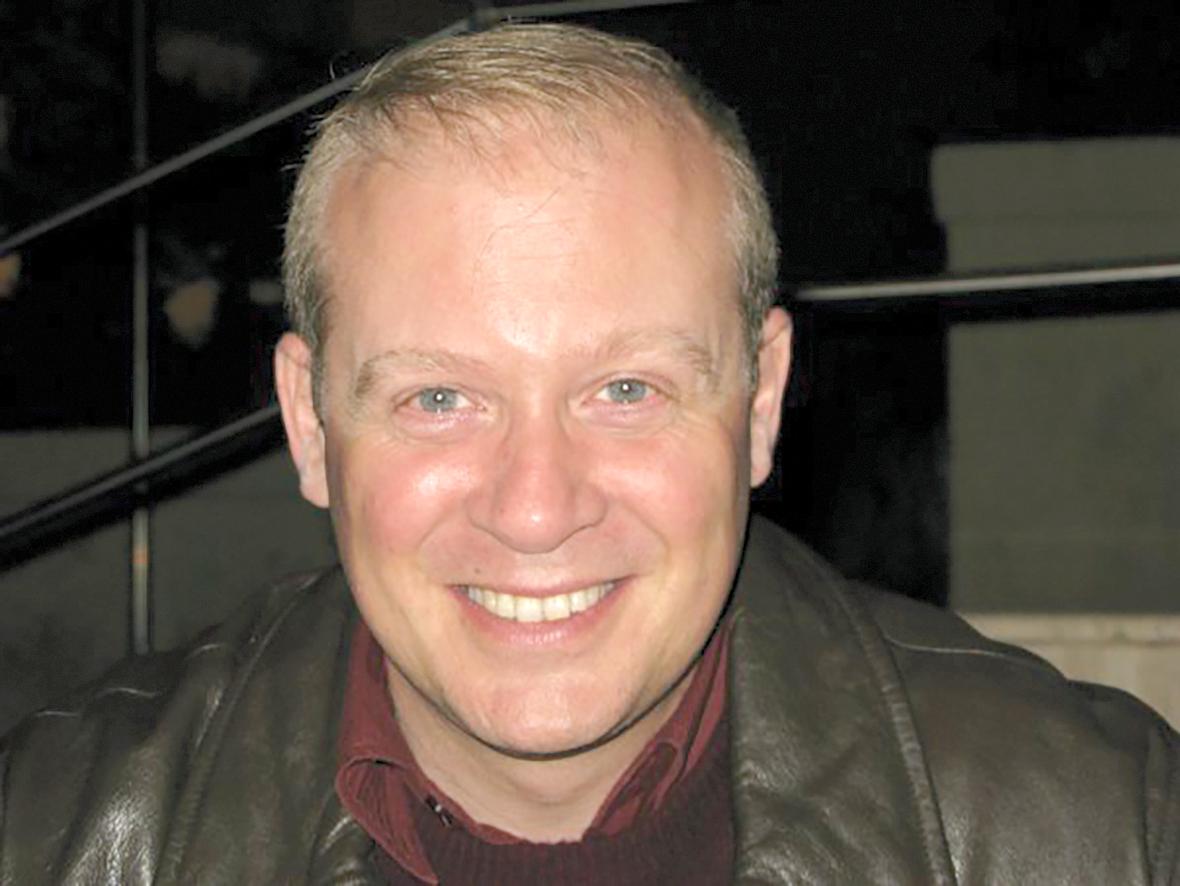
Alan Xuereb is the author of Riflessjonijiet dwar il-Ġid Komuni – Reflections about the Common Good.