TVM unveils AI television presenter
The programme aims to educate the public about AI in everyday life
Malta's first virtual television presenter will air on TVM on Thursday, hosting a programme to educate the public about artificial intelligence.
The presenter, in his black-and-white suit and slightly robotic appearance, may appear familiar to viewers.
"Greetings, I am Professor Alexiei Dingli, or rather, his avatar. And today, I welcome you to the very first episode of the series Artificial Intelligence in Our Lives," says the Maltese-speaking presenter at the beginning of the show.
The presenter is a somewhat smoother, hyper-realistic AI generated version of Dingli, a professor of AI at the University of Malta, who is pioneering the weekly 11pm television programme.
It was created using images that allowed the AI to capture Dingli's personal features and its behaviour and personality were shaped through prompts instructing it to act in a certain way.
However, recordings were used for the voice, instead of synthetic replication, to give the avatar a more natural and authentic sound.
"This choice was particularly important because, while AI can mimic a voice with just a few seconds of audio, it still struggles to reproduce the Maltese accent accurately," Dingli explained. "The result was a hybrid avatar that combined AI‑generated visuals and scripted behavior with a genuine human voice for cultural and linguistic authenticity."
Deepfake education
Dingli says the news programme has taken precautions to ensure that audiences understand they are watching an AI avatar. A disclaimer will appear on the side of the screen when the news host speaks, to clarify that it is not the real Alexiei Dingli.
In part, the artificial representation of Dingli is meant to teach people to distinguish between real people and avatars, especially given the rise of “deepfakes.”
Social media has been rife with deepfakes of prominent Maltese personalities. Earlier this month, a woman was accused in court of defrauding people using a fake video of Prime Minister Robert Abela promoting invesetments using cryptocurrency.
One victim said she had been defrauded of €52,000.
AI is an amazing tool, but people need to learn how to use it responsibly, Dingli said. The programme aims to educate the public about how AI can be applied in their daily lives.
Across 12 episodes, it will feature a range of topics, including education, traffic, health, art and social relationships. AI experts will join the show to discuss various applications of the technology. While much of the upcoming programme’s script is AI generated, humans have edited the content to ensure its accuracy, Dingli says.
Dingli sees avatars as a promising opportunity for the future of television broadcasting. “The quality and consistency of AI is probably better than humans,” he said, noting that, unlike humans, AI presenters wouldn’t have bad days or good days.
The human touch
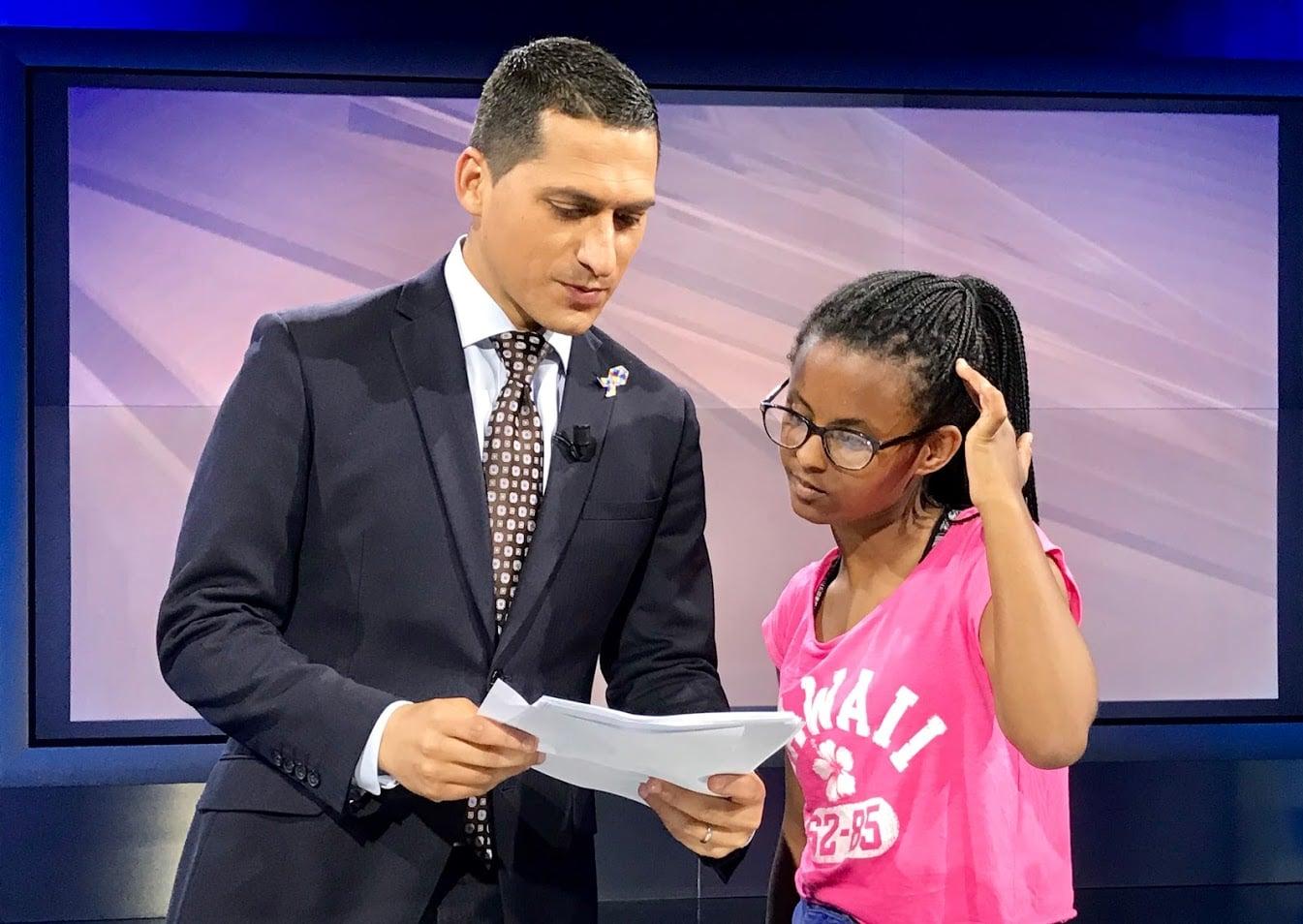 Former TVM news presenter Keith Demicoli says AI cannot provide the human touch needed to host programmes. Photo: Facebook/Keith Demicoli
Former PBS news anchor Keith Demicoli disagrees. “Human presenters would definitely outperform AI presenters,” he said. Speaking from his own experience, he believes spontaneity and emotional intelligence are two traits that AI presenters cannot offer.
Adjusting his tone, facial expression and pace according to the subject matter came very naturally to him as an anchor, whereas an AI avatar might be more challenged.
“I find it really hard for an AI presenter to deliver details about tragic news,” he said.
While he is wary of replacing human presenters altogether, he embraces the idea of incorporating AI into news broadcasts, including for the purpose of educating the public about AI.
AI could be particularly helpful for explainer videos and reports that involve a lot of graphics, he added.
During his time as a news presenter, Demicoli noticed that younger generations were not watching TV news anymore. He imagines that incorporating AI might encourage younger audiences to watch TV news by making it more dynamic.
Likewise, Dingli sees an opportunity for AI newscasters to reach wider audiences. While human newscasters typically stick to one script, AI introduces the possibility of tailoring the same news content to different audiences, such as children.
“It’s about pushing the boundaries more than anything,” he said.
Several other countries have also unveiled inaugural AI news presenters. In Venezuela, AI newscasters have played a critical role in protecting the identities of journalists amidst the government’s crackdown on journalism.
On the other hand, the wide accessibility to AI video generation technology may risk increasing the spread of disinformation. Earlier this year, a video of an AI-generated news anchor spread across social media, saying that Canada had declared war on the US, which was not true.
While the video later revealed that it was AI generated, it became a wake-up call for how easily fake messages can spread.
The use of the AI-generated actress “Tilly” recently drew intense backlash from human actors who worry about their jobs being replaced. The introduction of AI to television programs may cause similar worries among broadcasting newsrooms.
Dingli dismisses such concerns, believing that humans will continue to play an important part in news dissemination. With the spread of misinformation, humans serve a critical role in monitoring the quality and veracity of news, he said.
How can you spot AI-generated videos?
As AI advances, it’s becoming harder to distinguish real videos from AI-generated ones. Here are some things Professor Alexiei Dingli says to look out for:
- If the person’s face looks too smooth, doesn’t blink naturally, or their mouth movements don’t quite match the words, that’s a red flag.
- Strange lighting, blurry edges, or flickering backgrounds can also signal something’s off.
- Listen for voices that sound robotic or emotionless, especially in longer clips.
- Always check where the video came from, trusted news sources are more reliable than random social media accounts.If something feels too shocking or perfectly timed to stir emotions, pause and double-check.
- You can also search for the video online to see if it’s been reported or debunked.Staying skeptical and curious is your best defense.