Unawarded lifeguard tender left beaches unpatrolled during Ramla Bay tragedy
Last-minute contract ended on October 12
A tender that could have seen lifeguards patrol beaches until the end of October was not awarded, with a last-minute replacement agreement ending two weeks before the tragic deaths of an 11-year-old boy and his father at a popular Gozo bay.
On Monday, October 26, Mohammad Qadoos, 37, and his son, Ayan were swept into the sea at Ramla Bay and died.
While the tender extending services to the end of October was never awarded, the Malta Tourism Authority had signed an “interim” summer contract with Gozitan lifeguard operators.
That contract expired on October 12, two weeks before the tragedy.
The government has extended the lifeguard season into the spring and early autumn as swimming outside the summer months has become more popular.
The tender that was issued last year and was meant to take effect from mid-May described the lifeguarding season as lasting “till end of October”.
However, that contract was never awarded, with the MTA not providing an explanation when contacted by Times of Malta.
Those caught in rip currents should swim parallel to the shore until free of the rip- the UK’s Royal National Lifeboat Institution
Matthew Montebello, the secretary general of the Emergency Rescue and Response Corps (ERRC), which provides lifeguarding services in Gozo and which applied for the tender, said the ERRC started operating in mid-May.
“We actually started operating this year when we started seeing the beaches filling up,” he said, noting that an “interim contract” was later signed with the MTA midway through June covering lifeguarding services for the summer.
That contract initially only lasted until the end of September but was later extended until October 12, “so our lifeguards were at Ramla until then”, he said, noting that, without lifeguards, the warning flags were not in use.
He added that the recent deaths at Ramla Bay were “definitely not to do with the tender”, however.
The MTA said lifeguarding services usually matched the dates of the Blue Flag season – an international beach environmental award – which it said ran from June 15 to September 15.
“However, due to changing climate and improved weather conditions, the MTA supported the extension of the service to start a month before and end a month later. In fact, the service in Comino is still ongoing.”
Back in April, the MTA said the tender was still being evaluated and that further details would be released upon its conclusion, while promising lifeguards would be deployed in a “timely and effective manner”.
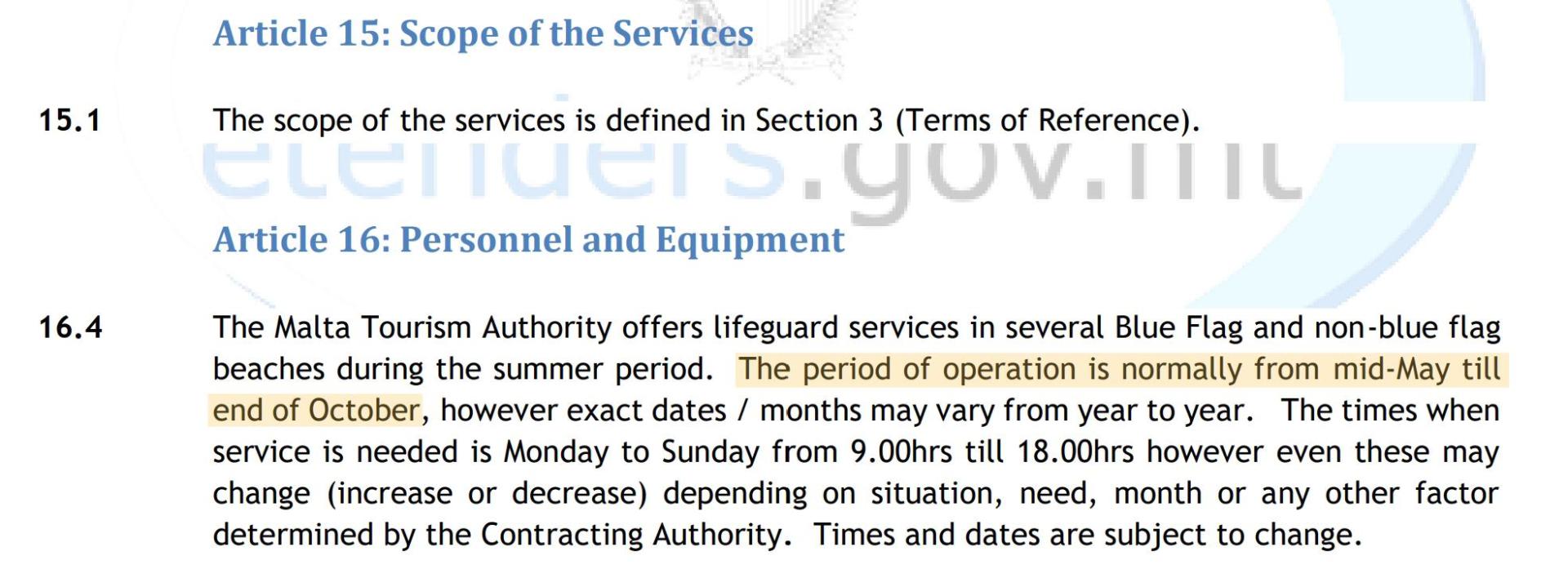 The MTA tender said the lifeguarding season would last until the end of October – but the tender was never finalised.
Year-round service?
Earlier this week, Mater Dei Hospital emergency doctor Jonathan Joslin said clear signage, permanent flag systems and emergency call points could make a significant difference in response times during off-peak months.
Asked about year-round measures, Montebello said year-round lifeguarding would be “fantastic but very expensive – and wouldn’t make sense at some times of the year, for example when the water gets colder and locals don’t enter the water”.
A Times of Malta exercise found that providing year-round lifeguard coverage in Malta and Gozo could cost around €10 million per year, based on figures found in the outstanding tender estimating costs of €4.7 million for mid-May until the end of October.
Montebello said the ERRC was open to providing a year-round service, noting “if we can at least save one life it would be worth it”. He added that using modern technology, warning flags could be operated remotely.
Robert Brincau, director of operations at Malta Red Cross – which provides lifeguarding coverage in Malta – said “there should be someone there every nice day all year round, but everything has a cost... however, if it saves lives, is it expensive?”
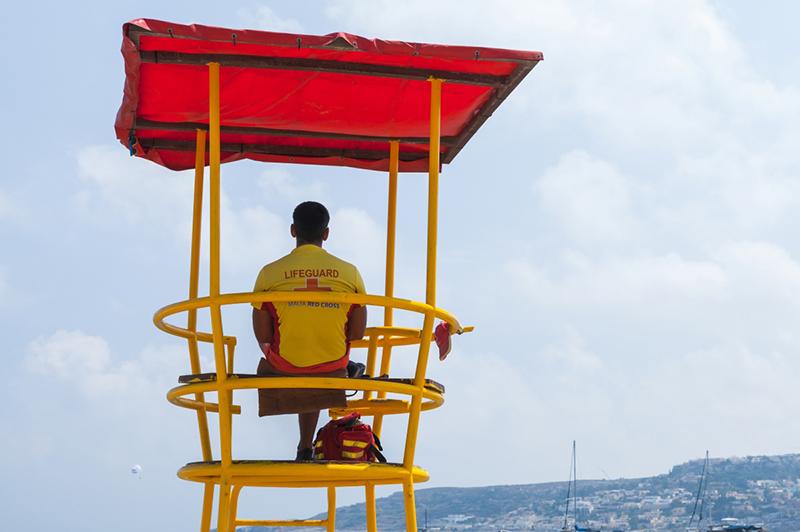 Lifeguard operators warn that a year-round lifeguard service would be expensive but could save lives. Photo: Shutterstock.com
‘It’s about time our culture changes’
Appearing to doubt the effectiveness of relying solely on beach warning flags outside of the summer, Brincau asked: “Do we want to tick a box or save lives? You can add a double red flag and leave but if we want to save lives you have to speak to people.”
Pointing to rising numbers of incidents involving tourists (“the Maltese know which beaches not to go to in bad weather”), he called such incidents a “repercussion” of Malta vying for increased tourist numbers in the shoulder seasons.
“It’s about time our culture changes – because Malta is changing,” he said.
The tourism authority said a year-round service “is beyond the resources of the MTA, whose original task was to try and introduce the concept of Blue Flags, lifeguarding and other beach services and then allow the other agencies to take over”.
“Having said that, the MTA has already offered support for any initiatives that the Civil Protection Department or other emergency or maritime agencies might have in improving the monitoring of beaches,” it said.
‘Very strong rip currents’
Earlier this week, a friend of the Qadoos family told Times of Malta that the father and son had been “swept away” by a strong wave in Ramla.
Asked about the incident, Brincau said the pair could have become caught in a ‘rip current’, which he warned were “very common” at Ramla Bay, Golden Bay and Riviera Beach in strong winds.
“They can carry you 10 metres in two seconds,” he said, emphasising they were “very strong” in shallow waters. He said rips in Malta were normally around 10 to 20 feet wide “and can move very quickly”.
The UK’s Royal National Lifeboat Institution (RNLI) describes rip currents as “strong currents running out to sea, which can quickly drag people and debris away from the shallows of the shoreline and out to deeper water”.
It warns that rips are a “major cause of accidental drowning on beaches all across the world” and “can be difficult to spot but are sometimes identified by a channel of churning, choppy water on the sea’s surface”.
Those caught in rip currents should “swim parallel to the shore until free of the rip and then head for shore”, the institution advises.
Sixteen people are known to have drowned since the beginning of the year, 13 of whom died in drowning incidents at sea.