A unique opportunity for Gozo
Cross-party unity is essential for Gozo’s next chapter
Gozo today finds itself in a political position unlike any it has enjoyed before. Following the last general election, the island is represented by eight Gozitan MPs drawn from both major political parties, while another Gozitan (Thomas Bajada) is an MEP.
Three of Gozo’s MPs (Jo Etienne Abela, Clint Camilleri and Anton Refalo) hold ministerial portfolios within the Labour government, while Gozitan Franco Mercieca, although elected as a Labour MP from a district on the mainland, remains an influential voice with strong ties to the island.
On the other side of the political spectrum, four MPs (Alex Borg, Norma Camilleri, Beppe Galea and Frank Anthony Tabone) represent the Nationalist Party, including, for the first time in Malta’s political history, a Gozitan who serves as opposition leader while representing the Gozo electoral district.
This parliamentary landscape is unprecedented. This is a unique moment for Gozo. It presents a rare opportunity to leverage this exceptional level of representation to secure tangible progress for the island and its people.
Despite belonging to different political parties, we are confident that all nine parliamentarians have Gozo’s best interests at heart.
Regardless of their political affiliations, they share a common commitment to the island and a desire to see it flourish. All of them want to see their native island realise its full potential and achieve greater socio-economic prosperity for its residents.
The time has therefore come for Gozo’s representatives to rise above partisan considerations and agree, at least in principle, to work collectively on a number of priorities. There are issues that transcend partisan divisions and demand a united Gozitan approach. Four such priorities stand out.
Planning for a new hospital should begin without delay
Foremost among them is the constitutional recognition of Gozo as an Island Region with greater autonomous governance.
As Malta’s second island, Gozo faces realities that are distinct from those of the mainland. Its geographic separation, demographic challenges, economic structure and environmental sensitivities often require tailored solutions that cannot always be addressed through policies designed primarily for Malta.
Yet, too many decisions affecting Gozo continue to be made from a national perspective that does not fully reflect the island’s unique circumstances. Granting Gozo constitutional recognition as a distinct region, accompanied by a greater degree of autonomous governance, would empower local institutions to address these realities more effectively.
Such a reform should not be viewed as a challenge to national unity. On the contrary, it would strengthen Malta by ensuring that Gozo’s voice is heard more clearly within the country’s constitutional framework. History has repeatedly demonstrated that when Gozitans are entrusted with responsibility and decision-making powers they are fully capable of managing their affairs successfully and delivering positive outcomes for their communities.
Connectivity is another issue on which there should be a broad political consensus. Reliable and efficient links between Gozo and Malta are essential for the island’s economic development and social wellbeing. Every day, thousands of Gozitans travel for work, education, healthcare and business. For them, connectivity is not a convenience but a necessity.
A long-term strategy must therefore address the island’s connectivity needs comprehensively. The expansion of Mġarr Harbour would strengthen maritime operations and accommodate future demand. An alternative access route to the harbour would reduce traffic bottlenecks and improve safety. Likewise, the renewal and modernisation of the Gozo Channel fleet is crucial if services are to remain reliable, efficient and environmentally sustainable.
Additional berthing facilities would enhance resilience during adverse weather conditions, while the development of a rural airfield, debated for decades, could provide valuable alternatives for tourism, business and leisure travel for locals and open up opportunities in aviation.
These proposals are not new. Successive administrations have discussed them extensively. What Gozo now requires is not further debate but decisive implementation.
Healthcare must also become a national priority for Gozo. The Gozo General Hospital was constructed in the 1970s to serve a population of approximately 26,000 residents. Today, the island’s population exceeds 41,000 and the hospital must also cater for thousands of visitors who come to Gozo throughout the year.
Medical services have evolved significantly and modern healthcare requires an infrastructure capable of supporting advanced technologies, specialised services and increased patient demand. The existing facility faces clear limitations in terms of space, capacity and future expansion potential.
Gozo deserves a modern hospital that can provide comprehensive, high-quality healthcare close to home, reducing the need for patients to travel to Malta for treatment whenever possible.
Planning for a new hospital should therefore begin without delay, not only to address current shortcomings but also to ensure that future generations have access to healthcare services worthy of a modern European island community.
Finally, environmental protection and sustainable planning must remain at the centre of Gozo’s development agenda.
Few places possess the distinctive charm that has made Gozo so attractive to both residents and visitors. Its village-centred communities, rural landscapes, open countryside and cultural heritage form an integral part of its identity. Yet, these same qualities are increasingly under pressure from development that risks eroding the very character that makes the island unique.
Gozo requires planning policies that recognise its particular scale and environmental constraints. Stronger safeguards should be introduced to protect agricultural land, traditional architecture, ecological sites and scenic landscapes. Development must be guided by principles of sustainability and long-term stewardship rather than short-term gains.
If Gozo is to remain the ‘Island of Villages’ conservation cannot be treated as an afterthought. Economic growth and environmental protection are not mutually exclusive objectives. Indeed, Gozo’s future prosperity may well depend on maintaining the qualities that distinguish it from elsewhere.
These four priorities rise above partisan politics and should unite all those entrusted with representing Gozo. Let all nine Gozitan parliamentarians commit themselves to advancing these fundamental objectives.
By working together on constitutional recognition, connectivity, healthcare and environmental protection they can help build a stronger, more resilient and more sustainable future for Gozo, one that honours the island’s unique identity while providing greater opportunities and a higher quality of life for generations to come.
Whether this moment becomes a turning point or merely a missed opportunity will depend on the willingness of Gozo’s elected representatives to work together in pursuit of a shared vision.
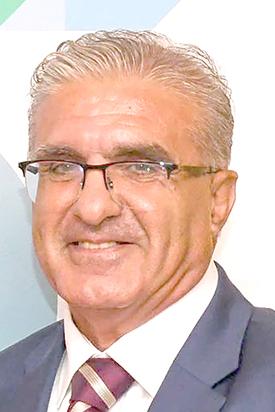
Joe Muscat is CEO of the Gozo Tourism Association.