Unveiled: the restored altarpiece by Favray that defines Casa Manresa’s soul
Favray's iconic altarpiece restored at Casa Manresa to celebrate 275th year
The titular painting of the chapel of Our Lady of Manresa at Casa Manresa in Floriana, by the celebrated artist Antoine de Favray (1706-98), depicting the Apparition of the Virgin to St Ignatius of Loyola in Manresa, was recently restored to mark the 275th anniversary of the official inauguration and blessing of this historic building as a retreat house on March 16, 1751, by the Bishop of Malta, Paul Alphéran de Bussan (bishop 1728-57), in a ceremony attended by the Grand Master of the Order of St John, Manuel Pinto de Fonseca (1741-73).
Later, the edifice, built under the care of the Jesuit Fra Pier Francesco Rosignoli, also served as a military hospital, a seminary, and a school, and today houses the Archbishop’s Curia.
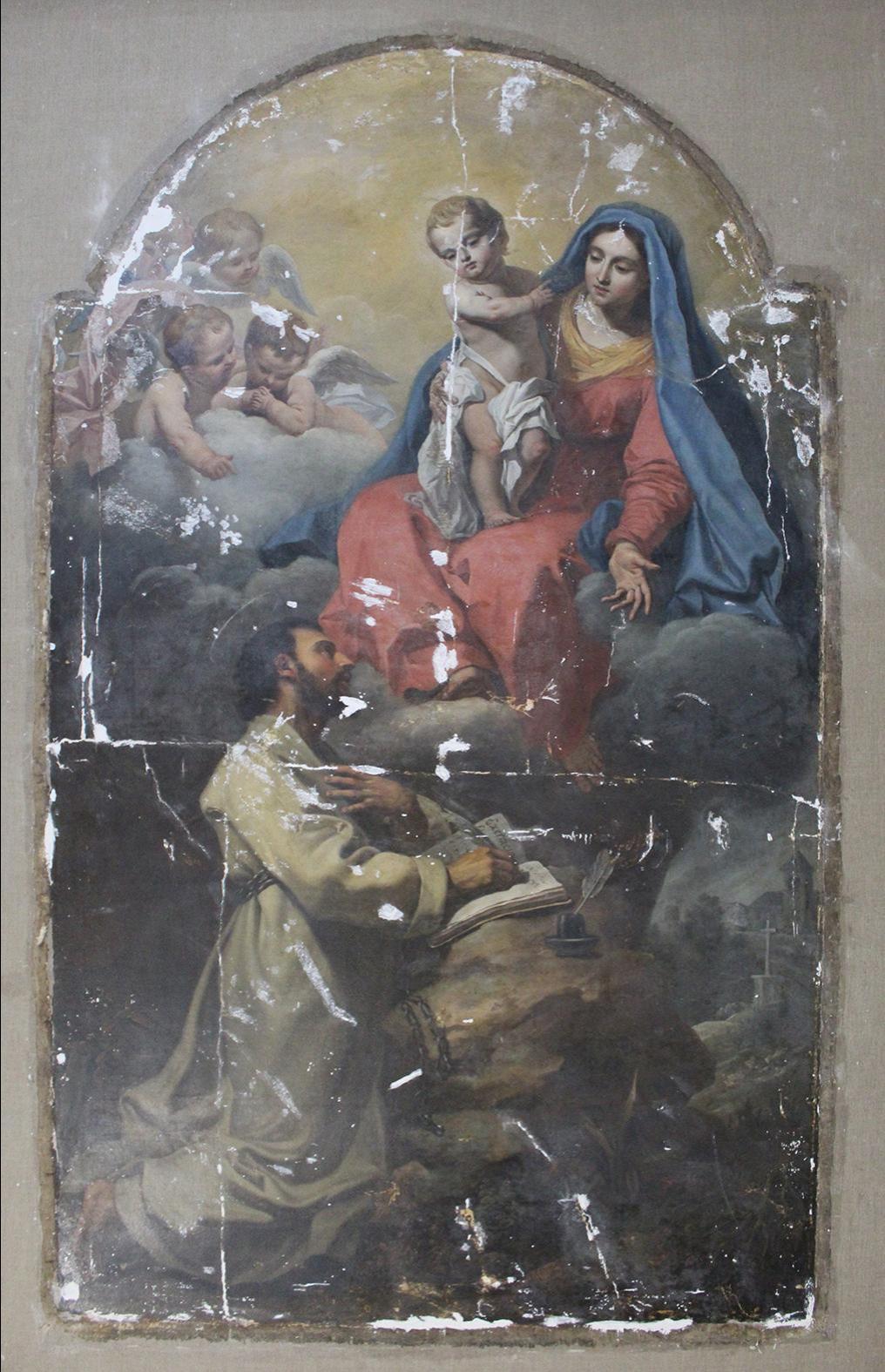 During infilling of losses in the ground layer. Photo credit: ASC Conservation Centre Ltd.
Casa Manresa stands as a remarkable convergence of late-Baroque aesthetic sensibility and reformed spiritual practice, shaped throughout by the distinctive Jesuit “way of doing things”. Functioning as a dedicated retreat house, it was conceived to facilitate the practice of the Ignatian Spiritual Exercises in an environment carefully calibrated to that purpose. The building’s visual programme – which incorporated works by distinguished painters including Antoine Favray and Francesco Zahra – constructed an immersive iconographic framework oriented around the Novissimi, or the Four Last Things: Death, Judgment, Heaven, and Hell.
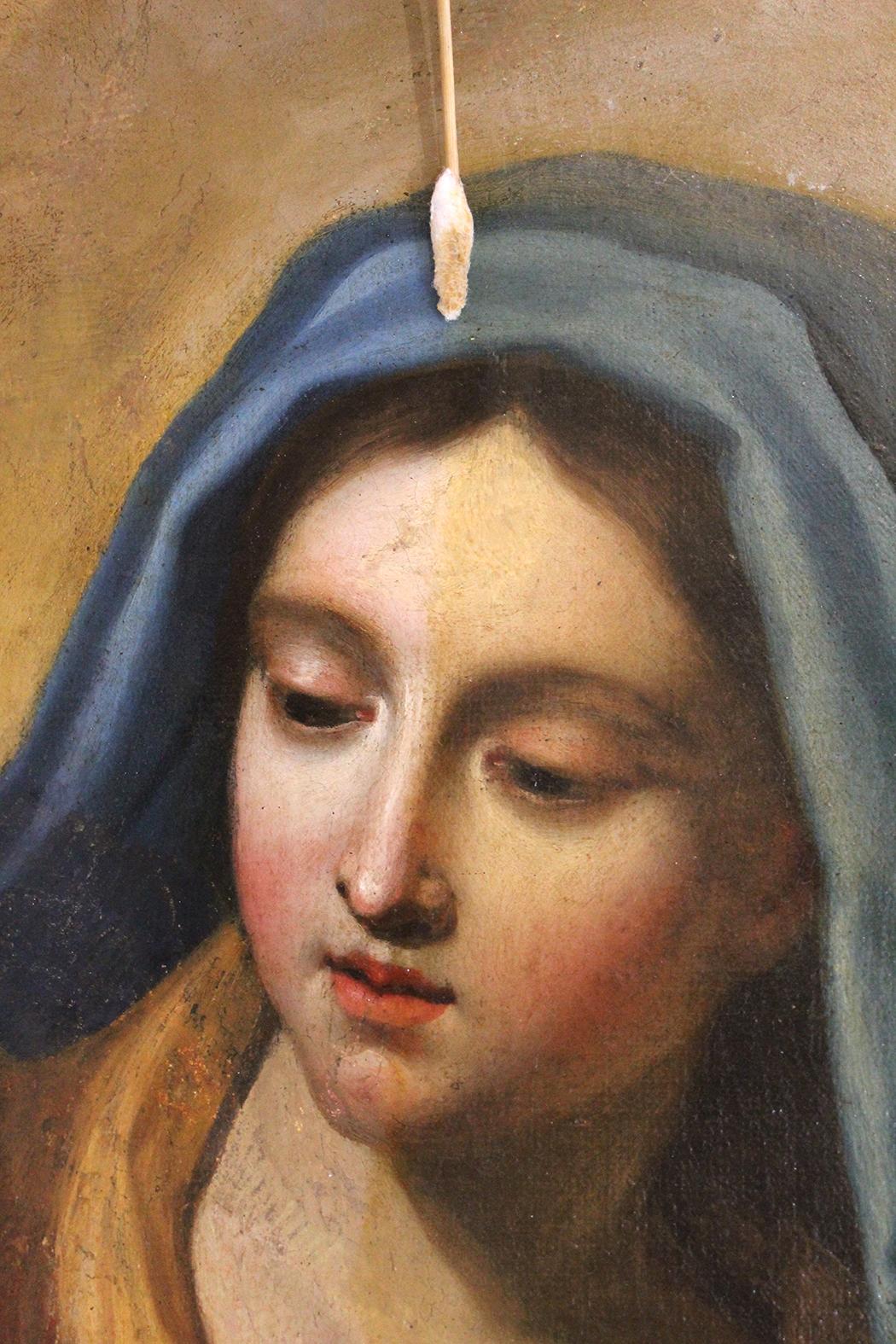
Details taken during the cleaning of varnish and overpaint. Photo credit: ASC Conservation Centre Ltd.
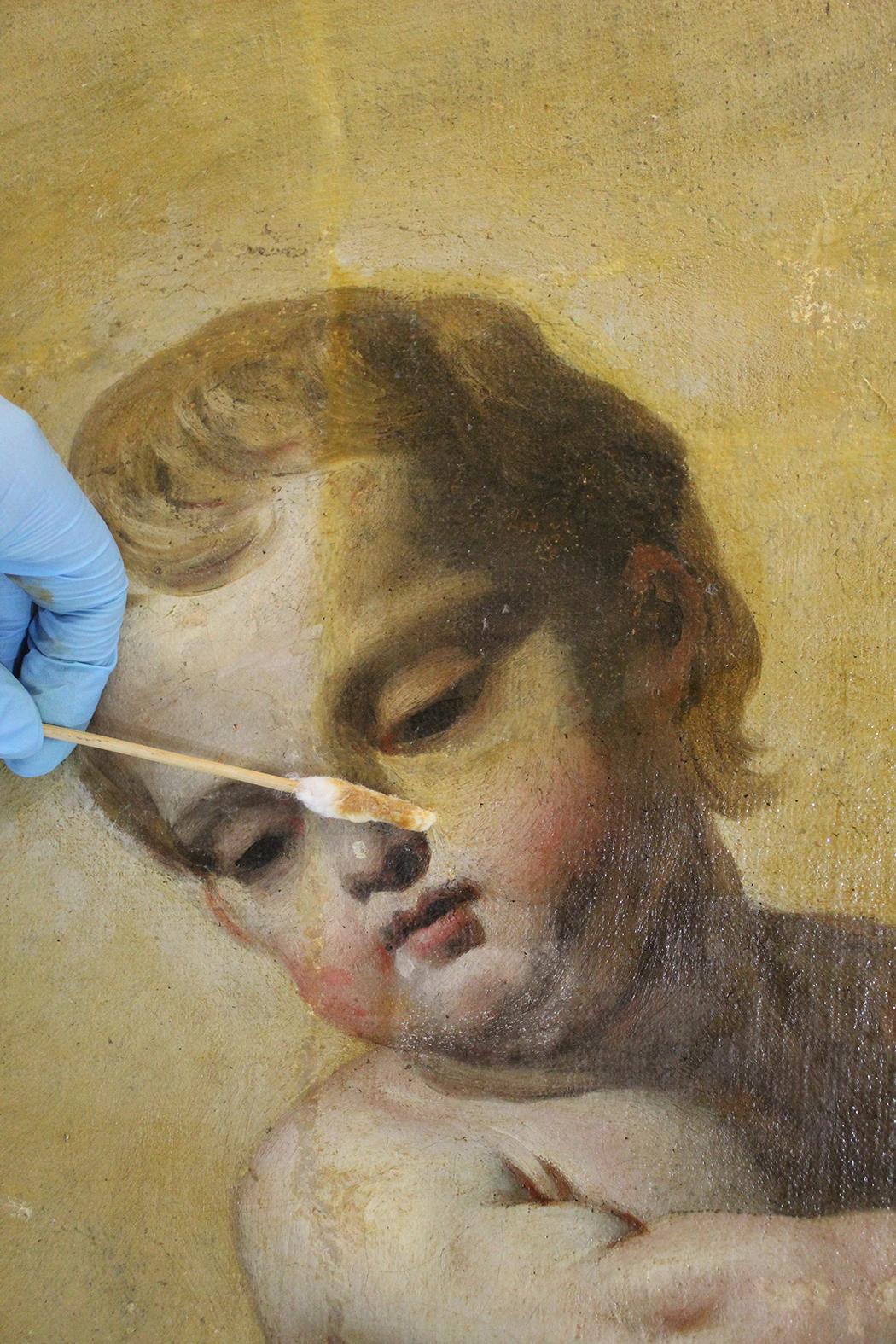
Details taken during the cleaning of varnish and overpaint. Photo credit: ASC Conservation Centre Ltd.
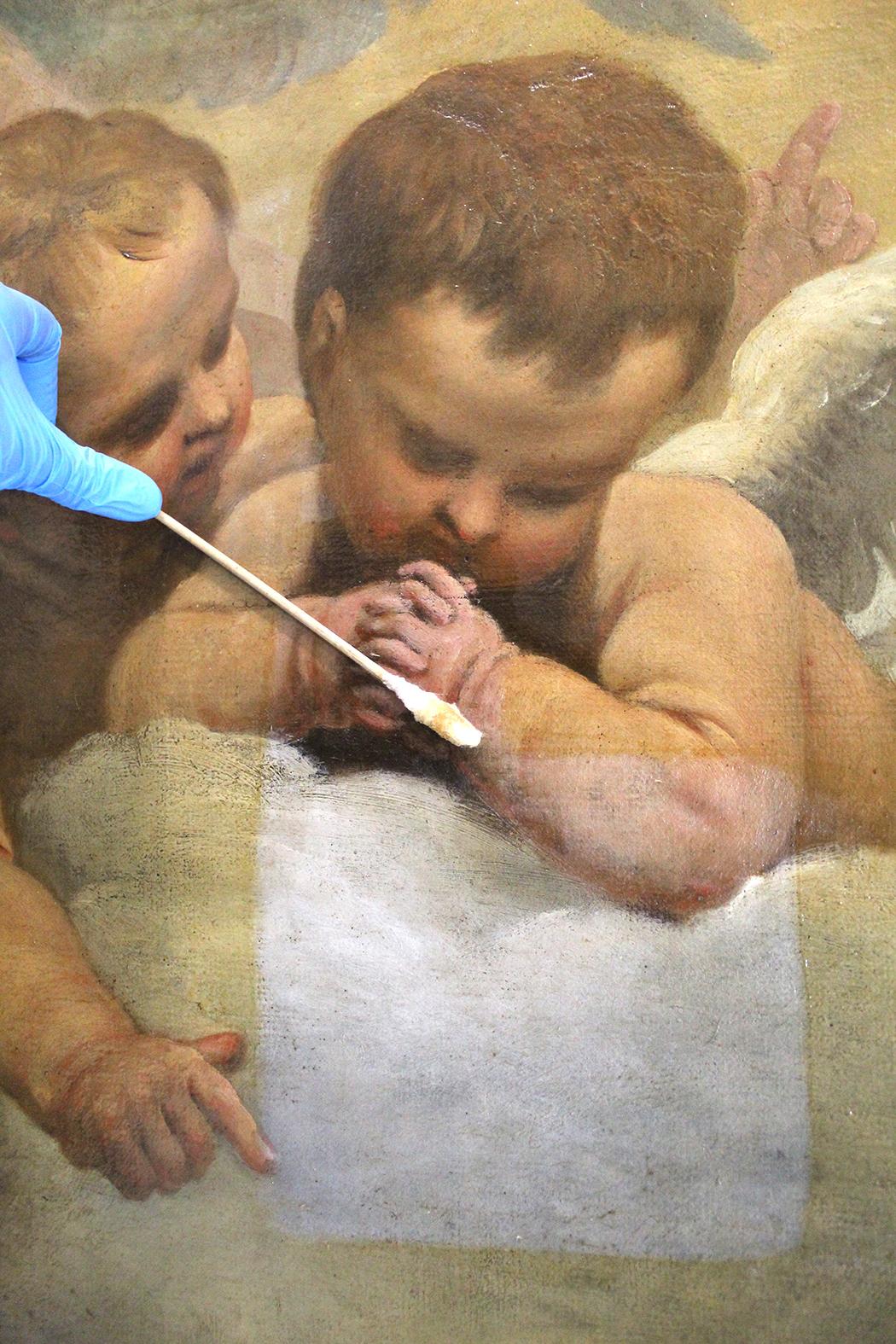
Details taken during the cleaning of varnish and overpaint. Photo credit: ASC Conservation Centre Ltd.
This thematic constellation guided those undertaking the Exercises toward sustained meditation on the ultimate ends of human existence and on the cultivation of what early modern Catholic culture termed the ars moriendi, the art of dying well.
Equally deliberate was the house’s physical placement: positioned close enough to Valletta to remain accessible to an urban clientele drawn from across the social spectrum, yet far enough from the city’s daily rhythms to foster the interior silence that genuine retreat demanded. In this way, the site itself became an instrument of the Jesuit apostolic vision – a sanctuary open to all, yet oriented entirely toward the transformation of the individual soul.
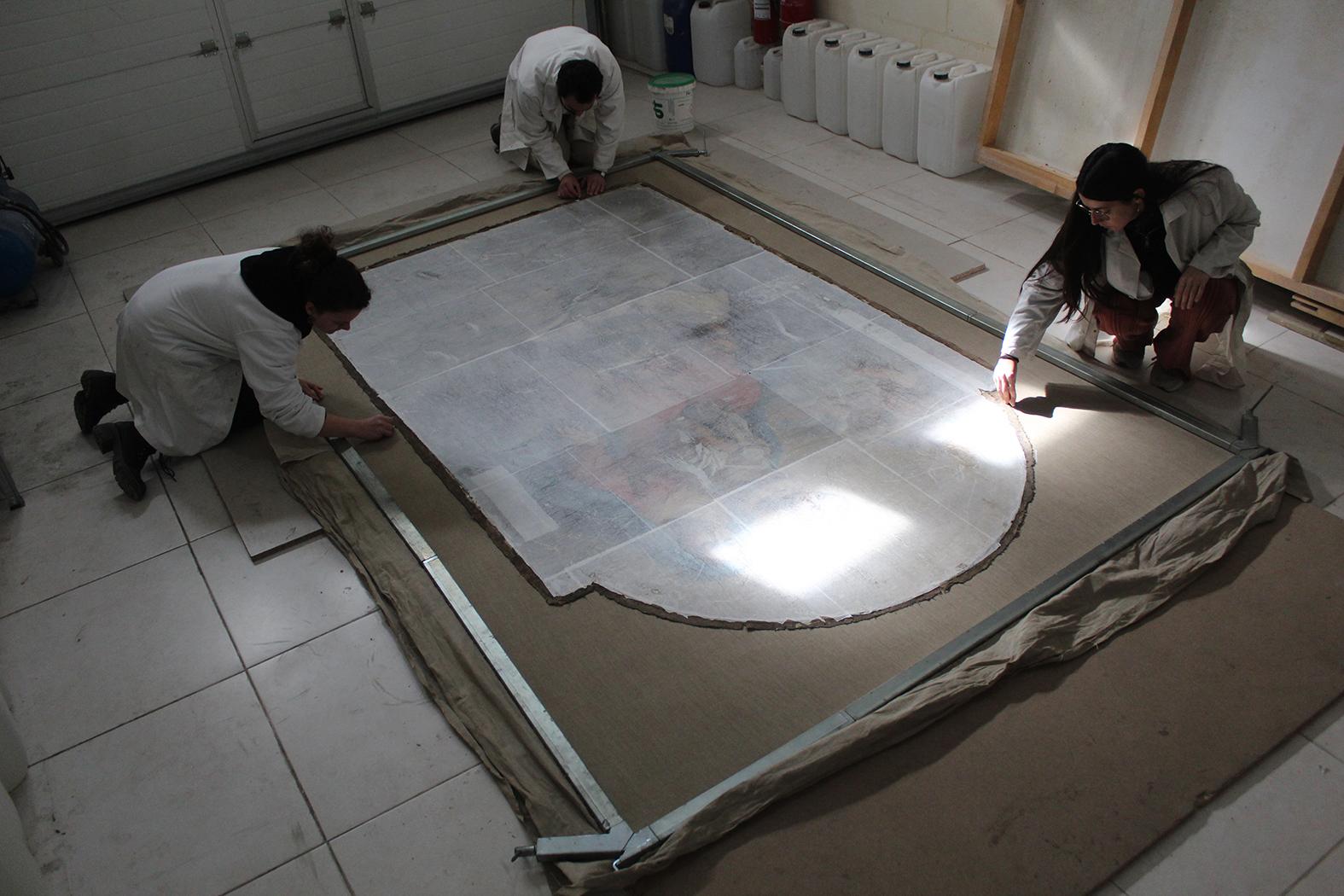 The team at ASC conservation Centre Ltd. preparing for the re-lining procedure which fully stabilised the canvas support. Photo credit: ASC Conservation Centre Ltd.
The titular altarpiece, consistent with the chapel’s broader iconographic programme, encapsulates the house’s founding rationale as a place of spiritual withdrawal. It depicts the saint composing his Spiritual Exercises, watched over by the maternal presence of the Blessed Virgin Mary, in the typical ‘sacra conversazione’ iconography – an image that anchors the chapel’s entire decorative scheme to the retreat house’s devotional and pedagogical intent.
Art historian Keith Sciberras describes this painting as “the work which marked the greatest difference from that of the native artists like Zahra, Buhagiar, and Regnaud”. He singles out its formal qualities: the figures are clear in mass, their gestures well-calculated, and the drapery folds beautifully restrained. In his view, Favray’s Baroque forms dispensed with the exaggerated energy characterising Zahra’s figures and the uncontrolled flutter of their drapery.
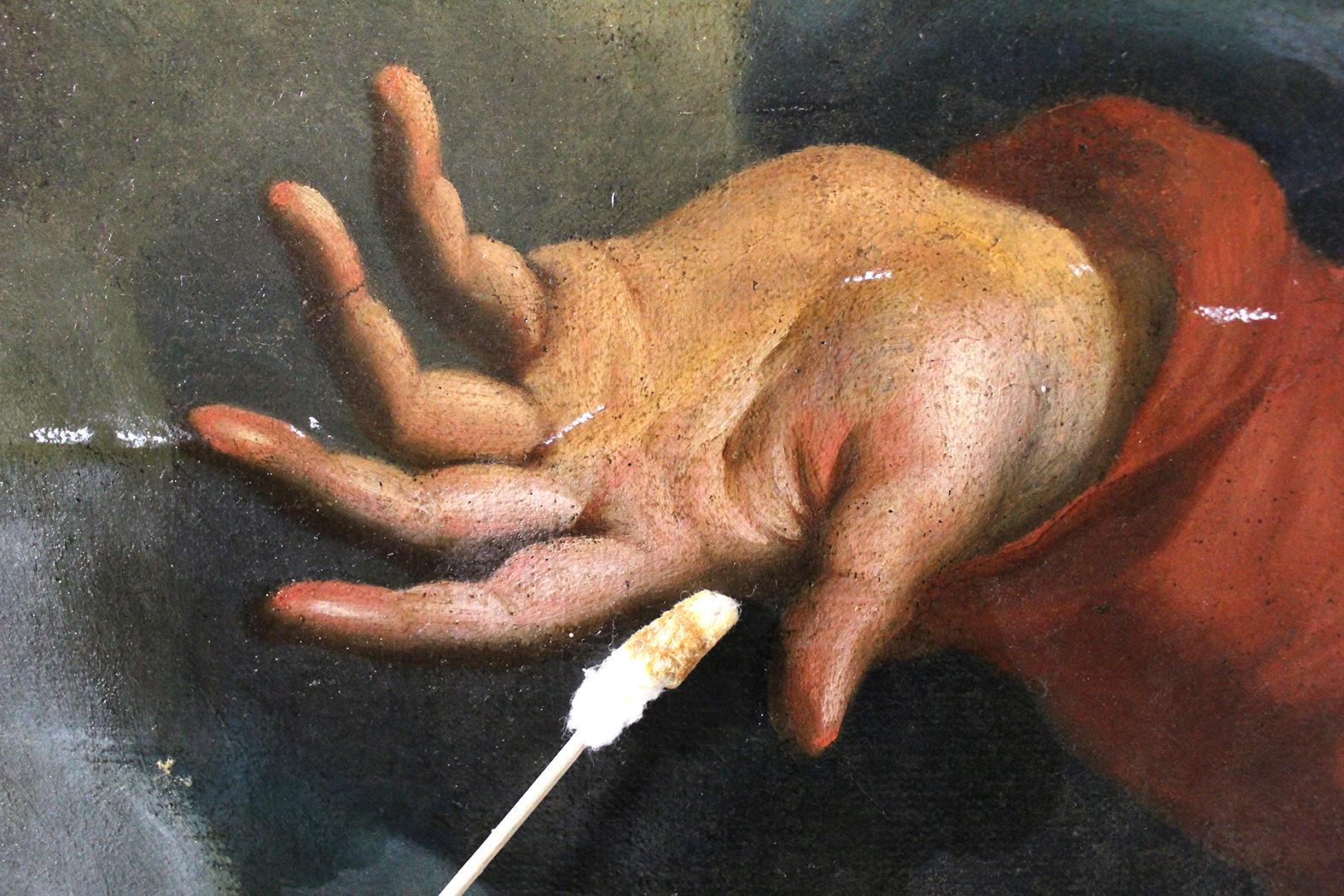 Details taken during the cleaning of varnish and overpaint. Photo credit: ASC Conservation Centre Ltd.
Favray also received the commission to execute the remaining paintings of the chapel cycle, each work serving as a visual prompt to those undertaking the Exercises, continuously orienting them toward the animating purpose of their time within these walls. In fact, an author who remains anonymous, but whom internal evidence betrays to have been the founder, Rosignoli himself, notes his Relazione della Pia Casa (1753), “Tutte le pitture de’cinque altari son opera del Signor Favrai pittor Parigino, dove va lasciando molte opere insigni del suo pennello.” (‘All the paintings on the five altars are the work of Monsieur Favray, the Parisian painter, who is leaving many remarkable works of his brush.’)
This thematic emphasis is further reinforced by two paintings of St Ignatius positioned above the side doors of the chapel, likewise attributable to Favray. The first records the pivotal moment of the saint’s conversion during his convalescence – the turning point at which a life shaped by worldly indulgence gave way to one grounded in Christian virtue and charitable service.
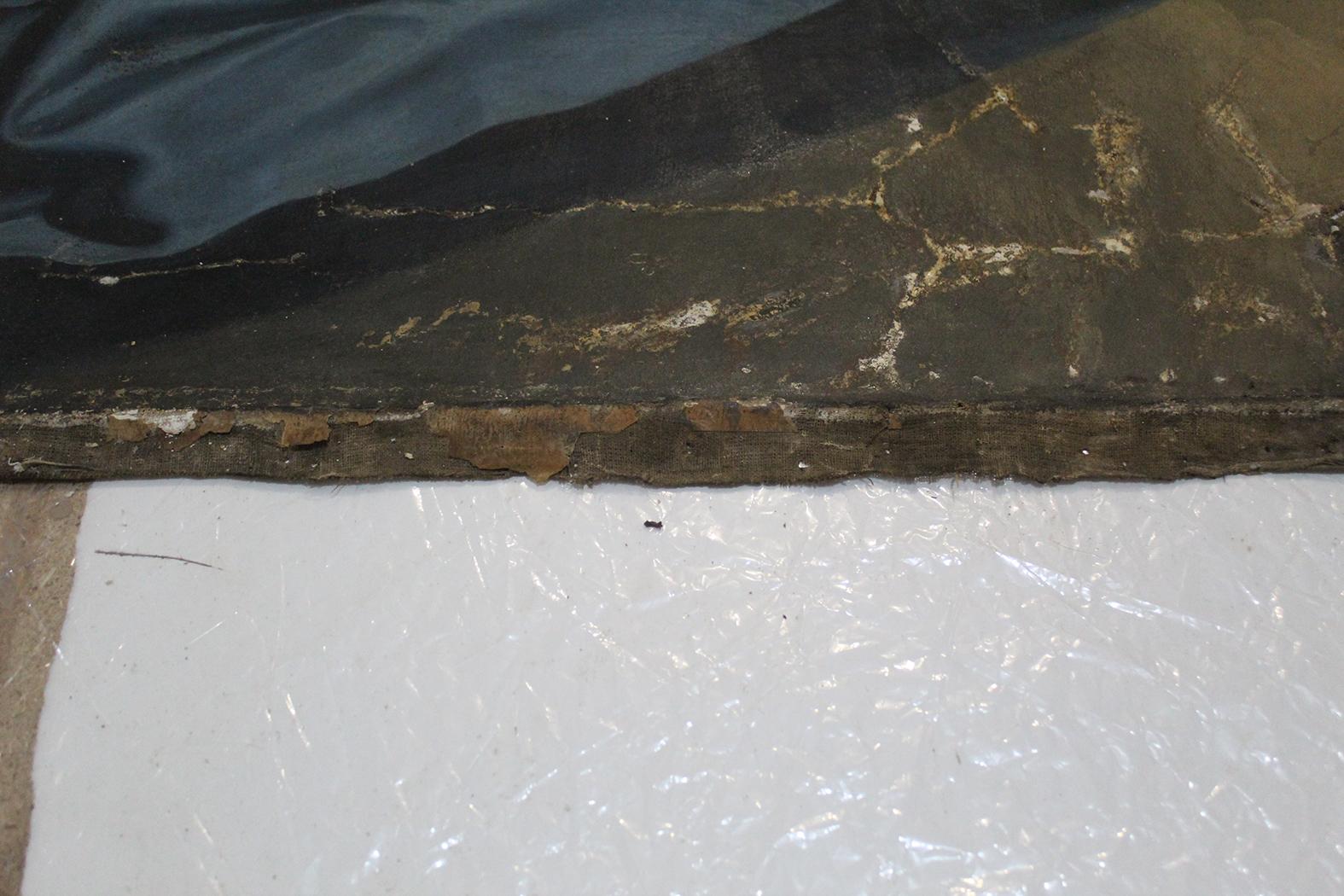
Various details showing the extensive damage and tears which the original canvas exhibited. Photo credit: ASC Conservation Centre Ltd.
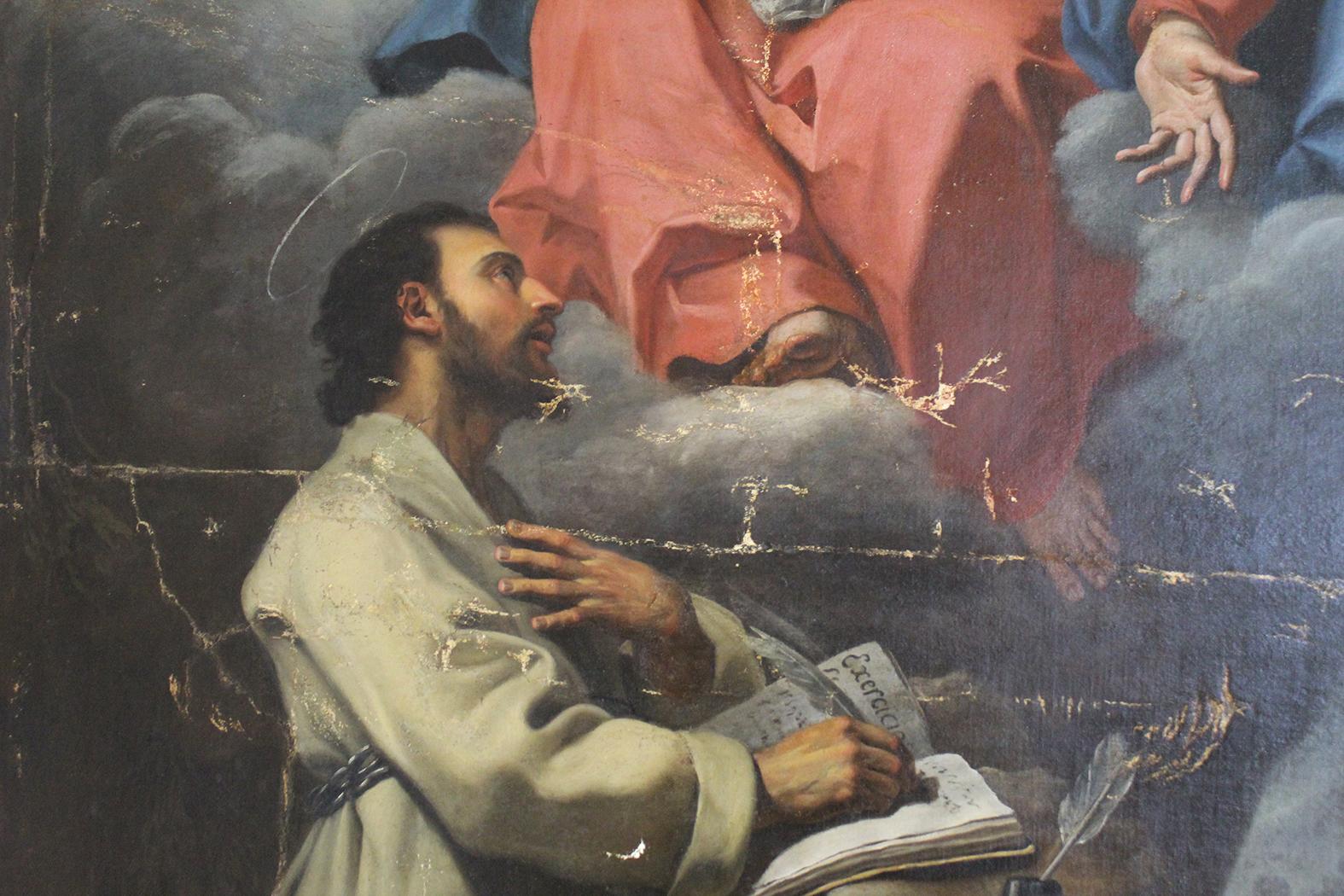
Various details showing the extensive damage and tears which the original canvas exhibited. Photo credit: ASC Conservation Centre Ltd.
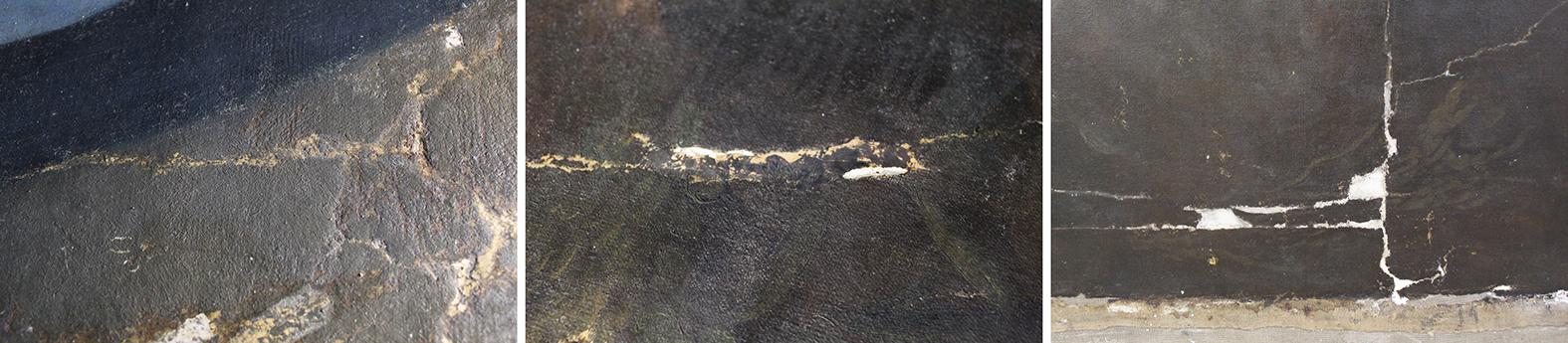
Various details showing the extensive damage and tears which the original canvas exhibited. Photo credit: ASC Conservation Centre Ltd.
The second captures a subsequent episode in that same spiritual trajectory: Ignatius setting aside his former life, divesting himself of his rich garments in favour of a beggar, and embracing the path of evangelical simplicity.
Taken together, the two compositions function as a deliberate moral invitation to those undertaking the retreat, drawing them toward a rupture from worldly attachment and an imitation of the saint’s own radical reorientation of life toward the ideals of Christian charity.
Conservation
The conservation and restoration of this painting by Favray was entrusted to ASC Conservation Centre Ltd. The restoration was carried out over the past year, and the Archdiocese of Malta highlighted in a statement that the restoration brought renewed clarity and vibrancy to the said artwork.
Following an initial, non-invasive scientific study carried out in the laboratory of ASC Conservation Centre, the conservators began removing layers of aged and yellowed varnish that were concealing the original tonalities of this fine painting. Cleaning treatments included the removal of overpaint and gesso, which were masking a network of canvas tears the painting had endured over the years.
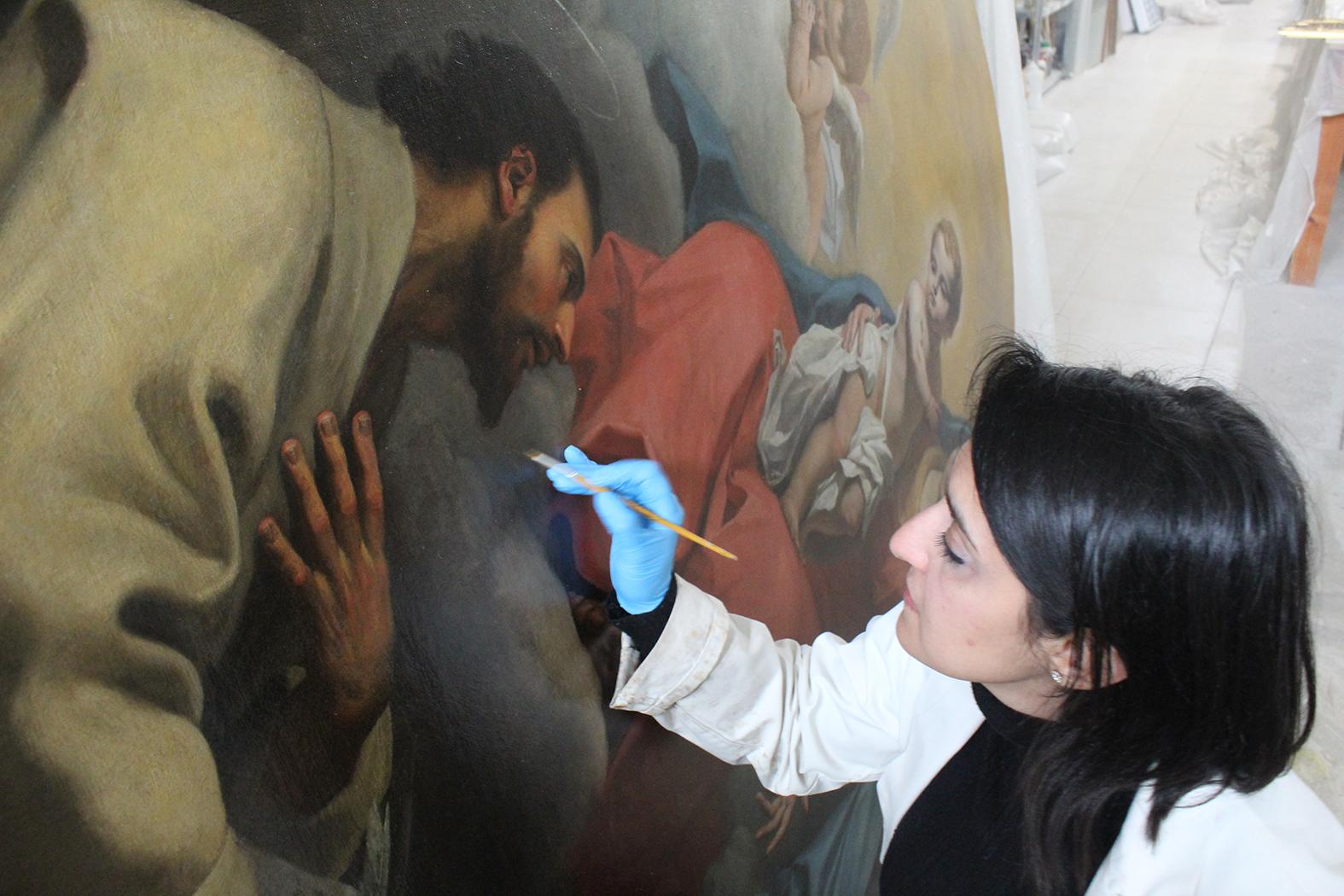 Founder/conservation director Amy Sciberras carrying out chromatic integration of infilled losses using reversible varnish colours. Photo credit: ASC Conservation Centre Ltd.
The extent and widespread distribution of the uncovered tears in the original canvas support were quite out of the norm and are usually encountered in paintings that have suffered war damage. Nonetheless, further archival research is needed regarding the painting’s physical history.
Previous restorers, in an attempt to conceal extensive damage to the canvas support, applied gesso and paint over the tears, which applications, unfortunately, greatly overlapped the original. Hence, in the latest treatments, Amy Sciberras and her team removed such gesso and retouchings, uncovering more of the original.
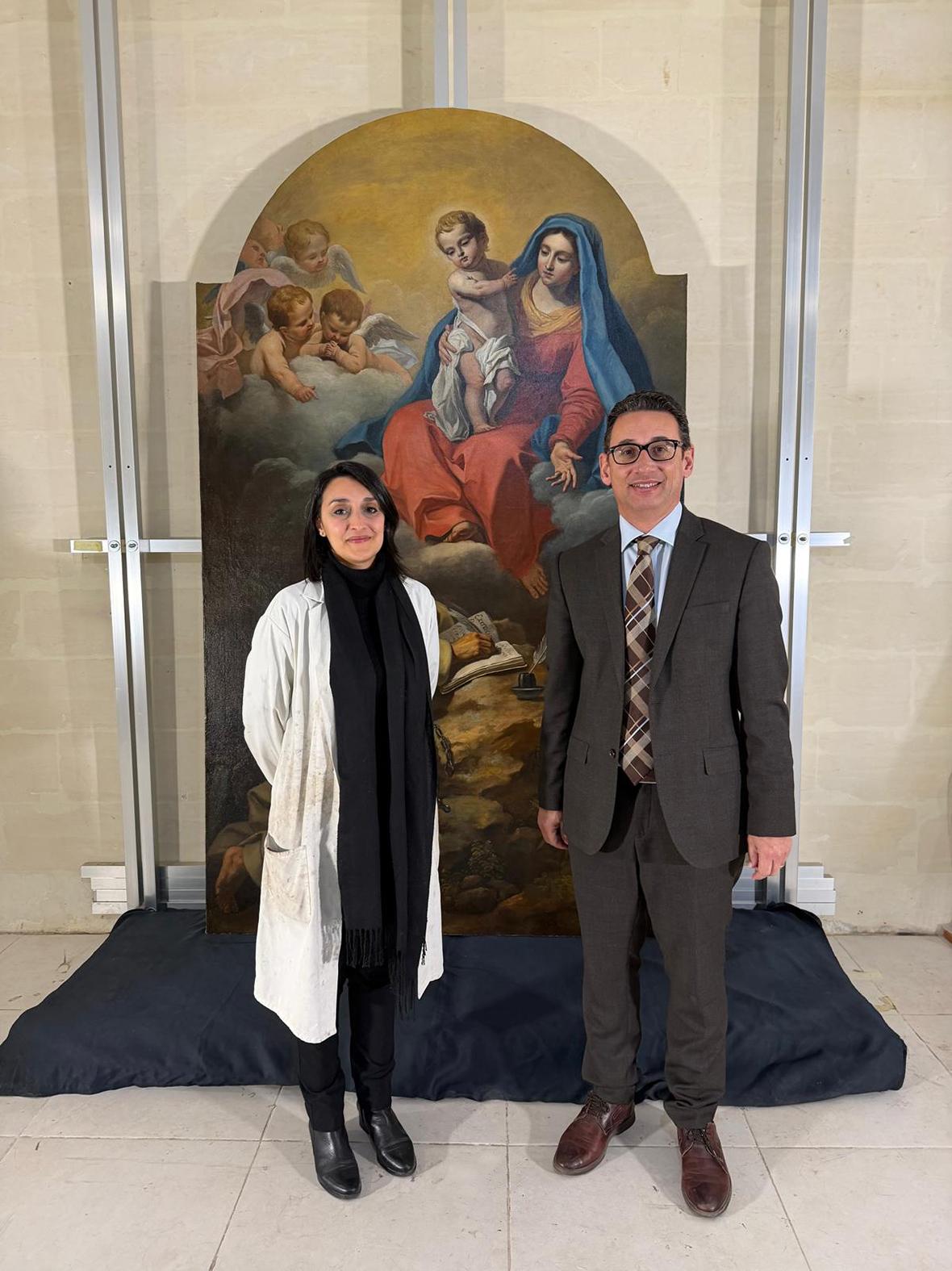 Administrative Secretary Michael Pace Ross during a visit at the conservators’ laboratory. Photo credit: ASC Conservation Centre Ltd.
The removal of past interventions also included the removal of a secondary canvas support that was attached to the verso of the original (lining process). The removal of the old lining canvas and the organic glue applied by past restorers to attach this secondary support, enabled the conservators to mend tears and carry out canvas repairs using current techniques.
Cut threads were re-woven under magnification and reinforced. The painting was also re-lined, fully stabilising the canvas support, and then re-stretched on a newly manufactured stretcher frame, which allowed the proper tensioning of the canvas painting.
Ultimately, losses in the ground and paint layers were infilled and chromatically integrated, following the ethics and principles of modern conservation, whereby all materials and treatments employed are compatible with the original, reversible and re-treatable.
The unveiling of the restored painting by Archbishop Charles Scicluna, in the presence of Auxiliary Bishop Joseph Galea-Curmi, fittingly marked the closing of this chapter of renewal, reaffirming Casa Manresa’s enduring significance – across its successive incarnations as retreat house, military hospital, seminary, school, and today the Archbishop’s Curia – as a living testament to Malta’s religious, artistic, and cultural heritage.
Acknowledgement
We would like to sincerely thank His Grace Mgr Charles J. Scicluna, Archbishop of Malta, for supporting this project.
Rev. Prof. Nicholas Joseph Doublet is the diocesan archivist. Michael Pace Ross is the administrative secretary of the Archdiocese of Malta. Amy Sciberras is the founder and director of fine arts restoration company ASC Conservation Centre Ltd and may be contacted via e-mail info@amysciberras.com