Urgent reform is vital to stop children paying price of parental conflict
When parents cannot agree, the law must protect the child, insists Marie-Louise Coleiro Preca
Malta places children’s welfare at the heart of its laws and international commitments but the real test of this principle comes when family relationships break down and parents are no longer able to agree on their children’s long-term well-being.
I am being inundated with pleas for help in cases where professionals working with children and families are encountering difficult situations where important decisions are delayed or blocked because one parent refuses to give consent.
Sometimes, the disagreement concerns participation in sport, the arts or another activity that would support the child’s development. In other cases, it involves access to psychological support, specialised intervention or medical treatment.
These are not abstract disputes but real situations where children risk losing valuable opportunities, going without the support they need or waiting for treatment while the adults responsible for their care remain locked in conflict.
Malta has developed an important legal and policy framework to safeguard children, particularly within family life. The Constitution, the Civil Code and Malta’s ratification of the UN Convention on the Rights of the Child all enshrine the principle that a child’s welfare must be paramount.
Under Maltese law, parental authority is generally exercised jointly. This reflects the right and responsibility of both parents to remain involved in their children’s upbringing, including after separation.
It is a sound principle and, where parents are able to cooperate, it serves children well. The difficulty arises when that cooperation breaks down.
In high-conflict situations, joint decision-making can lead to prolonged deadlock. One parent may effectively block a decision, even when it concerns the child’s health, education or development. This raises serious questions about whether the present legal framework offers sufficient protection to children in time-sensitive situations.
The Family Court plays an essential role in resolving such disputes, supported by invaluable contribution of child advocates and other professionals. Yet, court proceedings are not always suited to decisions that directly affect a child’s daily life, as these can take time, involve considerable expense and place further strain on families already facing difficult circumstances.
Children also experience time differently. A delay of weeks or months can make a significant difference to their development, particularly when therapy, specialised support or medical treatment is concerned.
The same applies to opportunities that help children build confidence, develop their talents and form friendships through sport, cultural activities or other forms of participation. What may appear to be an ordinary procedural delay can have lasting consequences for a child.
There is also a financial reality that cannot be ignored. Families drawn into repeated legal disputes face escalating expenses, diverting resources away from a child’s needs. In effect, children are doubly disadvantaged, first by the conflict itself, then by the economic strain it creates.
The judiciary and the government must act with immediate resolve- Marie-Louise Coleiro Preca
This situation exposes a critical need to reassess how the principle of the child’s best interests actually operates within Maltese law. While the legal framework is sound in principle, its application must evolve to address the realities of high-conflict separations.
It also highlights the importance of adopting a genuinely child-friendly justice approach, which ensures that legal and administrative processes are accessible, timely, responsive and centred on the rights, needs and voices of the child.
Reform is necessary and urgent. Clearer legal provisions are needed to allow decision-making authority to be delegated in defined areas such as education, extracurricular development and healthcare when persistent disagreement prevents decisions from being taken.
Disputes involving a child’s health and development have to be fast-tracked and made within timeframes that reflect the urgency of the child’s needs.
The role of mediation must also be strengthened. While mediation is already an integral part of family proceedings, its effectiveness depends on both accessibility and enforceability.
In cases where conflict remains persistent, Malta should also consider more structured parenting coordination mechanisms, as used in other countries, to help parents manage recurring disputes and reduce unnecessary returns to court.
Incremental adjustments alone, however, are not enough. We need a clear decisive policy direction that places children firmly at the centre of all decision-making when their parents separate.
A genuinely child-friendly justice system must be accompanied by continued investment and specialised training for professionals who work with children and families, be it members of the judiciary, lawyers, mediators, social workers, psychologists, or child advocates.
The judiciary and the government must act with immediate resolve. Legislative amendments, procedural reform and investment in family support services must be prioritised to ensure no child is denied access to care, development or opportunity because of conflict between their parents.
Courts or competent authorities must also be empowered to make binding and timely decisions where one parent’s refusal to consent is demonstrably contrary to the child’s best interests.
This is not simply a matter of legal refinement but one of responsibility. Malta cannot continue to uphold the principle of the child’s best interests in theory while allowing it to be compromised in practice.
Children cannot wait for systems to catch up with their needs as their development, health and well-being are time sensitive. The longer this issue remains inadequately addressed, the greater the cost will be, not only to individual families but to society as a whole.
The time for acknowledgement has passed. What we require is clear, targeted, and immediate action to ensure every child, regardless of their parents’ circumstances, receives the protection, care and opportunity they are entitled to under the law. This is not just a legal obligation but a moral and ethical one.
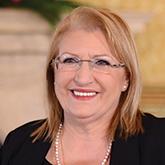
President Emeritus Marie-Louise Coleiro Preca is founder and executive chairperson of the Malta Foundation for the Well-being of Society.