The values of an IB education
In a world of acronyms, for IB, the word “international” is our North Star
Recently, I have had many candid conversations with parents about why they chose Verdala International School. These dialogues made me realise a significant teaching opportunity: while our community is vibrant, some families may have joined before the board solidified our commitment as a dedicated International Baccalaureate (IB) World School.
While many find us through word-of-mouth, it is vital to articulate that my decision to join the school – and that of many of my colleagues – is founded in a professional commitment to IB values. We believe the IB framework represents the pinnacle of educational excellence. To understand our school, one must ask: what does it truly signify to be an IB school today?
Established in 1968 in Geneva, Switzerland, the IB was designed to offer a comprehensive educational continuum for students aged three to 19. In a world of acronyms, for IB, the word “international” is our North Star. The philosophy is built on the belief that despite diverse backgrounds, education must build bridges between cultures rather than walls.
Looking back at its creation in the shadow of World War II, the global community stood at a crossroads. Philosophers and educators were haunted by an urgent question: how can we cultivate a generation with the wisdom and empathy to avoid repeating the catastrophic mistakes of the past?
If we want a different world, we must teach differently, fostering a sense of responsibility that extends globally
Post-war educators recognised a need for a curriculum that transcended national boundaries, promoting intercultural understanding instead of nationalistic pride. There emerged a rare opportunity to promote education for the ‘global citizen’.
This vision was about a moral obligation to the world, teaching young people that their identity is inextricably linked to the collective future of humanity. The architects of the IB understood that if we want a different world, we must teach differently, fostering a sense of responsibility that extends globally.
The pillar of this framework is ‘international-mindedness’, an active engagement with the world and a celebration of diversity. This is relevant at Verdala because many of our students lead ‘transnational’ lives. As the world became increasingly globalised in the 1960s, mobile families – diplomats, NGOs and international business leaders – faced challenges with varying national school systems.
Consequently, post-World War II, many not-for-profit foundation schools were established for these parents in cities around the world. These schools overwhelmingly chose the IB because it offered a portable, globally recognised and philosophically consistent education that could follow a child across continents without losing its soul.
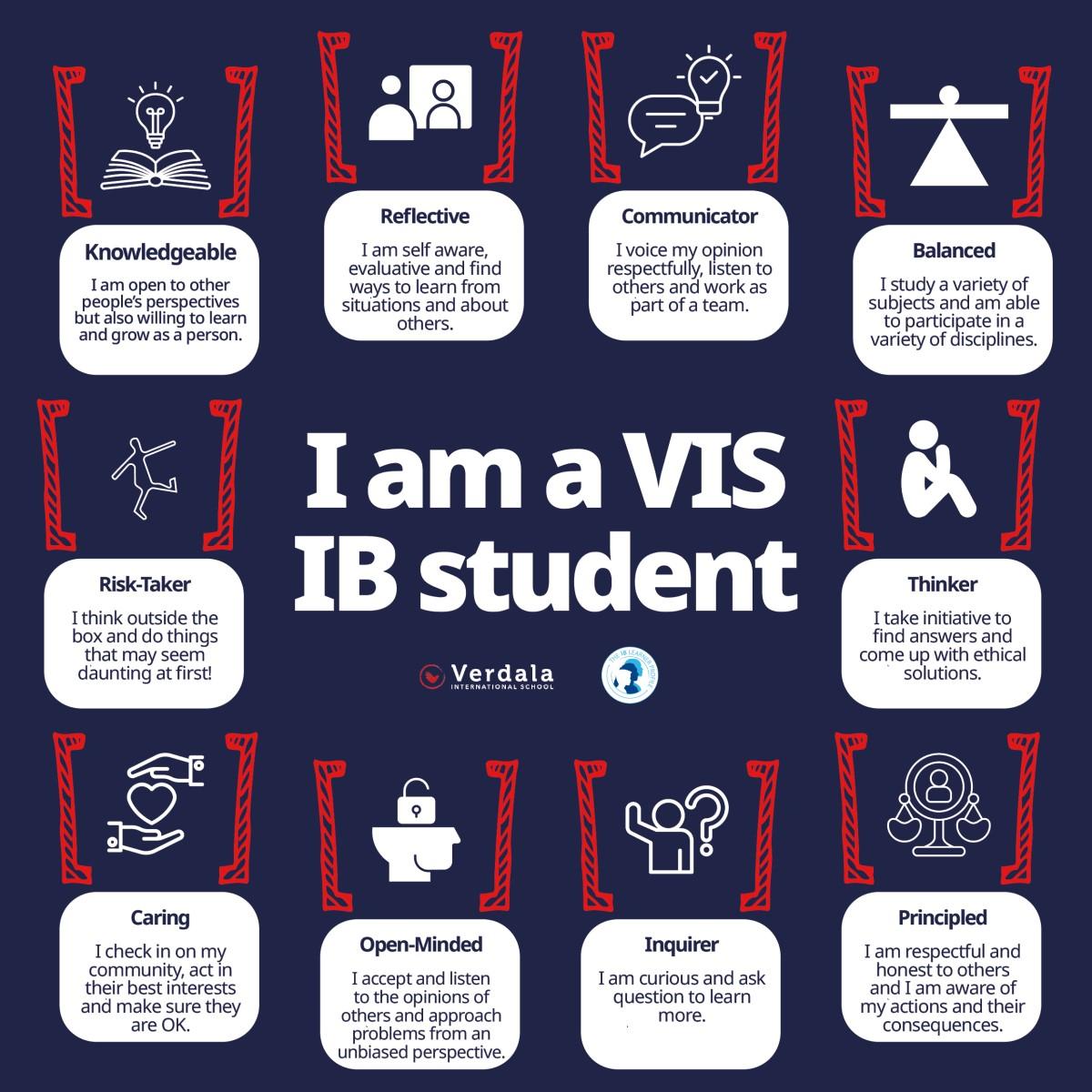 Verdala International School believes the IB framework represents the pinnacle of educational excellence.
The IB’s foundation was constructed by three visionary sources. First, teachers at the International School of Geneva sought a common curriculum to provide a ‘passport’ to higher education. Second, French educator Marie-Thérèse Maurette argued in her 1948 handbook that students should view the world through a lens of shared humanity.
Finally, Alec Peterson, the first director general, was instrumental in designing the Diploma Programme (DP). Now the gold standard of university preparation, the DP focuses on holistic development through the Creativity, Activity and Service (CAS) requirement and independent research via the Extended Essay (EE), giving students a head start in critical analysis.
Portability is a practical advantage, but what I admire most is the emphasis on interdisciplinary learning. The mandatory Theory of Knowledge (ToK) course challenges students to ask, “How do we know what we know?”, linking subjects rather than isolating them. This transforms education from a static noun into a dynamic verb – a process of making a difference.
Today, the IB Continuum includes the primary and middle years programmes, growing from the initial 29 students taking exams in 1970 to include over 5,000 schools in 150 countries. Verdala is proud to be part of this community, dedicated to shaping the leaders of tomorrow.
Davina McCarthy is head of Verdala International School.