Qolla l-Bajda Battery – its construction and role during the French invasion
A closer look at a dilapidated Knights-era battery, which is being restored
Built on a promontory between Qbajjar and Xwejni bays, this gun-battery is semi-circular, partly ringed by a parapet with six embrasures, with its gorge occupied by two blockhouses linked together by a short loopholed wall containing the main gate.
The flanks of the blockhouses overlooking the main entrance into the battery were pierced with musketry loopholes.
A low flight of steps provided access, via a wooden drawbridge, to the main entrance. A sea-filled moat protected the seaward front of the battery. The Qolla l-Bajda Battery has undergone considerable alterations to its structure, among which were those made to convert it into a catering and entertainment venue.
The construction of the battery was ordered in 1715 by French military engineers headed by Brigadier Louis François d’Aubigné de Tigné and Charles François Mondion as second-in-command, who visited the islands to enhance the defences of the islands’ bays.
As with the case of other works conducted on various fortifications, towers, batteries and entrenchments, detailed costings were listed for the construction of various parts of the Qolla l-Bajda Battery.
These included excavation works for the ditch, various parts of the parapet (parapetto) wall, including the part with the embrasures (parapetto a troniere), the gun platform (plataforma), the counterscarp (contrascarpa), the walls of the blockhouses, partition walls (muri di tramezzo), the roof stone slabs (balate di copertura, or xorok in Maltese), the walls around the doorway, stones for the platform (plataforma), the terrace (terrazza), the arches, the cistern, the water canals and the stairs. These works cost 823 scudi, two tari and 17 grani.
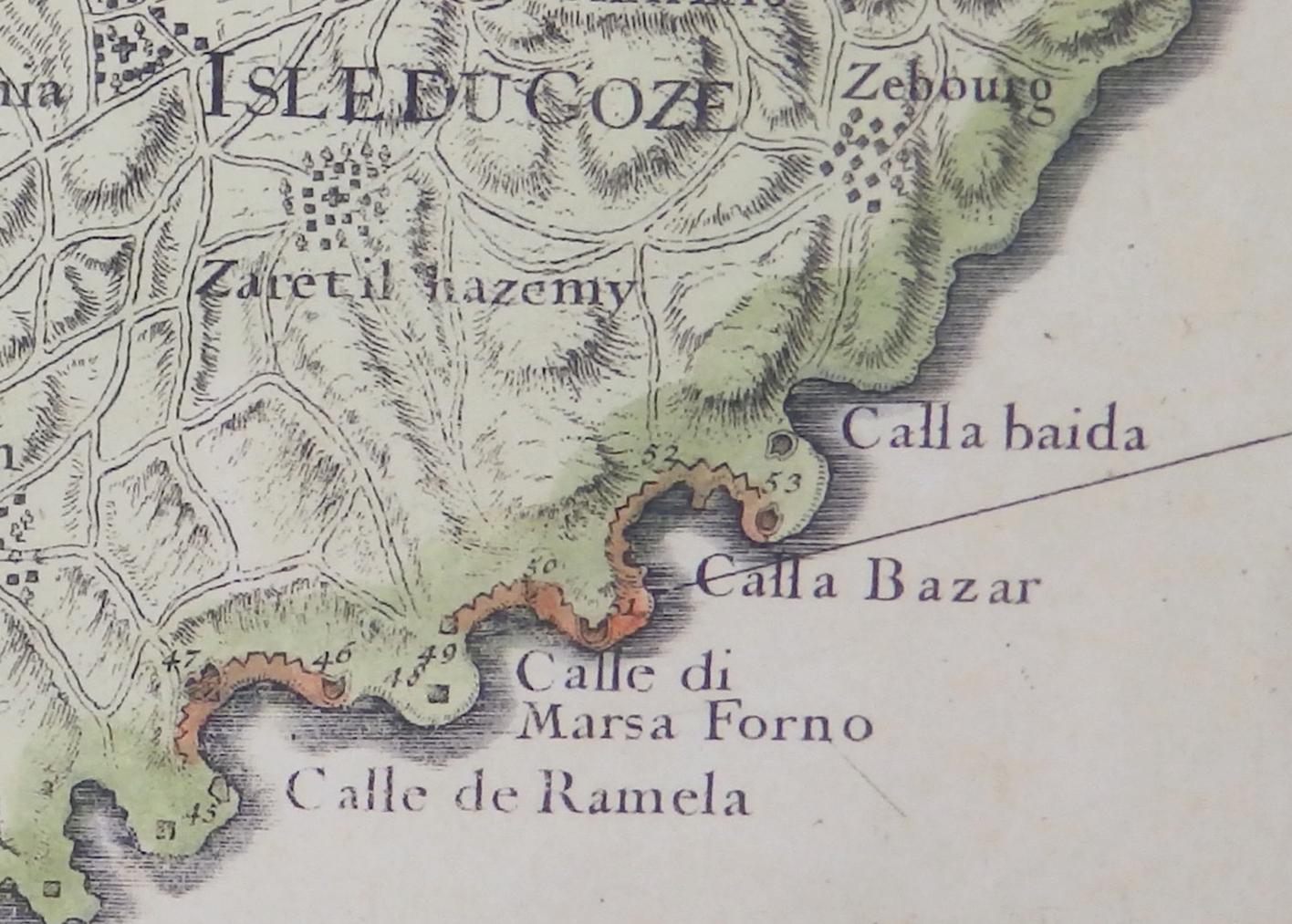 Detail of a 1726 map of the Maltese islands by Claude-Auguste De Berey.
It is interesting to note that the French engineer Philippe Maigret also presented his estimate of costs to see if this compares well with the approved estimate of works.
This practice is still used today when we compare the bill of quantities and estimate of costs prepared by the appointed architect with the estimates presented by the contractors.
Entrenchments – irregular walls erected along places accessible to enemy embarkation – were also proposed at Qbajjar in conjunction with the battery and Xwejni in 1715 by the Grand Prior of France, Philippe de Vendome, who joined the military engineers in July 1715.
The battery was armed with six nine-pounder cannons, but early reports claim there was no store of gunpowder, thus rendering the battery useless for defensive purposes. In 1761, it was reported that there were six nine-pounder cannons; in 1770, it was documented that there were only four six-pounder cannons. It was also suggested to replace these with eight-pounder cannons.
The same document reported that there were 276 cannon balls, 60 gun shots, 55 supplies of gunpowder, 12 guns with bayonets, four spontoons and two Spingarde cannons. In 1785, the recommendation to supply the battery with eight-pounder cannons was accepted, and the battery was armed with these cannons.
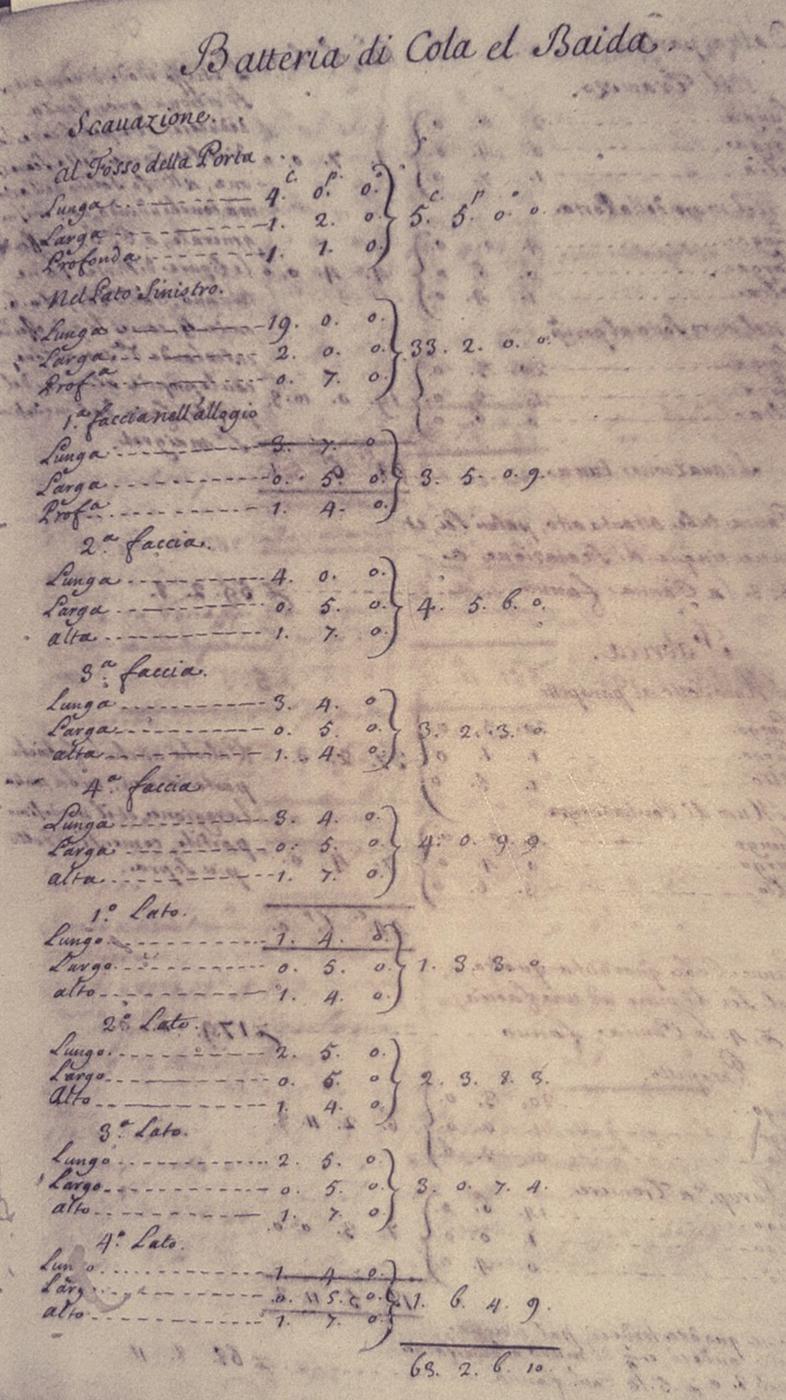
First page of a 1715 document giving details of expenses to build Qolla l-Bajda Battery.
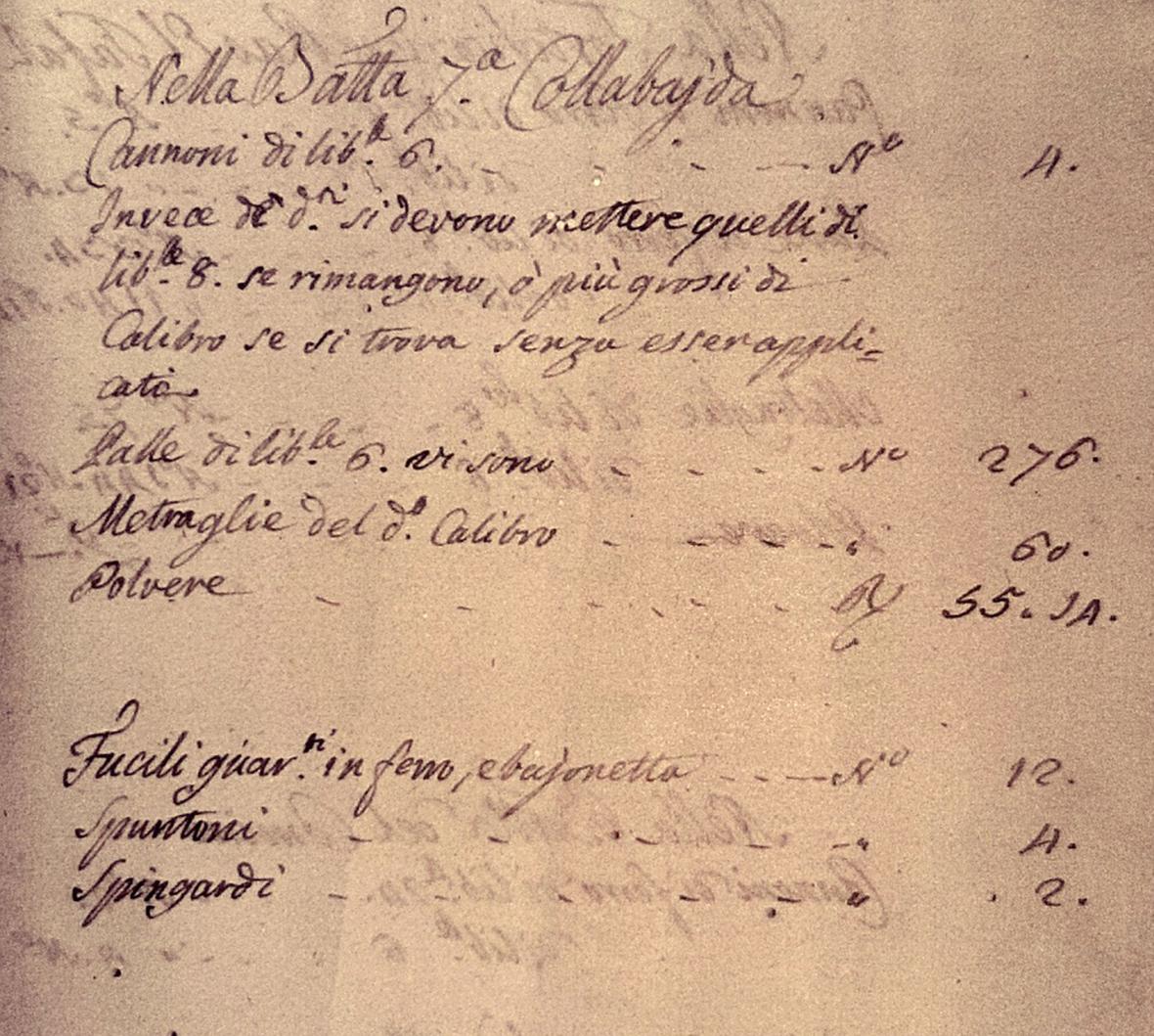
A 1770 report listing armaments found in the battery.
By the end of the century, many redoubts and batteries in Gozo were either abandoned or were in an unserviceable state. The Qolla l-Bajda and Ras il-Qala batteries were the only two equipped with gunpowder; the others had to transport it from the Gran Castello (the Citadel) in case of an attack.
When the French troops commanded by General Claude-Henri Belgrand de Vaubois arrived in 1798, most of Malta’s fortifications were not used to withstand the French enemy, also because most of the commanders of the troops were French knights.
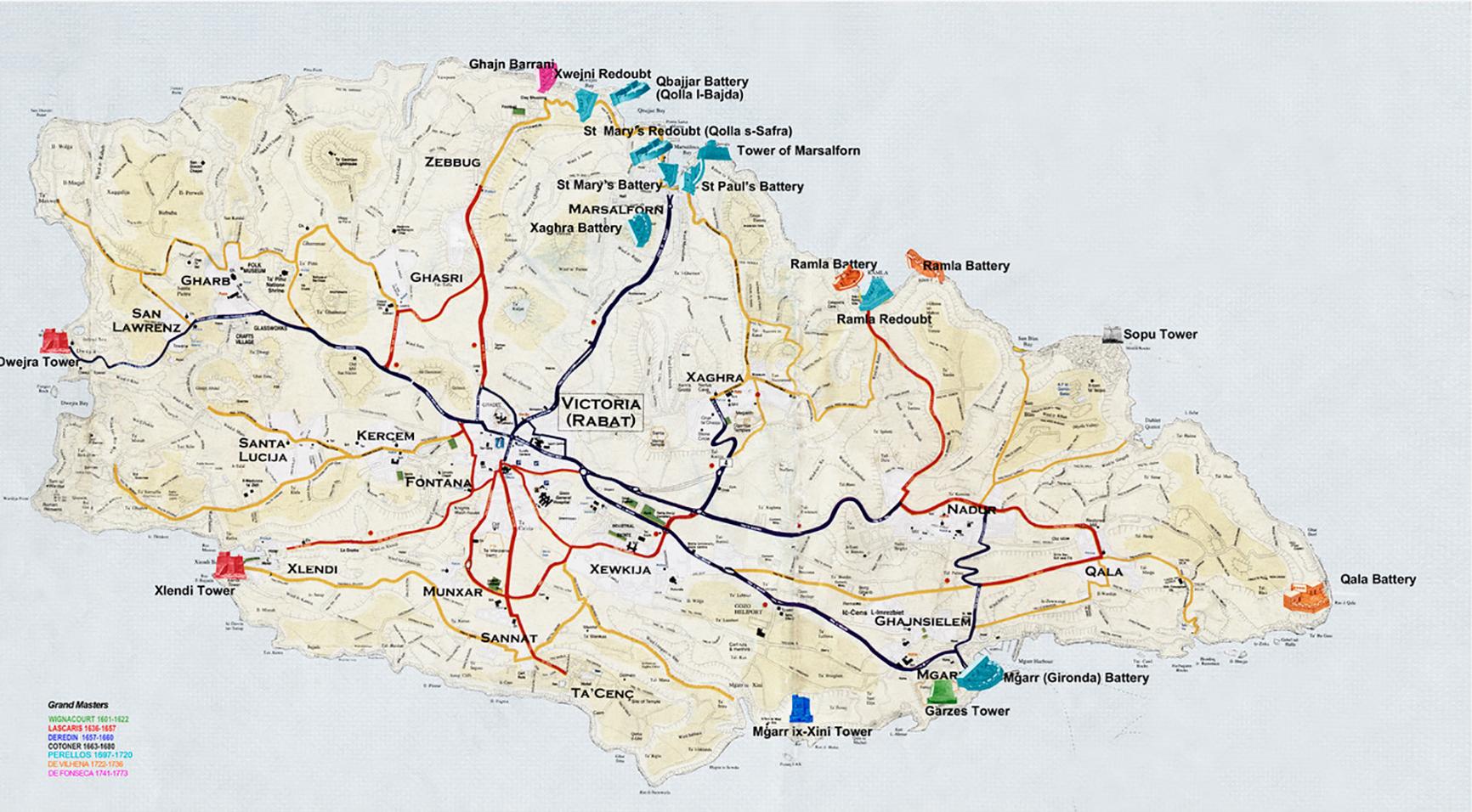 Map of Gozo surrounded with its towers and batteries.
The Seneschal knight who commanded the militia of the villages was Prince Camillo de Rohan. In Malta, his lieutenants were Bali Tomasi and Suffren S. Trope, the latter being in charge of the coast. Gozo was commanded by the French knight Pierre-Antoine-Charles de Mesgrigny de Villebertain. No wonder the French attack on the islands was a walkover!
Napoleon invaded Gozo on June 10, 1798 and landed at Daħlet Qorrot. The guns of Sopu Tower, which is within shooting range of the bay, opened fire to try to prevent the French army from disembarking.
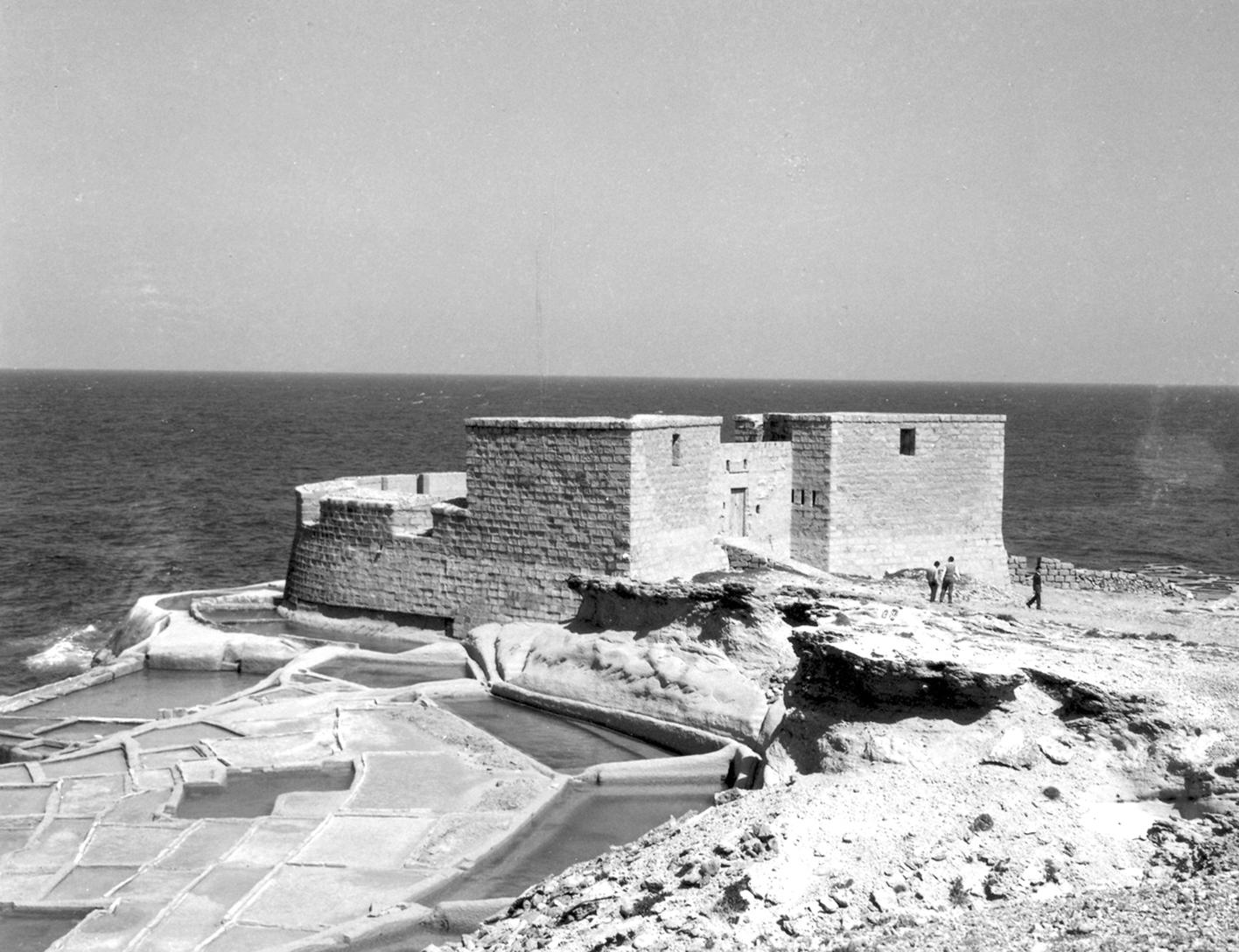 The Qolla l-Bajda Battery before alterations. Photo: source unknown
General Jean Louis Ébénézer Reynier, who was in command of the French, reported that, at the point of landing selected between the Sopu Tower and the battery of Ramla, enemy fire from the cliffs killed Sgt Major Bertrand, who was in the general’s boat. The French replied with heavy bombardment from the vessels Etoile and Pluvier.
By the end of the century, many batteries in Gozo were either abandoned or unserviceable. Qolla l-Bajda and Ras il-Qala batteries were the only two equipped with gunpowder
Apart from this exchange of fire during the landing, the French are not known to have encountered any other resistance in Gozo.
Given the presence of the Knights, Malta was considered a true bastion of the European continent, able to offer strong resistance to the advance of Ottoman power in Western Europe. The Maltese fortifications, including their coastal defences, exemplified the most advanced theories for defence. But all this did not prevent the French from taking over the island with very little resistance.
However, the French occupation of Malta lasted only two years as, in 1800, Britain assumed the role of defending Malta. After the Battle of Waterloo in 1815, when the French army under the command of Napoleon was defeated, the Maltese Provincial Battalions, the Malta Coast Artillery and the Battalion of Maltese Veterans were disbanded, and an infantry regiment called The Royal Malta Fencible Regiment was formed. Lieutenant Colonel Count Francis Rivarola was entrusted with raising the regiment.
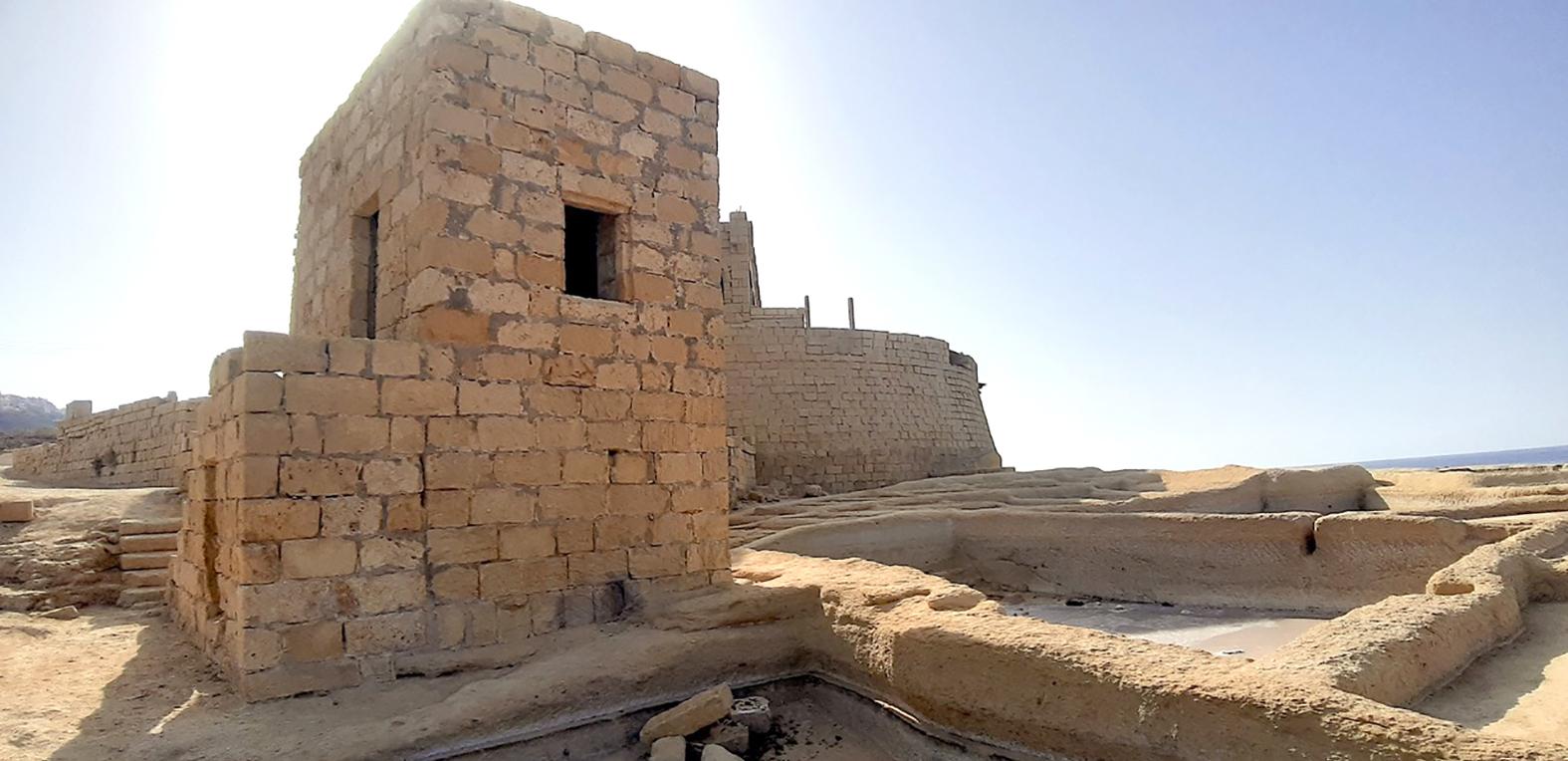 The room close to the battery that was probably used as a kitchen.
Qolla l-Bajda Battery – maintenance, alterations and its transfer to DLĦ
In April 1825, the three rooms of the Qolla l-Bajda Battery were whitewashed, one entirely, while the other two to a height of about 12 feet. The terraces and most of the pavement of two of the rooms had to be renewed, while two stone arches and the terrace of the other room were repaired.
Other restoration included renewing the roofing stones and terrace of the kitchen, as well as repairing the steps in front of the entrance. It is presumed that the kitchen was the two-storey building situated close to the salt pans on the eastern side of the battery. It was a common practice to have a room outside a defensive post to use as a kitchen.
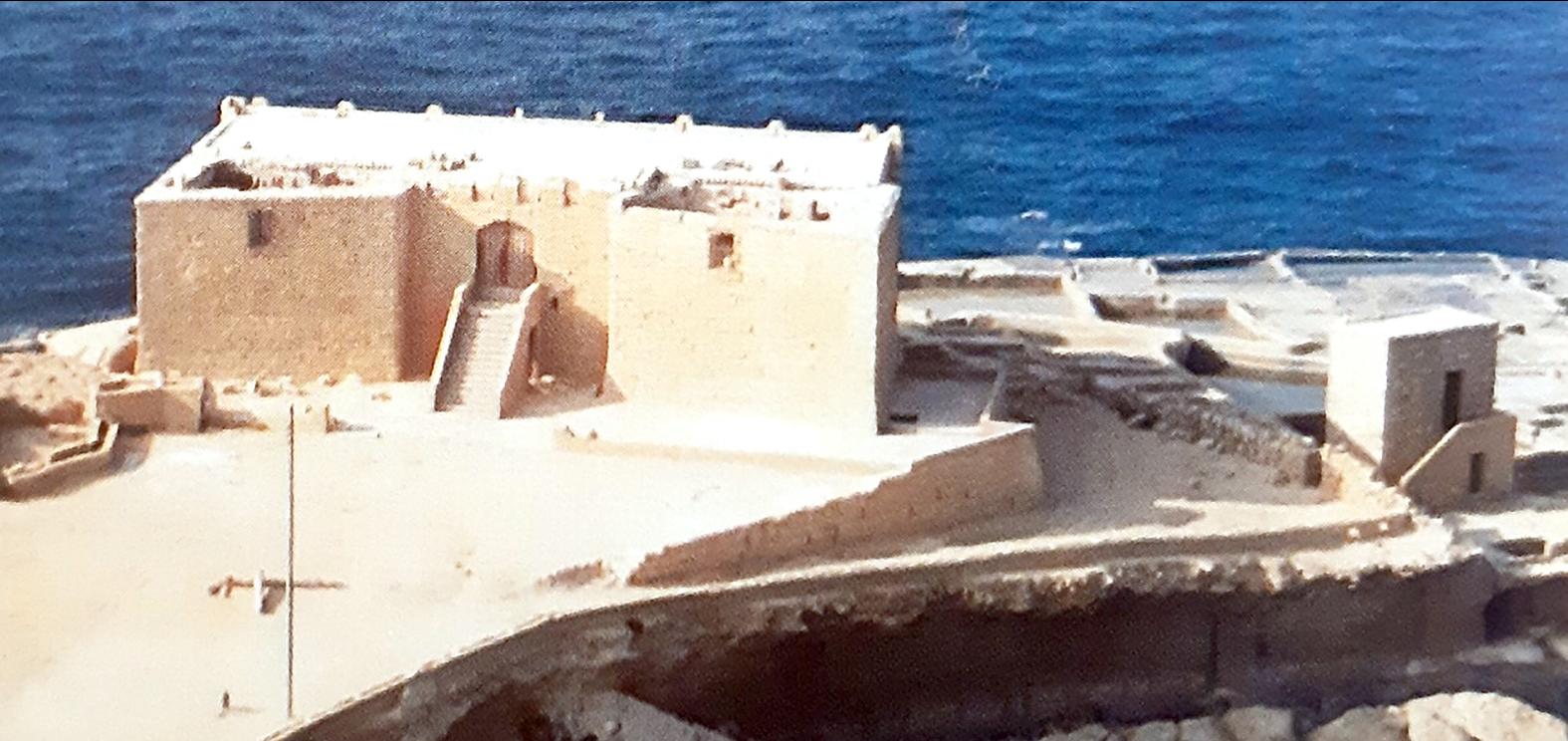 The battery in 1990
In September 1827, inspections were carried out on various fortifications and recommendations were documented to improve the state of maintenance of the properties. With regard to the Qolla l-Bajda Battery, the inspection concluded that “three rooms require to be whitewashed and their terraces repaired, as also a window in one of the rooms – the cistern requires also to be repaired”.
In another report dated February 11, 1829, and written by Col. George Whitmore, who headed the Royal Engineers Office between 1811 and 1829, Whitmore reported that the “Kollha Baydha” was built “for the fortification of the little cove on the north of the island called ‘Muyeg il Bahar’ – circular and enclosed at the gorge by two barracks communicated by a loopholed wall – it is occupied and in bad condition”.
He wrote that restoration required 505 cubic feet of masonry, 70 square feet of pavement, 450 square feet of roofing, 180 square feet of platforms and 4,500 square feet of pointing. It also required four doors and two shutters as well as repairs to other doors still in place.
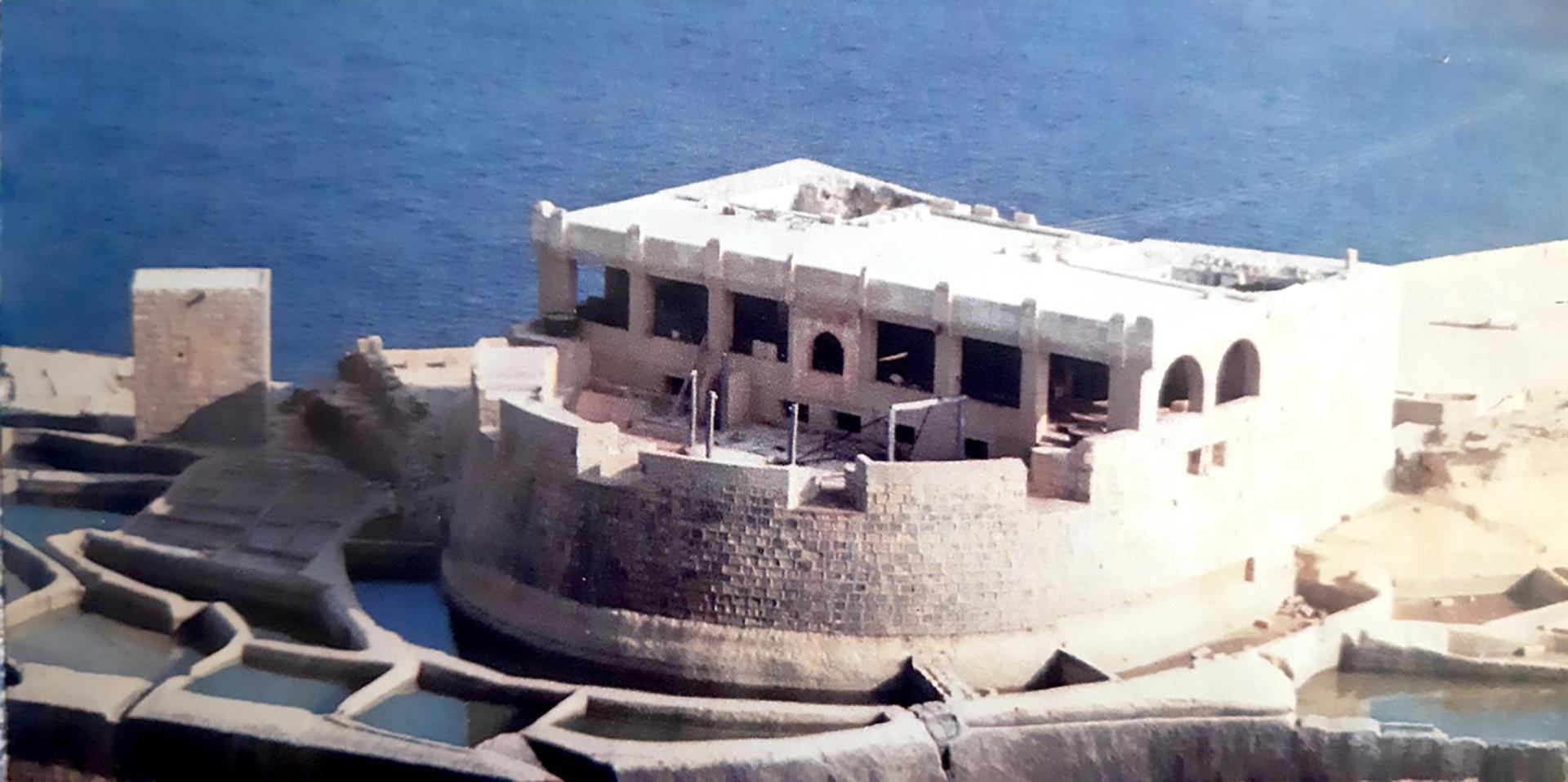 The battery pictured from a different angle in 1993.
Unfortunately, a considerable number of structural alterations were done to the battery
It is interesting to note that in old maps Qbajjar Bay is referred to as ‘Muieg il-Bahar’, referring to waves of the sea (mewġ meaning waves in Maltese).
A detailed map drawn up by a Maltese priest, Don Felice Cutajar, dated 1833, gives us the names of the coastal towers, batteries, entrenchments and the number of guns to be found in the coastal defences. In this map, the Maltese priest noted that there were six cannons on site. The nearby Qolla s-Safra Battery was armed with five cannons.
Subsequent visits by Royal Engineers reported that there were still six iron cannons, which were, however, unserviceable, and there was some ammunition on site.
During World War II, the battery was manned by reserve police constables as Observation Post No. 5.
In 1978, it was leased on a temporary emphyteusis for 25 years and transferred in 1981 to Rook Ltd for use as a bar, but it was converted into a discotheque after about five years. It served as a disco for about six years but was later on abandoned. Unfortunately, a considerable number of structural alterations were done to the battery during its latter use, which included the excavation of an underground space to increase the dance floor.
Photos dated to the early 1990s show that the roofs of the two blockhouses had collapsed but were repaired using concrete when the battery was used as a restaurant towards the end of the 1990s. In 1999, the Planning Authority apparently issued an enforcement order for illegal structures that had been erected, but nothing was done to reverse the damage.
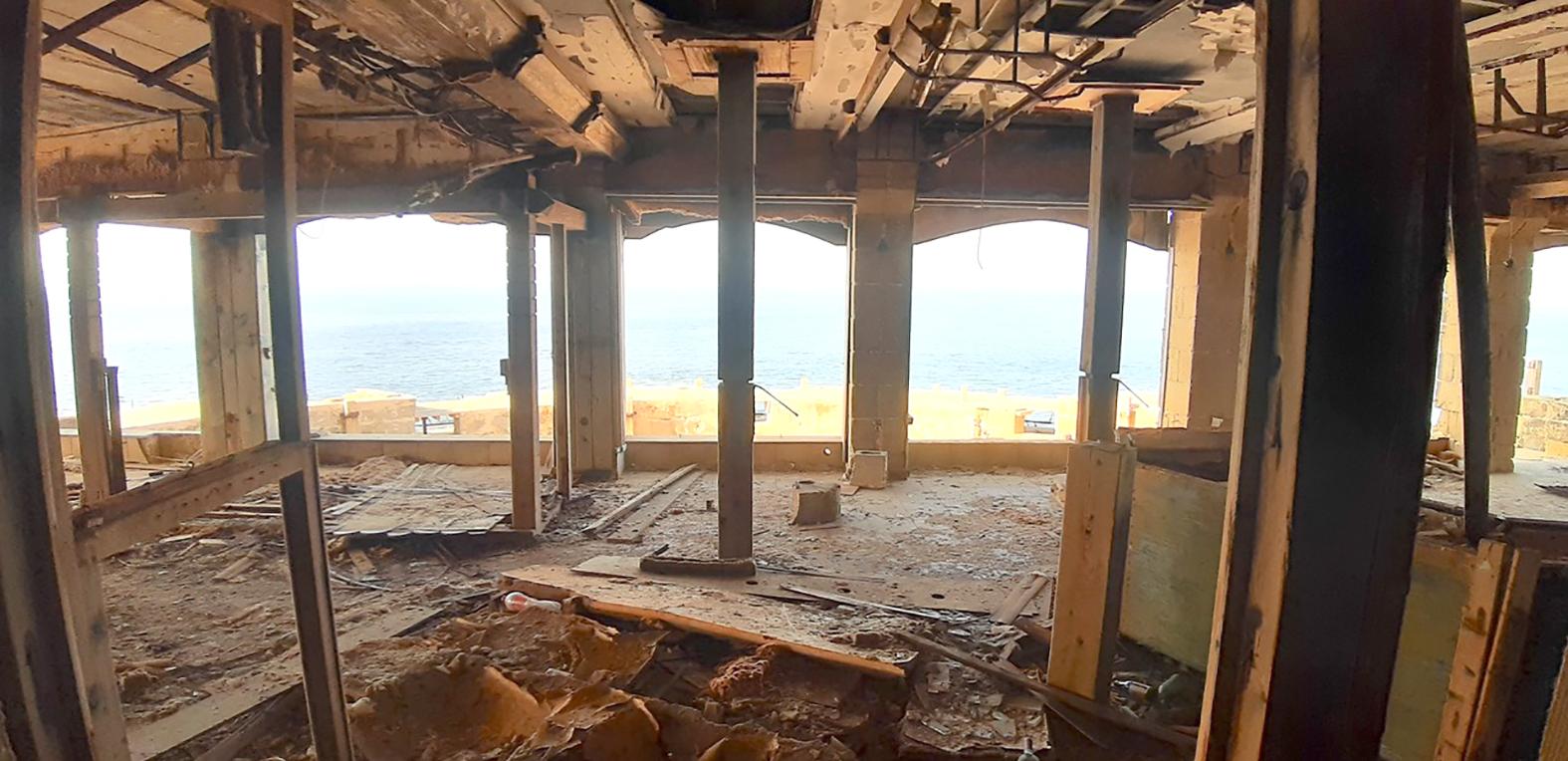 Drastic changes to the parapet of the battery.
Despite all policies and procedures to protect Malta’s heritage and historic places, Qolla l-Bajda Battery underwent extensive alterations when it was used as a bar and nightclub. An external flight of steps was built in 1981 when the place was transferred to Rook Ltd. An underground space was created, comprising a central large area for people to socialise and dance. This was accessible both through an opening under the outside staircase or through a flight of steps from the landward side of the gun platform.
Two other underground rooms, one on each side of the central one, were used as a sitting area and as a kitchen. Toilets were also installed close to the seating area. The underground kitchen was connected via a spiral staircase with the blockhouse on the battery’s right side above ground, which was converted into a kitchen, and its walls were tiled all around.
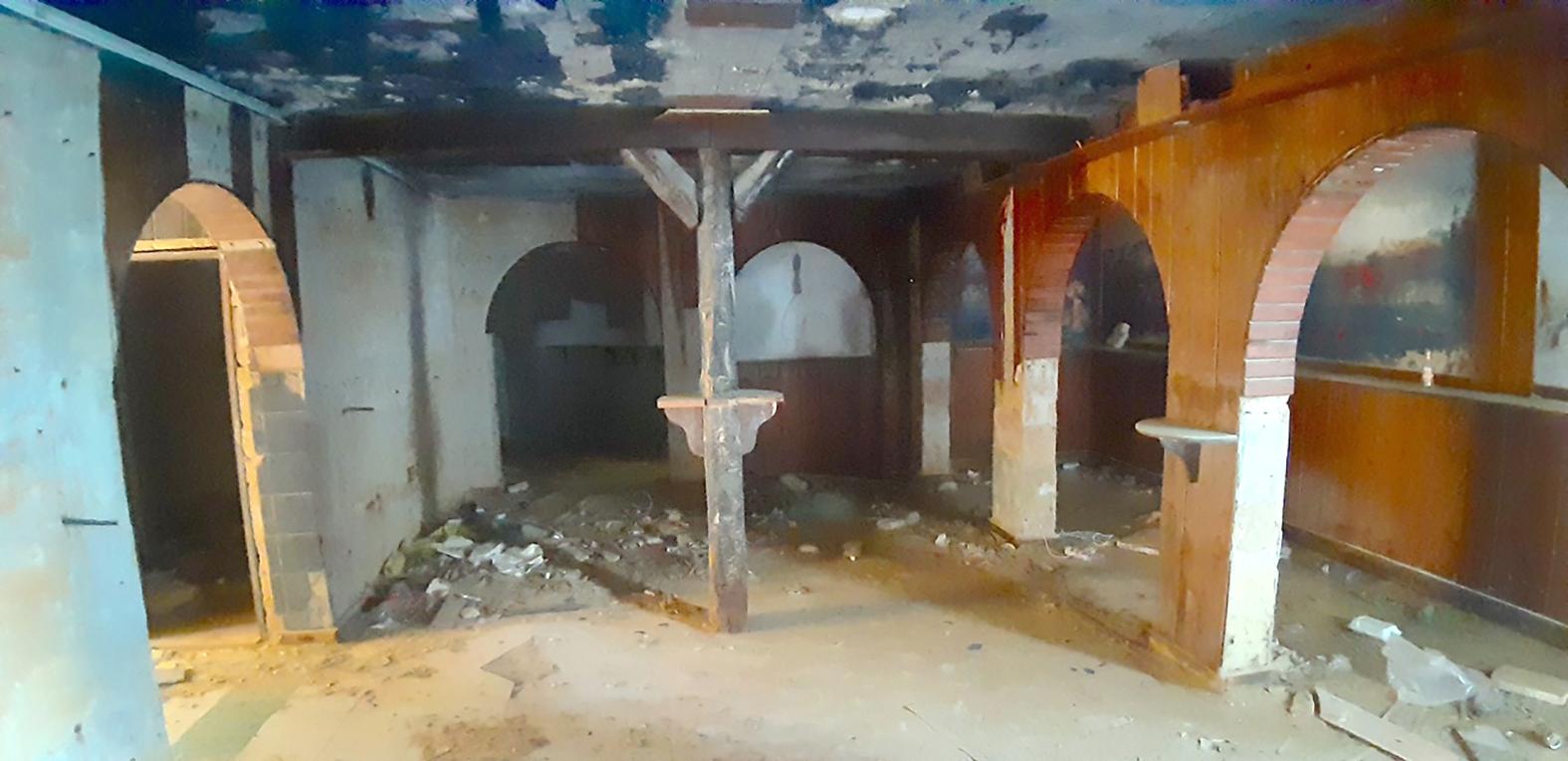 Underground space created within the battery after alterations.
The blockhouse on the left was used as a sitting area, but part of it was enclosed with a dividing wall and used as a toilet. This toilet was tiled halfway up. The wall between the two blockhouses was not tiled, but trenches were dug internally to pass a number of cables and pipes.
The outside gun platform was not spared. The parapet wall was tiled, and the original embrasures where the cannon used to lie were covered. The inner area between the two blockhouses was roofed with concrete, and this roof was extended over part of the gun platform.
Limestone columns were erected on the platform to further support this roof on the seaward side. This further increased the indoor area when it was used as a nightclub and a restaurant. Arches were built of limestone on the sides and back part of this area and closed with glass windows. Doorways were opened in the back parts of both blockhouses for easy access to this area.
The outside room that was used as a kitchen during the British period was probably not modified but a space was dug underground close by and divided into two rooms by a wall. This space was probably used for storage.
In June 2013, when the lease of the battery expired, the Planning Authority included the site in the National Inventory of the Cultural Property of the Maltese Islands. The site was scheduled as Grade 1 in 1995.
In 2003, the lease expired, but the tenant refused to return the land to the government despite an eviction order by the Lands Department. Unaware of the legal struggle going on, the non-governmental organisation Din l-Art Ħelwa had expressed its interest in restoring the battery on various occasions. The government informed the NGO on September 7, 2007, that it would evict Rook Ltd from the battery and hand it over to the NGO. The previous owner, however, went to court seeking a precautionary injunction against the eviction on the basis of a lack of a fair hearing.
The legal struggle went on until 2021, when Din l-Art Ħelwa was informed by the superintendence of cultural heritage by letter dated May 6 that the minister responsible for cultural heritage had recommended that the battery’s guardianship be granted to the association.
The superintendence also notified the Lands Authority that the battery was to be transferred to the superintendence. The latter requested DLĦ to start preparing the preliminary documentation, including a comprehensive restoration proposal and feasibility study, which it did.
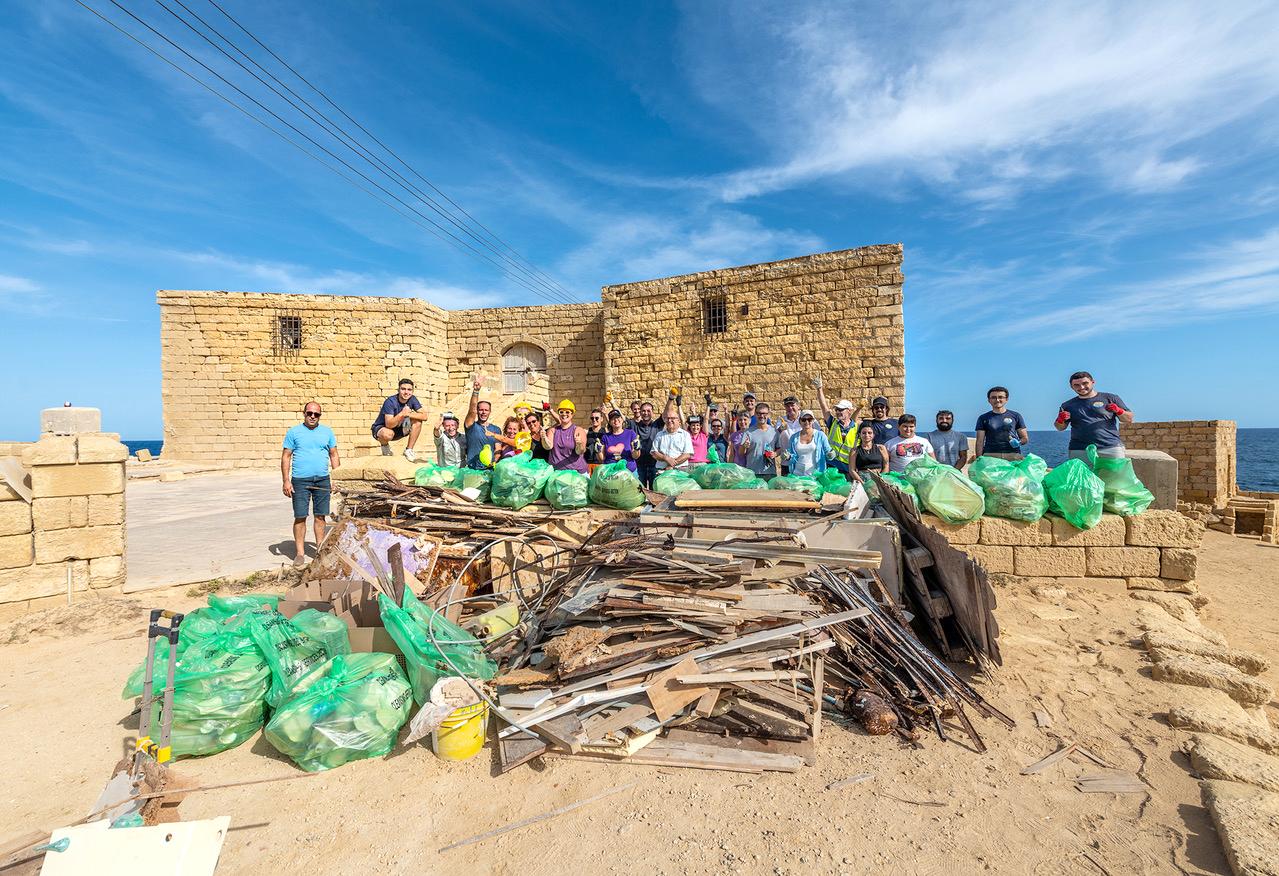 Participants in a clean-up of Qbajjar Battery held on October 22, 2023.
In January 2025, it was reported in the local media that the relevant authorities would be carrying out works to eliminate any structural danger at the battery. To the surprise of the association, in November 2025, the government announced it would be giving the battery for commercial use.
Din l-Art Ħelwa was always against plans to commercialise the battery and urged the minister responsible for lands and cultural heritage to reconsider this decision and direct the Lands Authority to release the property so that it may finally be restored and managed under a guardianship deed for the benefit of the nation.
Din l-Art Ħelwa intends to restore the building above ground to its original state. This will not be an easy job, as most accretions will have to be removed.
Stanley Farrugia Randon is Din l-Art Ħelwa vice president.