Why the waltz still rules the world
Peter Hosek on bringing Vienna’s musical magic to Malta
Johann Strauss wrote music more than 150 years ago, yet audiences across the world continue to fill concert halls to hear it. What is the enduring appeal of his music?
Strauss speaks the universal language of joy. His melodies carry an immediate warmth – you need not understand a single note of theory to feel your pulse lift the moment the first bars of a waltz begin. There is an alchemy in his music: elegance without arrogance, sophistication that still invites everyone onto the dance floor. More than a century and a half later, in a world that grows faster and louder by the day, his music offers exactly what we crave more than ever – a moment of grace, of shared beauty, of simply feeling alive together. That is what makes it timeless.
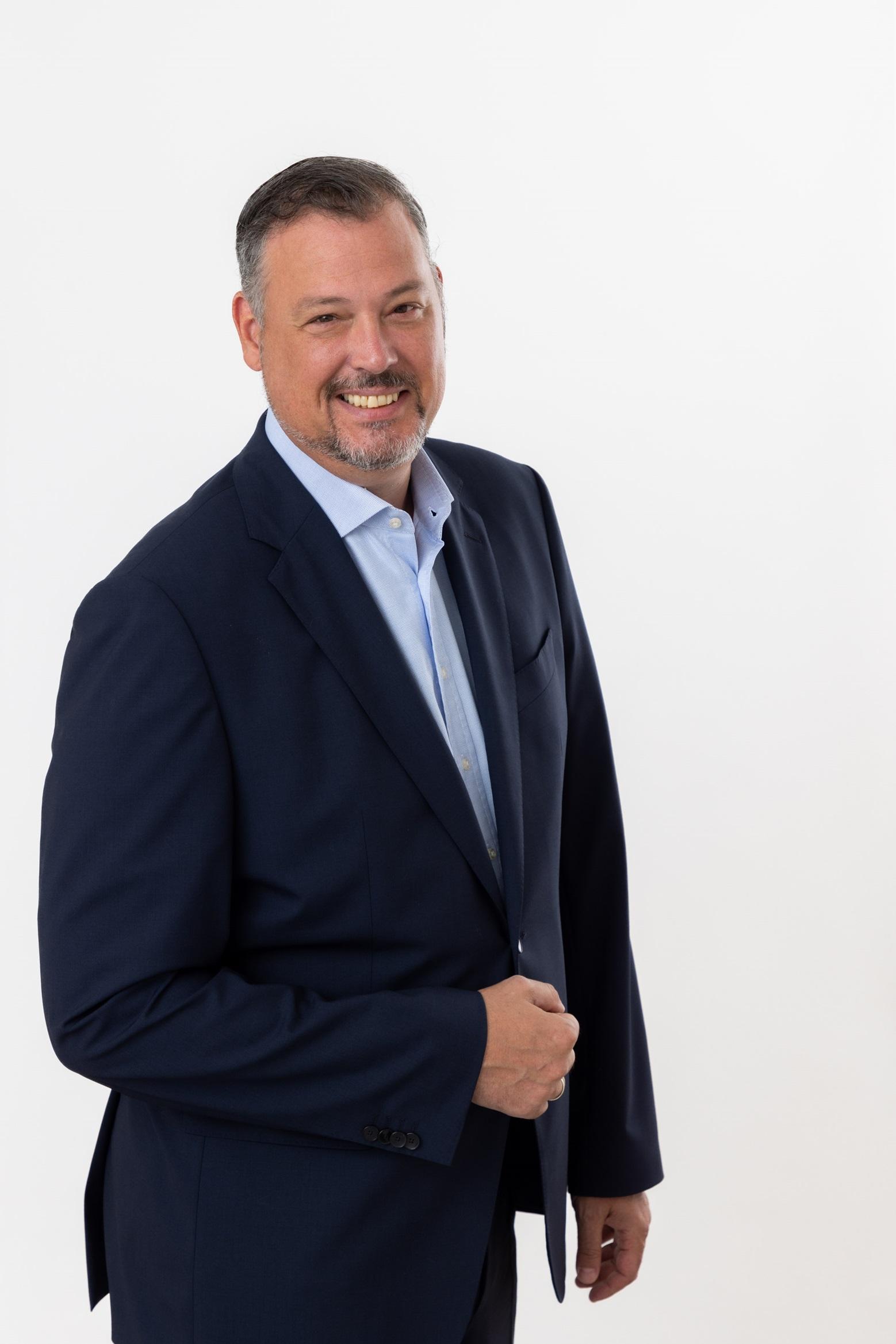 Peter Hosek
The title of your programme is The Golden Age of Johann Strauss. What does “the golden age” represent, and what can Maltese audiences expect from this particular performance?
The “golden age” is Vienna at the very height of its radiance – the second half of the nineteenth century, when our city was the beating heart of European music and society, when the ballrooms glittered and the whole world seemed to waltz. Our programme is a living portrait of that era: the great waltzes, the sparkling polkas, the beloved operetta gems, performed with the very spirit that made them famous. Maltese audiences can expect an evening of pure Viennese charm – vivid, elegant, at times mischievous, always heartfelt. Not a museum piece behind glass, but a celebration that steps down from the stage and takes you by the hand.
Vienna and Strauss are almost inseparable. How does performing this repertoire in Vienna influence the orchestra’s interpretation compared with ensembles elsewhere?
There is a way of playing Strauss that one can only truly absorb by breathing Viennese air. We call it the ‘Wiener Schmäh‘ – that subtle, almost teasing lilt in the waltz, where the second beat arrives a fraction early, like a shared secret between the players. It cannot be written into a score; it is handed from musician to musician like a family inheritance. Our players have grown up in the coffee houses, the ballrooms and the concert halls where this music was born. So when we perform, we are not interpreting a foreign tradition – we are speaking our mother tongue.
The Schloss Schönbrunn Orchestra performs in one of Europe’s most iconic imperial settings. How does the history and atmosphere of Schönbrunn Palace shape the orchestra’s identity?
Schönbrunn is far more than a backdrop; it is part of who we are. This was the imperial summer residence of the Habsburgs – the palace where a six-year-old Mozart played before Empress Maria Theresa, where emperors and empresses shaped the destiny of Europe. To carry the name of Schönbrunn is to carry that grandeur, and that responsibility, with us wherever we travel. It gives our musicians the sense of standing in a long and luminous line of history – and audiences feel it too. We do not merely perform music; we bring a piece of imperial Vienna into the room with us.
Many people associate Strauss with elegant waltzes such as The Blue Danube. What lesser-known works do you believe deserve greater recognition?
Everyone knows The Blue Danube, and rightly so – but the Strauss family left us a whole treasure chest that reaches far beyond it. I have a deep love for Roses from the South and the Emperor Waltz, works of astonishing tenderness and architecture. I always urge audiences to discover the irrepressible Tritsch-Tratsch Polka and the thrilling Thunder and Lightning Polka – pure exhilaration. Nor should we ever forget his brother Josef, whose Music of the Spheres is, to my ear, among the most sublime music ever written for the dance floor. There is an entire universe waiting just beyond the Danube.
The orchestra performs for audiences from every continent. Do different countries respond differently to Viennese music, and what have you learned from those experiences?
Wonderfully differently – and it is one of the great joys of touring. In Japan, audiences listen with an almost sacred concentration, then erupt with a warmth that moves us to tears. In China there is a growing, passionate curiosity, a genuine hunger to connect with this European heritage. In America – and I speak as the husband of an American – audiences are gloriously open, ready to clap along the instant you invite them. What all of this has taught me is that beneath every cultural difference, the music finds the very same place in the human heart. A waltz needs no translation.
Malta has a growing appreciation for classical music but also a vibrant cultural scene. What made Malta an attractive destination for this tour?
Malta captivated me. It is a crossroads of civilisations – an island where European, Mediterranean and North African influences have met for centuries, and from that meeting has grown a culture that is proud, warm and profoundly musical. Malta has a true love of the operatic and the melodic, and audiences who appreciate craftsmanship. When I first felt that energy, that hospitality, that appetite for beauty, I knew our music would find a home here. Some destinations you choose with your head; Malta, I confess, I chose with my heart.
This will be the orchestra’s first major appearance in Malta. Have you adapted the programme in any way for a Maltese audience?
Every programme we bring is shaped for the room and the people within it – that is the true art of touring. For Malta we have chosen a journey that opens with the sparkle everyone recognises, then leads the audience gently deeper, into works that reward anyone discovering Strauss for the first time. We have paid tribute to the Maltese love of melody and of the operatic voice. But the most important adaptation is not written in the notes – it lives in the spirit. We do not come as visitors performing at Malta; we come as guests playing for Malta.
As Managing Director, how do you balance preserving a centuries-old musical tradition while ensuring the orchestra remains relevant to younger generations?
This is the central question of my life’s work, and I have come to believe the answer is not to choose between the two. Tradition is not the worship of ashes but the passing on of the flame. We preserve the authentic Viennese sound with absolute rigour, because that authenticity is our promise to every audience. But we present it in ways that speak to today – immersive settings, new technologies, storytelling that draws young people in and makes them feel they belong. When a nineteen-year-old leaves one of our concerts having felt something real, the tradition has not been diluted. It has been renewed.
Classical music organisations everywhere are competing with countless entertainment options. What strategies have proved most successful in attracting first-time concertgoers?
The single most powerful strategy is to remove the fear. Far too many people imagine classical music to be a private club with secret rules, where they might applaud in the wrong place and give themselves away. We say the opposite: come exactly as you are, there are no wrong moments here – only the music and how it makes you feel. We create experiences, not just concerts: beautiful settings, warm hosting from the stage, programmes that begin with the familiar and quietly open a door to the new. And we meet people where they already are, through digital storytelling. Once someone has felt a live orchestra fill a room, they are changed forever. Our task is simply to get them through the door that first time.
Vienna’s New Year’s Concert has made Strauss synonymous with celebration. Do you think his music is sometimes underestimated because people view it as simply “light” entertainment?
Yes – and I admit it is one of my quiet frustrations. There is a lazy assumption that because Strauss makes us smile, he must somehow be shallow. Nothing could be further from the truth. To write music that sounds effortless is one of the very hardest things a composer can do; the lightness is the achievement, not the absence of one. Beneath the sparkle lies masterful craftsmanship, harmonic daring and orchestral colour that even Brahms and Wagner admired. Brahms himself once wrote on a lady’s fan that The Blue Danube was, alas, “not by Brahms.” Joy is not a lesser emotion. To lift the human spirit is a serious and noble art.
Artificial intelligence is changing many creative industries. Do you see AI playing any meaningful role in the future of orchestras, or is live performance becoming even more valuable in the digital age?
I find this question fascinating, and I am not the least bit afraid of it. Artificial intelligence will certainly help us – in reaching new audiences, in managing the vast logistics of touring, in telling our story more vividly. I welcome those tools with open arms. But here is the deeper truth: the more digital and artificial our world becomes, the more precious the genuinely human moment becomes. An algorithm can imitate a waltz; it cannot perspire under the lights, cannot exchange a glance with a colleague across the stage, cannot feel the breath of a living audience. The magic of an orchestra is that it is gloriously, irreplaceably human. Technology will not diminish that. It will only make us treasure it more.
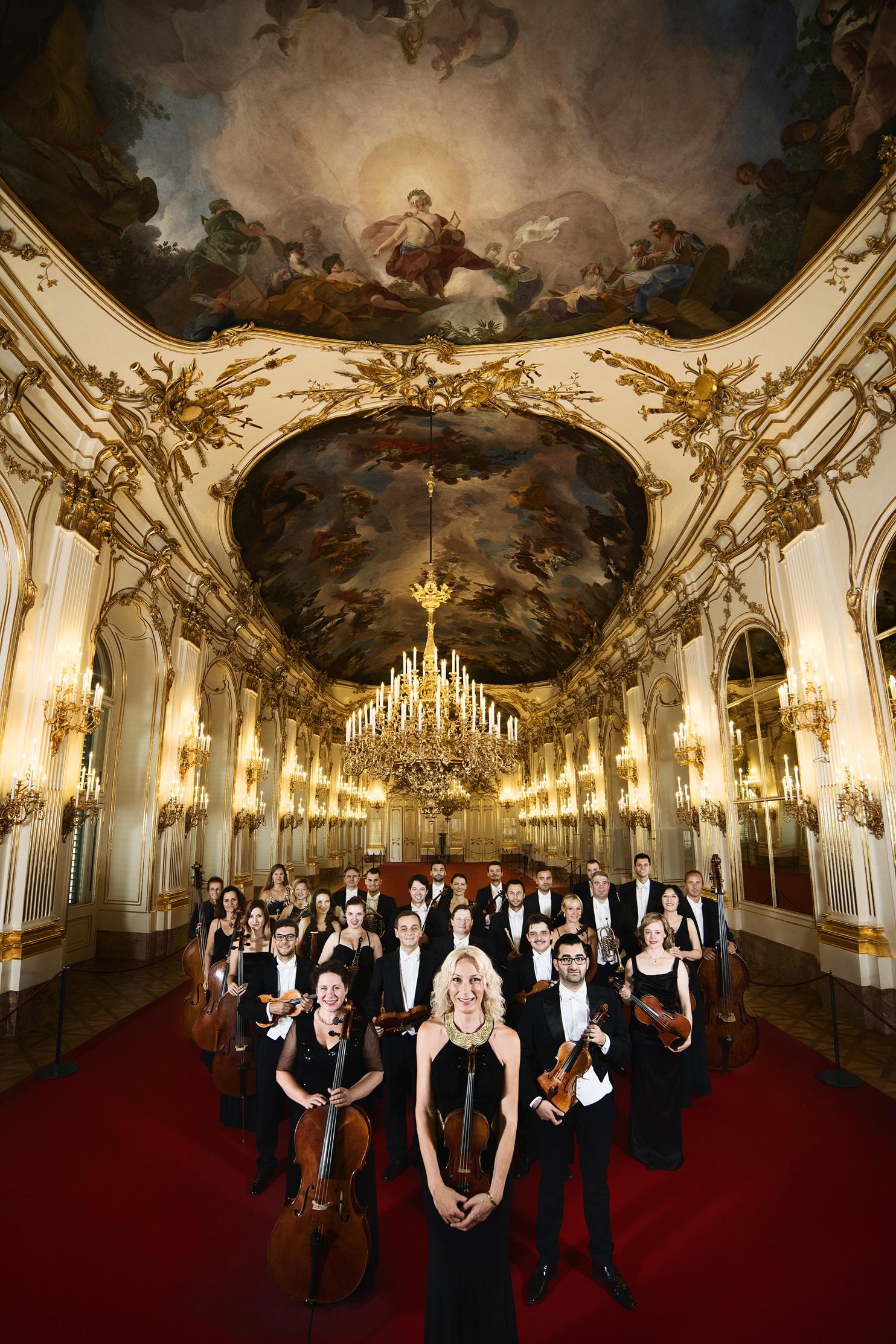 The evening is organised by AD Events.
Many young musicians aspire to perform in leading European orchestras. What qualities do you look for beyond technical excellence?
Technical mastery is the price of admission, not the destination. Beyond it, I look for heart – the willingness to be a little vulnerable on stage, to give something of oneself to the audience rather than merely play the notes correctly. I look for the team spirit that turns a group of fine soloists into a true orchestra, because Strauss lives or dies by how the players breathe together. And I look for joy: musicians who, after years of work, still feel wonder at what they are able to do. You can teach a great many things, but you cannot teach someone to love the music. That, above all else, is what I am searching for.
Touring an orchestra involves significant logistical challenges. What is something audiences rarely realise happens behind the scenes before a concert can take place?
The audience sees two elegant hours; they rarely imagine the months and the mountains behind them. For a single concert abroad we move an entire world – instruments that must travel in climate-controlled cases, some worth more than a house; costumes, stands and scores; visas, transport and rehearsal schedules calculated to the minute. A delayed flight, a shift in humidity that puts every string out of tune, a customs form in triplicate – any of these can threaten the evening. And yet the promise we make is that when the lights come up, none of that struggle will show. All the audience feels is effortless beauty. That invisibility is the whole point of our craft.
If Johann Strauss were alive today, what do you think would surprise him most about the way his music is performed and appreciated around the world?
I think two things would astonish him. First, the sheer reach – that a boy from Vienna’s dance halls would become, through the New Year’s Concert, perhaps the most listened-to composer on earth for one morning every year, heard in dozens of countries at the very same moment. He wrote for the ballrooms of his own city; he could never have dreamed of the whole world as his ballroom. And second, I believe he would be delighted, and a little amused, to see how very seriously we now take music he wrote simply to make people dance. He would probably tell us all to lighten up – and then join the party himself.
Vienna continues to be regarded as the world’s capital of classical music. What responsibility comes with representing that musical heritage internationally?
It is a profound honour and a genuine weight, and I feel both every single night. When we walk onto a stage in Malta, in Tokyo or in New York, we do not represent only ourselves – we carry the name of the city that gave the world Mozart, Beethoven, Schubert, Brahms, Mahler and the entire Strauss dynasty. That demands the highest standard at all times; there is no room for “good enough” when you stand as an ambassador of Vienna. But it is also a deep joy, because it means we get to share the very best of our home. In a very real sense we are cultural diplomats – and our diplomacy is written in melody.
The bicentenary of Johann Strauss’s birth has renewed global interest in his work. Why is this anniversary particularly significant for musicians and audiences alike?
Two hundred years since the birth of Johann Strauss is an extraordinary milestone – a moment for the whole world to pause and celebrate a man who did nothing less than teach humanity to dance. For us as musicians it is deeply moving to realise that the joy he created is still alive, still filling halls, still lifting hearts two centuries on. The anniversary has drawn fresh attention to the true depth and breadth of his work, far beyond the handful of famous pieces. It reminds us that great art does not age; it simply waits, generation after generation, to be rediscovered. To carry his music around the world in this anniversary is the privilege of a lifetime.
Looking ahead, how do you see the future of classical music evolving over the next decade? Are you optimistic about attracting the next generation of listeners?
I am an unapologetic optimist. Yes, we compete with a thousand glowing screens for people’s attention – but I believe that is precisely why live music will grow more essential, not less. The coming decade will belong to those who can offer what no screen ever can: real presence, real emotion, real community gathered in a single room. I see classical music becoming more open, more imaginative in how it is presented, more woven into the rhythm of people’s lives – and I see young audiences responding, because the hunger for genuine beauty never goes out of fashion. We simply have to keep the door open and the welcome warm. Of the next generation coming, I have no doubt whatsoever.
For someone attending their very first classical concert in Malta on October 18, what moment in the programme do you think will leave the strongest impression?
For a first-time listener, I believe the most unforgettable moment will be the one they least expect – the instant when The Blue Danube begins, and they realise they already know it, that this melody has somehow lived inside them all their life. There is a very particular magic in recognising something for the very first time. That flush of familiarity and wonder together – hearing, live and in the room, a tune the whole world hums – is a moment I have watched transform people’s faces a thousand times over. On the eighteenth of October, I very much hope it transforms a few in Malta too.
Finally, if you could describe the experience awaiting Maltese audiences in just three words, what would they be, and why?
Elegance. Joy. Vienna. Elegance, because Strauss is the very definition of grace. Joy, because that is what our music exists to give – an evening that sends you home lighter than you arrived. And Vienna, because in a few short hours in Malta we hope to carry the whole spirit of our city across the sea to you. Experience Culture. Feel the Moment – that is our promise, and on the eighteenth of October, we fully intend to keep it.
The event
Date : October 18, 2026
Venue: Mediterranean Conference Centre (MCC), Valletta
Organised by: AD Events