Watch: AI-powered drones will spot rubbish that’s ‘out of sight’
Drone data will enable Clean Malta to direct teams to go directly to where rubbish is
The government’s public cleansing agency will soon be hiring drone pilots, thanks to new artificial intelligence research being led by the University of Malta.
Prime Minister Robert Abela has announced that Clean Malta will be deploying drones to help identify waste in open spaces, enabling it to be collected more quickly and efficiently.
The drone-based system, which is coordinated by Dr Dylan Seychell and his team at the Department of Artificial Intelligence within the University of Malta, makes use of computer vision technologies to detect litter from above.
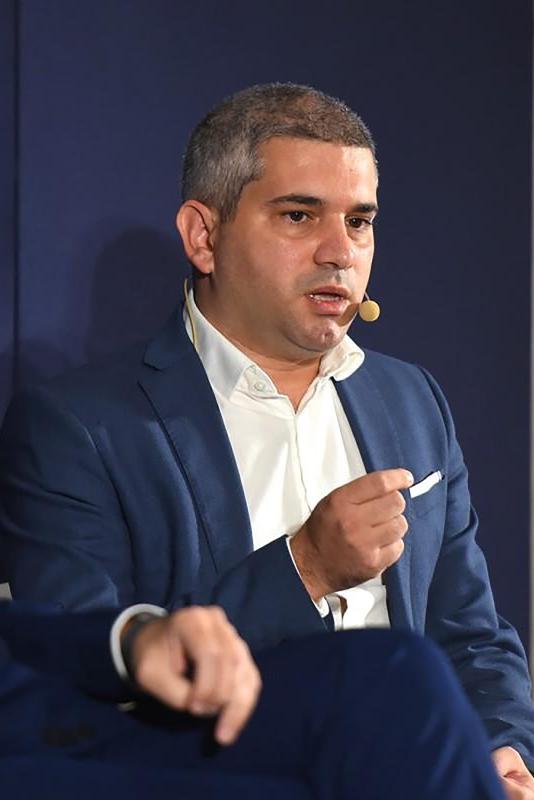 Dylan Seychell. Photo: Chris Sant Fournier
Speaking to Times of Malta, Seychell explained that the system, called the Aerial Waste Identification and Geolocation System (AWIGS), is designed to address persistent gaps in Malta’s waste management strategy.
Seychell said the idea for the system arose from the team’s belief that Malta’s current waste management approach needed extra support, particularly in open spaces.
“We need to be realistic that people can’t pick up everything,” he said. “To manage open areas, you need something else to help and we thought a drone which can easily get around and use a camera might work.”
Seychell said the team began publishing research on this topic in 2018 or 2019, before the mainstream breakthroughs in AI.
“The first time we published anything was around 2018 or 2019, which is practically prehistory for us. For context, this was a couple of years before Chat GPT, so the tech was very primitive.”
People can’t pick up everything- Dylan Seychell
The AWIGS system uses advanced computer vision methods to accurately detect various types of litter at altitudes ranging from 1 to 30 metres. Computer vision enables machines to interpret and understand visual data such as images and videos, a key capability in the AI field.
Seychell said the project will improve the way Clean Malta operates. “The project will help them work better and more efficiently,” he said.
He gave the example of how crews are currently sent to clean a site, such as a beach, by focusing on the main area. “However, we know people spread about and a lot of excess waste is just thrown out of sight.”
Drones, he explained, can help fill that gap by identifying overlooked areas.
The drones will fly over designated zones to detect the presence and exact location of waste. This data will then allow Clean Malta teams to go directly to where the rubbish is, significantly streamlining the clean-up process.
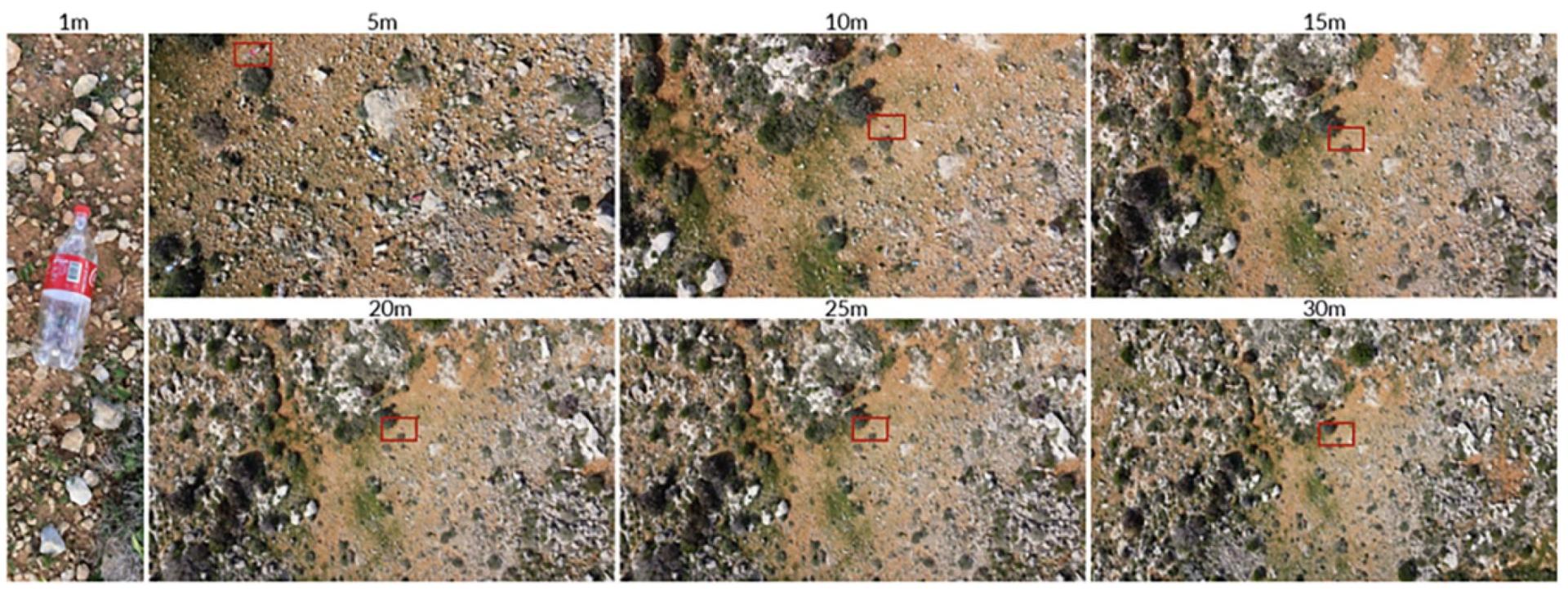 Demonstration of detection of the same litter object from different altitudes. Photo: Faculty of ICT
The project was built with a “privacy by design” approach, meaning it incorporates safeguards to protect personal privacy from the outset.
In the coming weeks, Seychell’s team will be on site with Clean Malta staff to pilot the drones and iron out any unforeseen technical issues. Once this testing phase is complete, Clean Malta personnel will be trained to operate the drones independently.
“The beauty of this project is that, hopefully in the near future, Cleansing could launch a drone pilot application, while separately, people working in AI are already helping to collect litter,” Seychell said.
Seychell praised the interdisciplinary academic team behind the project, which includes Prof. Ing. Carl J. Debono, Prof. Matthew Montebello, and Dr Konstantinos Makantasis from the Faculty of ICT, as well as Prof. Saviour Formosa from the Faculty for Social Wellbeing.
The team is also supported by research officers Ing. Daniel Pisani, Gabriel Hili and Matthias Bartolo. Both Hili and Bartolo are still full-time students.
“They show that young people can become scientists in Malta and don’t have to leave to find work like this,” Seychell said.
The project has received significant backing from public bodies. Clean Malta has hired a researcher full-time for a year to support the initiative, and the project has also been funded through Xjenza Malta’s Technology Development Programme Lite.