Watch: How cheap synthetic ‘cannabis’ fuels addiction among homeless
YMCA says they have nowhere to go as people heard ‘screaming at night’ in Marsa
A man carrying two large plastic bags filled with empty bottles and cans in Valletta says he has not eaten or slept in two days.
Jonathan has been homeless and addicted to synthetic cannabis for three years. He was suffering withdrawal symptoms.
“I’m a hard worker. This is what I’ve collected over two days. Valletta is the best place for this because of all the tourists,” he told Times of Malta.
Instead of redeeming his items from a BCRS machine, he said he goes to a grocery shop in Ħamrun.
“I always go to this guy because he gives me money for my bottles. This way, I can buy synthetic [cannabis]. It’s very cheap, only €5. I don’t beg because I’m a junkie. At least like this, I work for the money myself,” he said.
The owner of the grocery store held a large plastic bag open as the homeless person meticulously counted each bottle and can while he placed them in the bag.
“I haven’t seen my wife and four children in three years. They’re in Norway at the moment. I don’t want them to see me like this,” he admitted.
The owner paid him €20 for about 260 bottles and cans. Neither of them said a word.
I haven’t seen my wife and four children in three years. They’re in Norway at the moment
Jonathan then headed off to Marsa to buy synthetic cannabis, stressing he “could not take it any more”.
As homelessness rises, many are turning to this cheap drug, which a Times of Malta investigation found leaves users in a zombified or unresponsive state.
Another homeless addict said his drug of choice was crack cocaine but when short on cash, he settled for synthetic cannabis.
“I don’t like taking it, but I have to take something,” he said.
‘Stuck in a hole’
YMCA’s chief executive officer, Anthony Camilleri, told Times of Malta that synthetic cannabis is turning into a “major issue” among homeless people.
“We’re in a situation where we have a new cohort of homeless people – those suffering from drug addiction and mental health issues – who are not being catered to. These people are stuck in a hole,” Camilleri said.
“For any homeless person with a drug addiction, they must remain homeless until they are accepted into a rehab programme.”
Camilleri explained that shelters in Malta have strict rules, especially regarding drug use. Residents in YMCA shelters are subject to random drug testing, and if they are caught using drugs, they are kicked out.
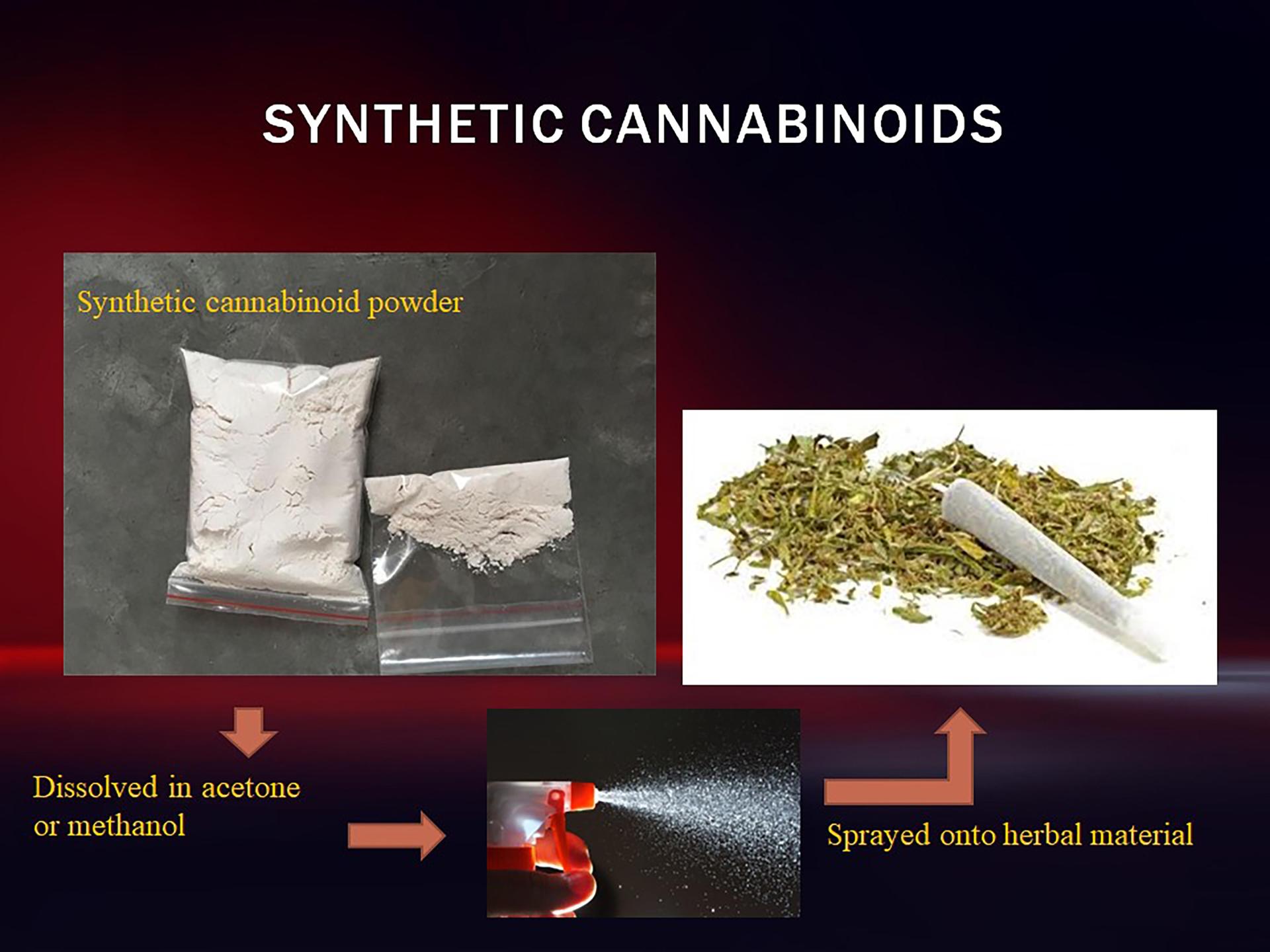 Graph explaining how synthetic cannabis is made. Photo: The University of Malta’s Forensic Analysis Laboratory
Camilleri added that Malta has no low-threshold centres, where anyone is allowed to go and sleep overnight with minimal rules. For instance, in some other countries, the churches remain open throughout the night for people to sleep.
In fact, a study found that most drug users admitted to Mount Carmel Hospital are seeking help for homelessness and unemployment rather than psychotic illness.
Ylenia Zammit, a doctor at the Detox centre, said the drug has high levels of dependence and causes severe withdrawal symptoms. Treatment is also difficult as there is “no specific therapy to replace or control the symptoms”.
“It’s very difficult to engage people in therapy or rehab because of its side effects and their eventual chaotic lifestyle,” Zammit said.
What is ‘synthetic’?
The addicts Times of Malta spoke with all referred to the drug as “synthetic”. The drug is also known as ‘Spice’ or ‘K2’. Although the correct term is synthetic cannabis, forensic court expert Godwin Sammut said the drug is in no way derived from the cannabis plant.
This is also different to semi-synthetic cannabinoids like CC9 or HHC, which are derived from the plant.
“The main reason these drugs entered the market is because they are cheaper and accessible, as they are easy to produce. They’re very dangerous and unpredictable,” Sammut said.
He explained that the people making the drug get a herbal material – the most common being marshmallow leaves – and spray it with chemicals.
“The effects of this drug vary depending on what type of chemicals it is sprayed with, and how much. But generally, it is a lot stronger than normal cannabis, and it can lead to psychotic episodes, aggressiveness or going into a zombie state,” he said.
Beggar numbers down since arrests
A lot of this type of drug activity is concentrated around Triq il-Ġerrejja and Triq it-Tiġrija behind Marsa’s horse-racing track.
When Times of Malta visited the area at 1.30 pm, there were piles of rubbish and litter, trolleys scattered about, people vomiting behind a car, and faeces in front of a garage.
A few people could be seen smoking drugs or drinking beer on the street. Three men were spotted hunched over in front of a garage smoking crack cocaine from a makeshift bong, and around the corner, people were dozing off on the pavement.
“This place is sh**. It’s horrible. At night, sometimes you hear people screaming,” one person in the area said.
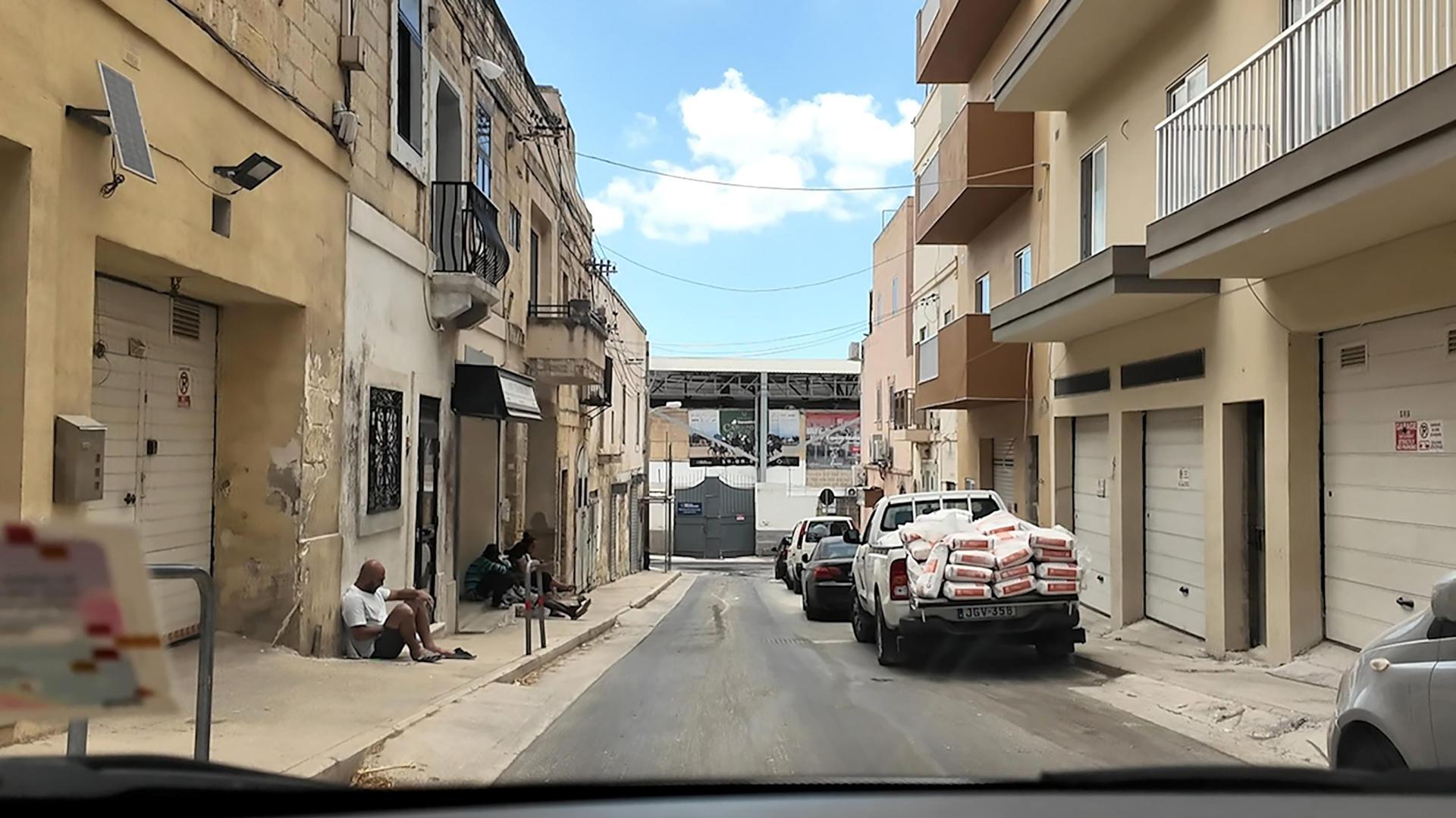 Behind the horse-racing track in Marsa. Photo: Matthew Mirabelli
Another person close by said, “I think you should leave because people are looking at you.”
Right behind him were two men, one of whom passed a €10 note to the other, who in return passed him a small plastic bag that had what seemed to be synthetic cannabis inside it.
Close to this area, at the shopping complexes in Marsa and Qormi, the police arrested numerous homeless people for begging throughout June. Some were not begging and were only arrested for being homeless.
Since the arrests, he doesn’t beg as much now, a homeless person said. “But I don’t feel it’s fair to arrest me. I’m not bothering anyone. I ask if somebody has something; if they say no, then I tell them thank you and I leave them alone.”
People who work at the shops close by said that the number of homeless that come to the area to beg has gone down since the arrests took place almost three months ago, but they still see them. Before, it used to be an almost daily occurrence.
“They can be very persistent sometimes, as they won’t leave you alone until you give them money. On one occasion, a mother got out of her car with her child, and the man would not leave her alone until she gave him money,” one person said.
Another recounted how he has seen them scratch cars or even try to force them open. Once, he had to call an ambulance as someone passed out in front of their shop.
“Enforcement is important, and it’s needed. But these people also need help,” he said.
Sources within the police drug squad said the area has long been a hotspot for drug busts, with operations taking place there for many years.
“Heroin used to be more popular, but there has been a shift towards crack cocaine and also synthetic cannabis because it’s so cheap,” they explained, warning that synthetic cannabis is “extremely dangerous”.
They added that while the problem persists, the situation would be far worse without the regular raids carried out by the squad.