Watch: How roadside drug tests will work in practice
The police will have the power to stop drivers without ‘reasonable suspicion’
A law to allow the police to conduct random roadside drink and drug-driving tests will be the first item on the government’s agenda when parliament returns from its summer recess later this month, according to Home Affairs Minister Byron Camilleri.
The random roadside drug tests will check for cannabis, cocaine, ketamine, ecstasy, amphetamines, methamphetamines and opioids – a category of drugs that includes heroin and fentanyl.
Mandatory prison sentences for those found guilty of negligent homicide while driving and having alcohol or drugs in their system will also be discussed on September 15.
The alcohol limit for a car driver is 0.5 grams per litre of blood (around two small beers), while there can be no drugs in your system if you are behind the wheel.
Asked if he was concerned that someone who took drugs days before driving could end up being charged, Camilleri said:
“These types of drug tests are already in use, but currently they require a magistrate’s order and can’t be conducted roadside. We’re not changing what’s legal while driving – only how the tests are administered.”
At present, police must have ‘reasonable suspicion’ to stop and test a driver, and they are legally authorised to test for alcohol using a breathalyser.
The police can test for drugs in a driver’s system, usually after a collision, but only after approval from a magistrate.
Under what the government is proposing, the police will have the power to stop drivers without ‘reasonable suspicion’ and also test for drugs in their system.
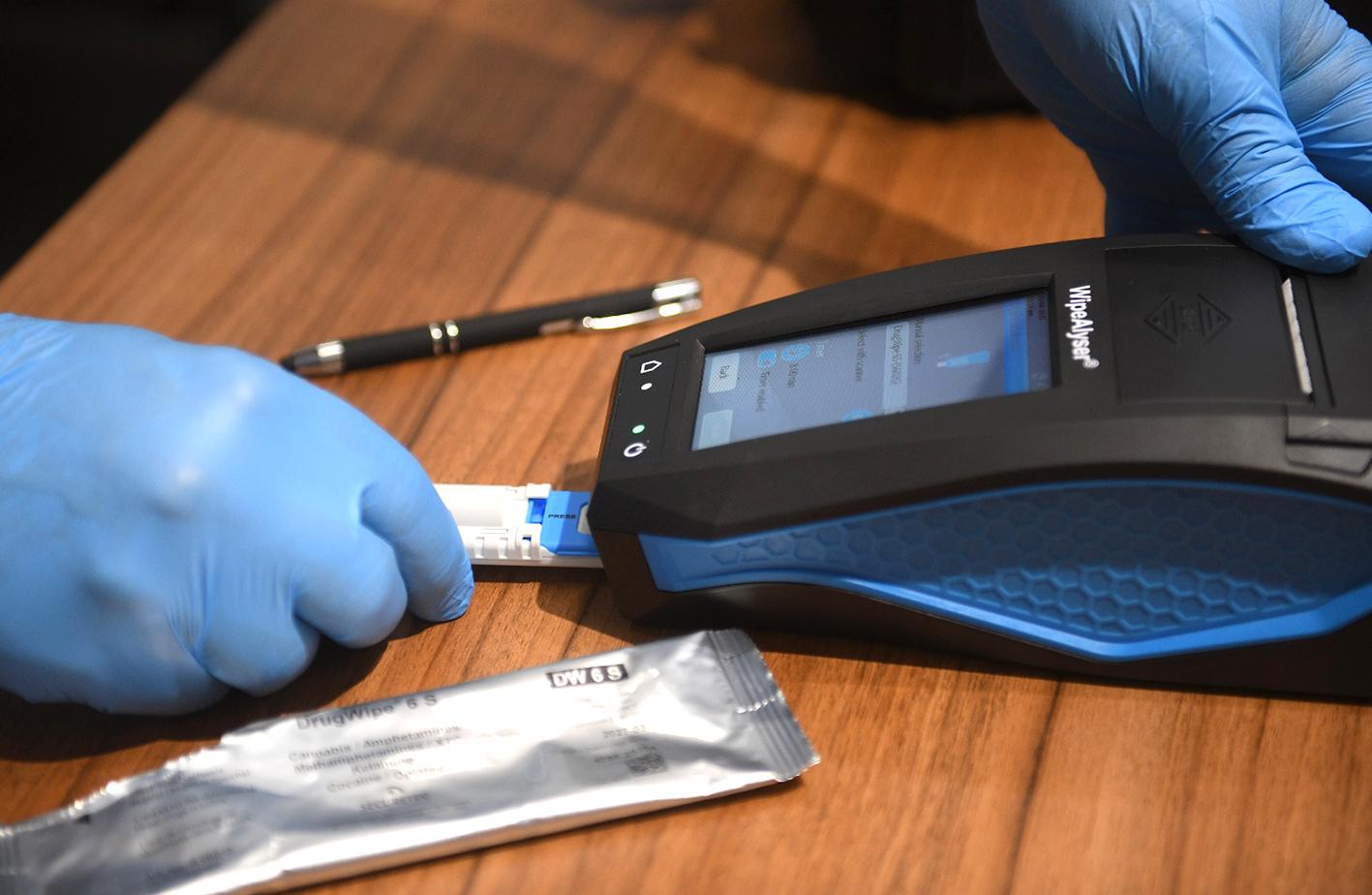 ue with a swab. Right: If there is a positive result, the next step is to take another sample to confirm the results, this time via a saliva swab that is tested in a lab. Photo: Matthew Mirabelli
So how do the drug tests work?
When the law is in force, the police will be equipped with handheld drug tests – which check for the seven types of drugs and their derivatives, Police Superintendent Nicholas Vella explained.
To conduct the test, the police officer needs to scrape the driver’s tongue with a swab, which is then inserted into a plastic holder before being inserted into the testing device.
The test takes around 10 minutes to produce a result. If positive, it also indicates which drugs are present in the driver’s system.
“Just like with a breathalyser test, anyone who returns a positive result cannot drive home and cannot leave our side,” the superintendent said.
If there is a positive result, the next step is to take another sample to confirm the results, this time via a saliva swab that is tested in a lab.
Minister Byron Camilleri said the two tests were needed to provide legal certainty that the person had drugs in their system.
‘Record enforcement’
Camilleri said the new law will come on the back of a “record” number of road checks.
“We already surpassed the number (of road checks) we conducted last year, which was a record year,” Camilleri said.
“Even though enforcement is there, there are still those who are abusing, so as a cabinet we want to send a message that if you are abusing, there will be consequences – which will now be quite serious,” he said.
Camilleri said the police not only have enough staff to enforce the new legislation but also the will to do so.
“This year we founded the Roads Policing Unit because we wanted to go in this direction,” he said.
“The next step is not only to have enforcement but also a strong deterrent,” Camilleri said.