The man who is saving Malta’s political history, one poster at a time
From an 1856 list, to Mintoff posters, to the 2026 election
A voting document from the suspended 1930 election printed in English, Maltese and Italian. Politicians’ portraits from the back of 1920s cigarette packets. A burnt Dom Mintoff rally poster. A leaflet urging women to “read, think and decide”.
These are among the thousands of items in Steven Dalli’s private collection of Malta’s political memorabilia, an archive that stretches from an 1856 list of eligible voters to the leaflets distributed during last month’s general election.
While most campaign material is quickly binned once an election is over, Dalli has spent the last few weeks doing the opposite. With help from family and friends across all 12 electoral districts, he has been collecting leaflets from every political party and candidate.
“So many people throw these away, but to me they have value,” said Dalli, a director and film editor at Sharp Shoot Media company.
“These documents provide us with a photo of the situation in Malta right now. In the coming weeks and months, Malta will change. The problems we see in May 2026 will change, evolve and be different to what will be proposed in the next five years.”
Dalli’s collection began when he was studying history at the University of Malta, after a fellow collector gave him a 1921 Constitutional Party poster for Gozo, then the eighth district.
“That was the spark that set off my collection,” he said.
Most of the collection is archived, numbered and stored in a room at his home. But his Pietà office offers a glimpse of its scale and variety.
One framed item is the electoral programme of the Democratic Action Party, which won four seats in the 1947 election. Nearby, a photograph of George Borg Oliver hangs close to one of Dom Mintoff.
His walls also display mass meeting posters, among them one for a Nationalist Party rally in Sliema in 1981, where then Opposition Leader Eddie Fenech Adami was due to address supporters.
Another framed poster advertises a Dom Mintoff rally in 1965. Part of its side is burnt.
“This particular poster was given to me by someone who said he wanted to get rid of a bunch of documents he had,” Dalli said.
“Many times, I get these things for free from family, friends, and sometimes even old people who just hand me boxes full of old stuff, things they had planned to throw away.”
Dalli’s collection makes no distinction between parties. It includes material from Labour, the Nationalist Party, smaller parties, and movements that have largely faded from public memory.
There are party flags, posters, booklets, postcards, pins, voting documents, lighters, hats scarves and campaign giveaways.
In one box, he keeps Labour Party-themed hats and caps. In another, PN-blue scarves and flags are folded neatly, some fragile to the touch.
There is also a bundle of political posters that parties and candidates were once allowed to paste on walls.
Dalli closes the archive for each election once parliament reassembles. He also adds newspaper cuttings from the day the election was announced, the results and the opening of parliament.
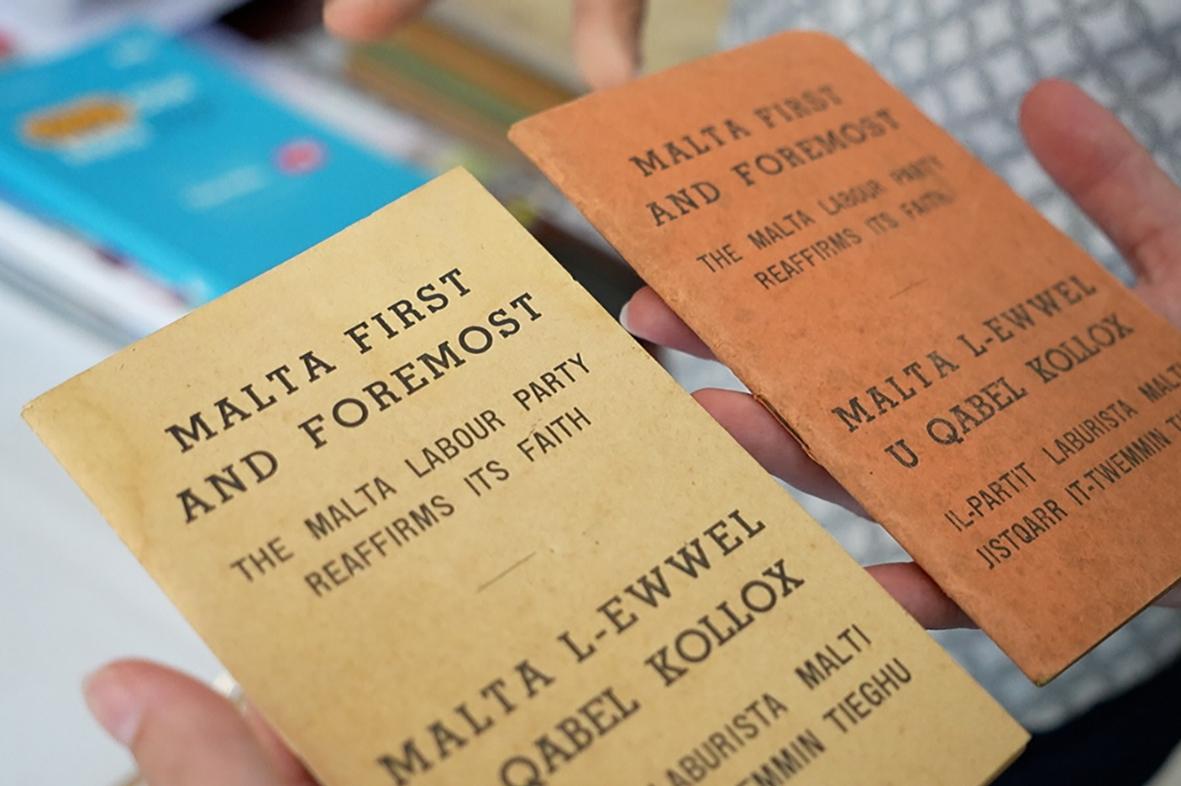
‘Malta first and foremost’ Malta Labour Party manifestos published in English and Maltese. Credit: AFL Photos
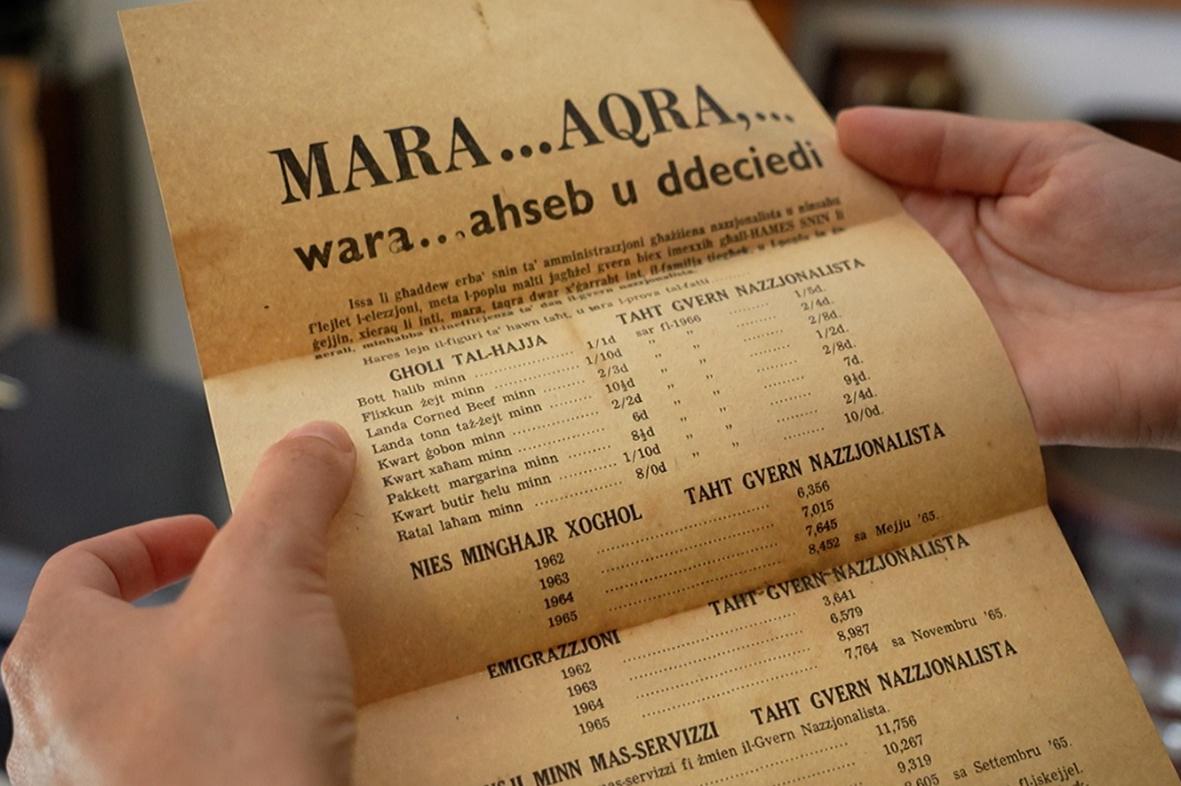
Aqra Mara 1965 leaflet. Credit: AFL
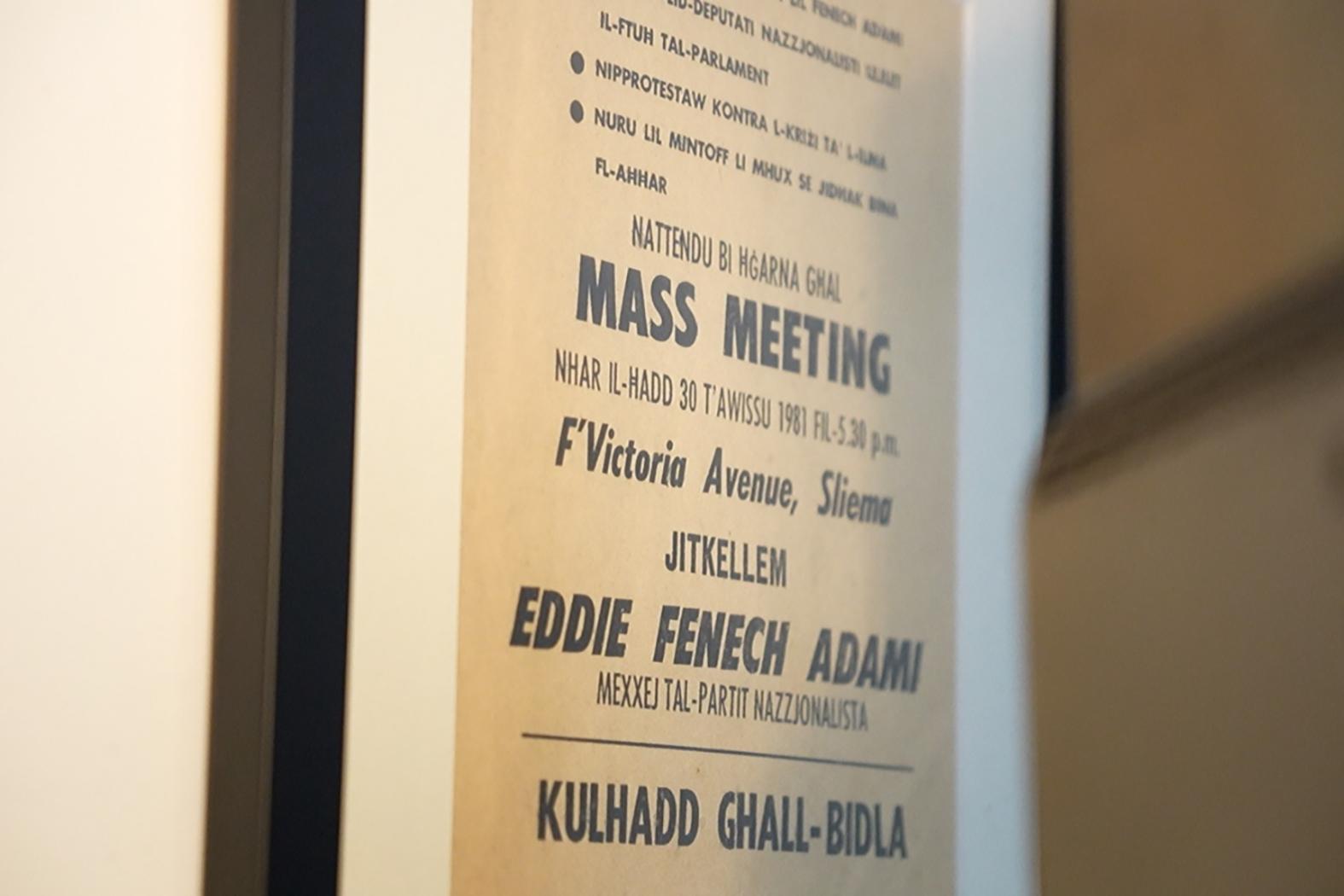
A PN poster promoting a Sliema rally with Eddie Fenech Adami.
An artefact from 1856
The oldest artefact in his collection is from 1856: a document listing the names of people who were eligible to vote at the time.
Perhaps the strangest item in the collection is a full set of cards that appeared on the back of Black Spot cigarette packets, featuring politicians elected to parliament and the Senate in 1927.
“You wouldn’t dream of publishing politicians’ photos on the back of cigarette packs today,” Dalli said.
Another item is aimed specifically at women voters.
“Mara… Aqra… wara aħseb u ddeciedi” (Woman: read, then think and decide), the 1965 pamphlet reads. It lists increases in the prices of everyday products, including milk and corned beef, under the then Nationalist Party government.
Dalli said the thousands of items show how political communication has changed, from formal printed notices to colourful manifestos and personality-driven campaign booklets.
“As years go by, such leaflets would include more writing, and in the 1970s and 1980s, the typography becomes bolder and more colourful,” he added.
In more recent times, campaigners have used photographs of themselves with supporters or family members.
Asked to choose his favourite, Dalli narrowed it down to two.
The first is a voting document for the 1930 general election, which was suspended by the British authorities following tension involving the Catholic Church and Gerald Strickland’s Constitutional Party.
“While the election was suspended, the voting document had already been published in the three languages used in Malta at the time: English, Italian and Maltese,” he said. “There is no other document like this.”
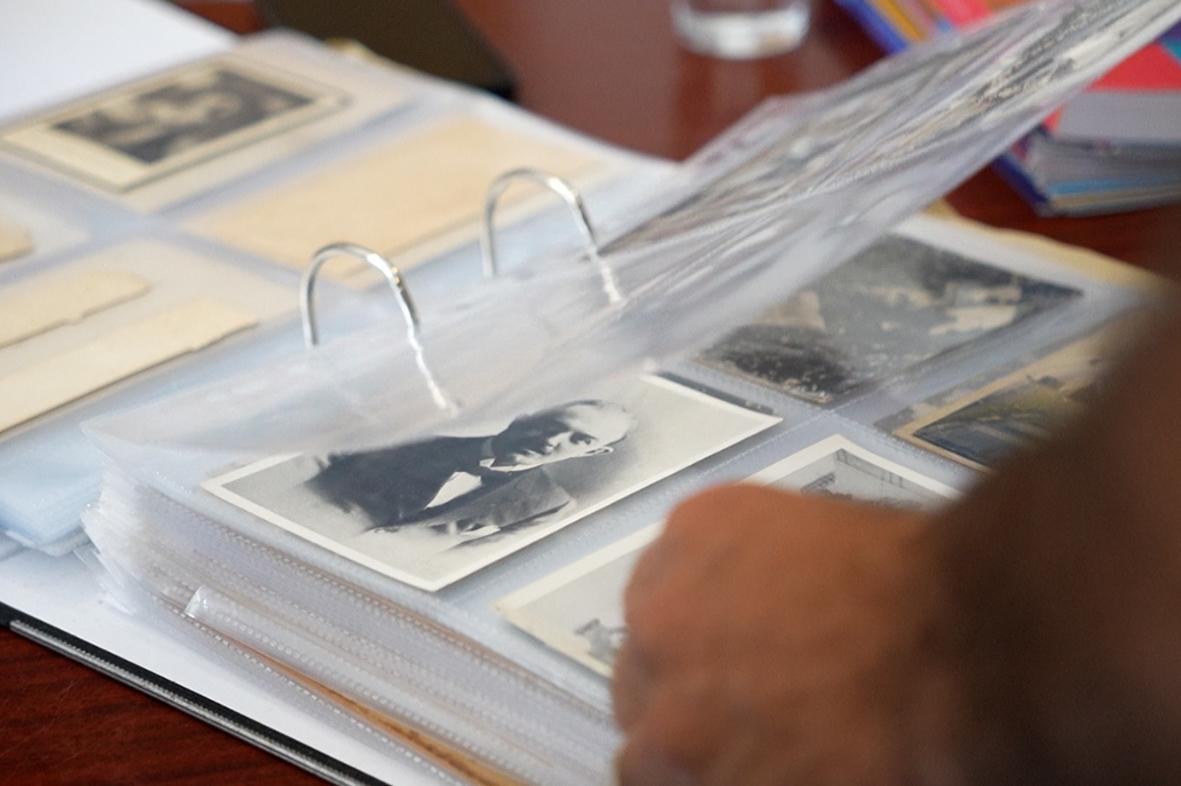
Dalli’s neatly filed postcards of different politicians and candidates
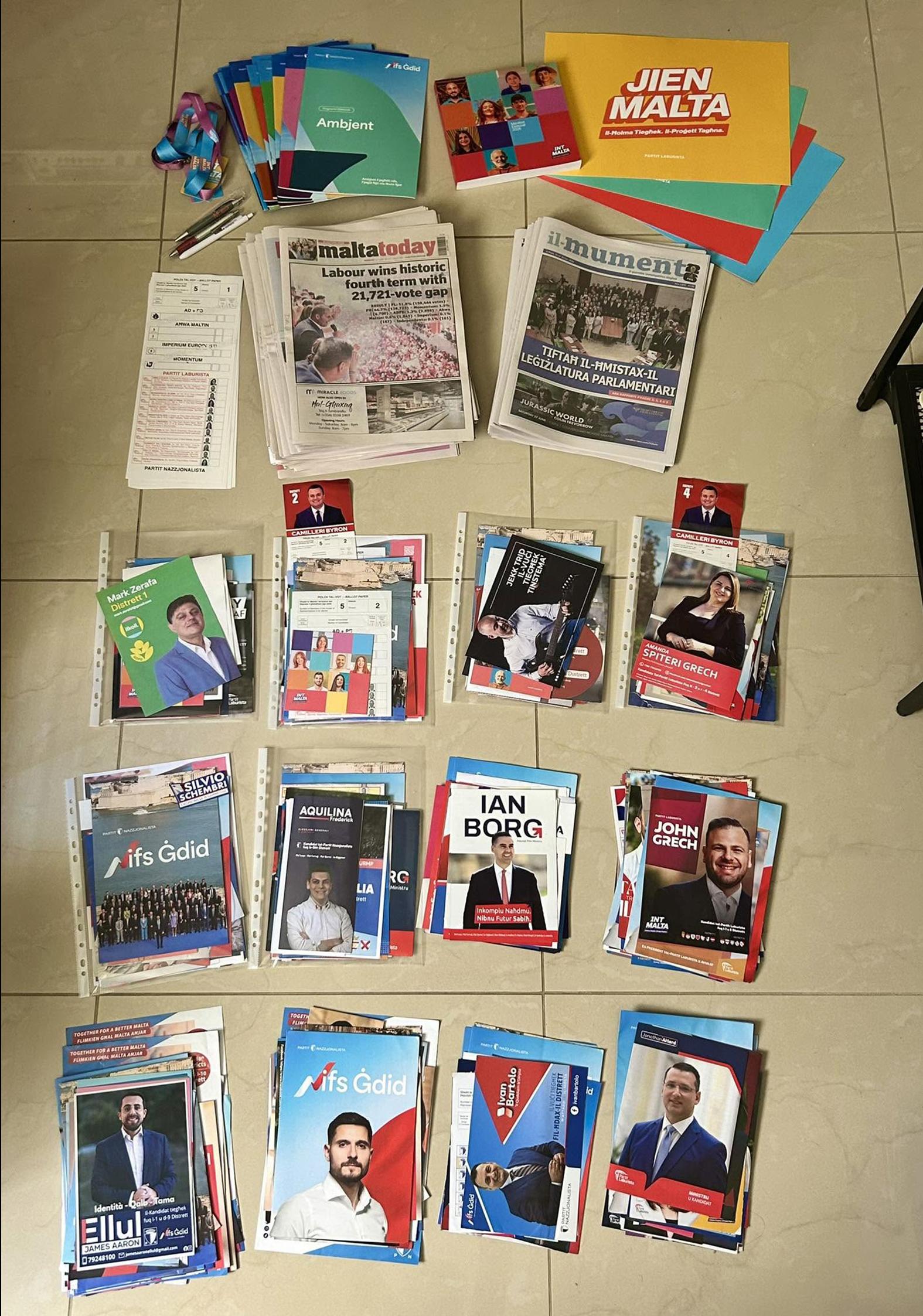
Dalli's 2026 election collection photo. Photo: Facebook
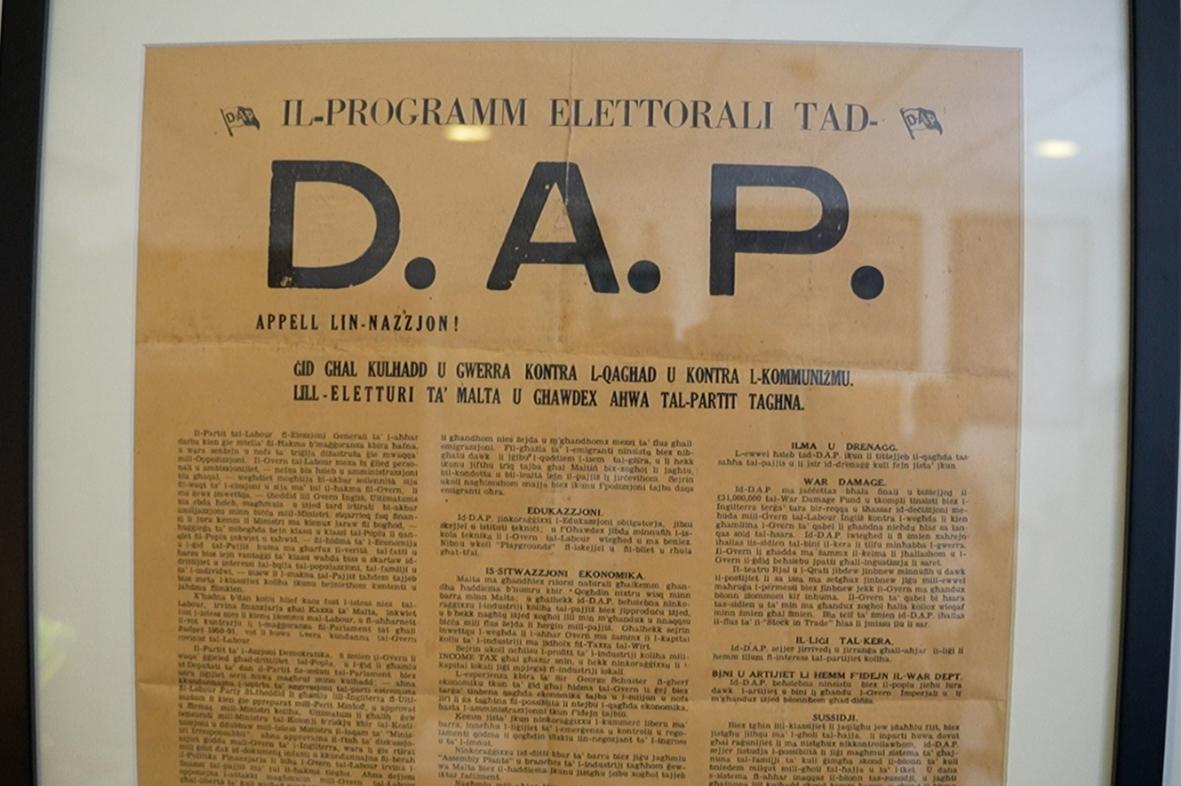
DAP electoral campaign
The second is a hand-drawn booklet by an unknown person featuring the signatures of the 1971 cabinet, including future presidents Anton Buttigieg and Agatha Barbara.
“To me, it’s priceless for its historic value,” he said.
Dalli hopes to digitise the collection and eventually hold an exhibition.
Parts of it were featured in an exhibition marking the founding of the Labour Party in 2024, and he has also helped history students who contacted him to use some of his documents for research.
But he fears physical campaign material is already disappearing.
“I have noticed that in recent years there is a reduction in the use of paper material,” he said.
“Today it’s rarer to find a physical copy of the 2026 manifestos than those dating back to the 1970s.”
For Dalli, the collection is not about nostalgia alone.
“This collection is how I show my love for my country,” he said.
“If I did not collect this, all this information would be lost, even thrown away. Here I can see how our country has changed throughout the years, and it shows all the good and the bad we have faced.”
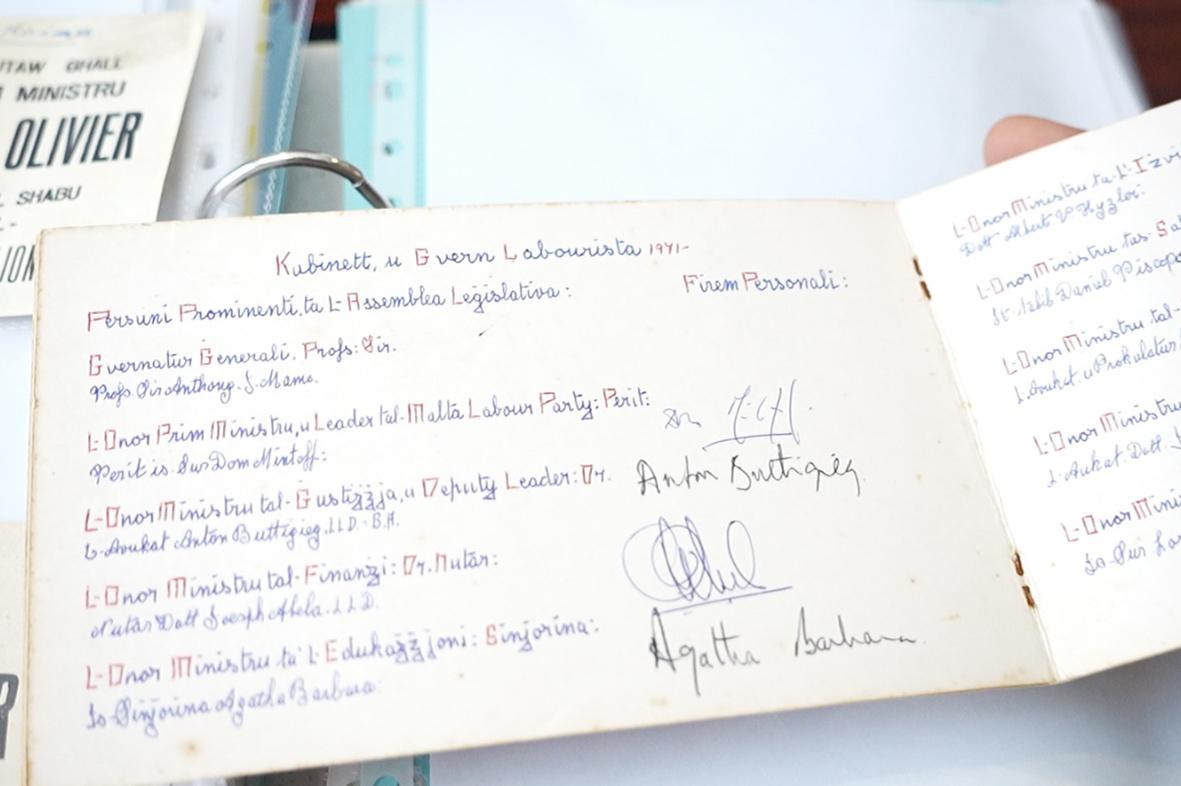
One of Dalli's prized possessions – a handdrawn booklet including 1970 cabinet signatures.
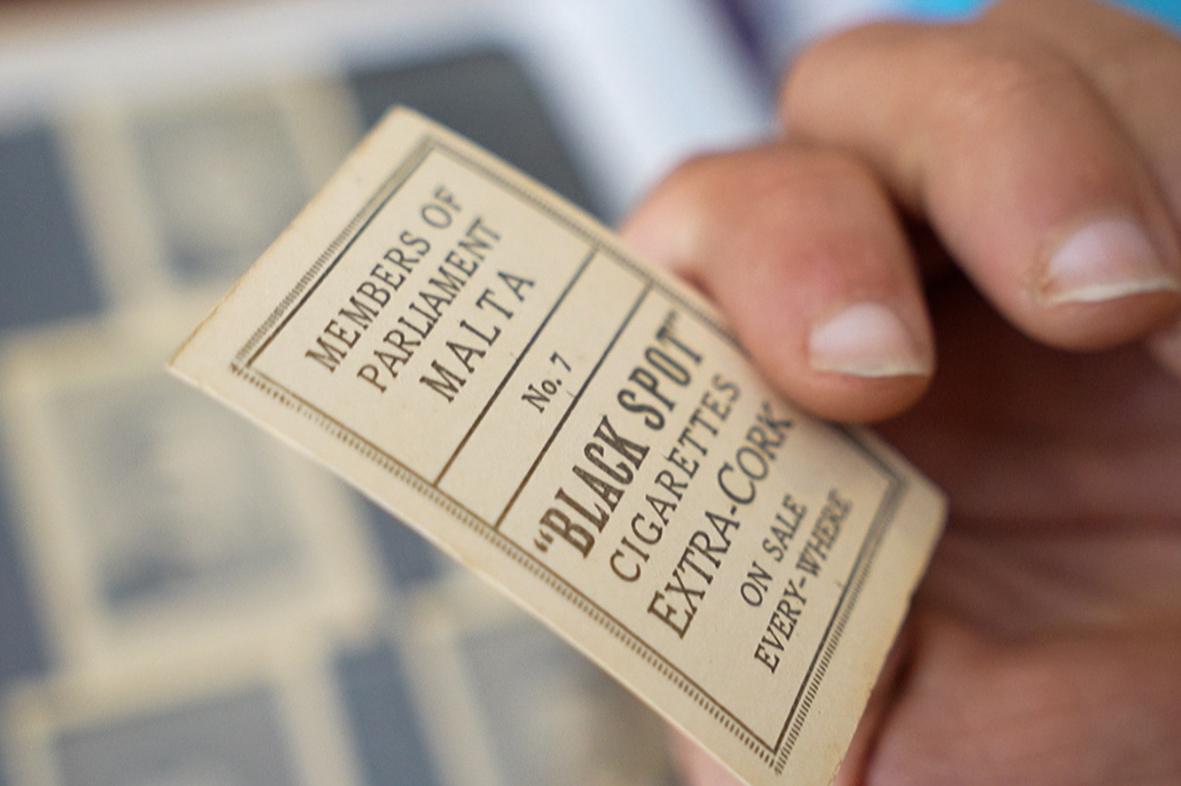
Politicians advertised on the back of cigarette packs.
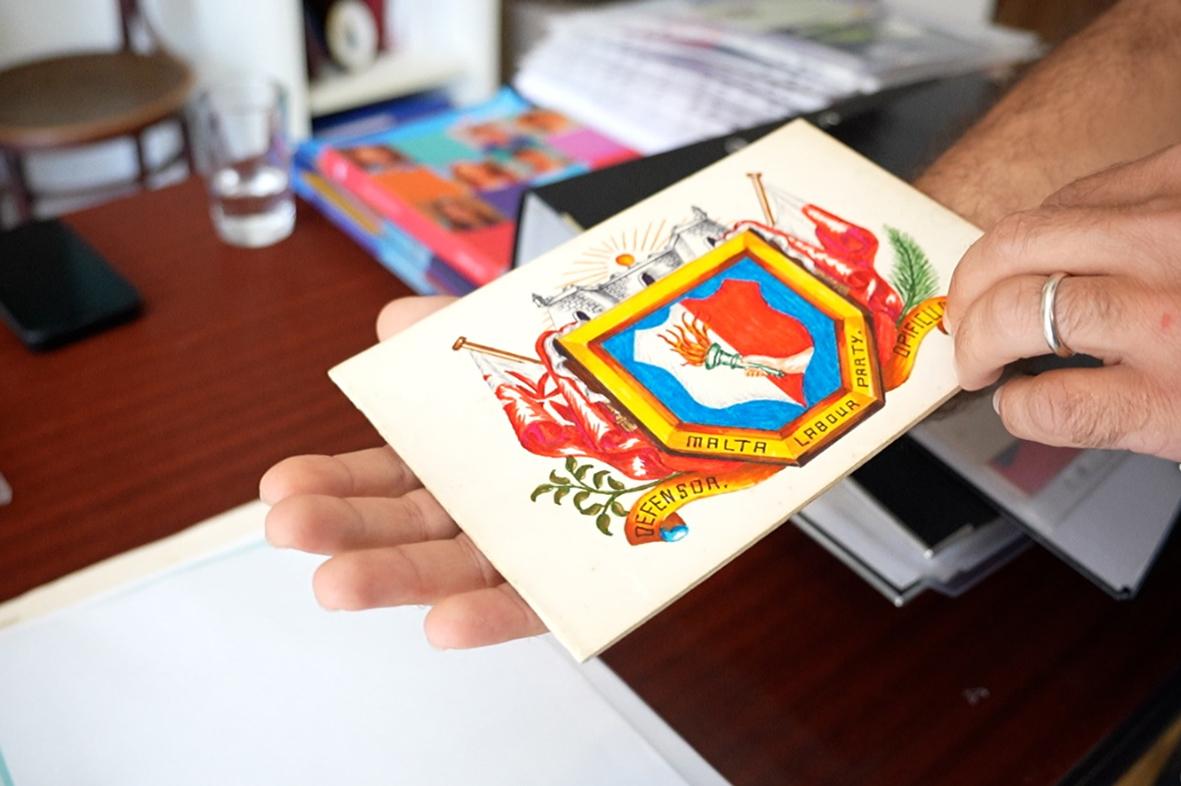
Signatures of the 1970 cabinet in handdrawn booklet.