Watch: The deadly politics behind Malta’s hijack horror exposed in new book
The disaster claimed 60 lives on Malta’s runway following a botched storming of the aircraft
A new book on the 1985 EgyptAir hijack in Malta aims to keep the deadliest rescue attempt in aviation history alive, based on blow-by-blow tape recordings of the dialogue between the control tower and the terrorists, exposed to the public for the first time.
The hijacking claimed 58 innocent lives and two hijackers on Malta’s runway following a botched storming of the aircraft.
About to hit bookstores in time for the 40th anniversary, on November 23, Sovereign is a historical fiction based on the true story, using an analysis of court transcripts of the control-tower tapes as its “spine”.
The recordings, which had been transcribed for court proceedings in the case against one of the hijackers, form “the hard evidence from which we can judge how the matter was handled”, said its author Malcolm Scerri Ferrante.
Reproduced word for word, even at the risk of tedious repetitions, he said they were very telling about how negotiations were conducted behind the scenes during the stressful 22 hours in the control tower.
“Only in their raw form can they reveal how the ordeal truly unfolded, moment after moment… under fear, defiance and impossible choices, revealing at times the inexperience of those faced with managing the crisis,” said Scerri Ferrante in the preface.
Keeping the readers outside the plane, they can experience the perspective of former prime minister Karmenu Mifsud Bonnici, who led the negotiations with the hijackers and oversaw the crisis from the airport before Egyptian commandos blasted their way onto the plane, triggering a gun and grenade battle that left it filled with smoke, riddled with bullets – and a total of 60 dead bodies.
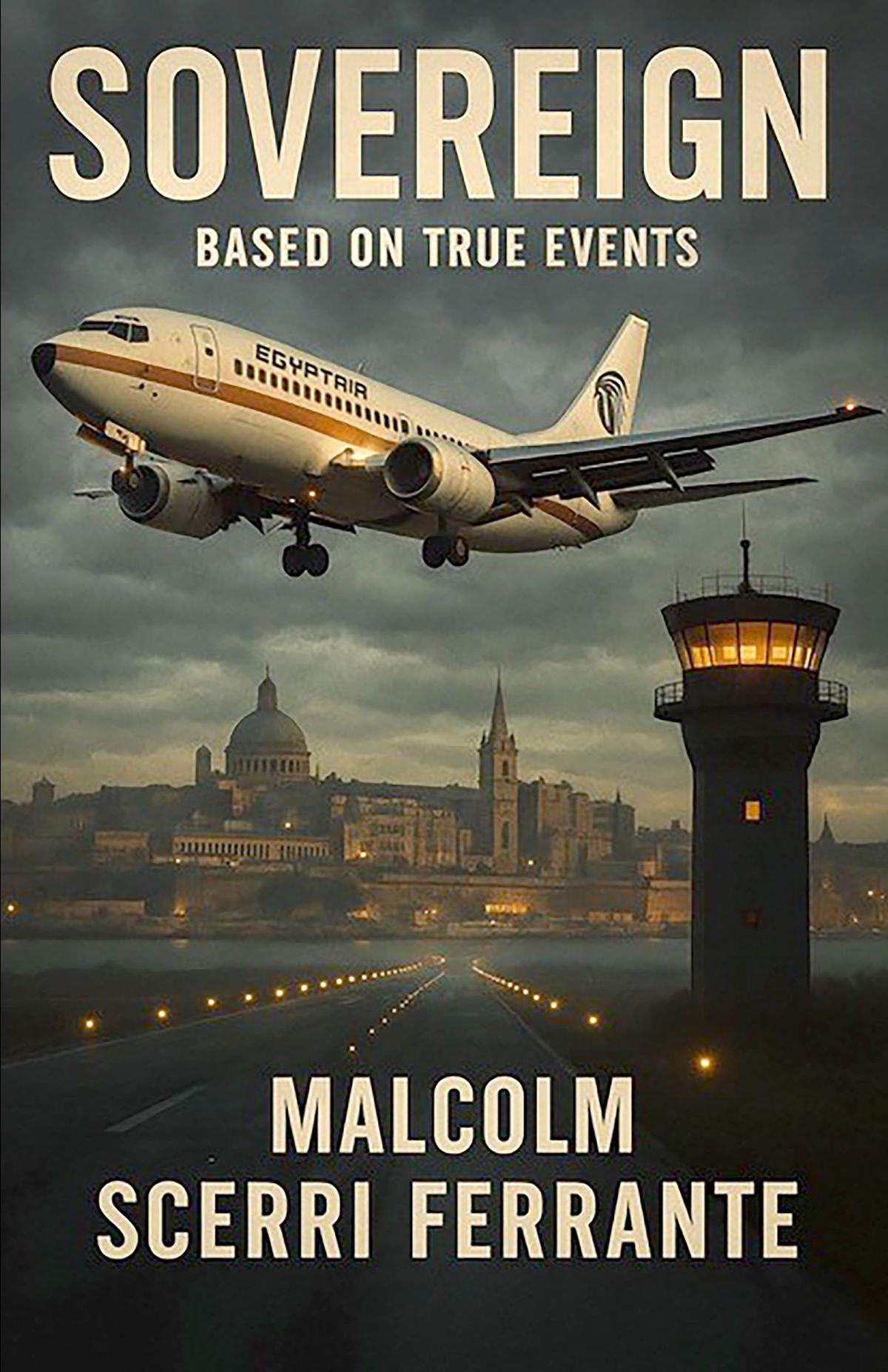 Sovereign is about to hit bookstores in time for the 40th anniversary of the 1985 EgyptAir hijack.
Scerri Ferrante had been researching and collecting interviews since 1990 to understand exactly what had happened when Flight MS 648 was forced to land in Malta.
The result underscores the “blurred line of responsibility” that may have contributed to the disaster that unfolded, he said.
Although the author took creative licence to “dramatise” certain scenes in this true-event fiction – “solely to capture the real spirit” – many facts remain untouched and unembellished.
Scerri Ferrante said Sovereign served to remember some uncomfortable truths that have long been buried, including the refusal to use specialised equipment offered to help gather intelligence from inside the aircraft until it was too late – “purely because of the nationality of those extending the help”.
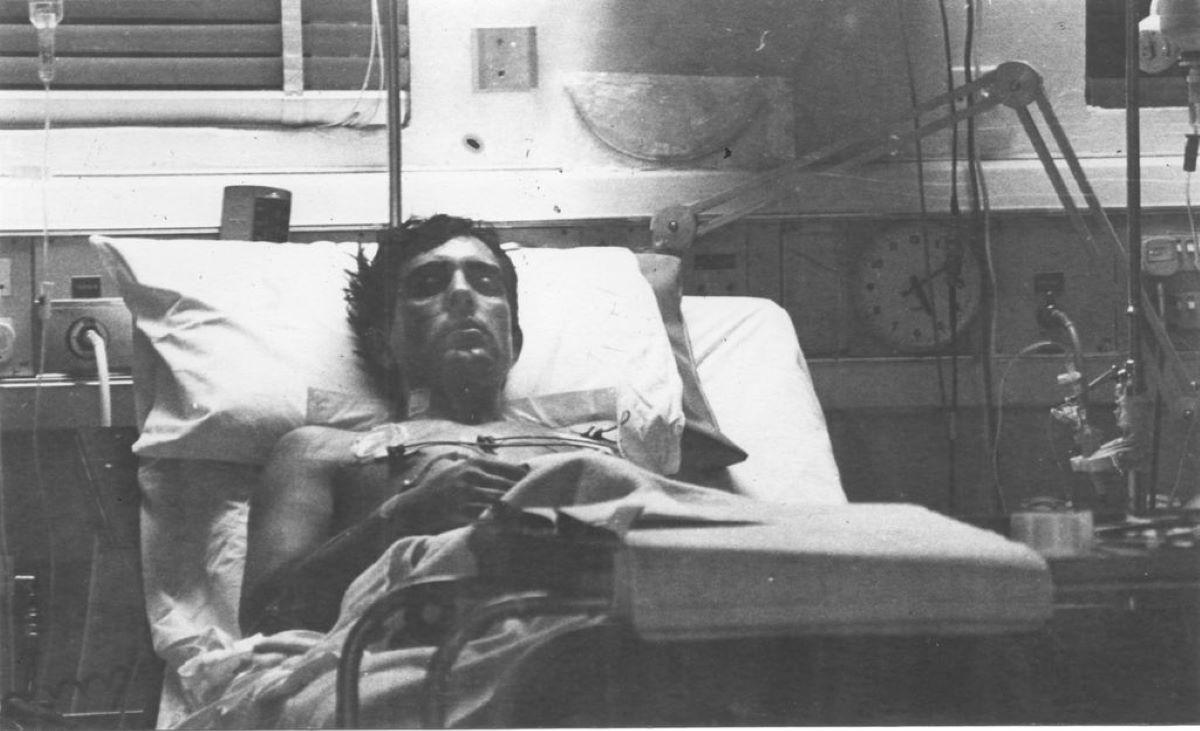 Omar Rezaq, the only surviving hijacker, was only identified after a surviving passenger recognised him in the hospital ward as they both recovered from the assault. Photo courtesy of John A. Mizzi, former Times of Malta editor in 1990, Times of Malta and Union Press.
He also highlights the troubling fact that several foreign military officers, who were part of the rescue operation, were placed under house arrest and prevented from coordinating the assault that might have saved lives.
The EgyptAir hijack was a “powerful example of political ideology – however well-intentioned – overshadowing the fundamental duty to protect human life”, Scerri Ferrante said.
The idea for the book was borne of a 2009 filmed interview with Mifsud Bonnici, where he “candidly admits his political bias”, telling the author he did not want the Americans to intervene for political reasons only.
In the interview, never yet aired, Mifsud Bonnici, who has since died, said “the Americans were very much tempted to come and do the job themselves on our soil. That would have created a very awkward political situation for the Maltese government. We had to avoid such things happening.”
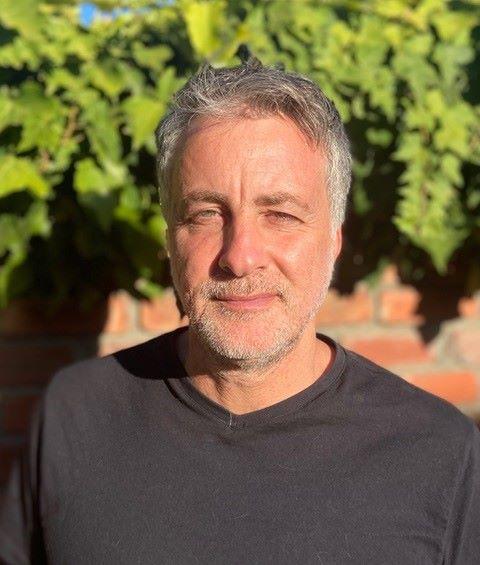 Malcolm Scerri Ferrante
That comment fuelled Scerri Ferrante’s message that the story must never fade, nor the mistakes be buried.
Scerri Ferrante recalled that, at 76, Mifsud Bonnici seemed to have accepted the hijack would forever define his legacy, whether he liked it or not.
“His willingness to talk felt almost therapeutic, as though explaining his decisions might finally convince him that he could not have acted differently.”
The author understood his conflict and struggle to balance the passengers’ lives with Malta’s sovereignty and ideology at the time, and he drew on this interview in the novel’s final chapter to create a fictitious inquiry – none was ever carried out – into how the hijack was handled, based on Mifsud Bonnici’s real answers.
History cannot afford selective memory
Scerri Ferrante, who is a film and television producer, said he penned the book to preserve crucial facts about the hijack that risked being forgotten as the decades rolled on.
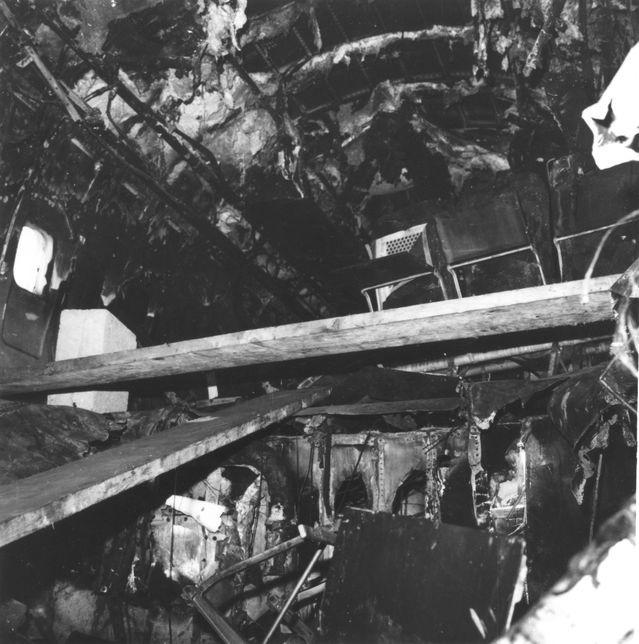 The interior of the Boeing 737 after the commandos’ assault. Several passengers were found fused to their seats as they were overcome by the massive fireball in the plane. Photo courtesy of John A. Mizzi, former Times of Malta editor in 1990, Times of Malta and Union Press.
The Egyptian commandos were lambasted for failing to save most of the passengers and instead triggered a catastrophe that ended in a fireball from hell, with the bodies of hostages found literally fused to their seats in the two-minute storming fiasco.
While these recollections were not incorrect, Scerri Ferrante observed that today, the “shortcomings of the local authorities have been quietly swept under the carpet”.
Attempts to control the narrative and paint a picture of a nation that made no mistakes meant no lessons could be learned, he said.
“Some key players wish to bury this tragedy forever. I have spoken to a few who made this very clear,” Scerri Ferrante said about his experience researching.
“With Malta being Malta, where everything becomes politicised, I would not be surprised by criticism for reviving the story and revealing the voice recordings between the tower and the cockpit.
“I understand their views, but the lives of 58 innocent people and two unborn babies should never be forgotten.”
 Omar Rezaq was imprisoned for murder in Malta. At that time, Malta had no laws against hijack offences. After serving only seven years, he was released after benefiting from a presidential amnesty applied to several prisoners. He was subsequently captured by US federal agents and tried in the US. The latest information available shows he is currently being held in a medium- ecurity prison in Illinois, 40 years after his crime.Photo courtesy of John A. Mizzi, former Times of Malta editor in 1990, Times of Malta and Union Press.
The chilling dialogue
Like a scene out of a film, here are some of the more harrowing exchanges between the EgyptAir cockpit and the control tower.
OR: Hijacker Omar Rezaq
HG: Captain Hani Galal
MT: Malta Control tower
HG: Yes, sir. You don’t seem to understand. Ah you want us to crash at the sea because if you don’t let us down we will crash. My endurance now is less than 15 minutes.
MT: I understand fully. I understand but I have been advised to tell you that the airport is closed.
HG: Ah, OK, and ah, now I have a message from the hijackers. Ah, they are saying that ah, they will execute one passenger in ah, 15 minutes if the fuel truck ah, truck does not show and the engineer.
MT: 648 message copied. (Pause – 22:12:40) Egypt air 648 ah, by which steps ah, will the doctor come aboard?
HG: OK, he says he is going to kill the passengers in 10 minutes.
MT: 684. No one will speak to you if you kill ah, the passengers. No fuel. No one will speak to you.
MT: Due to the fact that you have killed a number of passengers, ah, we shall cut off our contacts with you and we shall, ah, we shall, ah, turn off the lights completely from the area of the plane.
OR: In case, in case the lights are turned off from the plane we shall kill a hostage every 10 minutes. We shall kill a hostage every 10 minutes and you will bear responsibility. You have to keep the lights on. And if, and if any car, any car or person approaches the plane, we shall blow up the plane with those in it.