Alex Borg demands compensation as power cuts persist
Miriam Dalli: No government has invested as heavily in the power grid as this one
Updated 6.32pm
Opposition leader Alex Borg on Monday hit out at a "failure of planning" as power cuts continued to hit various parts of Malta.
Speaking in parliament, he said the power cuts were undermining people's quality of life and businesses and demanded an automatic compensation system for loss of business, damaged appliances, loss of stock and food and medicines.
Families should not need to wage a bureaucratic war to be compensated for their losses, he said.
Borg made his remarks during an emergency debate requested by the Opposition.
Power supply has become a luxury
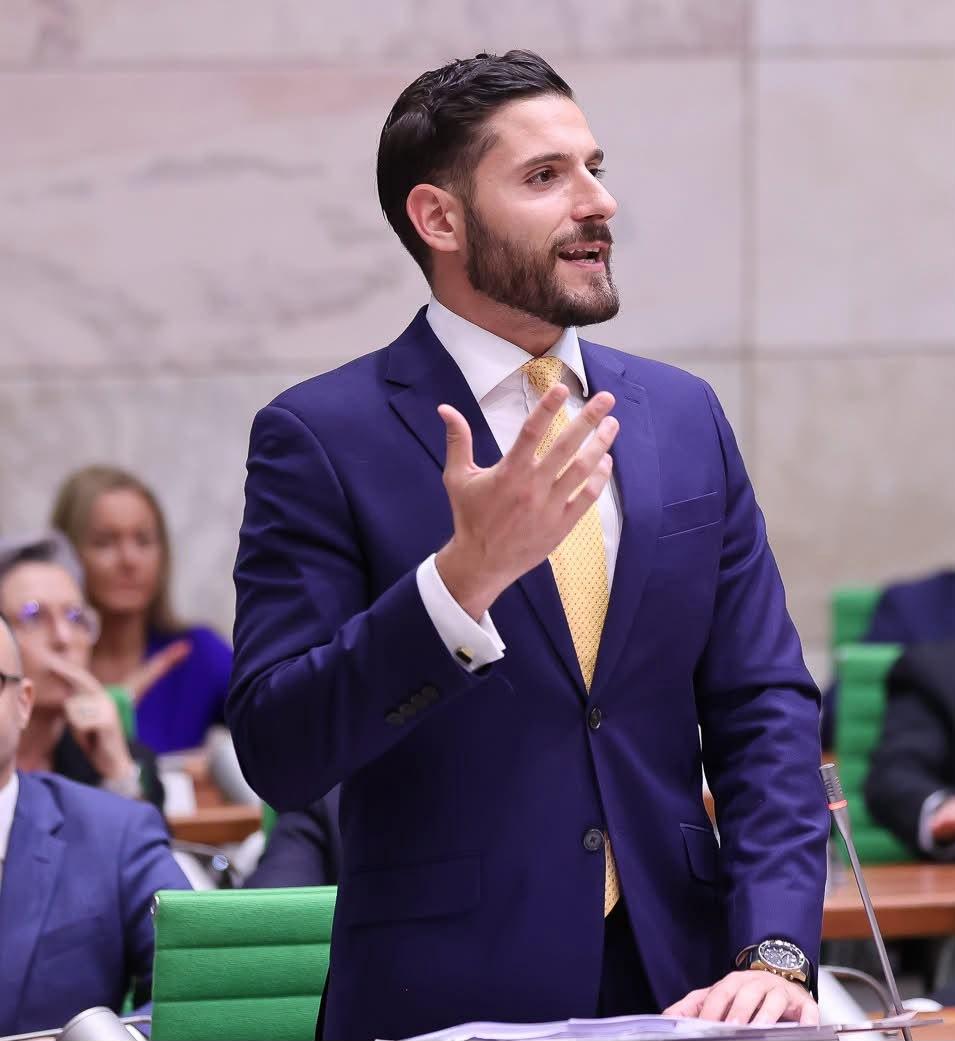 Alex Borg speaking in parliament.
At the opening of the debate, Borg highlighted the problems which the power cuts were causing the people.
"The government has made the power supply a luxury," he said. The government, summer after summer, was showing itself to be unprepared, he said.
The government was minimising the problems to an inconvenience, he said, and yet every hour without electricity had a price as people threw away food and medicines.
Residents and businesses were also reporting damage caused by fluctuating voltage, which then morphed into days of loss of business, he said. He asked if compensation would be forthcoming.
It was not enough for the government to say that generation was sufficient if that supply then did not reach the clients.
The distribution network was vulnerable and lacked resilience. The serious crisis of 2023 had exposed a serious problem and the issues have persisted every summer since.
"How long would they continue before the energy minister assumed political responsibility?"
The core of the issue was a failure of planning. The government had boosted population growth and energy demand, but had not matched that with investment in the power grid.
The people should not be made to wait nine years for the completion of Enemalta's plan.
Borg insisted on compensation for families and businesses who suffered losses because of the power cuts.
He suggested the introduction of cold premises where vulnerable people could shelter when power cuts lasted a long time.
He also insisted that people should be kept well informed of power cuts in their localities through an updated SMS system.
Robert Abela had spoken of people's quality of life having improved to the extent that more were buying boats. Yet, for many, even a good night's sleep had become a luxury, Borg said.
The people are not requesting miracles, but a stable power supply they were already paying for. They wanted assurance that their appliances could function in an efficient power grid, he said.
The shadow minister for energy, Mark Anthony Sammut, said the crisis was particularly impacting vulnerable people, such as the family who told him a cancer patient could not be taken to hospital because the lift was not working.
Sammut said the situation had persisted for four summers now, affecting thousands of people in various localities, some grappling with power cuts and others with overvoltage.
This government has been in power for 13 years, he said, and it was useless of them to try to blame the former PN government.
He recalled that an Ombudsman investigation two years ago had found chronic underinvestment in the high-voltage network. Between 2014-2023 annual investment was three times less than the previous 10 years.
He asked what the regulator was doing to protect consumers.
“It is a situation the people cannot tolerate any more,” he said.
Sammut observed that the government had said it was spending €130 million on the power network. Miles of road were dug up, including newly-surfaced roads.
"So why had the problem persisted, when would it be resolved, and what had become of Enemalta’s long-term development plan for the power network," Sammut asked.
Sammut also asked why Enemalta was four years late in its audited accounts. In a situation where massive investment was needed in the power grid, what was the financial health of the company. And what had become of the reported €60m loss related to international carbon credits? Was the company able to recover those losses?
MPs Rebekah Borg, Darren Carabott, Paula Mifsud Bonnici and Toni Bezzina also spoke for the opposition.
The debate is still underway.
Miriam Dalli: Record investment, but more remains to be done
Replying, Energy Minister Miriam Dalli said the government was investing heavily in both energy generation and distribution.
Malta was experiencing record temperatures and record demand for power, she said. But thanks to recent investment, when faults developed in the power grid, supply could, in many cases, be switched to other substations. 235 new substations had been built and hundreds of kilometres of new cables had been laid in the past three years, improving the capacity and resilience of the network
Still there was no doubt that much more work remained to be done. In Birkirkara and Iklin, for example, work to reinforce the grid had started but more remained to be done, as the current faults showed.
"Our immediate priority is to restore supply securely and quickly whenever there are faults," she said.
Current extreme temperatures put pressure on power systems, not just in Malta but all over the world, she said.
Many thousands of people had been without power a few weeks ago in France, Italy, Germany and Greece as a result of extreme temperatures.
In Malta, no government had invested as much in the power grid as this government had done in the past three years - €161 million. And this massive investment would continue in the coming years.
Borg had said the power supply had become a luxury. But one could remember the high tariffs charged by the PN governments for the power supply, Dalli said.
The government, she said, had already offered compensation whenever there were long power cuts.
Current major works, she said, included new distribution centres in Msida, Siġġiewi and Naxxar and a new 132KV link between Magħtab and Mosta.
Over the coming nine years the government would build 15 distribution centres, a dedicated distribution centre for Mater Dei, a new distribution centre for the freeport and the airport, two distribution centres in Gozo, a 132kv link between Malta and Gozo, and a €13 million project to reduce consumption of street lamps by 60%.
All this was in parallel to strong investment in power generation, including a new undersea cable between Sicily and Malta, an offshore wind farm and a battery storage facility. Consideration was being given to a third interconnector, using the DC system linking Malta with continental Italy.
Dalli insisted that the Opposition could not shirk responsibility for its lack of investment in the distribution system while it was in government. Such investment was long-term, she said. Had proper investment been made in time, current problems would not have arisen.
What she wanted to promise the people, she said, was that the current government would continue to invest heavily in a resilient grid that would be able to handle increased demand and high temperatures well into the future.