WAVE: Improving training for water rescue through VR
A University project aims to develop a VR tool for use in lifeguard and water-rescue personnel training
Training for water rescue scenarios is an increasingly important priority in Malta, particularly in light of recent water-related incidents and the country’s reliance on coastal safety. As new technologies continue to develop worldwide, training centres are redesigning their materials to better prepare rescue personnel for real-life emergencies.
One such initiative is WAVE, a project that aims to position Malta at the forefront of water rescue training through virtual reality (VR). The platform immerses trainees in a realistic VR environment that recreates Maltese beaches and presents a variety of water rescue scenarios. These simulations include spotting drowning victims, choosing the correct rescue steps and completing multiple-choice assessment questions at the end of each scenario.
A key feature of WAVE is the level of control given to instructors. Trainers can adjust weather and other environmental factors for each scenario, allowing trainees to experience a wide range of conditions they may encounter in real rescue operations. This approach ensures that trainees are exposed to challenging situations in a controlled and safe environment before progressing to real-world rescues.
The project places strong emphasis on responsible AI and domain accuracy. To ensure the reliability and safety of the training content, all rescue scenarios and multiple-choice questions must be pre-vetted by a qualified water rescue instructor before being made available in the simulation. This process helps ensure that the training provided is accurate and appropriate, reducing the risk of unsafe or misleading training content.
Currently, the WAVE platform is still under development, with early prototypes being tested internally. The next phase of the project will involve testing with lifeguard personnel, during which structured feedback will be collected and used to refine the application.
WAVE’s long-term vision is to be one of the essential tools used as part of the lifeguard and water-rescue personnel training programme. By offering an immersive experience, WAVE aims to better equip lifeguard trainees at the end of their training to handle rescue scenarios on the Maltese beaches.
WAVE is funded by Xjenza Malta and the Malta Digital Innovation Authority through the Digital Technologies Programme 2025. The project is led by Matthew Montebello from the Department of Artificial Intelligence at the University of Malta, with Keith Azzopardi, Gabriel Borg, Karl Cini, Luke Cardona and Richard Caruana serving as research support officers in the same department.
Sound bites
• WAVE combines generative AI and virtual reality to transform water-rescue training, placing trainees in realistic, adaptive emergency scenarios that personalise learning, improve decision-making, and safely prepare rescuers for real-world challenges, with potential applications far beyond the shoreline.
https://library.iated.org/view/BORG2025ADV
• Scientists have uncovered a hidden weakness beneath the Pacific Ocean that helps explain why Japan’s catastrophic 2011 earthquake and tsunami became so devastating. By drilling deeper into the seafloor than ever before, researchers discovered a thin, slippery layer of ancient clay that allowed the massive rupture to race all the way to the ocean floor, triggering enormous seafloor movement and a powerful tsunami.
https://www.sciencedaily.com/releases/2026/06/260625060220.htm
For more soundbites listen to Radio Mocha www.fb.com/RadioMochaMalta/
Myth debunked: Does a drowning person wave, shout and splash?
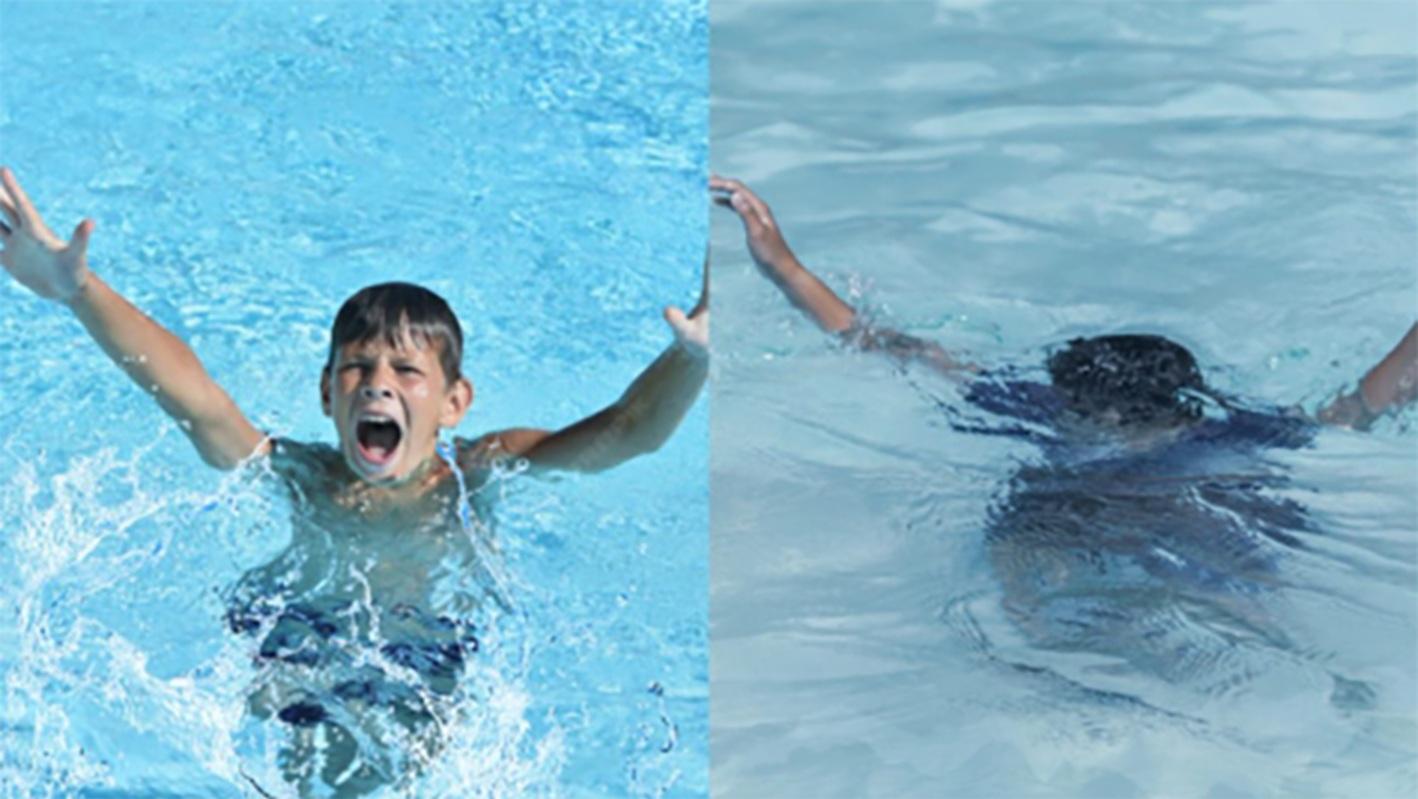 Drowning involves little splashing, no waving or yelling. Sometimes the person is only 20 to 60 seconds at the surface before submerging.
In many cases, active drowning is quiet. When someone is struggling to keep their mouth above the surface, breathing takes priority over speech, so they may not be able to call out.
Furthermore, their arms may press down on the water rather than wave, and their body can remain almost vertical, with little forward movement.
This is why lifeguard training places so much emphasis on scanning, pattern recognition and rapid decision-making.
The signs can be subtle: a head low in the water, a mouth at water level, eyes closed or unfocused, hair over the face, or a swimmer who appears to be “climbing a ladder” in the water but is making no progress.
The myth matters because bystanders often look for dramatic signs of trouble.
A person may have only a brief window at the surface before submersion, so spotting early signs of distress can be life-saving. Tools such as WAVE aim to let trainees practise these rare, high-pressure situations repeatedly and safely before they encounter them on a real beach.
The drowning-signs claim is well supported: the Instinctive Drowning Response is described as involving little splashing, no waving or yelling, and sometimes only 20 to 60 seconds at the surface before submersion.
Did you know?
• Drowning is often silent: there may be little splashing, no waving or shouting.
• The Instinctive Drowning Response lasts 20 to 60 seconds before submersion.
• Lifeguards often have under 30 seconds to spot a passive drowning victim.
• Cold water does not need to be icy to be dangerous: water below about 15°C can trigger cold-water shock, affecting breathing, movement and coordination.
• Rip currents pull swimmers away from shore, not underwater; trying to swim directly against them can quickly lead to exhaustion.
For more trivia, see: www.um.edu.mt/think
Photo of the week
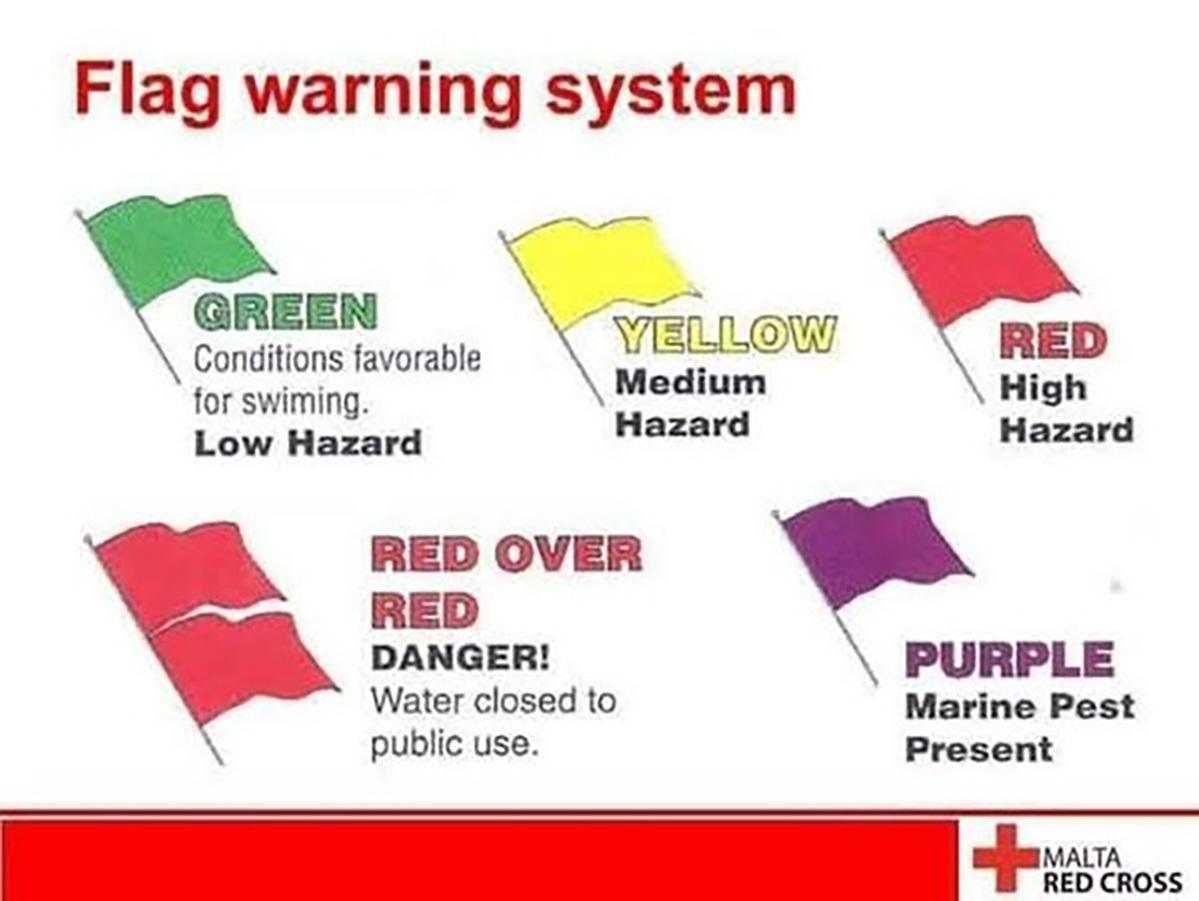
Lifeguard flags are typically displayed at lifeguard stations and are easy to see from the beach. When you arrive, it’s important to check these flags and understand what each colour means. They give essential information about current sea conditions, and paying attention to them can help keep you safe in and around the water in Malta. Photo: Malta Red Cross