‘We knew they might never come back’: World War II plotter who saw Malta burn
Kay Xuereb, aged 101, is the last known Maltese World War II plotter
From deep beneath Valletta’s Upper Barrakka Gardens, in the underground operations rooms at Lascaris, Kay Xuereb helped track enemy aircraft and coordinate Malta’s air defences during one of the most heavily bombed campaigns of the war.
Today, more than eight decades later, she still remembers the fear, the exhaustion and the young men who never returned.
“We knew them,” says Kay, who lives in the UK.
“They would come down to the plotting room to look at the plot… and look at the girls. Then they would go flying. And sometimes they never came back.”
When Italy declared war on Britain and France on June 10, 1940, Malta immediately became one of the most strategically important – and vulnerable – Allied positions in the Mediterranean.
The bombing began the next day. And for the next two-and-a- half years, the island endured relentless air attacks from Italian and German forces.
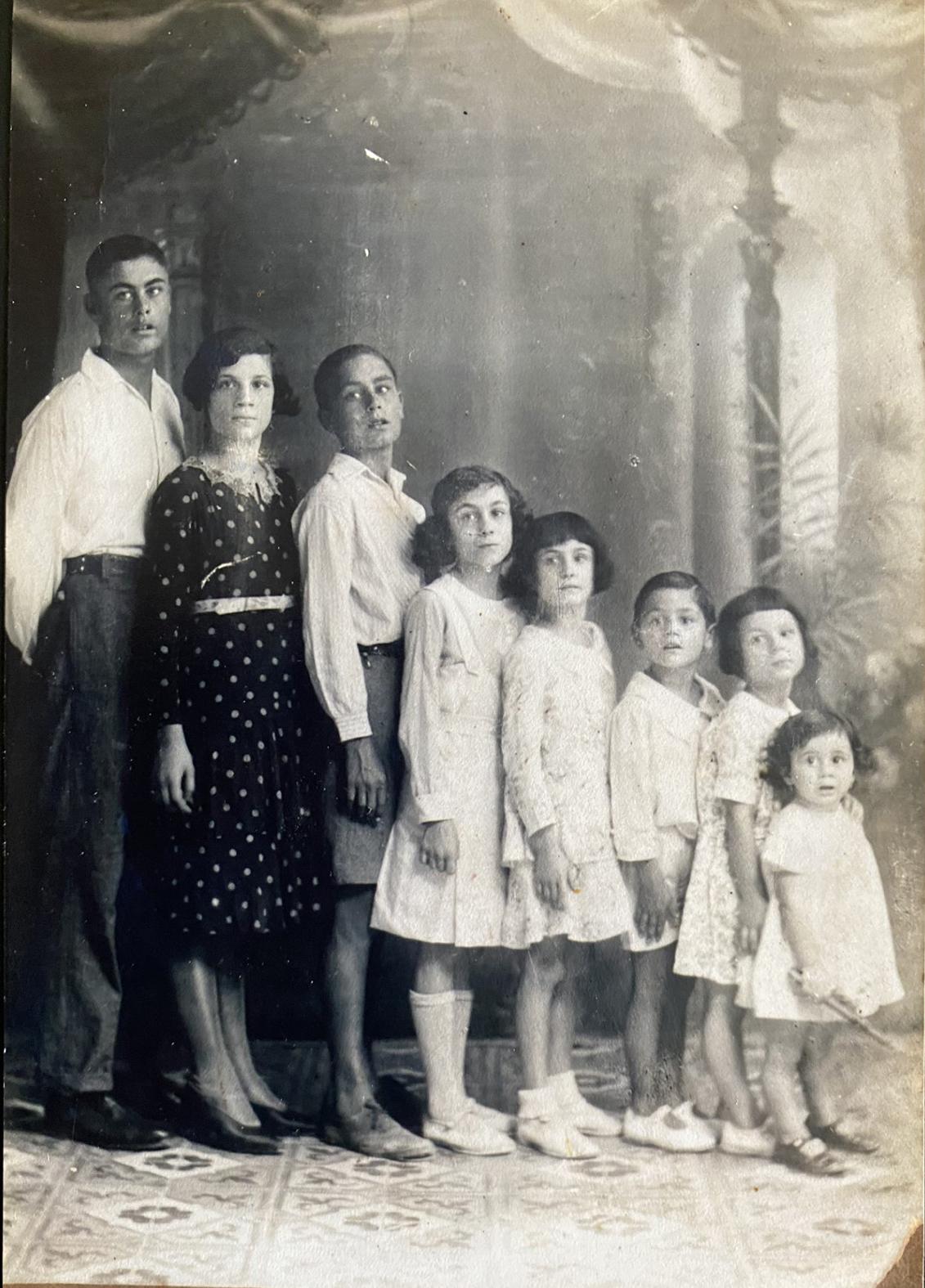 Eight of the Xuerebs’ nine children in 1932. From left: Charles, Mary, Paul, Nina, Kay, Romeo, Juliette and Adelina. Benny was born a year later.
Civilians and servicemen alike heard the near-constant wail of air-raid sirens, and Kay experienced it all first-hand.
“We heard Mussolini declare war on the Rediffusion. And the bombing started the next day.”
At the time, she was still a teenager.
From shop assistant to war plotter
Kay Xuereb was born on September 28, 1924, in St Ursula Street, Valletta, one of 10 children.
Her father, Emmanuel, worked in the dockyards in Grand Harbour. Her mother Jessie ran a small lace business from home, selling handcrafted Maltese lace to naval officers’ families and visitors to the island.
As a teenager, Kay helped in her mother’s lace shop near Tigné Barracks in Sliema.
“I didn’t like it,” she says bluntly. “My mother put me in the shop, but I didn’t get paid.”
When war disrupted Malta’s economy and many naval families left the island, the business struggled. Kay took work with the NAAFI, where she met sisters Jane and Martha Hayston, who would become close friends.
In the summer of 1941, Jane mentioned something that would change Kay’s life. Jane had begun work in the underground RAF headquarters at Lascaris as a civilian aircraft plotter.
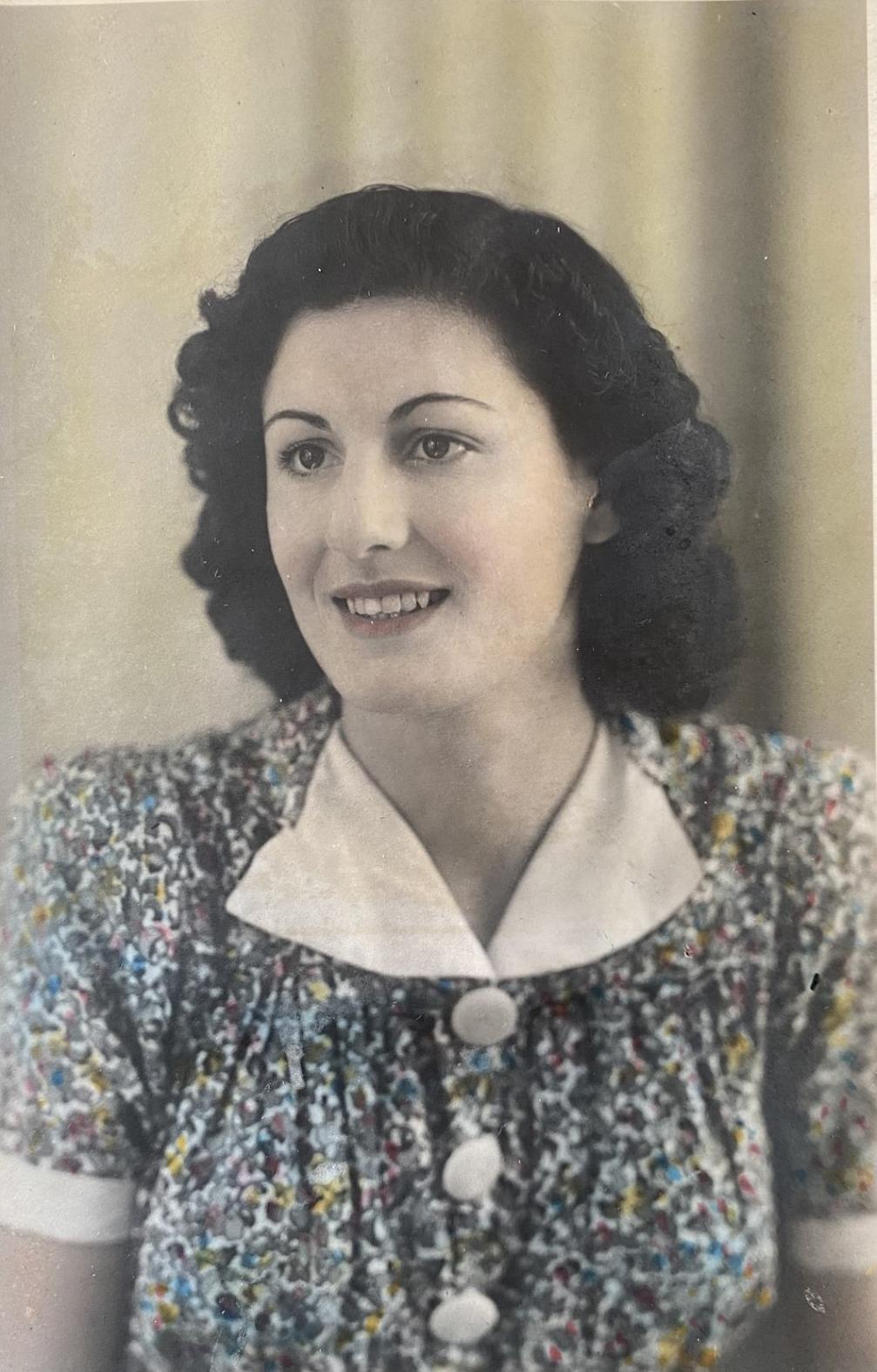 Kay in late 1941, age 17. She bought the material for the dress, which she made herself, from her very first RAF pay packet.
Kay also applied and was accepted. She was still only 16.
Officially, the underground complex beneath Valletta was known as No. 8 Sector Operations Room. Unofficially, those who worked there called it “the ditch” or “the hole”.
From here, teams of RAF personnel and civilian women monitored radar reports, tracked enemy aircraft and coordinated fighter interceptions.
Kay joined D Watch, one of the rotating teams that operated around the clock. Her job was to work at the large plotting table in the centre of the operations room.
“The girl on the table was called the ‘Stooge’,” she explains.
Using coloured arrows – red, blue and yellow – plotters tracked aircraft movements across a map of the central Mediterranean. The colours corresponded with the sectors marked on the large operations clock.
'Remove that bloody plotter off the table'
New plotters were assigned the quieter western side of the table.
As they became more experienced, they moved to the east side – that included Malta.
From April to November 1942, the watch controller was RAF fighter ace Bill Farnes.
“I was terrified of him,” Kay recalls.
“If we made a mistake on the table, he would shout: ‘Remove that bloody plotter off the table. Get her out’.”
The work was relentless. The women worked seven days a week, with just a week’s leave every three months.
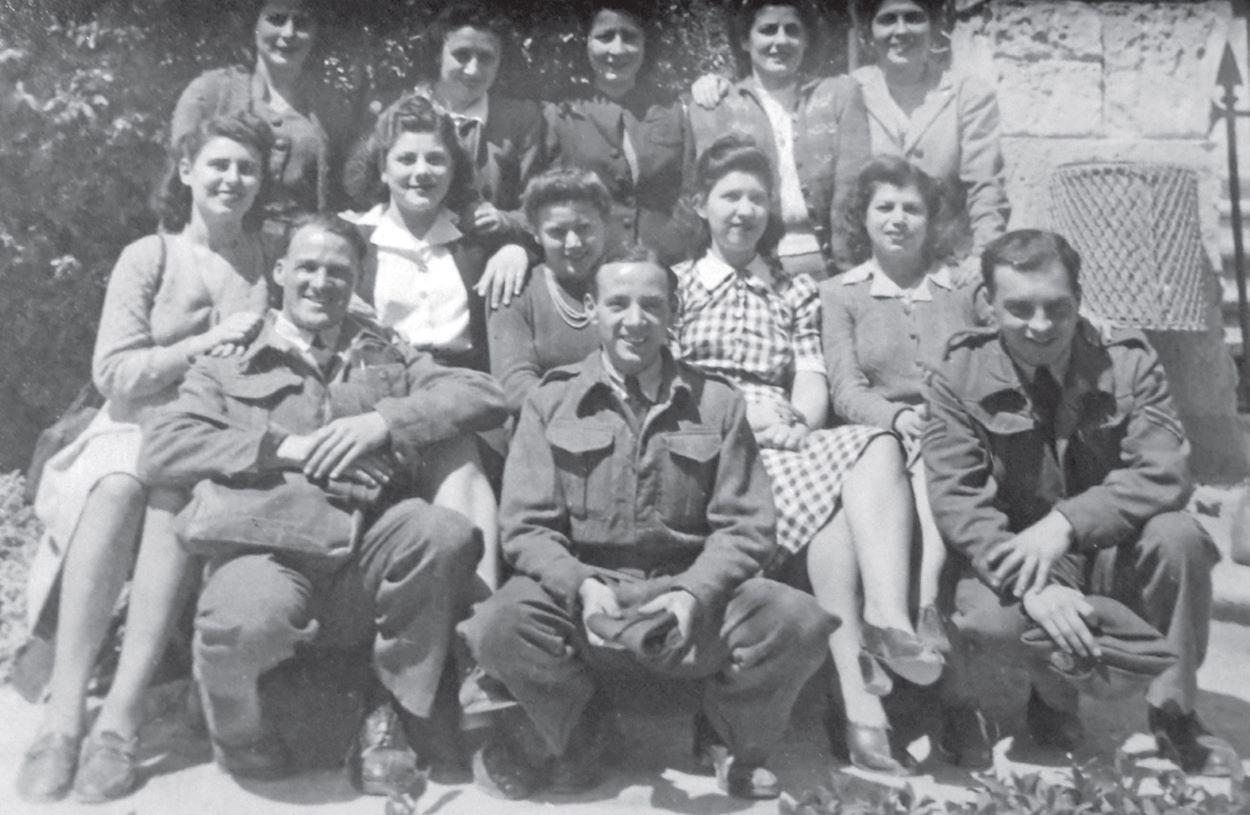 D Watch, 1944. Back: Not known, Sarah Demajo, Win Turk, Kay Xuereb, Carmen Borg. Middle: Stella Vella, Julie Xuereb, Mary Aitken, Lily Turk, not known. Front: Three men, not known.
Despite the pressure, friendships formed quickly. Among those on D Watch were Christina Ratcliffe – later captain of the Watch – the Hayston sisters, Gladys Aitken, the Tomlin sisters and Sue Price.
Nearly 80 years later, Kay still remembers with affection Ratcliffe, who was also a British singer and dancer.
“She was nice to everybody. She was bossy – in a nice way. If one of us wasn’t doing our work right, she was firm. Christina looked after us. Everybody loved her.”
Above the Lascaris tunnels, Malta was being devastated as families moved constantly and homes were destroyed by bombing.
The Xuereb family evacuated to Birkirkara and lived temporarily in a school before returning to Sliema, where they eventually squatted in a roofless house with two usable rooms.
'He would hide in a cupboard'
Kay’s eldest brother Charles, served in an anti-aircraft gun crew in the dockyards.
During the Illustrious blitz in January 1941, his gun position took a direct hit. He was the only survivor. The blast left him suffering severe shell shock.
“From that point, he behaved like a child,” Kay says. “When the siren went, he would hide in a cupboard, then run to the shelter and sit on his own.”
The family endured constant displacement as bombing destroyed one home after another. Eventually they moved to Msida and later Gżira.
Even getting to work could be dangerous. When she lived in Sliema, Kay sometimes took the ferry across Marsamxett Harbour to Valletta.
But bombing made the crossing terrifying. The ferry cost a shilling. And one day it took a direct hit. Instead, she often walked the four miles to Lascaris.
The plotters had to report for duty regardless of the air-raid state.
“We realised we could not be late for our shift,” she says.
Sometimes the journey itself was deadly.
“One day I was running to work, and one of the anti-aircraft guns got a direct hit... What did I see? Bodies. All those men from the gun.”
She ran past the devastation and kept going.
“I ran and ran to my work. I remember it to this day.”
Tragedy at home
One bombing raid struck even closer. After finishing a night shift, Kay was asleep at home when the air-raid siren sounded.
She and her sister reached the bottom of the stairs. Their brother Charles managed to reach the basement when a bomb struck the house.
“One of six bombs hit the house and went down to the basement, where it exploded.”
Kay and her sister survived. Charles was killed.
The family moved yet again, first to Savoy Hill in Gżira, then to another house from which they were bombed out before eventually returning to Tigné Terrace.
Like many Maltese civilians during the siege, Kay remembers constant hunger.
“I remember looking in people’s dustbins to find a piece of bread. We used to go to the Victory Kitchens with a big pot.”
Yet even during the darkest months of the siege, the Lascaris girls found moments of normality.
Between shifts, they went dancing. Tea dances were held at clubs like the ERA Club and the Vernon, just across the road from Lascaris.
“We were a happy lot,” Kay says.
Airmen often teased them: “They used to say we would never dance with a lowly airman – only someone with stripes on their arms.”
One day, after a shift, Ratcliffe invited several plotters to her apartment on Strait Street. They climbed onto the roof and began dancing. A War Office photographer took their picture.
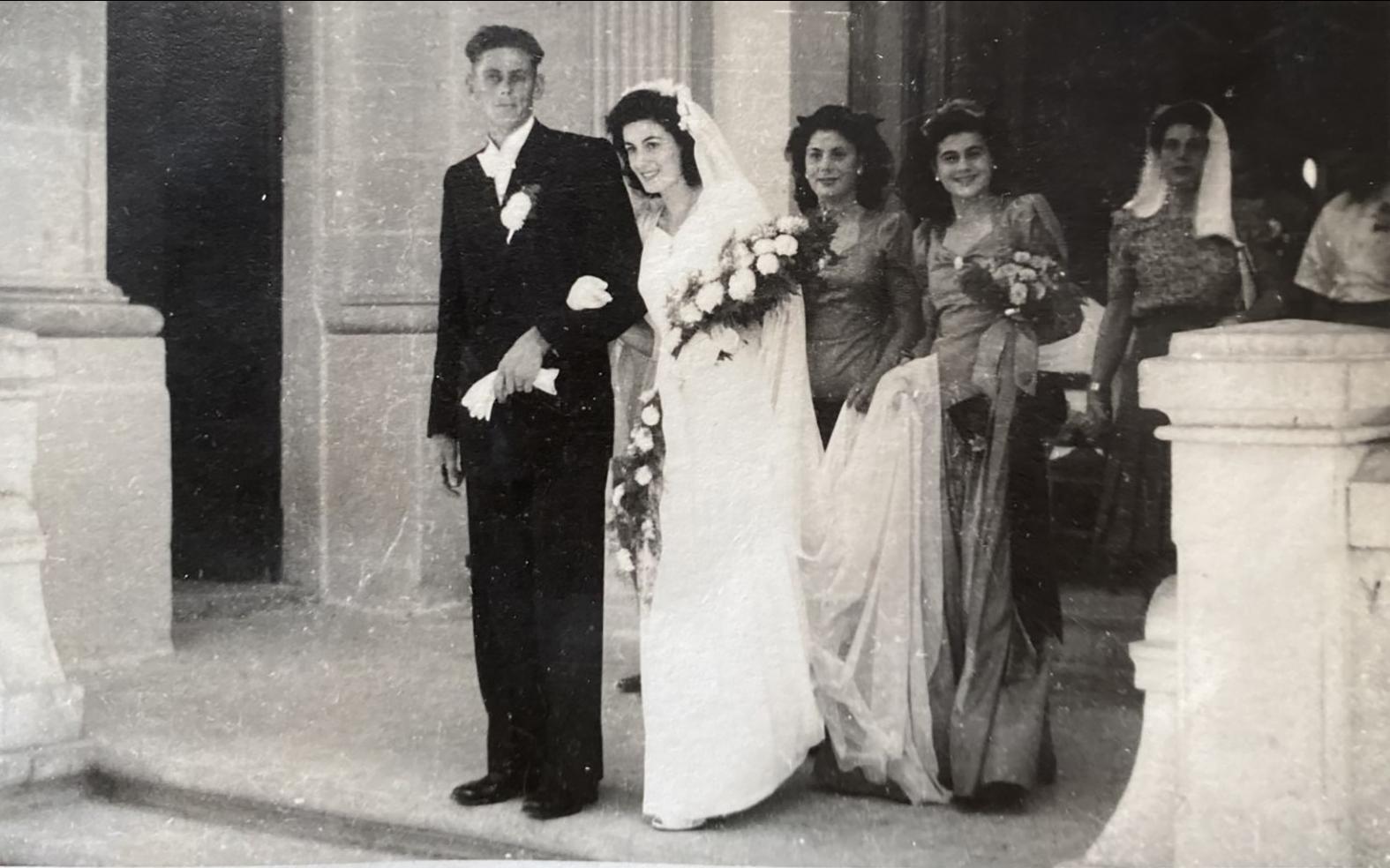 Jack and Kay Cussins, outside Stella Maris church, Sliema, August 26, 1945. The bridesmaids were Kay’s sisters, Juliette and Adelina.
Later, the image appeared in the Daily Mirror.
“We were thrilled. One day, a sailor came up to me with the picture from the newspaper.”
Hearing the last calls
Not all memories are happy. Kay says there are three things she remembers from the war that she rarely speaks about.
One was the bombing. Another was the sight of dead servicemen after raids. The third was hearing the final radio calls from doomed aircraft.
One plotter handled Mayday transmissions from pilots in distress. Their position was located by plotting radio bearings with long pieces of string across a circular table. Where the strings crossed showed the aircraft’s location.
Rescue launches from Kalafrana could then be sent.
“But sometimes we knew they were going down. We could hear them.”
One moment in particular has never left her.
In August 1942, Malta was on the brink of starvation. An Allied convoy known as ‘Operation Pedestal’ attempted to deliver desperately needed supplies to the island.
German and Italian aircraft sank most of the ships. But one tanker – the Ohio – struggled towards Malta, badly damaged.
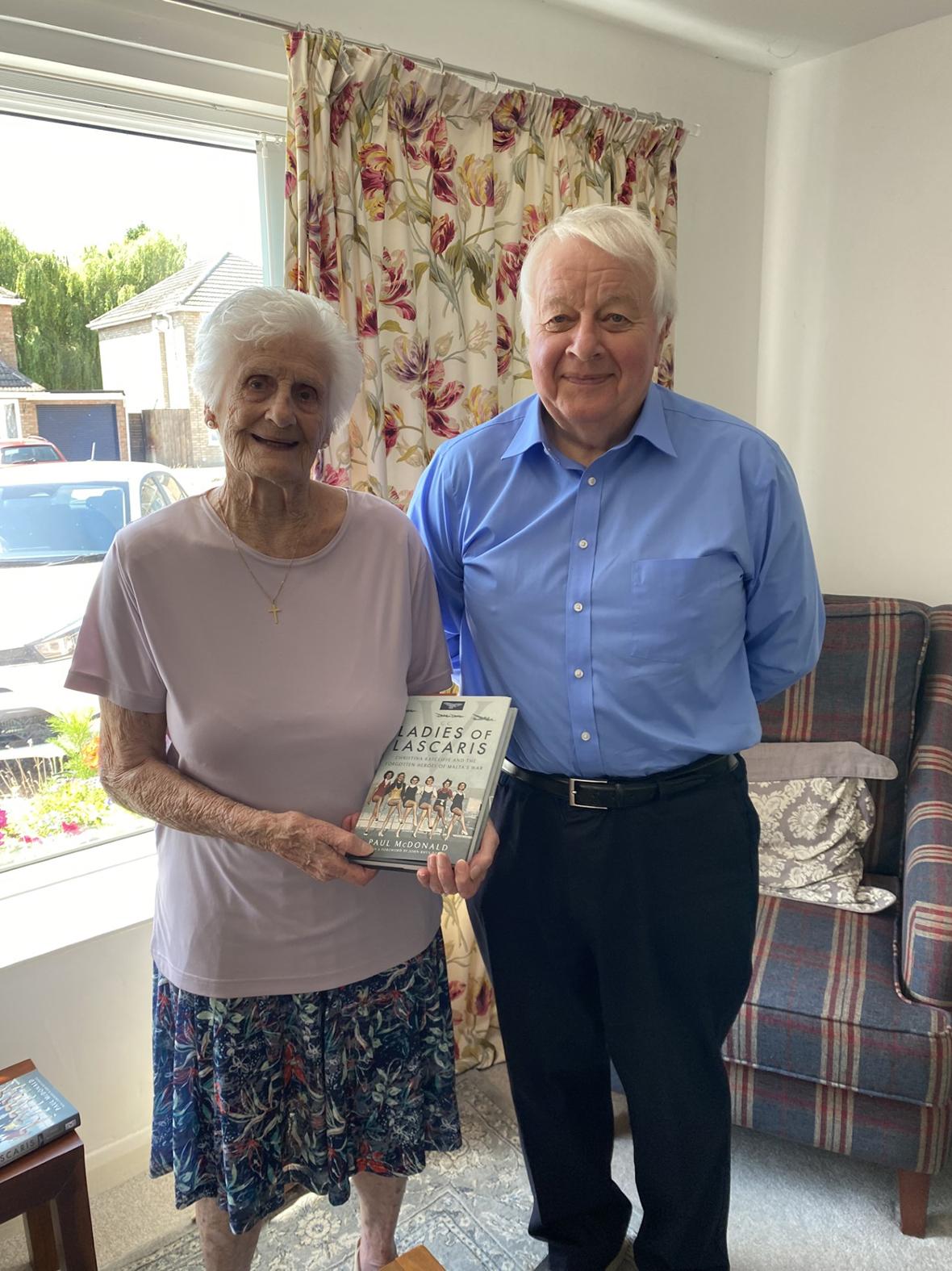 Kay Cussins and Paul McDonald pictured in 2023.
Kay watched the drama unfold in the operations room.
“We knew they were coming. We plotted them on the board.”
After finishing a night shift, she went to Valletta’s Lower Barrakka to watch.
“I saw the Ohio coming in, slowly, slowly. Two destroyers were holding it up.”
What she saw on the deck has stayed with her ever since.
“All along that ship, all I could see were dead sailors.”
But the tanker made it into Grand Harbour.
“And that’s what saved us. That saved Malta.”
‘Dead boys… young boys’
Looking back, it is the human cost of the war that stays with her most strongly. “So many soldiers, sailors and airmen died. Dead boys. Young boys.”
Yet despite everything − the bombing, the hunger, the loss − she reported for duty day after day.
“That was our job. The job had to be done.”
Paul McDonald is a speaker with the UK-based Shuttleworth Veteran Aeroplane Society. He is the author of three books: Winged Warriors, Malta’s Greater Siege and Adrian Warburton and Ladies of Lascaris: Christina Ratcliffe and the Forgotten Heroes of Malta’s War.