Why younger Maltese people are now rolling their Rs less
A study of recordings of 60 Maltese speakers finds signs of a generation divide
Younger Maltese speakers are rolling their Rs less than older generations, a University of Malta research project has found, marking a subtle but significant generational shift in pronunciation.
The study, based on recordings from over 60 Maltese speakers, found a clear generational divide: older participants were far more likely to pronounce the traditional trilled ‘R’, while younger speakers often used a softer, more English-like version. Researchers link this change directly to shifting media exposure – as younger Maltese consume far less Italian TV and far more English-language content, their speech patterns appear to be subtly adapting.
The study, led by Prof. Holger Mitterer from the University’s Department of Cognitive Science in collaboration with Eva Reinisch from the Acoustics Research Institute of the Austrian Academy of Sciences, investigated how the pronunciation of the R sound in Maltese has evolved across generations.
Speaking to Times of Malta, Prof. Mitterer said: “When it came to Maltese, what I noticed is this strong difference in attitude to Italian between the generations. What is an internationally not well-known possibility is that you apparently can learn a language just by watching TV because it’s the most interesting TV available.”
Older generations informally acquired Italian by watching Italian television.
We need to be careful not to make the claim that it’s just the Italian versus English influence- Prof. Holger Mitterer
Today, younger Maltese are not doing the same and are, in fact, far more exposed to English-language media. The researchers set out to determine whether this shift has influenced the way younger Maltese speakers pronounce the R sound – a consonant known for being one of the most variable and easily influenced across world languages.
Maltese audiences have been exposed to Italian since the early 20th century, with Italian radio transmissions reaching the island as early as the 1930s. By 1957, one of the first television broadcasts to be aired in Malta came from Rai in Sicily. Malta’s own television broadcasts only began five years later, in 1962, with the launch of the Malta Television Service, later known as TVM.
 Prof. Holger Mitterer. Photos: Department of Cognitive Science at UM.
In contrast, younger Maltese audiences have grown up immersed in English-language content, largely due to the influence of YouTube and other digital platforms. Channels such as Nickelodeon, Cartoon Network, Disney Channel, and various BBC outlets like CBeebies were staples of their childhood media consumption.
“The R sound is like the canary in the coal mine for language change,” Mitterer said, explaining that while there are only a couple of common ways to pronounce the T sound, there are more than 10 variants of the R sound.
“We found the older speakers are producing more trilled Rs (a rolled ‘R’) as they would also be produced in other Semitic languages and as they are reinforced from Italian, but younger speakers are using more approximate R (a softer English R).” The word “red” as an example of the English approximate R, and “burro” – the Italian word for butter – as an example of the Italian-style heavy trilled R.
Study involved 60 participants
The study was conducted over January and February and involved 60 participants. To be eligible, older participants had to be at least 45 years old, while the younger group was capped at 25.
Participants were given a sentence memory task. They were shown an image alongside a corresponding sentence. The sentence was then removed, and only the image remained, requiring the participant to recall the sentence aloud.
Mitterer explained: “We chose to conduct the research like this to make sure people are not reading out loud and they’re not thinking about pronunciation.”
One of the sample sentences was: “Gianni kien rebel meta kien żgħir”, (Gianni was a rebel since he was young) which was shown alongside an image of a young man in a leather jacket.
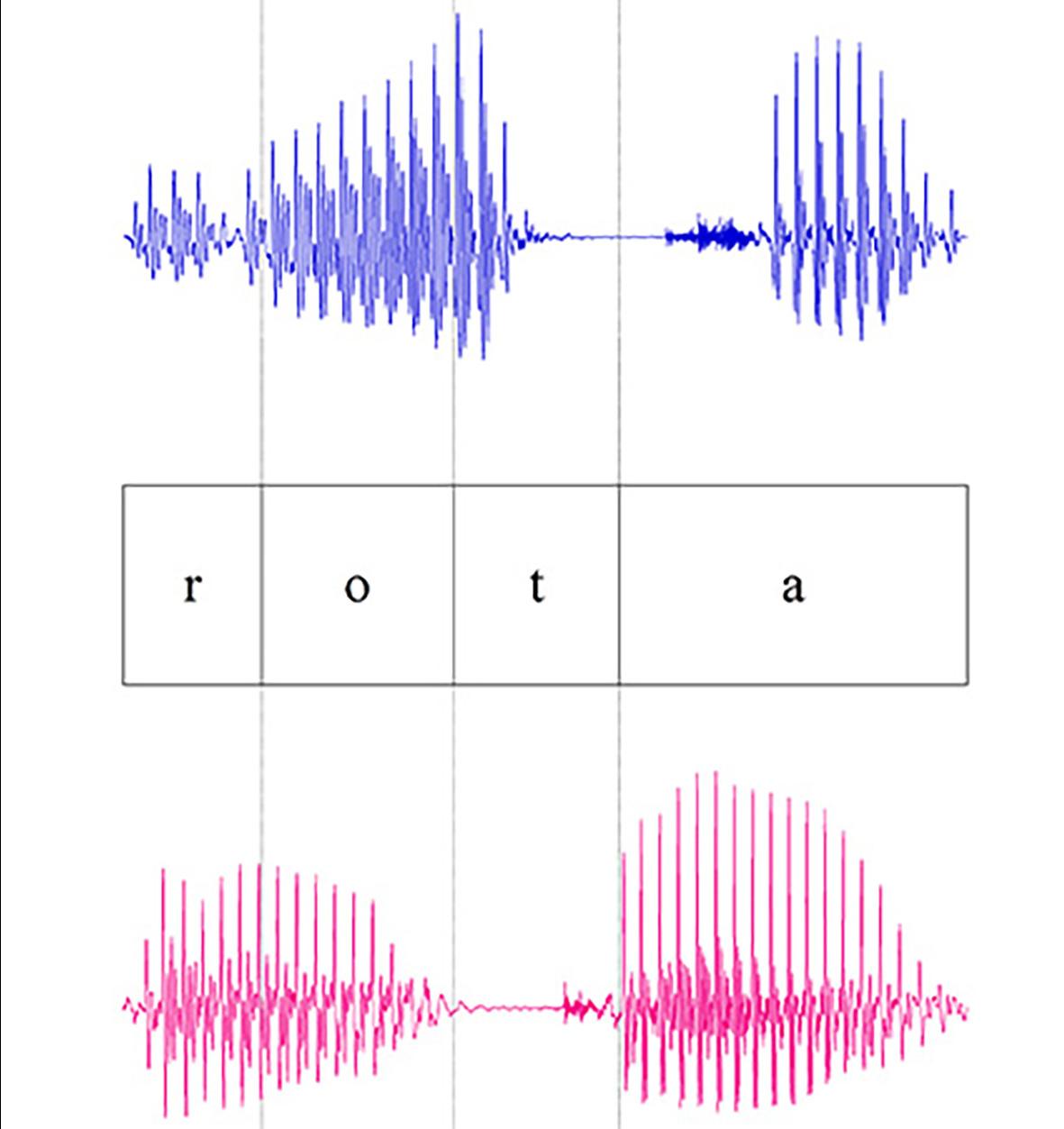 Differences in Rs.
Sentences featured Maltese words of Semitic, Italian and English origin. The researchers found that trilled R sounds were less common in English-origin words and observed that even older speakers were not rolling their Rs with words such as in “darts” or “ors”.
“‘Ors’ was one of the words we tested, and no one produced it with a trill,” Mitterer said. However, trills still occurred when an R sound appeared before a vowel and after a consonant – for example, in words like ‘freezer’ or ‘sriep’.
Mitterer noted that such changes are part of a broader linguistic trend and are not solely a result of media exposure. Furthermore, it does not mean that Maltese is at risk.
“People have moved away from rolling their Rs in many languages, including English, and this is just a normal process,” he said. “We need to be careful not to make the claim that it’s just the Italian versus English influence.”
The project was funded by the Malta Council of Science and Technology (MCST). In light of the research, the University of Malta will host the international ‘r-atics 8’ conference at its Valletta campus on May 22 and 23, drawing scholars from around the world to discuss R sound variation and change across languages.
Correction: An earlier version of this article incorrectly stated that 300 people had taken part in the study.