The woman who founded New York Fashion Week has some styling tips for Malta
‘If Malta wants to turn fashion into business, runway pieces need to be easier to find and buy’
Malta has sun, sea, grand hotels, historic gardens and a ready-made reputation as a Mediterranean escape.
Now, according to the woman who founded New York Fashion Week, it may also have the ingredients to become something glamorous: a resort-fashion destination.
Fern Mallis, the fashion powerbroker often dubbed the “fairy godmother of fashion”, was in the country this week for Malta Fashion Week, where she urged organisers and designers to lean into what Malta has to offer.
It does not need to imitate Paris, Milan, London or New York.
Malta’s setting and growing creative scene could be turned into an advantage, provided local talent is properly nurtured and given a platform beyond the applause of fashion week.
“This is one of the Mediterranean’s best-kept secrets,” Mallis added, saying she plans to help expose it.
Her comments come at a time when Malta Fashion Week has placed a stronger emphasis on local designers and students from the Malta College of Arts, Science and Technology, giving emerging talent a more prominent role in the programme.
For Mallis, that is exactly where the future of fashion lies.
If she could wave a magic wand, designer clothes would not be so “crazy” expensive, sustainability would become the industry’s guiding principle and emerging designers, rather than luxury giants, would take centre stage.
Prices have gone sky high and, looking ahead at what she would like the fashion scene to be like in the next 50 years, Mallis wanted to see prices drop significantly, hoping it would be more realistic in terms of what ordinary people can actually afford.
She described being “horrified” in Paris by the dominance of luxury brands, including a plain Dior denim skirt priced at around $1,500.
“Really?” she said. “You have to either be crazy, or so wealthy that you do not even look at prices.”
'Fashion landscape dominated by same luxury conglomerates'
For Mallis, Europe once offered shoppers the thrill of discovering independent designers and exciting labels unavailable elsewhere. Now, she said, too much of the fashion landscape is dominated by the same huge luxury conglomerates.
The antidote, she argued, is to discover young, authentic designers, celebrate them and help bring them to the surface.
At Malta Fashion Week, she was pleased to be witnessing just that.
“There is a genuine joy in seeing something new and watching somebody flourish while doing something they love,” she said.
In her former role as executive director of the Council of Fashion Designers of America (CFDA), Mallis said she “cared deeply about supporting designers”.
Among those were Zac Posen in his early years and Indian designer Sabyasachi with his first New York show.
“Now he is opening flagship stores around the world,” she said. “Watching that journey has been incredibly rewarding.”
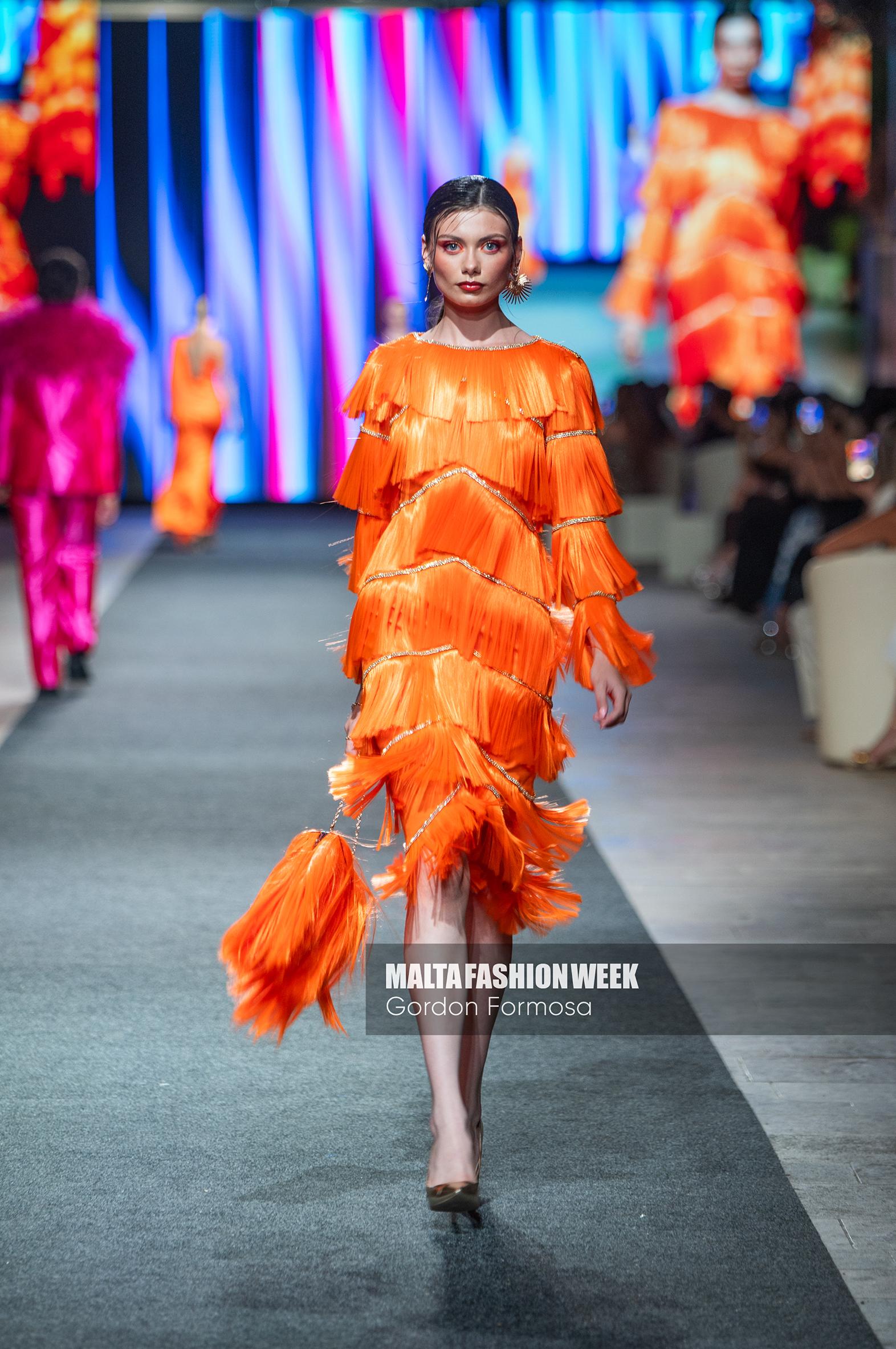 Vanusia on the catwalk at Malta Fashion Week.
Fashion godmother to Max Alexander, 10
She is also proud to be fashion fairy godmother to 10-year-old designer prodigy Max Alexander. Together, they have designed a collection of caftans called Fern to the Max, and she praised his complete commitment to sustainability.
Fast fashion, she warned, is “clogging up the planet”.
Consumers, she said, are being encouraged to buy new clothes every week, and the industry’s production cycle had become unsustainable.
“People simply do not need that much, that quickly,” she said.
Although fashion remains one of the most exciting and creative industries in the world, Mallis said it has become excessive in scale, and, at times, in taste.
“When you look at what people are wearing on the streets today, I sometimes think there is hardly any clothing left,” she said. “It’s shocking to me how naked people are! How many more places can you slash from a dress? How many more body parts can you expose?”
Some of it, she said, was verging on “tacky and trashy”.
“It makes me think I am glad I do not have children,” she added.
Yet Mallis was far more optimistic when speaking about regional fashion weeks such as Malta’s.
They did not necessarily host the biggest retailers to buy from the designers, or the major international press to write about the collections.
“But the truth is, today, you do not necessarily need Saks Fifth Avenue or Bloomingdale’s sitting in the front row, because business happens very differently now.”
The idea is “to get the photographs; to get the exposure; to create excitement and hype. It is a marketing tool for the designer”.
Mallis believes fashion weeks are also a “good economic engine” for a city or a country. If done well, people travel, stay in hotels, eat in restaurants and, hopefully, do some shopping, she said.
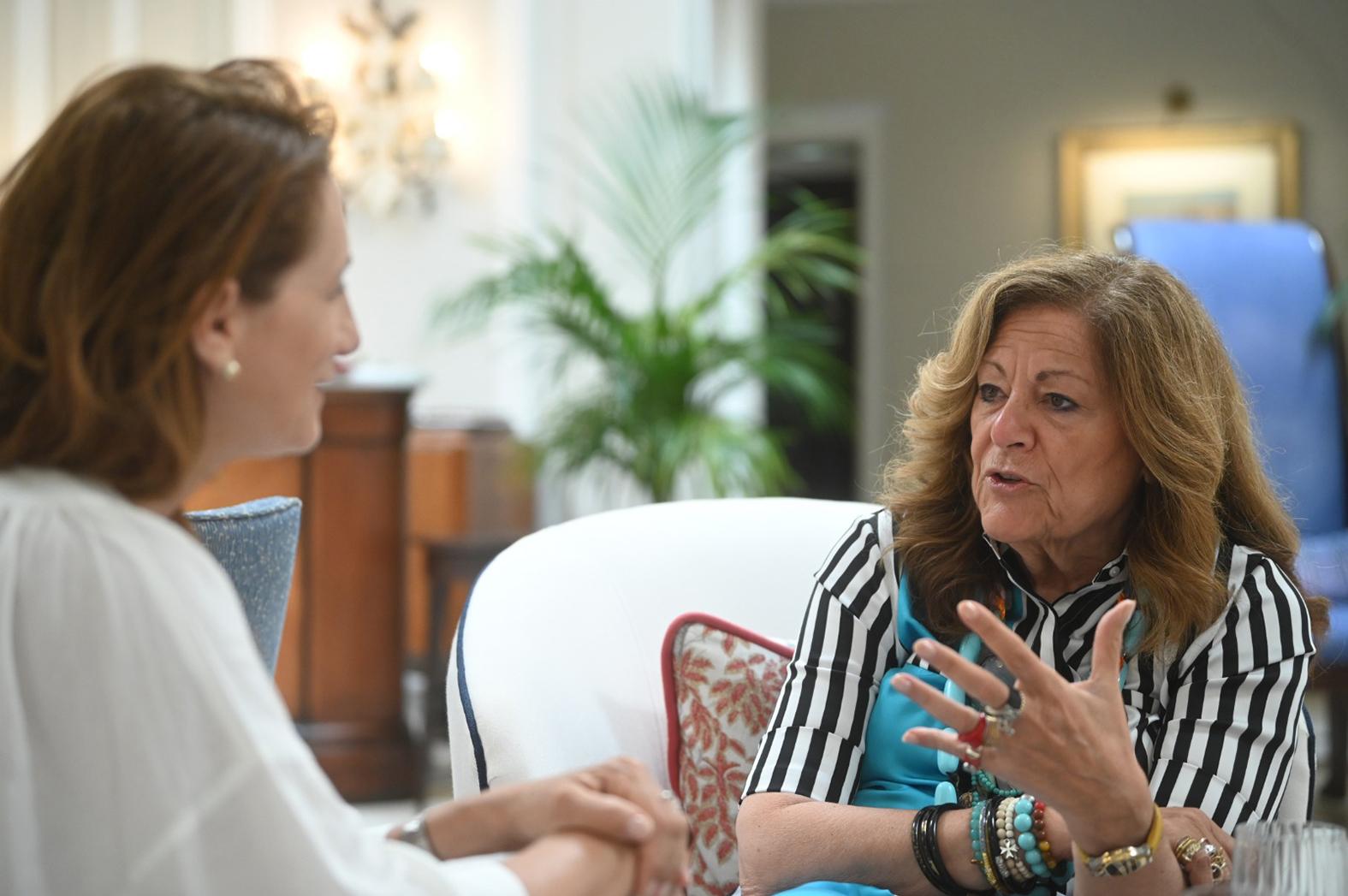 Fern Mallis speaking to Fiona Galea Debono at the Phoenicia Hotel. Photo: Jonathan Borg
'The idea is to get the exposure'
Mallis, who has attended fashion weeks around the world, said Malta compared favourably. She praised Malta Fashion Week founder Adrian Mizzi, the atmosphere at the Biskuttin Gardens venue in Floriana, the recognition given to backstage talent and the focus on emerging designers.
But she also has a challenge for the local industry.
If Malta wants to turn fashion into business, runway pieces need to be easier to find and buy. Fashion can be art, she said, but commercial collections should ultimately reach consumers.
She encouraged organisers to continue nurturing local creativity, consider inviting international guest designers, despite expenses and complications, and think seriously about resort collections.
Presented in the right setting, she suggested, Malta could offer something that feels authentic rather than forced.
Mallis also urged designers to make better use of social media, saying “fashion lives on social media today”.
Her visit was organised by the US Embassy in Malta in partnership with The Phoenicia Malta and with the support of Malta Fashion Week in celebration of America’s 250th anniversary.
Mallis said Malta may not have been on her bucket list before this, but she was thrilled to have visited and planned to return for next year’s Fashion Week.
Being such a small country did not create barriers for a fashion industry, she said. On the contrary, it was an advantage.