The women we refuse to see
International Women’s Day is often marked by speeches about empowerment and equality. But empowerment without protection is hollow, writes Helena Dalli
“But, to promote justice for the people, you must listen to the victims, like the women seated behind you. They’re some of the hundreds of survivors of Jeffrey Epstein’s global sex trafficking ring demanding the truth for America and accountability for the abusers who trafficked and raped them. You still haven’t met with these survivors.”
When US Representative Jamie Raskin spoke these words to US Attorney General Pam Bondi, he did more than open a congressional hearing. He exposed the central failure of the Epstein story: even in rooms meant for accountability, survivors remain on the margins.
The Epstein Files, according to a UN Human Rights Council statement, contain “disturbing and credible evidence” of systematic and large-scale sexual abuse, trafficking and exploitation of women and girls, suggesting a global criminal enterprise with transnational reach. The scale and severity of the alleged crimes are so grave that some may meet the legal threshold of crimes against humanity under international law.
Yet, as new material surfaces, public debate quickly returns to familiar questions. Which powerful men were involved? Who shielded them? Who escaped scrutiny?
Those questions matter. But their dominance exposes a deeper problem. The girls and young women Epstein trafficked are treated as instruments in elite power struggles, not as individuals whose consent was systematically stripped away.
This erasure is not accidental. It reflects a broader reluctance – in law and culture – to centre consent in our understanding of sexual violence.
When headlines ask, ‘Which billionaire was on the plane?’ instead of ‘How did this trafficking network operate and remain protected?’, proximity to power eclipses the mechanics of exploitation. It becomes a spectacle with the survivors as background.
We saw this in the treatment of Virginia Giuffre. Before her death in 2025, she was often portrayed not as a survivor of systemic abuse but as a controversial figure in a royal scandal. Trauma became tabloid currency, the weaponisation of a victim’s distress for clicks.
Epstein’s crimes rarely relied on overt force. They depended on grooming, manipulation, money, fear and extreme power imbalance. Many victims were minors. Some were barely adults. Some were paid. Some returned. Some did not physically resist.
Too often, these facts are used to blur responsibility. Was there force? Was coercion explicit? Did she resist loudly enough?
A consent-based framework asks a simpler question: Did she freely and genuinely agree?
Sex trafficking rarely resembles cinematic abduction. It is the gradual erosion of autonomy, where “choice” is shaped by poverty, age, dependency and intimidation. When rape is defined narrowly as requiring force or threat, ambiguity shields perpetrators. Compliance is mistaken for consent. Payment is framed as mitigation. Power imbalance disappears from view.
Two years ago, at the European Commission, we proposed a directive to combat violence against women. Article 5 would have defined rape as sex without consent, a clear ‘Only yes means yes’ standard across all 27 member states. Resistance from some governments meant the article was removed.
The objections were framed as technical questions of national competence. But the consequences are not technical. Coercion-based laws – which require proof of violence or threat – are a gift to predators. If an abuser is powerful enough to groom rather than bruise, the law may fail to recognise the crime.
Even without Article 5, many member states – including Malta – have consent-based laws. Others still rely on proof of force or threat. As the EU moves toward the 2027 deadline for the directive’s implementation, the consent gap should be closed.
If the lesson of the Epstein Files is merely that elites escaped scrutiny, we have learned little- Helena Dalli
The same tension exists in the United States. Rape law is not defined at the federal level for most prosecutions; it is primarily governed by state law and the definition varies by state. While some states have moved toward consent-based standards, others still require proof of force, threat or incapacity.
Without a consent-based definition, sexual violence law depends on proving violence. That grey zone is where traffickers thrive. Grooming is the antithesis of consent: it replaces free agreement with manufactured compliance.
The parallels with Epstein are stark. The focus on his associates, while understandable, continues to centre elites rather than examine how consent was stripped away. Survivors appear relevant only insofar as they implicate powerful men – not as individuals whose autonomy was violated.
A consent-based framework does more than improve prosecutions. It reshapes how society defines harm. Silence, acquiescence or return do not equal agreement. Age, wealth, status and dependency become legally relevant. It challenges the myth that exploitation is defined only by overt violence committed outside respectable society.
If we continue to avoid consent-based definitions of rape, we leave the door open for other and more Epsteins. The law must finally see the girls and young women who were told they were ‘Nobody’s girl’ and affirm that they belonged only to themselves.
International Women’s Day is often marked by speeches about empowerment and equality. But empowerment without protection is hollow. Equality without legal clarity is fragile. If we are serious about women’s rights, consent cannot be optional, implied or negotiable.
If the lesson of the Epstein Files is merely that elites escaped scrutiny, we have learned little. The harder lesson is that there are still legal and cultural systems that hesitate to name sexual exploitation plainly when it does not fit outdated scripts of violence.
The question this International Women’s Day is not whether we know enough. It is whether we are willing to listen and to build laws that treat women’s lack of consent as the starting point, not the afterthought. As ever, the law on its own is not enough. We have to work on attitudes and culture but it is a good start.
When Raskin urged officials to look behind them and see the women who survived Epstein’s abuse, he was not asking for symbolism. He was demanding a reordering of priorities.
Accountability cannot begin and end with powerful men’s names. It must begin with the violation of consent that defined the crime.
If we continue to debate proximity to power more intensely than the stripping away of autonomy, survivors will remain exactly where Raskin found them: present but unheard.
This International Women’s Day, centre also the women and girls. Not just the powerful men.
Happy Women’s Day.
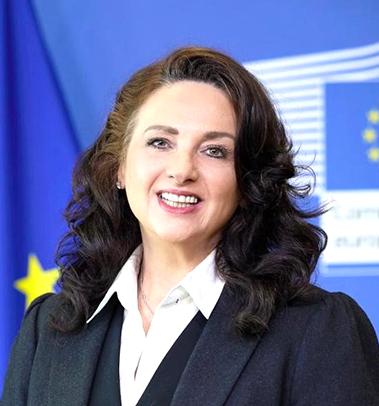
Helena Dalli is a former EU commissioner and a former social dialogue minister.