Women, witchcraft and early modern Malta
A review of Carmel Cassar’s public lecture ‘Women, Witchcraft and the Maltese Inquisition in the 16th and 17th centuries’
On April 3, the Jesuits’ Church Foundation hosted a compelling lecture by Carmel Cassar entitled ‘Women, Witchcraft and the Maltese Inquisition in the 16th and 17th Centuries’.
Cassar, director of Maltese Studies and a lecturer in Anthropology at the University of Malta, is perhaps best known for his book Witchcraft, Sorcery and the Inquisition: A Study of Cultural Values in Early Modern Malta, available at the Inquisitors’ Palace and other Heritage Malta sites.
The audience – ranging from university students to academic colleagues to members of Malta’s growing neo-pagan community – was captivated as Cassar recounted the haunting case of Isabetta Caruana, a Gozitan midwife accused of witchcraft in 1599.
According to testimony from Valerio Cauchi, a long-time resident of the Citadel, he saw Isabetta Caruana and her daughter Romana flying naked on a broomstick. He denounced them to the Roman Inquisition as magara – wicked women or witches.
Several corroborated this accusation, including an official from the Bishop’s Curia, and it received support from Gozo’s governor and resident knights. Needless to say, the Inquisition triggered an inquiry.
During the tribunal, Isabetta defended herself as a devout Catholic. As a child, she had lived in a Mdina monastery, and as an adult, she religiously attended mass and confession, participated in processions, and helped impoverished girls obtain dowries after the 1565 Siege left them bereft.
When the tribunal confronted her with the fact that she was often seen walking outdoors at night (something no respectable woman would do at that time), she countered that it was because she was a midwife: babies come at all hours of the night.
However, Isabetta’s theological misunderstandings – and worse, her teachings – worked against her. She believed Christ was four months old during the Passion (because there are four months between Christmas and Easter) and that Jesus, born of a virgin, must have emerged from Mary’s breast or side – errors that did not help her defence.
Worse still were accusations far graver than fanciful heresies or flying on broomsticks. The June 15, 1599, deposition tells us that Valerio Cauchi accused Isabetta of trying to procure his 13-year-old stepdaughter to sexually service Gozo’s lieutenant governor, an Italian knight.
Although Cauchi apparently intervened in time and managed to save the girl, his stepdaughter’s reputation was forever destroyed and no one would marry her.
Isabetta’s daughter fared worse. Despite vehemently denying the broomstick rumour, she did admit to being a former prostitute, a plight Cassar made clear was common for single young women, even widows, at this time.
Without a family or husband who could provide for them and with little to no opportunities of learning a trade, women had extremely limited options for garnering an income and providing food and shelter for themselves.
Many early modern women in Malta had a tough time
Cassar didn’t shy away from the complexity of female relationships in these cases, noting how some women demonised others. Some, driven by envy, fear, pressure or the desire to deflect suspicion, helped corroborate accusations against their neighbours, fuelling the spread of rumours and social ostracism. (Men, too, were occasionally accused and complicit in betraying friends and colleagues.)
Yet, amid this betrayal, Cassar also highlighted moments of solidarity – particularly Romana’s efforts to shield her mother and sister from shame, fully aware that her own “fallen” reputation could taint them.
On August 31, 1599, the inquisitors decided to imprison and torture both mother and daughter in order to extract confessions. They were taken to a chamber in the Inquisitors’ Palace and subjected to the corda, a dreadful device known as ‘The Queen of Torments’. It is likely they were first stripped before their hands were bound behind their backs.
A rope was then threaded through the binding and hoisted over a ceiling beam, painfully wrenching their arms upward as they were lifted into the air and left to hang. After a long period of suspension, they were then lowered – only to be raised up again, perhaps this time with weights attached to their feet.
But despite the agony of this torture, neither Isabetta nor Romana would confess.
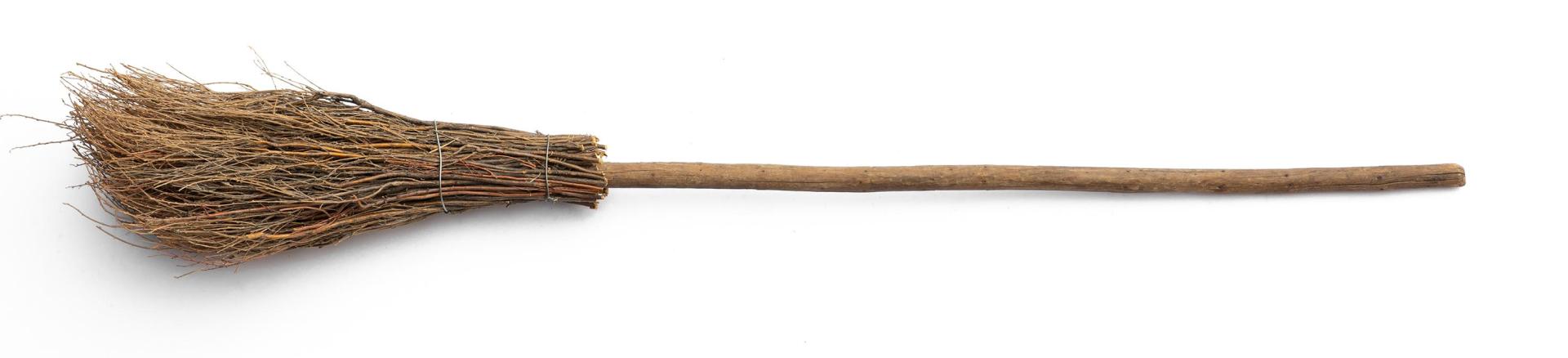 According to testimony from Valerio Cauchi, he saw Isabetta Caruana and her daughter Romana flying naked on a broomstick.
Cassar pointed out not just the inquisitors’ brutality but also their hypocrisy and corruption. For instance, a contemporary wealthy woman also charged with witchcraft managed to avoid torture and incarceration altogether. How? By providing the Inquisitors’ Palace with a hefty fine – a practice that the Roman Inquisition deplored and ordered Malta to stop.
Although there was no time left for questions at the end, it was clear that Cassar sympathised with Isabetta and Romana’s plight: his lecture emphasised the subjugation of Malta’s 16th- and 17th-century women, especially single women and widows – perhaps even our own foremothers 10 generations past.
Whether it was being tortured for false allegations of flying on a broomstick, being forced to sell one’s body in order to survive, being procured as a young teenager to serve the sexual whims of a powerful authority figure, never being able to marry because one’s reputation was destroyed, or being forced to seek charity to obtain a dowry for marriage, many early modern women in Malta had a tough time in this unfairly patriarchal hegemonic society.
It is to Cassar’s credit that he keeps the memories of Isabetta and Romana alive. Their stories are not just historical tales – they carry warnings for our time.
We may think that superstitious thinking, social ostracisation and scapegoating are things of the past, but people are still imprisoned, tortured and executed for practising witchcraft or sorcery in certain parts of the world.
Even in our own society, many suffer the consequences of unfair, untrue and malicious gossip – all one needs to do is check the Women for Women (Malta) Facebook group for instant verification.
But perhaps witchcraft isn’t so bad. As Cassar wryly remarked, he wouldn’t mind flying on a broomstick himself – if only to escape Malta’s wretched traffic!