Workshop considers ethics of building and sustainability
Participants invited to use writing as a tool to explore themes development and the built environment
An upcoming workshop invites attendees to write collectively on the topic of the ethics of building.
Pre-Sustainability: The Ethics of Creation is a participatory writing workshop led by art and architecture writer Ann Dingli at Valletta Contemporary on July 23. Organised in collaboration with Friends of the Earth Malta, the session forms part of a wider workshop series exploring the relationship between creative practice and the circular economy.
“We began contemplating our deep relationship with the earth far earlier than our thinking began on sustainability,” says Dingli. “The workshop’s reference to ‘pre-sustainability’ therefore goes back to an intuitive, corporeal conversation about the environment – to what the land makes us feel and think, and how it has transported us wholly since the beginning of time.”
Dingli contextualised sustainability as the result of an anthropocentric perception of the world, where human beings fail to recognise the primacy of nature.
“Human beings are far younger than the earth itself – which is a 4.6-billion-year-old veteran of life-making. The discussion on environmental sustainability is a mandatory one, but many others preceded it,” explains Dingli.
“The poetry of Wordsworth and Shelley came long before our discourse on planetary stewardship. Their words drew on human beings’ insubstitutable relationship with the land – which is one of the few things in our existence that was not made by us.
“Humans have no authorship over the earth, and therefore the conversation we have about it is ours only to borrow.”
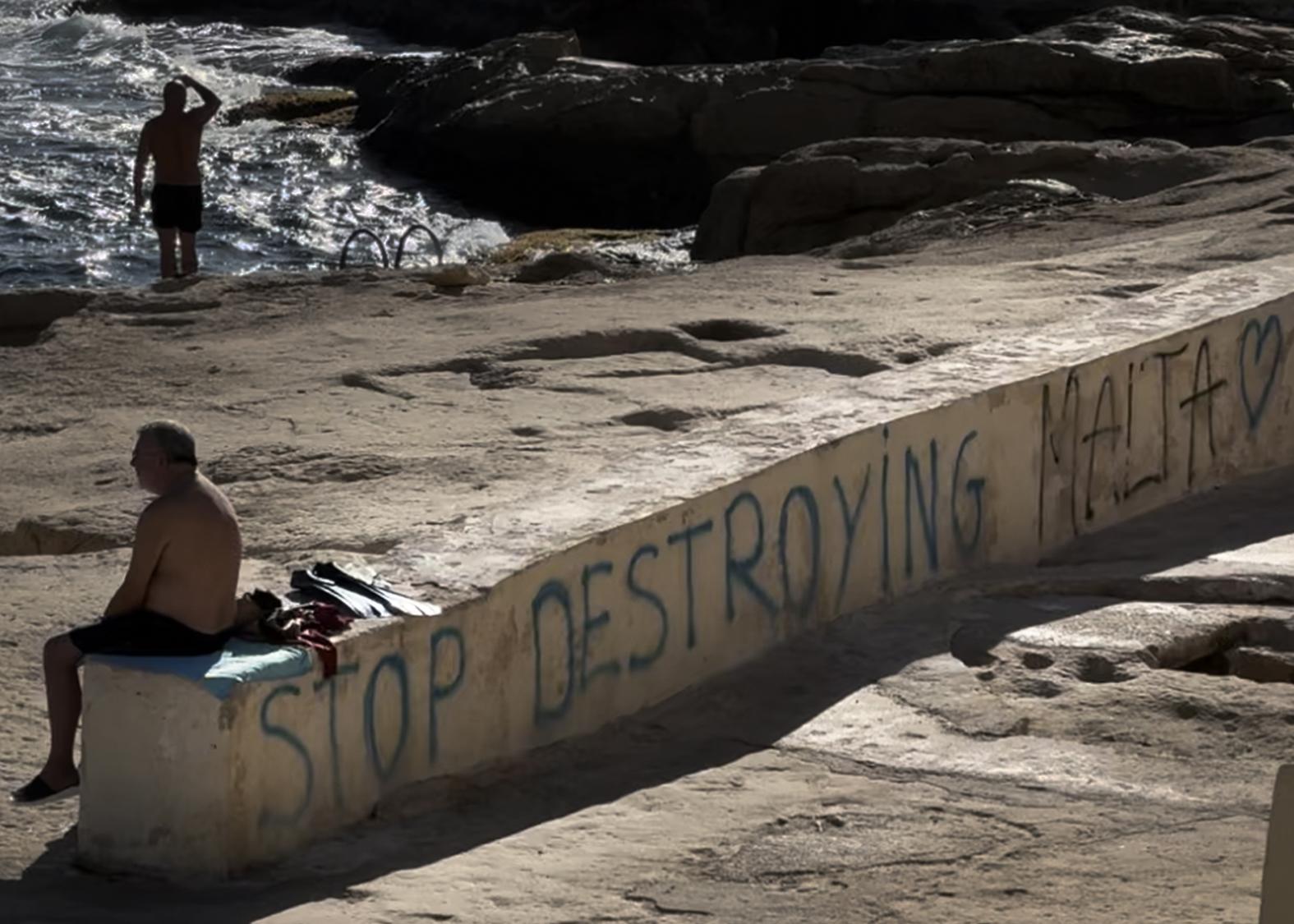 We need to think about moral re-ordering. Photo: Ann Dingli
Dingli maintains that today’s discussion on ‘sustainability’ fundamentally translates to how human beings have treated an earth into which they came long after – one they only inherited.
“The failure to recognise this chronology is just one of the pillars of a ‘human-centred’ value system that many civilisations, including ours, live by,” she says.
“Because of this collective egotism, there exists a moral failing to instinctively prioritise the needs of things outside ourselves. This includes the land. We therefore need to think about moral re-ordering – about the ethics of creation – before we can start to talk about what we create.”
The workshop invites participants to use writing as a tool to explore themes such as extraction, development and the built environment, with a view that writing may help shape public debate on these issues.
“Writing’s two greatest assets are its flexibility and its permanence,” says Dingli.
She explains that writing is malleable in that it can assume innumerable formats, and therefore be consumed democratically. It is also a crucial part of the act of ‘organising’ – of creating communal momentum towards a virtuous goal.
“Writing’s ability to catalogue that movement and enshrine it with permanence is not just useful, but a faculty that carries responsibility,” se continues.
“Words are in charge of recording how and why we have treated the environment the way we have. It keeps the score on a problem we are fully liable for creating.
“In practical terms, it creates a recorded transcript of how we are pushing back against unchecked densification, development and resource extraction. Finally, writing is important for its strength.
“Unlike oral debate, writing has a sanctified privilege of building an argument without being interrupted or instantly rebutted. It forces opponents to wait to respond, and therefore maintains an argumentative clarity that is rarely achievable elsewhere.”
The workshop Pre-Sustainability: The Ethics of Creation led by Ann Dingli is taking place at Valletta Contemporary on July 23 between 4.30 and 7.30pm. Prior writing experience recommended. Registration is required. A donation of 5 euros will support the work of the Norbert Francis Attard Foundation and Ann Dingli’s writing practice. Members are free, for more information send an email to maria@vallettacontemporary.com.