‘You really have to fight for each building’
The head of Europe's largest heritage organisation has some advice for Malta
The head of Europe’s largest heritage organisation has stressed the importance of Malta protecting its buildings of cultural heritage he says hold “enormous” tourism potential.
Noting that Malta, due to its small size, does not have “endless heritage”, Europa Nostra executive president Hermann Parzinger emphasised “you really have to fight for each building, for each site”.
Such sites hold “enormous” potential, he stressed, noting that while other Mediterranean destinations could compete on beaches, in Malta “heritage is packed so closely together”.
Speaking from the Valletta headquarters of national trust organisation Din l-Art Ħelwa, Parzinger said that “just 15 kilometres away there’s Mdina, a temple [Ħaġar Qim] – this is something very unique”.
“This is an enormous potential... for the Maltese economy and for tourism”.
Parzinger was speaking to Times of Malta during a visit to the country for Europa Nostra’s annual meeting, bringing heritage representatives from across Europe for discussions on heritage strategy and the organisation’s annual European Heritage Awards.
Each year the meeting is held in a different location, with Din l-Art Ħelwa’s 60th anniversary this year a “fantastic occasion to come here”, he said.
Parzinger’s last visit to Malta was around 20 years ago, when he visited as a tourist, and since then he has noticed changes.
Highlighting positive steps taken to preserve Malta’s heritage, Parzinger pointed to the roof covering built to protect the Ħaġar Qim temples during the summer and the “excellent” restoration work on many cultural heritage sites.
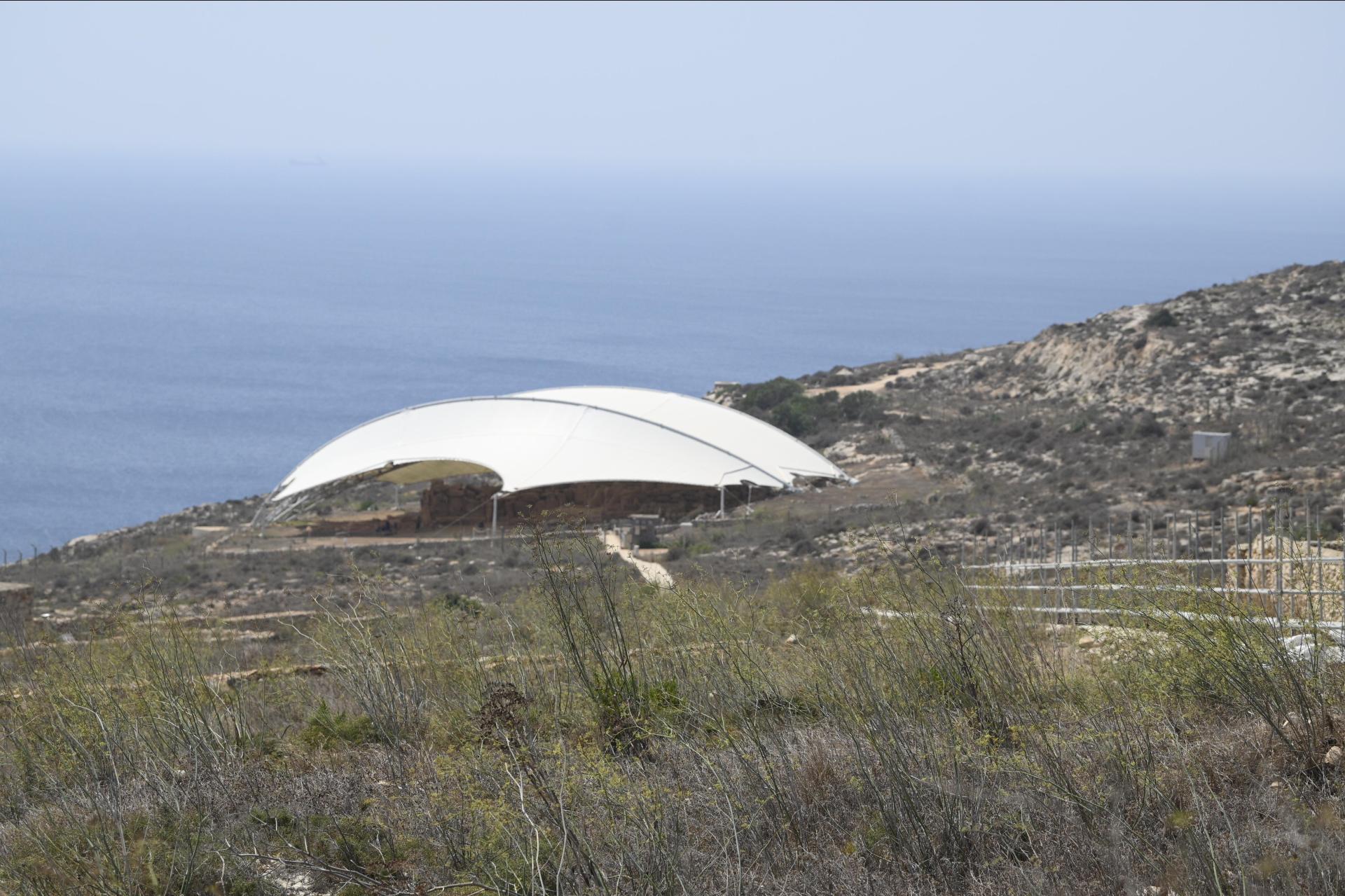 A protective shelter covers Ħaġar Qim to slow down the weathering of the ancient stonework. File photo: Times of Malta
But like in many other countries, there is still work to do, he said.
Once things have disappeared, they’re gone- Europa Nostra executive president Hermann Parzinger
“My feeling is that Malta’s regulations and enforcement are broadly applied. But there are cases, as the [19th-century Fort Chambray] British barracks, where things are happening in the certain interests of developers, which heritage professionals have different views on.”
Plans to demolish the British-era barracks at Gozo’s Fort Chambray in favour of a hotel and apartment complex have been met with dismay by heritage organisations including Din l-Art Ħelwa.
And while the Planning Authority, which granted approval for the redevelopment of the fort, has pointed favourably to plans to relocate the barracks’ inner façade, arcade and flanks within the proposed hotel, Parzinger offers a word of caution.
“There are cases in other countries in Europe where this happens; it’s one of the compromises between heritage professionals and developers. But it depends on the importance of the building,” he said.
“If the interior fits perfectly with the façade, then you cannot just leave the façade behind because it’s a whole, an entity, and should be preserved as an entity,” he explained.
“But I know of cases in other countries where the interior was changed and no longer in the period of the façade – then of course you can interfere.
“It depends really on the case; but if the façade and the whole interior is preserved, then it should be preserved as a unity.”
Cases such as the redevelopment of Fort Chambray are a “dilemma we have in many countries,” noted Parzinger, “but in these cases, the future should really be taken into account because once things have disappeared, they’re gone”.
“And for an island state which is really living from history – that as I mentioned holds enormous importance for visitors, for tourists – this should be taken into account,” he said.
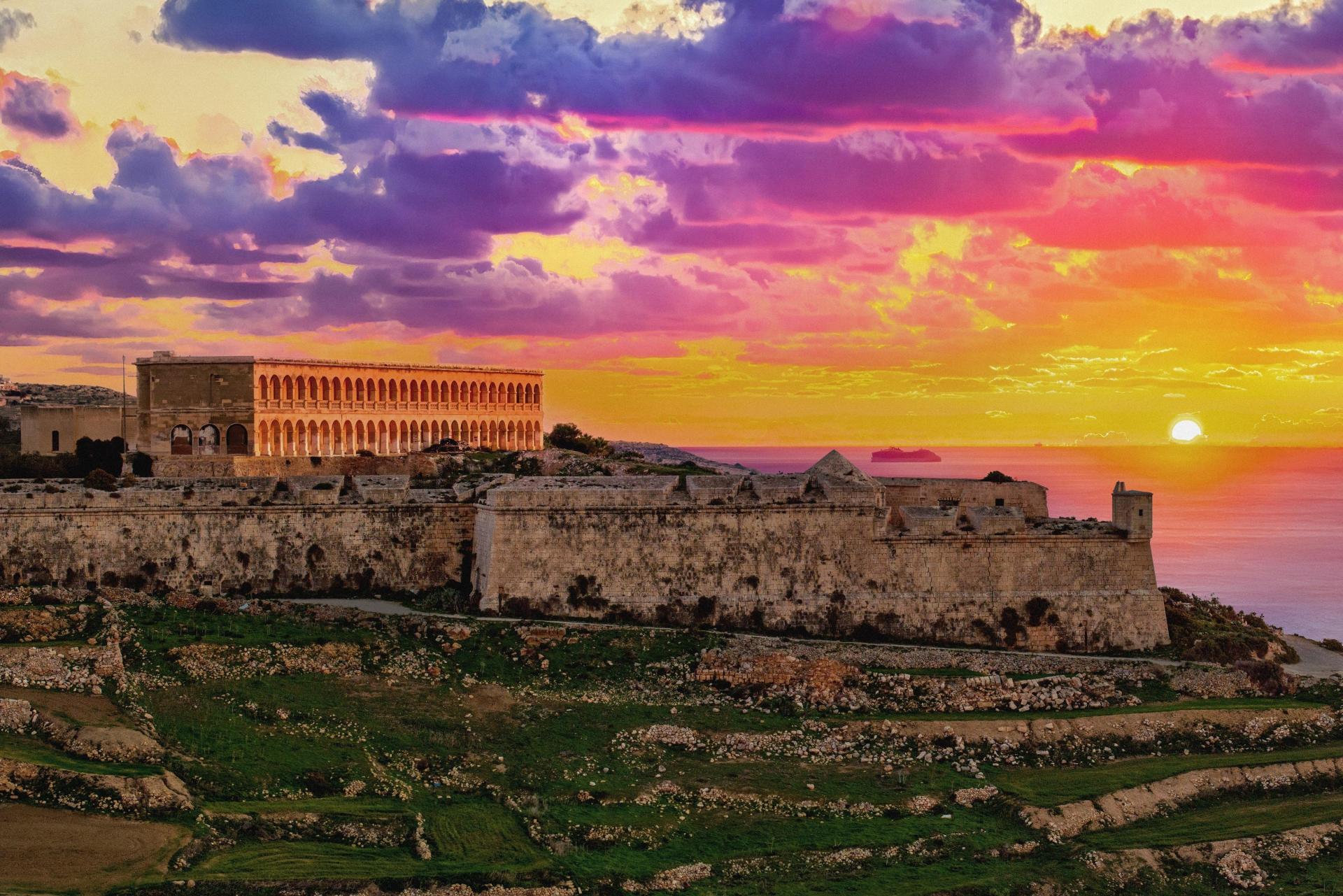 There are plans to demolish the British-era barracks at Gozo's Fort Chambray. Photo: Daniel Cilia
‘Get-out-of-jail-free card’
Highlighting a seeming gap in Malta’s heritage protection, Din l-Art Ħelwa executive president Patrick Calleja, speaking alongside Parzinger, noted that while the constitution makes the state responsible for maintaining national heritage, there was no way of enforcing it.
“The last clause in that chapter states there is no way of holding them [the state] responsible for that – it’s like a get-out-of-jail-free card,” he said. “Organisations like ours fill a void when the state has different priorities. We exist because of that”.
Should the constitution be changed?
“It’s very simplistic to say it should be changed. I think something like that should come from legislation and need not come from the Constitution,” Calleja said.
Describing Fort Chambray as a “relatively basic issue,” Calleja stressed that while the fort was not built by the Knights of St John, “it is just a different layer of our history which should be not relegated because it’s from the British period”.
That the fort was being treated differently due to its British-era roots “was the impression we got,” he said, “that it doesn’t matter; we’ll keep the façade and build another three storeys over it. It’s wrong”.
While Malta’s wealth had “increased exponentially over the years, the education hasn’t kept in tandem- Din l-Art Ħelwa executive president Patrick Calleja
Pointing to “a lot of pressure from developers” locally, Calleja said that while Malta’s wealth had “increased exponentially over the years, the education hasn’t kept in tandem,” calling for pressure for heritage protection to come “from all parts of society”.
Parzinger agreed, and said social media had the potential to provide heritage organisations with “enormous outreach; it used to be a certain ‘elite group’ of people addressing these topics... [but] we need the population to take part in this”.
Reflecting on Europa Nostra’s Malta meeting, which he said was “very fortunate” to take place around Din l-Art Ħelwa’s 60th anniversary, Calleja noted the occasion had also coincided with a visit by Malta’s European Commissioner Glenn Micallef, who attended the meeting.
Describing Micallef as “energetic and attentive”, Calleja said he was “very proud” to have Micallef as a commissioner, adding he believed the commissioner had been “unfairly criticised” by those who argued Malta had been handed a weak portfolio.
Micallef is commissioner for intergenerational fairness, youth, culture and sport.
“That’s one of the most important portfolios,” said Calleja.
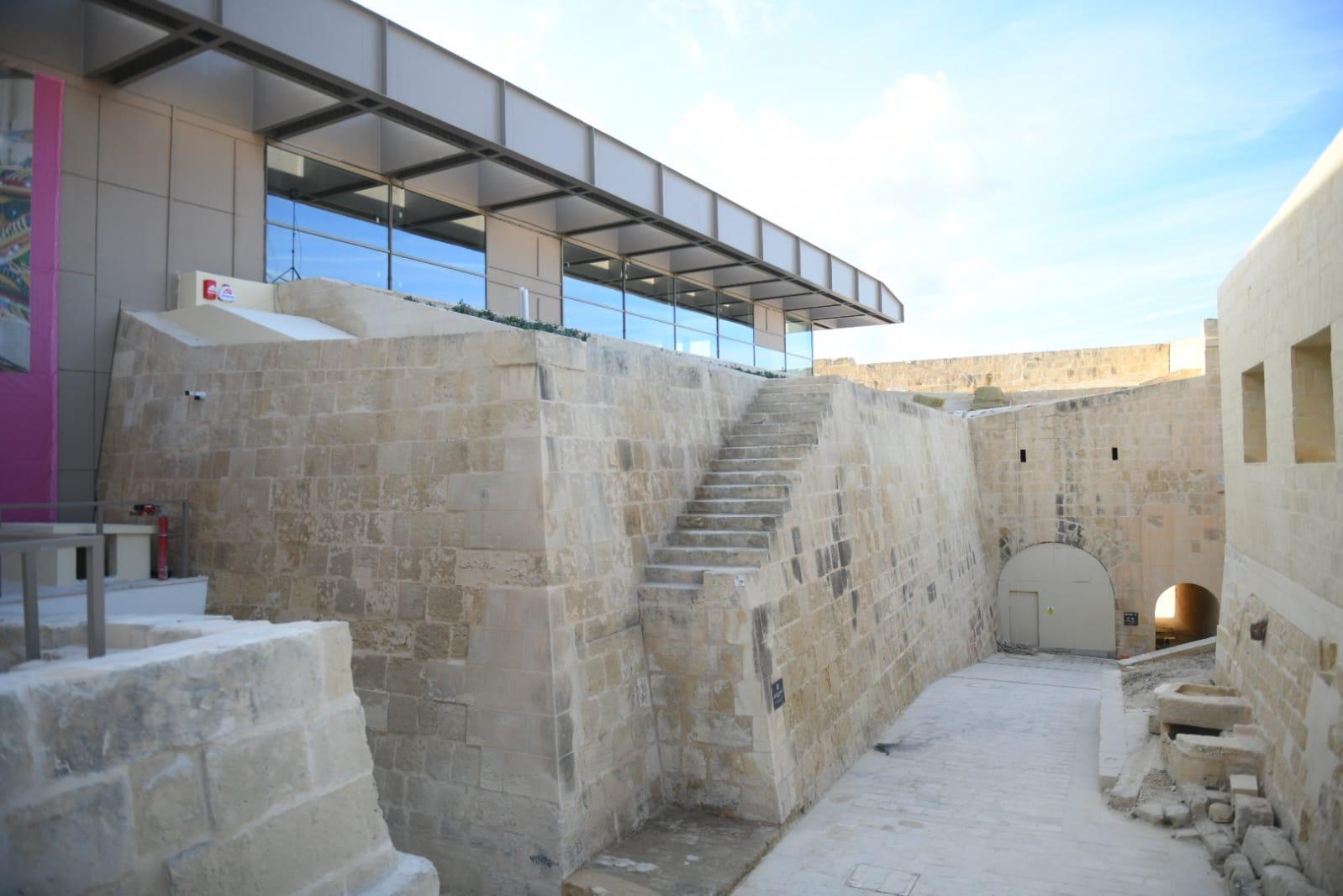 Parzinger described Malta’s newest museum – MICAS, inaugurated last year – a ‘good example of how to develop a modern building without destroying any stone’. Photo: Matthew Mirabelli
‘Really convincing’
Parzinger described Malta’s newest museum, the Malta International Contemporary Arts Space (MICAS) – inaugurated in October – as “really convincing” and a “good example of how to develop a modern building without destroying any stone”.
“I like it very much; it can bring the needs of today and the past together,” he said.
In light of successes like MICAS – and challenges facing the country – how optimistic is Parzinger about the future of Malta’s heritage?
“I’m always an optimist, so my feeling is positive. But of course, you cannot cease from fighting, convincing and doing advocacy, and this a great task for all heritage professionals,” he said.
“If politicians take a decision which is not really in faith of heritage, it would be a mistake in our lives.”