Watch: Young women escape Taliban to study in Malta
Afghan students are now studying at the American University of Malta
Afghan student Mumtaz Islamzay is haunted by her memories of four years ago when she raced across the border to Pakistan to escape the clutches of the Taliban.
“The day we crossed the border I couldn’t say goodbye to my brother. I left him with nothing and he said, ‘Run and do not look back; if you look back, the Taliban will notice that you’re alone and they will take you,” Islamzay said.
“It’s a flashback coming to my mind when I think about how I came through this difficult journey,” she said.
Islamzay was speaking to Times of Malta from a classroom at Cospicua’s American University of Malta (AUM), where for the last four months she has been studying for a master’s degree in artificial intelligence.
She is among a group of Afghan students who recently relocated to Malta following the Trump administration’s sweeping cuts to the US Agency for International Development, otherwise known as USAID.
Islamzay was a scholarship student at Afghanistan’s Bakhtar University, but when the Taliban returned to power, her studies ended.
“It’s like you’re a beautiful flower enjoying the heat of the sun, and suddenly they [the Taliban] took you and put you in a dark room.”
“My mom said: ‘You have to get an education... you have to go, you have to fight for yourself’. So, I took this strength and I said goodbye to my mom, gathered all my courage and left Afghanistan to continue my education.”
Islamzay travelled to Qatar, where she continued her studies at the American University of Afghanistan (AUAF).
The institution had been forced to leave Afghanistan when the Taliban resurged to power, relocating its around 600 students to Kyrgyzstan, US, Iraq and Doha in Qatar, where it opened a temporary campus.
AUAF continued operating from Qatar and running online classes for students based abroad until January, when Trump’s cuts to USAID ended funding for the university.
Former AUAF vice president of academic affairs, now American University of Malta rector, Victoria Fontan, said the cuts meant the institution “literally went dark overnight”, leaving her with no choice but to relocate.
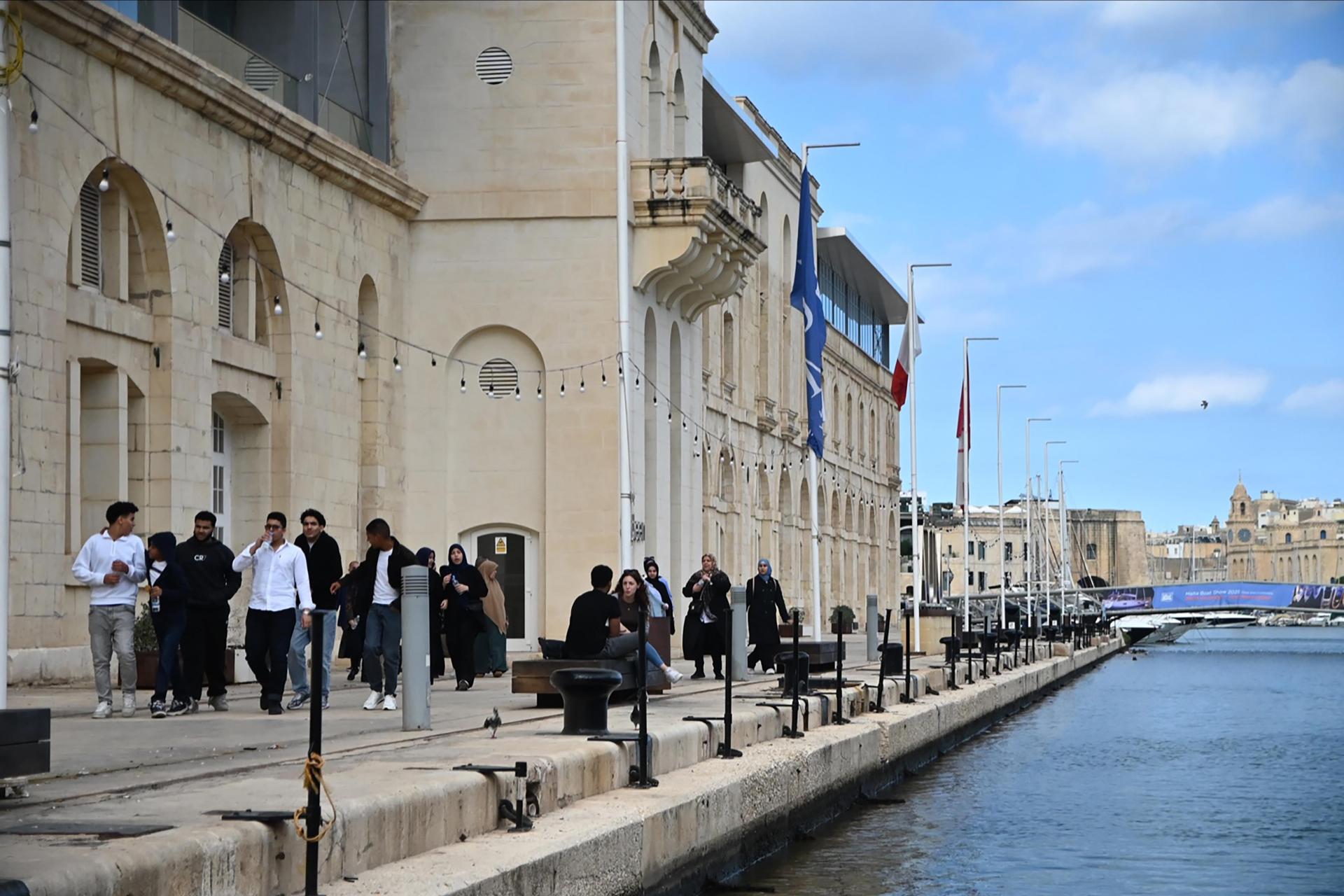 The Afghan students have found a new life at the American University of Malta (AUM) in Cospicua.
“I looked at many different destinations that could both accommodate my own career progression and my students with me, because we’ve stayed together since 2021,” she said.
Fontan explained she had already entered into discussions with AUM when an alternative line of US government funding – boosted by some private backing – opened up, securing her students’ path to Malta, the destination she described as the “best opportunity”, having also considered institutions in Albania, Oman and Azerbaijan.
“Malta is an English-speaking country, a welcoming society and has a long-standing tradition of humanitarian action and upholding human rights – and especially the rights of women. It was just a perfect combination.”
‘Amazing neighbours’
Fontan said a “sizeable” number of Afghan students were now studying at AUM, and that they had “adapted really well”.
“The weather is fantastic. They’re all lodged in the same dormitory in Tarxien and the neighbours have been amazing to them... so far, I think it’s been a success.”
The rector said the Afghan students’ studies in Malta ranged from business, accounting and management to graphic design, engineering and computer science – “niche programmes that would have them employed right after graduation”.
“The idea is not just to educate them for the sake of it, otherwise they can take a sewing class and go back and make dresses in Afghanistan; it’s about contributing to technology and the future of any society that they might choose to live in.”
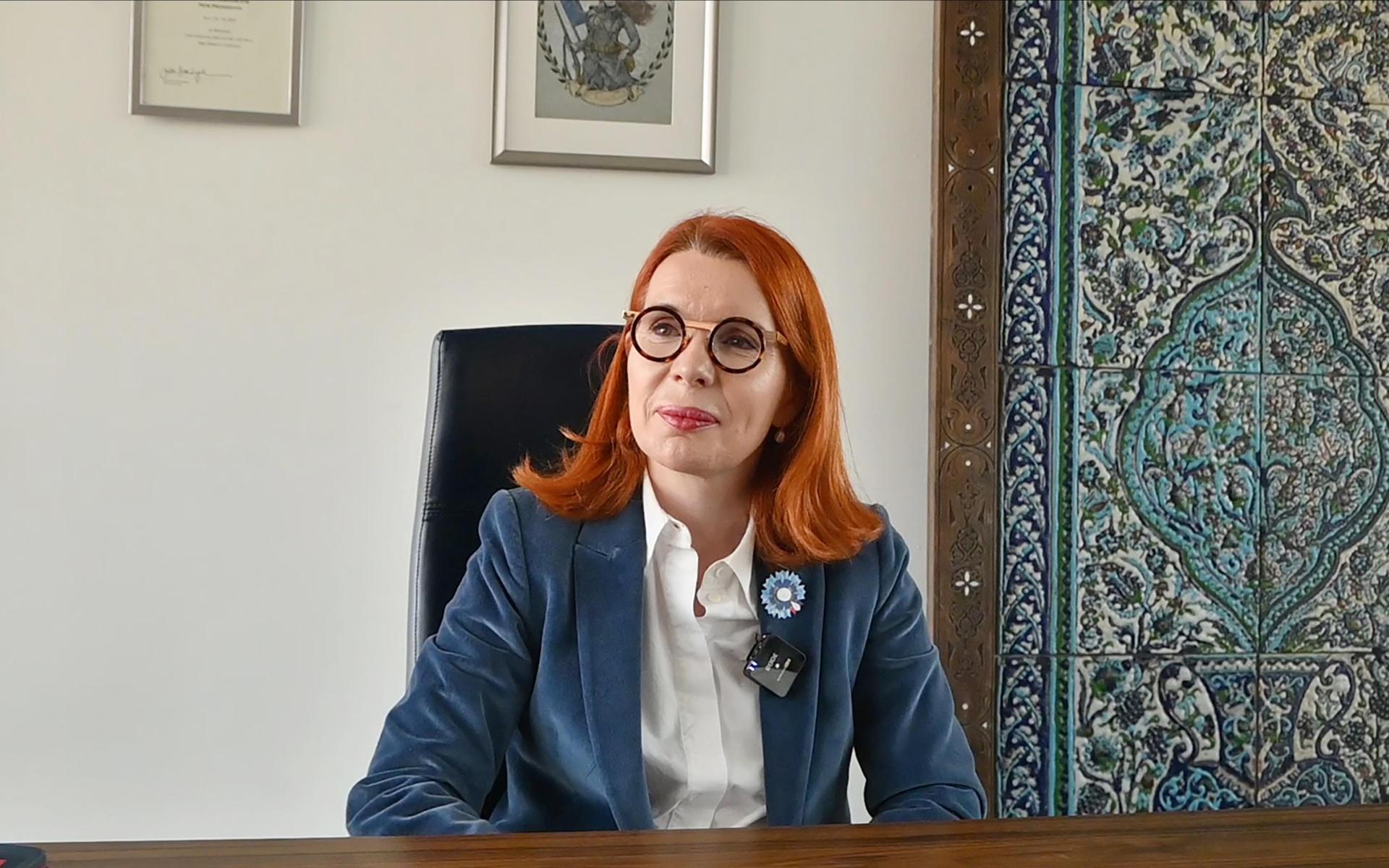 AUM rector Victoria Fontan called Malta the ‘best opportunity’ for her students.
Fontan said her students now make up a sizeable part of AUM’s student population, without going into further detail. And while AUM has faced questions in the past over low student numbers, the new rector is aiming to beef up those numbers.
“We have a cohort of study-abroad students that are going to arrive from North America and we’re establishing agreements with other American institutions,” she said.
“I came as a package with my cohort, and within our own network we had other partnerships that now are going to be coming to AUM and growing our student body... So, this is just the start.”
Responding to possible concerns about her students’ country of origin, she noted that all the Afghan students had been vetted by America’s FBI and CIA intelligence agencies.
‘Worst nightmare’
The French peace and conflict studies scholar spent more than two years teaching in Afghanistan and was in Kabul when the city fell.
Recalling the shocking events of 2021, she described the speed of the Taliban takeover as “defying logic for many people on the ground” and spreading fear among the population.
“For many Afghans, and especially women, it was their worst nightmare coming true; they had been told about the 1990s by their grandmothers, and then all of a sudden, after growing up with total freedom, they were faced with this new reality they had been dreading.”
The Taliban rule in Afghanistan collapsed in late 2001 in the face of a US-led invasion of the country following the September 11 attacks in New York. Almost exactly 20 years later, the militant group retook the country in a lightning offensive.
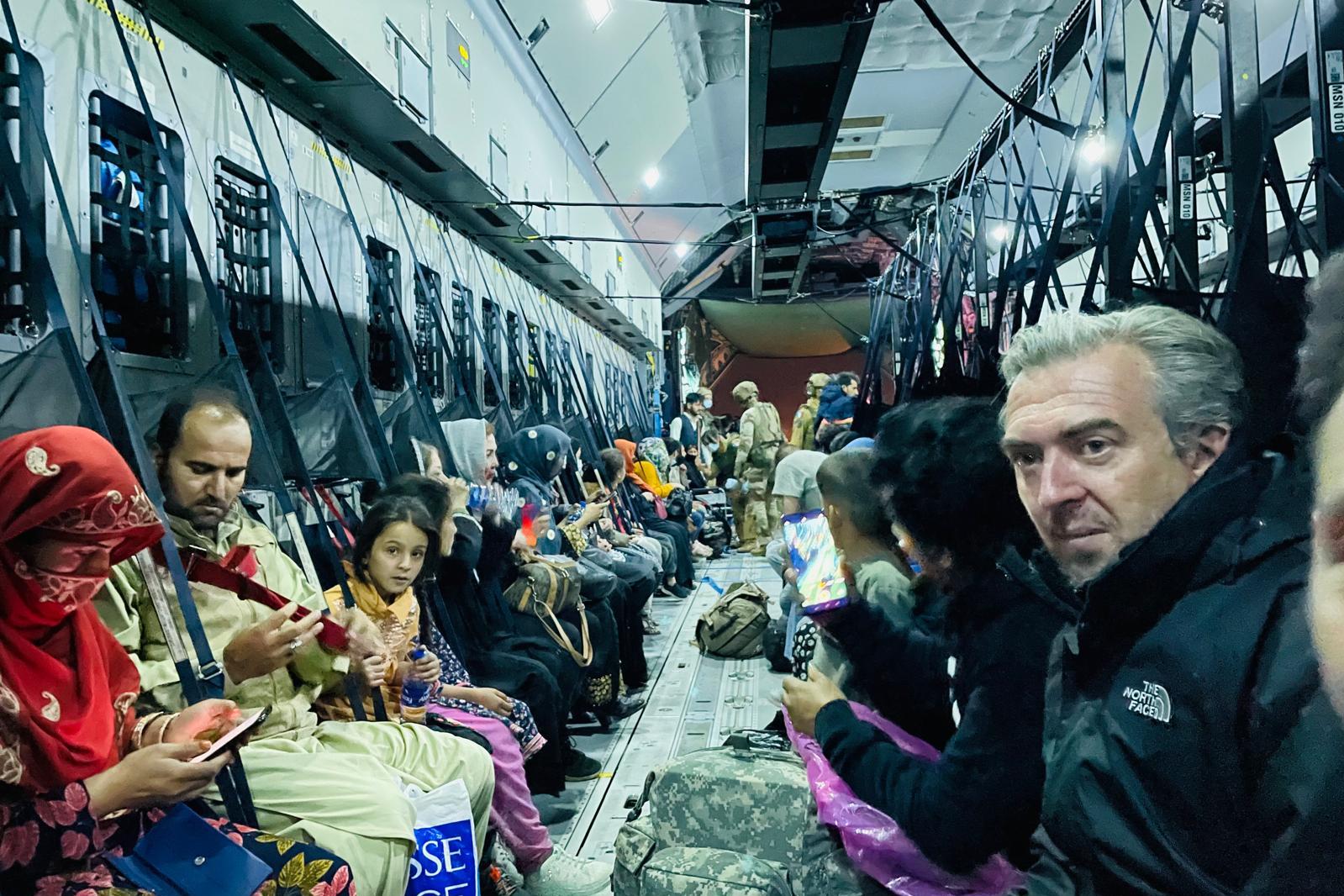 Staff and students were forced to flee Afghanistan when the Taliban resurged to power. Photo: Victoria Fontan.
Fontan’s harrowing departure from Kabul included burning files to protect student and staff identities, being searched by the Taliban and being held for days before being allowed to leave.
But even before the Taliban retook the country, it had remained a threat; a 2016 attack on the AUAF campus by the militant group left 15 staff and students dead and others abducted.
“Since the attack, students risked their lives to come to university every day. The university was like a maximum-security prison; we had enormous walls and nine ballistic towers with armed personnel – sponsored by USAID at the time – defending us,” she said.
“Just for teaching basic subjects such as gender studies, human rights, climate change, we were facing the wrath of the Taliban,” said Fontan.
‘Really grateful’
Like Islamzay, fellow student Roya Ahmadi also left Afghanistan to continue her studies after the Taliban retook the country, travelling first to the AUAF campus in Qatar and then to Malta.
She is grateful to be studying in Malta and all too aware of the fate that would await her back home: “My friends in Afghanistan are hopeless; even if they have food, shelter and family, they have no hope in their heart.”
Stressing that she remains driven by her hopes for her future, Ahmadi said she “couldn’t survive” if she were forced to return to her home country.
“The girls cannot even live their life; they can’t even go to the park... [to] sit somewhere and enjoy nature. So, if I don’t have that kind of right, how about my education? My work? My future?”
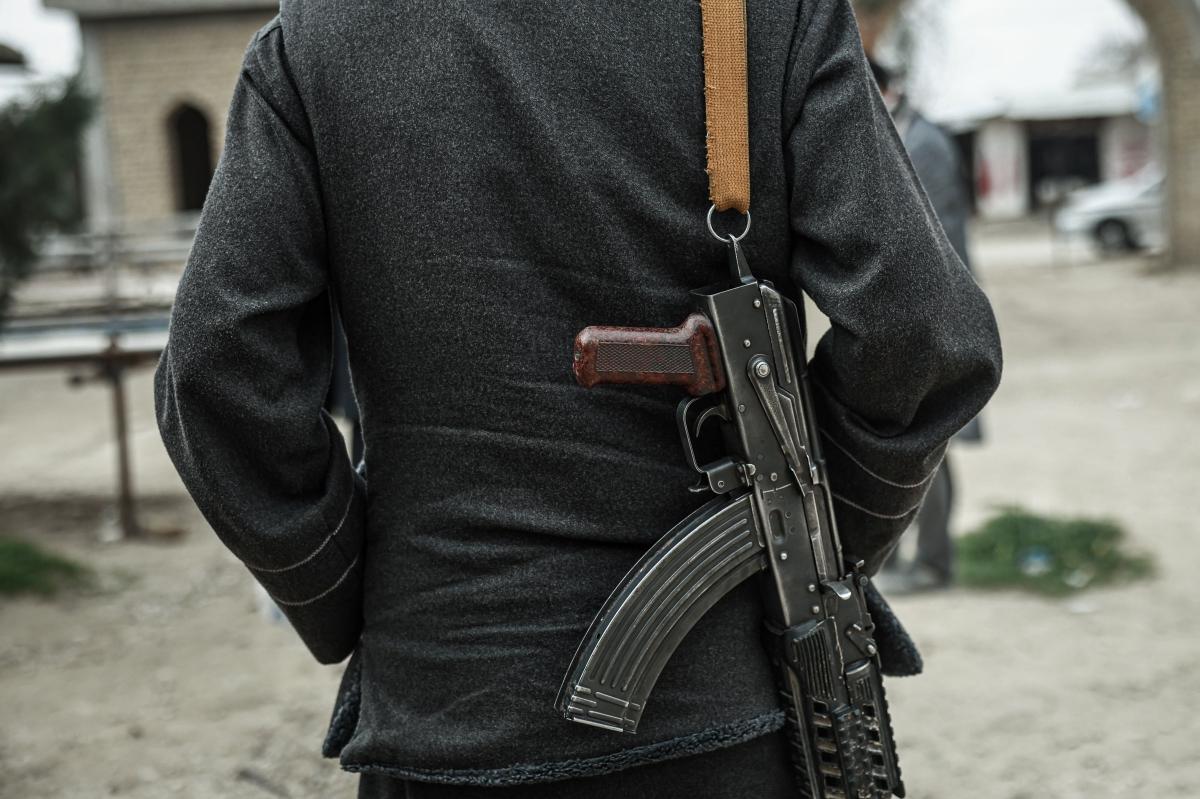 The Taliban retook power in a lightning offensive in 2021. Photo: Shutterstock.
Emphasising she would “never, ever” go back to Afghanistan while the Taliban remained in power, Ahmadi said that should the regime change, she hopes to one day return and “serve my people” by working in the government.
And she believes such dreams should be open to all Afghans: “It’s not only about girls and women; all people of Afghanistan want to have that right – to live their life the way they want,”
Reflecting on her new life, Ahmadi said she was “really grateful” to Malta, “because today I have this chance and it changed my whole life”.
Does she have a message for her people back in Afghanistan?
“Don’t lose your hope, and I hope that you have the chance that I have today.”