Youths piling on more debt to buy property
Median value of loans taken out by youngsters aged 18-25 has risen by over €53,000 between 2021 and 2024
Updated 11.30am
Youngsters are racking up more debts with banks to buy a home, official statistics show.
The median value of loans taken out by youngsters aged 18-25 has risen by over €53,000 in the space of three years, according to loan data compiled by the Central Bank of Malta.
In 2021, the median loan for youths to bankroll a property purchase was €162,900. By 2024, the median loan value for that age group had risen over 32% to €216,000.
An average of 427 youths a year took out a bank loan for a property purchase between 2021 and 2024.
The 25-35 age group take out the most property loans, accounting for half of all the 5,830 property loans in 2024. This age group too has seen a notable increase in the median loan value needed to fund a property purchase. In 2021, the median loan for a property purchase was €184,500. By 2024, the median debt taken on for a home purchase by 25 to 35-year-olds rose by just under €36,000 to €220,400.
Banks typically require buyers to fund 10% of the property price, this rising to 25% for a second home loan.
Apartments and penthouses are the most common property type bought by the 18-25 and 25-35 age groups.
Access to homeownership is increasingly linked to family wealth rather than solely to income or saving capacity- KPMG study for MDA
The increase in median loan values reflects rising property prices in Malta.
Data across all age groups, from youngsters to the over-50s, shows the median value of properties financed by a loan has risen by just under 25% between 2021 and 2024. House prices increased by 40% during that period, apartments and penthouses by 26% and maisonettes by 15%.
Real estate loan default remains low in Malta, according to the International Monetary Fund, with the risk of such defaults mitigated by low mortgage rates, strong labour markets and other strong economic markers.
The IMF did, however, caution in a recent report that the prevalence of variable rate mortgages leaves lower-income households vulnerable to interest rate increases.
Despite higher property prices, a study by KPMG and the Malta Development Association indicated that the average apartment sizes are decreasing.
Housing affordability has become an increasing policy priority for the government in recent years.
The KPMG study found that a young couple in their late 20s earning the minimum wage, with a joint income of €23,000, could only afford 2.2% of properties on the market in 2025, a sharp drop from the 5.7% in 2024.
Participants in the study raised similar concerns over housing affordability, highlighting how people have become increasingly reliant on donations from their parents to buy a property.
“Access to homeownership is increasingly linked to family wealth rather than solely to income or saving capacity,” the report said, citing comments from its interviewees.
The government has stepped in with various initiatives to ease the burden of rising property prices. These include grants for first-time buyers and an equity sharing scheme through which the government jointly funds the purchase of a property.
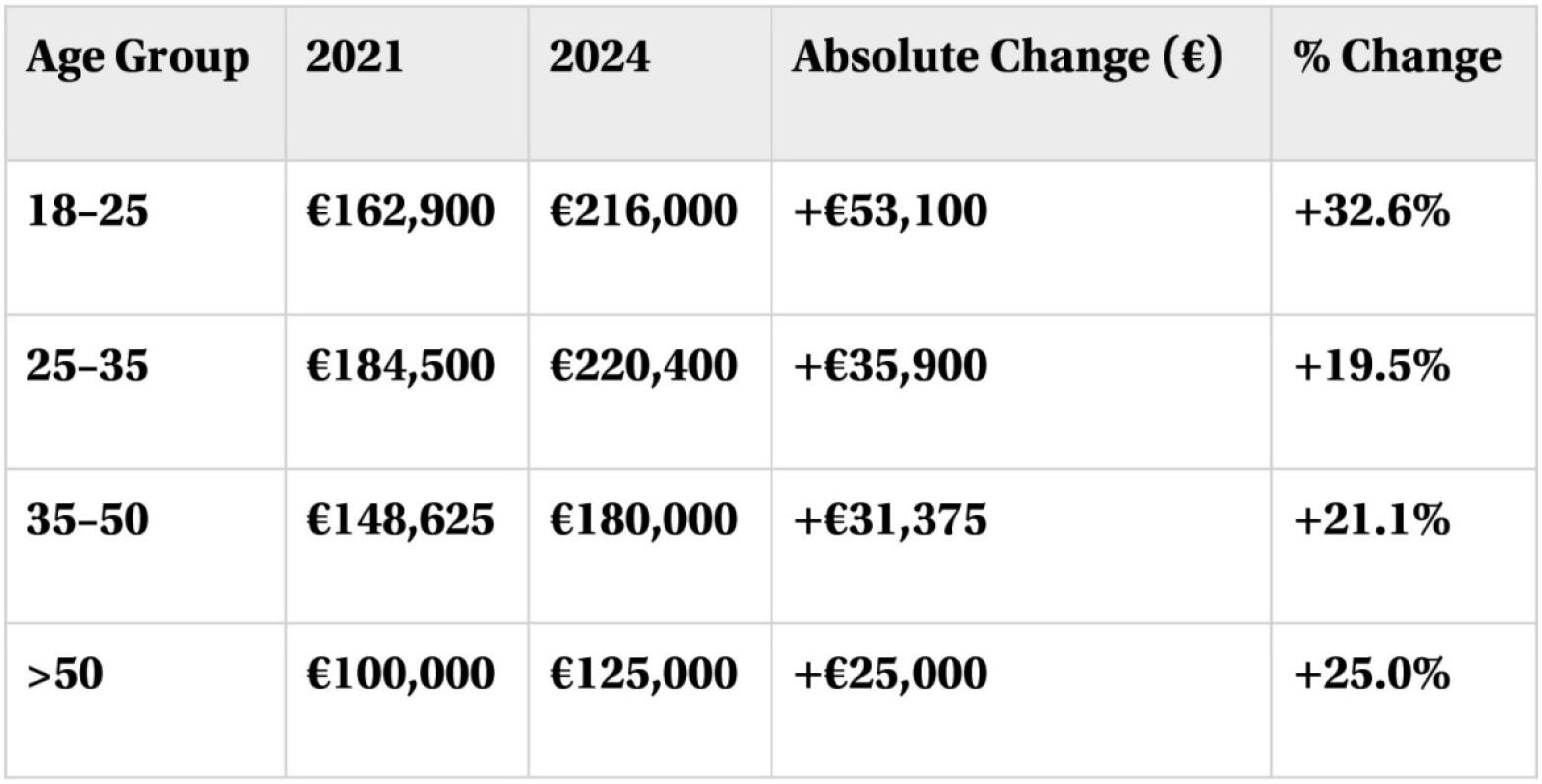 Median loan values in 2021 compared to 2024
Rampant land speculation encouraged by government: ADPD
Reacting to the published data, ADPD said on Friday that the property market was spiralling out of control, with young people paying the highest price.
"Rising house prices, rampant land speculation, and an investment-driven property sector are pushing the necessity of home ownership or even long-term affordable rent further out of reach for generations trying to build their lives here."
While owning a basic flat in Malta was becoming an ever-greater financial burden on the young and median earners, salaries and wages languished, the party said.
"Meanwhile, unbridled land speculation, fuelled by weak planning oversight and a system that favours profit over people, is turning our towns and countryside into concrete jungles.
"Our agricultural land and open spaces are being bulldozed while developers and speculators reap huge profits, with little regard for community interests. Sustainable development on these islands is a sick joke. All this while the quality of the property developed and the surrounding urban areas continue to decline."
The party believes that the rise of buy-to-let investments and flats marketed with 'golden passport' holders has further distorted the market, converting homes into commodities and sidelining the needs of Maltese families.
Properties are increasingly seen as financial assets first, homes second, making affordability a privilege only for those already wealthy or supported by family wealth, it added.