History education: A thing of the past?
The ongoing weakening of humanities subjects in schools, particularly history education, is a worrying trend
As is typical of a State that prioritises the free market and minimises government influence in the economy, in-depth analysis of the educational ‘system’ has been constantly originating from entities such as the Chamber of Commerce and individuals not directly involved in education but in powerful economic sectors.
Regrettably, educators have been notably absent from these discussions.
The focus of this article is to unravel the implications of what I consider a significant and dangerous consequence of neoliberal influence in education ‒ the ongoing weakening of humanities subjects, particularly history education.
In other words, I will try to contend with a particularly utilitarian question, which, as a history teacher, I had to tackle innumerable times with my students: Why do we need history at all?
One premise. It is important to clarify that this is not meant as a critique of the economy’s impact on educational practices. While I won’t be delving into the complexity of the relationship between the economy and education, I firmly believe that economic literacy and a critical understanding of the economic context are necessary aspects of core education.
In past years, the number of secondary school students opting for history as a subject, involving a deeper delve into topics that range from life histories to revolutions, from ideas to wars, has steadily declined. A worrying example is the recent SEC exams, where 120 out of 290 registered students chose not to show up for the history exam.
Various factors contribute to this decline.
The process of selecting subjects in Year 8 has been gradually transformed into a market-driven endeavour, enticing students with promises of benefits ranging from freebies to lucrative employment opportunities. This is also attributable to a disturbed sense of how the ‘who we are’ is constructed. This manifests itself in various forms of amnesia, including the over-simplification of historical events and history treated mainly as touristic nostalgia.
In the recent SEC exams, 120 out of 290 registered students chose not to show up for the history exam
Yet, this situation is also correlated to educational policy matters. In 2012, the National Curriculum Framework proposed humanities as core educational subjects. This was a step in the right direction, attempting to address clear and present dangers that were already obvious at the time. This policy was put into practice through a subject that skims through history, geography and social studies.
Such a generalist approach has merits, with the main one being that most students get a taste of different subjects. Also, in most Church schools, there have been laudable attempts to make such an approach more integrated. Nonetheless, this widely adopted solution has one problematic consequence.
Many educational leaders have relied on this approach to put their conscience at rest, believing that the basic content dictated by the curriculum is being covered. This lack of educational vision has accelerated the humanities’ descent down the ladder of priorities.
This situation cannot be dismissed as a coincidence. In a neoliberal milieu, the humanities, which constitute the basis of a problem-posing education, are considered little more than a nuisance.
Educational leaders with a deep understanding of the contexts we inhabit and a perspective on education that resists instrumentalisation must recognise the importance of revitalising humanities subjects. In an era when educational discourses focus mainly on skills, sociologist Michael Young’s concept of ‘powerful knowledge’ becomes crucial.
In simple terms, Young defines this important pedagogic concept as the knowledge that students gain from various academic disciplines, enabling them to generalise their experiences and better understand our world. From this perspective, history education needs to be reconceived as a powerful tool for interpreting past events and imagining the limits and possibilities of the present, with educators and students actively engaging as agents rather than passive observers.
I hope that ongoing consultative exercises lead to a significant revaluation of curricular spaces. However, judging by the direction our country is taking – the recent approval of flats neighbouring the Ġgantija Temples being a case in point – I doubt that such a change can come from the top. It is up to educators with a just and inclusive vision to stand up and address the spirit of our times.
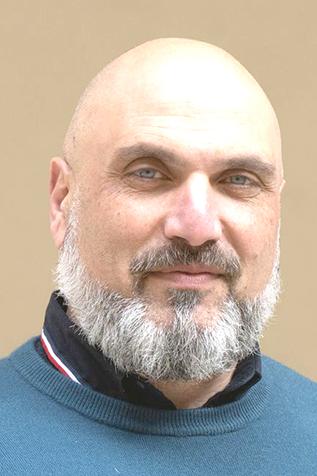 Bernard Cauchi
Bernard Cauchi is a history teacher and head of the Department of History and Social Studies at the Secretariat for Catholic Education.