Myth Debunked: 3D concrete printing may lack adequate interlayer bond strength
Improving structural performance in 3D concrete printing
The belief that 3D concrete printing lacks adequate interlayer bond strength has been largely debunked. Early methods produced weaker interfaces than those of traditional cast concrete, resulting in anisotropic 3D printed structures.
This is due to cold joints and porosity caused by gaps between layers, voids that reduce shear and tensile strength and other factors. However, researchers have identified advanced techniques through physical and chemical methods to enhance interlayer adhesion.
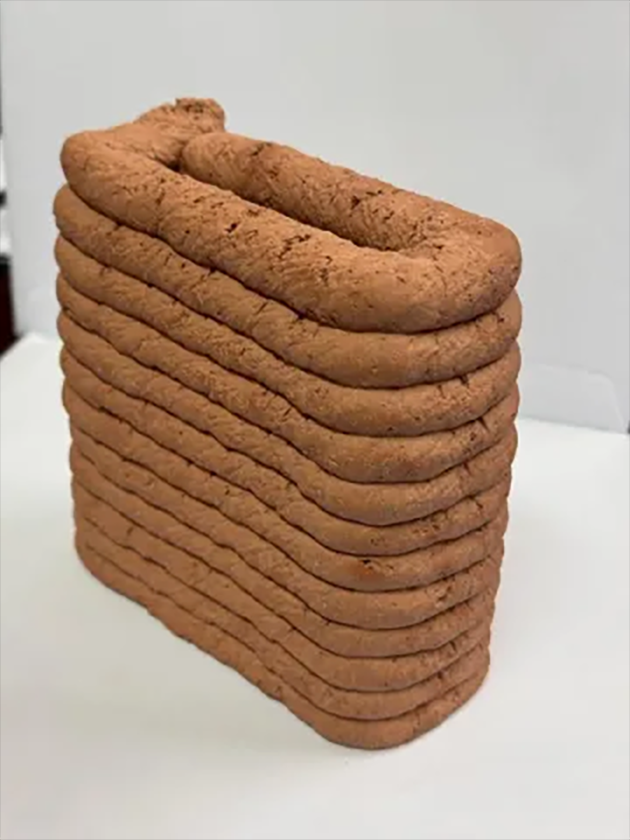 Geopolymer concrete printing, without cement as a binder, and based on construction and demolition waste. Photo: Ruben Paul Borg
These include controlling the time gap between layers to ensure that previous layers are sufficiently rigid for new ones, surface modification to improve mechanical bonding, and the use of chemical additives to enhance hydration and polymer modification.
Effective 3D concrete printing requires optimised mix designs, carefully selected materials and controlled printing parameters to ensure structural performance.