Afghan woman who fled Taliban graduates in Malta
Roya Ahmadi’s graduation marked end of seven-year journey after being forced to flee her country
An Afghan graduate among the first cohort of women from her country to graduate in Malta has spoken of her gratitude to the country for giving her the chance to live and study here.
Roya Ahmadi was among a group of nine Afghan women to graduate from the American University of Malta (AUM) earlier this week, in a ceremony held on the quayside in Cospicua.
Her graduation marked the end of a seven-year journey to complete her degree, after being forced to flee Afghanistan to continue her studies when the Taliban retook the country in a surprise offensive in 2021.
She first continued her studies at the American University of Afghanistan campus in Qatar, before eventually arriving in Malta last year.
Reflecting on her long journey, Ahmadi told Times of Malta her graduation was “something special, it’s hard to express; after seven years, I finally managed to graduate”.
“Malta was my final destination, and it’s so special to me; we had so many difficulties, but we finally managed to achieve our dream,” she said, adding she was “thankful to Malta for giving me the freedom to live and study here”.
The business studies graduate described how she loves to tell her family and friends about Malta, pointing to her positive experiences in the country and its rich history.
She noted that three of the Afghan women who completed the course had been studying remotely.
Ahmadi said she planned to continue her studies and was hoping to undertake a Master’s degree programme, and that she was looking for a place in Malta, though she is open to other places too.
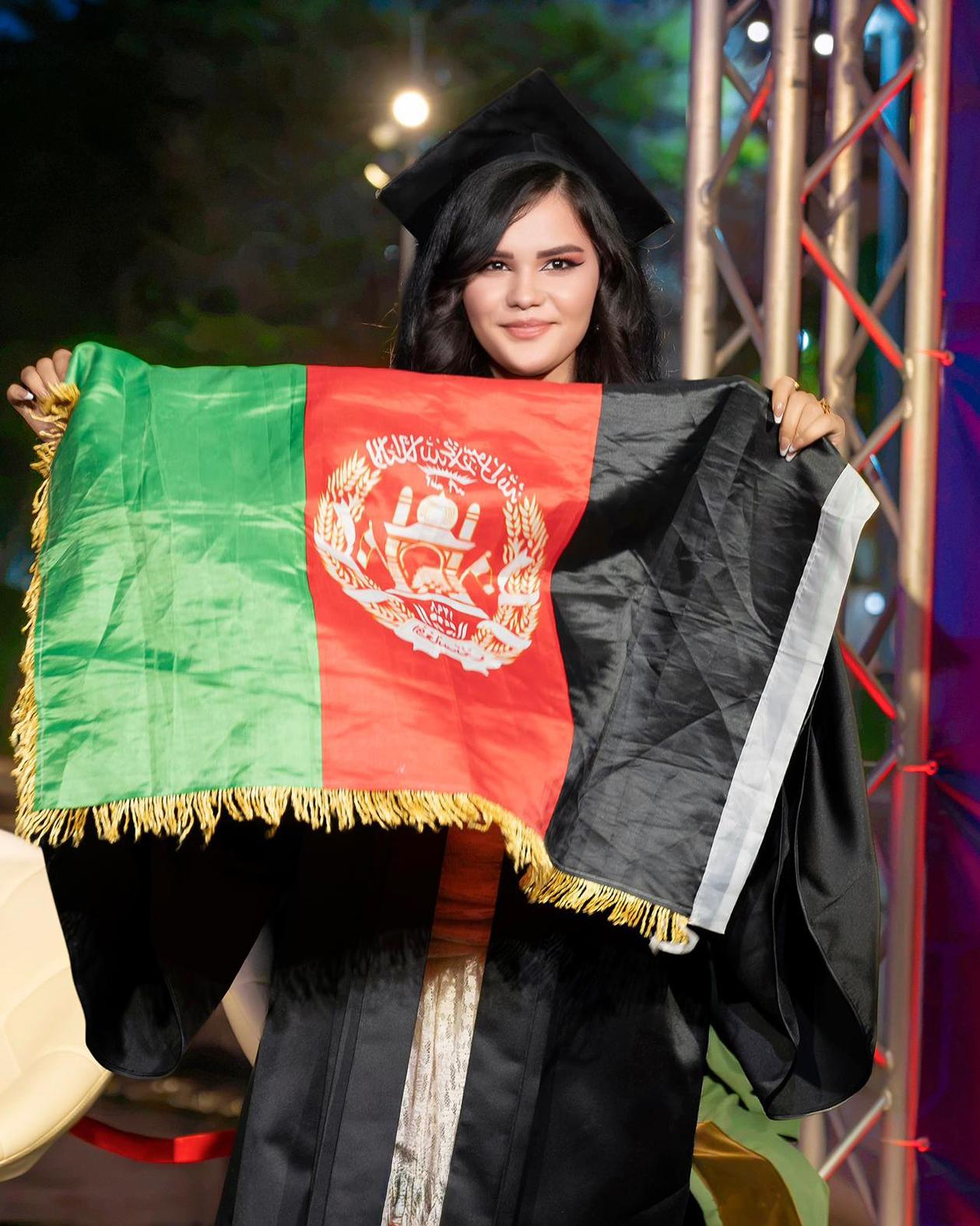 Ahmadi was among a group of nine Afghan women to graduate from AUM.
'It's difficult'
But with Afghanistan consistently appearing at the bottom of passport indexes, which rank passports according to the number of countries they allow for visa-free or visa-on-arrival access to, is she concerned about potential visas issues?
“It is difficult – even when I came here [Malta] it was difficult to get one. But I managed. So, it will be difficult, but considering all the things I’ve been through, I’m ready.”
Speaking to Times of Malta in November about the decision to move the group of Afghan students to Malta, former AUM rector Victoria Fontan described the country as the “best opportunity”, having also considered institutions in Albania, Oman and Azerbaijan.
Noting that a “sizeable” number of Afghans had relocated to Malta, Fontan said their studies ranged from business, accounting and management to graphic design, engineering and computer science, while expressing the belief such courses would make them employable immediately after graduation.
The Taliban’s first rule in Afghanistan collapsed in late 2001 in the face of a US-led invasion of the country following the September 11 attacks. The Taliban had provided sanctuary to Al-Qaeda.
She would 'never, ever' go back to Afghanistan while the Taliban remained in power, but that should the regime change, she hopes to one day return and 'serve my people' by working in the government
Almost exactly 20 years after the US-led coalition toppled the organisation in Afghanistan, the militant group retook the country in a lightning offensive.
Back in November, Ahmadi stressed that she would “never, ever” go back to Afghanistan while the Taliban remained in power, but that should the regime change, she hopes to one day return and “serve my people” by working in the government.
Despite first pledging to protect women’s rights and press freedoms after retaking Afghanistan, those earlier promises have since given way to authoritative and highly restrictive policies.
Human Rights Watch notes that the Taliban has imposed policies “amounting to the crime against humanity of gender persecution”, prohibiting girls and women from education beyond the sixth grade and severely restricting employment opportunities and freedom of movement.
The radical militant organisation enforces strict dress codes on women, and requires women to travel with a male guardian, while imposing strict penalties on women found to be non-compliant.