Borg suggests fixed-term elections to end timing uncertainty
Opposition leader says speculation is creating confusion and insists the PN is ready for an election at any time
Opposition leader Alex Borg on Sunday raised the possibility of fixed-term elections, arguing that speculation over an early vote is leaving the public uncertain.
Speaking in Qrendi, Borg said speculation about a possible general election was contributing to a sense of uncertainty among the public.
“As prime minister, I don’t want to play with the election date according to when it benefits me, rather than the country,” he said. He added that he was considering whether Malta should adopt a fixed-term system similar to those in the United States or, he said, the United Kingdom.
A fixed-term election is an election that is held on a set, pre-determined date, rather than being called at the discretion of the government or, in Malta's case, the prime minister.
Borg said responsible leadership required politicians to put the country before party interests. He argued that many people were seeking clarity, including couples preparing to get married who were anxiously asking him when the election would be held.
“They are playing with dates like it is a game of chess,” Borg said, referring to the government.
He attributed the uncertainty to several factors, including increased public activity by elected officials and mixed messages from within the Labour Party.
While some officials have begun holding more events, the party’s deputy leader had dismissed the possibility of an election.
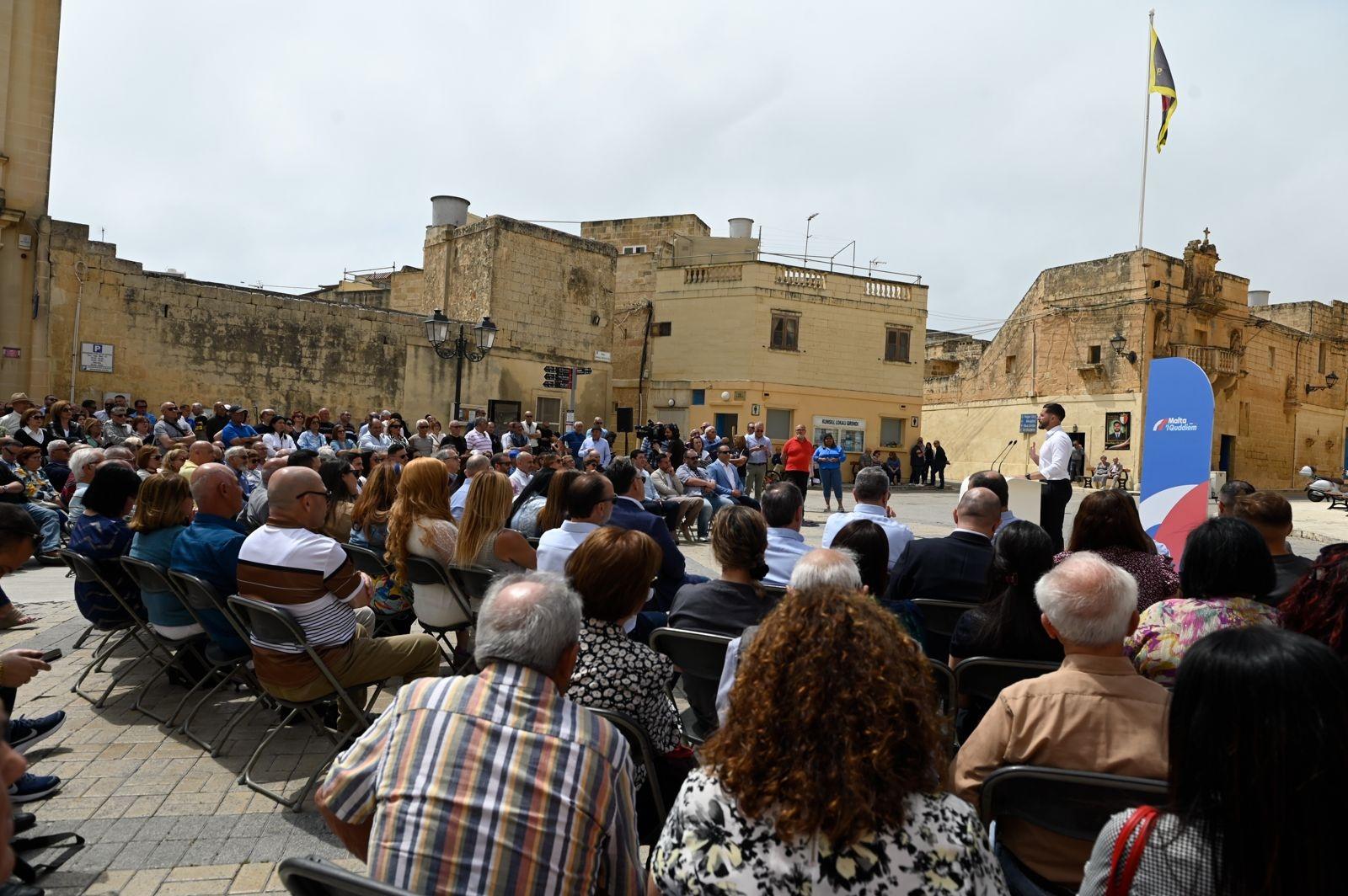 Alex Borg speaking on Sunday.
Alex Agius Saliba on Saturday moved to quash rumours about a snap election, saying the Labour Party “feels no urgency” to call one and has not discussed any eventual electoral date.
Borg said that the Nationalist Party was prepared whenever an election was called. “We are prepared and determined. He could call it next week or next year, we are ready!”
He rejected claims of internal division, pointing to the presence of former leaders Adrian Delia and Bernard Grech. He said he was continuing to build on their work and that the party had a clear and unified vision. He made no reference to a Times of Malta poll showing the PL gaining on the PN.
During the same address, Borg also focused on traffic, describing it as one of the main sources of stress for people in Malta.
He pledged that, within his first 100 days as prime minister, work would begin on a mass transport system.
“Within the first 100 days of me as prime minister, we will start working on a mass transport system and in our five years in office, we will complete the first line of it.”
He contrasted this with the government’s previous proposal for a metro system, announced in 2021, which envisaged three underground lines and 25 stations across Malta.
The project was initially estimated to cost more than €6 billion. However, Prime Minister Robert Abela later said revised plans would reduce the projected cost significantly. Nothing appears to have been done since.
He also criticised the Labour government for failing to address traffic congestion over the past 13 years.
Turning to social issues, Borg linked traffic-related stress to broader concerns about mental health. He highlighted the appointment of Ivan Bartolo as shadow minister for loneliness.
“There is an acute problem of loneliness and it is not just the elderly and those who live alone,” Borg said.
He added that Bartolo was working on a private member’s bill aimed at addressing the issue. No one should be left behind and feel alone. Everyone should feel a part of Maltese society, he said.
Other speakers at the event included shadow home affairs minister Darren Carabott, who spoke about population density and its implications for the coming years.
Nationalist Party candidate Joseph Grech and economist Joseph Farrugia also addressed those present.