The challenges facing Andy Burnham
The seventh UK prime minister in a decade inherits a country with a prolonged cost-of-living squeeze, a sluggish economy and uncertainty caused by Brexit
As the English saying goes, “If at first you do not succeed, try, try again.” In the case of the new leader of the UK Labour Party, Andy Burnham, it was third time lucky on his journey to 10, Downing Street. After unsuccessful leadership bids in 2010 and 2015, he left Westminster to become the mayor of Greater Manchester, where he built a strong reputation and earned the nickname “King of the North”.
His rise to the leadership of the Labour Party and subsequently to the office of prime minister marks the appointment of the seventh UK prime minister in the space of a decade.
Burnham succeeds Sir Keir Starmer, who led Labour to a landslide general election victory in 2024 but was removed from the leadership just two years later following a series of political manoeuvres orchestrated by Burnham.
Ultimately, Starmer played a significant role in his own downfall. Labour’s poor performance in the local council elections on May 1 exposed growing dissatisfaction within the party and among voters. The elections were further overshadowed by the controversy surrounding Starmer’s decision to appoint Peter Mandelson as the UK ambassador to the United States, a judgement that many critics viewed as a serious political misstep.
Burnham also inherits an economy facing considerable challenges. Although inflation has fallen from the highs experienced earlier in the decade, economic growth remains sluggish and business confidence fragile.
Public finances are under pressure, with demands for increased spending on the NHS and social care (especially in view of the ageing population), defence (especially in view of President Trump’s criticism of NATO) and infrastructure, all competing against the need for fiscal discipline. At the same time, many households continue to feel the effects of a prolonged cost-of-living squeeze, with wages only gradually recovering lost purchasing power.
Beyond the economic statistics lies a broader sense of uncertainty. Productivity growth has remained weak, investment levels have struggled to keep pace with those of many international competitors, and regional inequalities continue to pose a significant political and economic challenge. Burnham has long made the case for greater devolution and investment in the north of England, but he now faces the far more difficult task of translating regional success into a coherent national strategy.
Brexit also remains an unresolved factor shaping Britain’s economic and political landscape. While the divisive debates that dominated public life in the years immediately following the 2016 referendum have largely subsided, the long-term consequences of leaving the EU continue to influence trade, investment and Britain’s international relationships.
The last thing the country needs is another prolonged period of political intrigue and internal party warfare while pressing economic and social issues remain unresolved
Unfortunately, UK businesses still face additional administrative and regulatory burdens when trading with the EU, the UK’s largest export market, while questions persist over labour shortages in certain sectors and the country’s ability to attract foreign investment.
Burnham has previously argued for a more pragmatic relationship with Europe, but he will need to balance efforts to strengthen economic ties with the EU against the political reality that reopening old Brexit battles could prove deeply unpopular with many voters. Navigating this delicate path will be a crucial test of his ability to unite a country that remains, in some respects, divided by the legacy of Brexit.
Perhaps the greatest test confronting the new prime minister, however, is restoring political stability. The UK has experienced an extraordinary turnover of leaders in recent years, creating an impression of constant upheaval at the heart of government. Businesses, investors and the public alike crave predictability and clear direction. The last thing the country needs is another prolonged period of political intrigue and internal party warfare while pressing economic and social issues remain unresolved.
Burnham’s critics are quick to point out that, while he may now occupy Number 10, he does so without the endorsement of a nationwide popular vote. Unlike a prime minister elected immediately after a general election campaign, his mandate derives from the parliamentary system and an internal party leadership contest rather than a direct appeal to the electorate. Although constitutionally legitimate, this reality is likely to fuel demands for Burnham to demonstrate quickly that he can command not only the confidence of his party and parliament but also the trust of the wider British public.
Whether Burnham’s leadership marks the beginning of a political renewal or merely another chapter in Britain’s recent cycle of instability remains to be seen. What is certain is that the expectations placed upon him are immense. Having reached the highest office at the third attempt, he must now prove that his reputation as the "King of the North" can be transformed into effective national leadership at a time when the country can least afford failure.
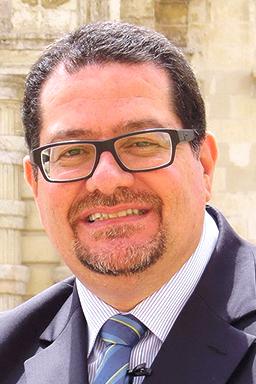
Ivan Grixti is a senior lecturer in financial accounting at the University of Malta.