CrediaBank sealed deal as the clock ticked for HSBC, CEO says in interview
Greek bank will give Malta the attention it has been lacking, Eleni Vrettou promises
CrediaBank turned down the possibility of bidding for HSBC in December 2024, only to return in summer when the banking giant had grown “almost desperate”, CrediaBank CEO Eleni Vrettou told Times of Malta.
Vrettou was speaking during her first interview with the Maltese media since the Greek bank’s prospective takeover was announced.
Vrettou says the possibility of CrediaBank buying HSBC was first floated in December 2024, just a few months after the bank announced its intention to exit Malta, when an adviser from KPMG approached her with the idea. At the time, CrediaBank still had its hands full finalising a merger with Greek bank Pancreta Bank and chose not to pursue a deal.
“I said I don’t have the capacity to run such a big project. It’s a shame we can’t do this but let someone else do it,” Vrettou says.
Things changed in early July, when CrediaBank told its investors at a general assembly it was looking for opportunities to grow. Days later, the advisors returned, telling them that the opportunity to buy HSBC Malta was still on the table, with the sale process “going nowhere”.
Vrettou says the deal was “the perfect fit” for CrediaBank, particularly because opportunities to grow in other countries were limited.
Outside Greece, Cyprus would be the obvious choice for the bank to explore but Vrettou says the island has relatively slow economic growth and a banking sector already dominated by Greek banks (“instead of competing with Greeks in Greece, I would be competing with Greeks in Cyprus,” she says).
The neighbouring Balkan countries were also considered and dismissed because of “no rule of law in some of those markets and very expensive valuations”.
Malta, on the other hand, offered an economy similar in size to Cyprus, “overlooked by several of the big players, there’s not enough competition there and very thirsty for investment, so you could actually make a difference if you put some investment”.
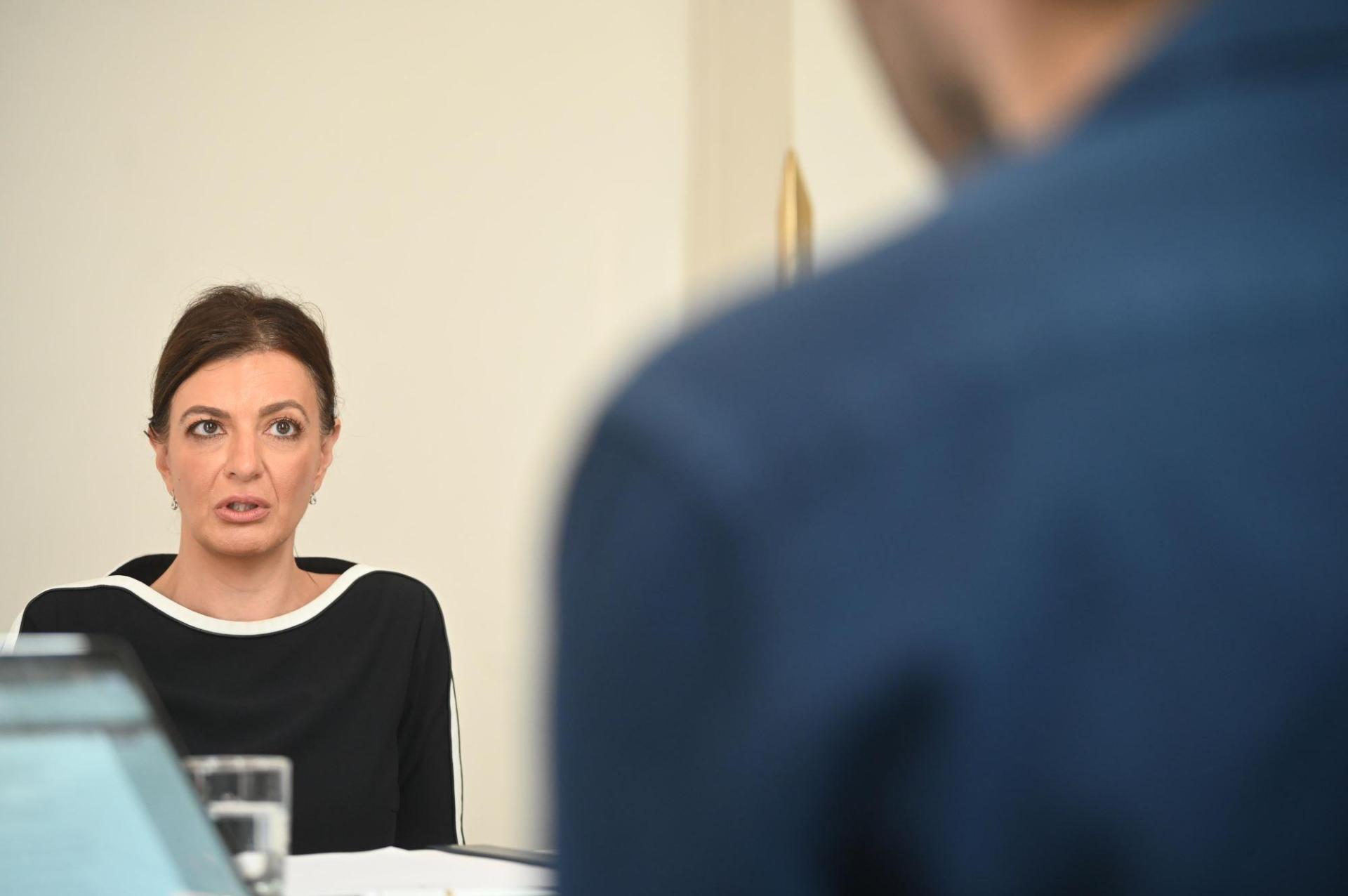 Vrettou hit back at critics who say Malta will be losing a globally-renowned bank, only to replace it with a small one. Photo: Jonathan Borg
Timing
Ultimately, Vrettou confirms, the deal was sealed in just a couple of weeks.
Timing played a crucial role in the deal, Vrettou says, pointing out that things would have been trickier had they been in the race from the beginning, when HSBC was “more optimistic about attracting other players”.
“The fact that we came right at the end, when they were almost desperate with the identity of many of the other bidders, allowed us to say ‘we’re your best chance, you’re going to miss your best chance if you don’t respond quickly’,” she says.
It’s no surprise that major European banks were not lining up for the deal, Vrettou says. “If you’re a big Western bank trying to pick between investing in Germany or investing in Malta, you might say this is not worth the trouble and the effort.”
But, surely, Malta’s reputational issues didn’t help? Was CrediaBank worried about Malta’s international reputation?
“I’ll be honest, when we first went to the shareholders and our board, the first reaction was that Malta has all these reputational issues,” she says.
“But I had done my research, I told them Malta was off the grey list. There was also a lot of comfort that HSBC had done a proper cleanup exercise because of their own risk appetite,” she says.
“In Malta, you have the rule of law, you have a proper system and the British legacy and that gives me comfort rather than other countries where this is more debatable,” she says, returning to the bank’s dilemma over whether to invest in Malta or the Balkans.
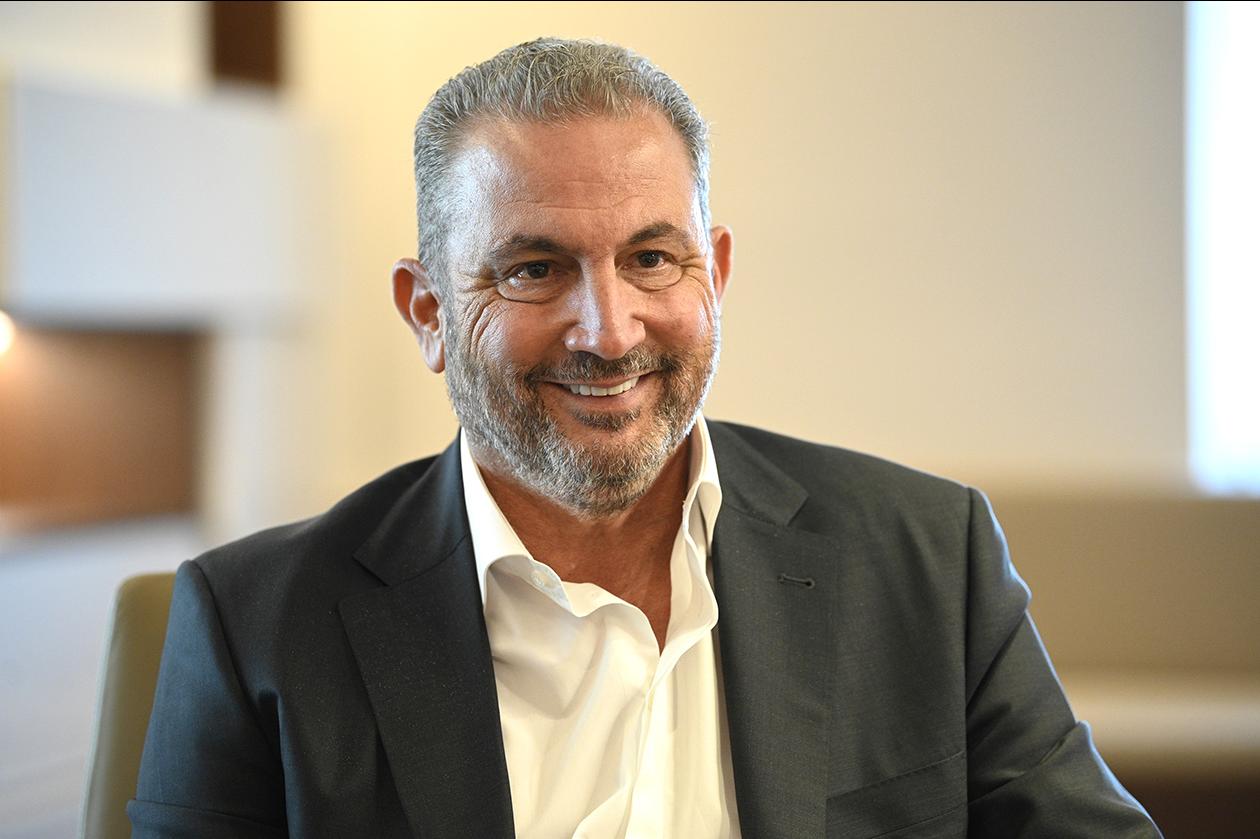 Eleni Vrettou’s husband, Alexandros Exarchou, is one of the bank’s shareholders. File photo: Matthew Mirabelli
Controversies
CrediaBank itself has found itself at the heart of a media storm in recent weeks, focused on one of the bank’s majority shareholders (and Vrettou’s husband), Alexandros Exarchou.
The couple’s relationship has raised concerns over conflicts of interest at the highest levels of the bank’s management, at a time when Exarchou is under investigation for fraud linked to a controversial construction contract.
“It’s interesting because the media discovered the cases that the regulators actually knew about long before the media,” Vrettou says, insisting that issues had been promptly signed off by banking authorities when they arose.
“When I met Alex (Exarchou), I was married at the time. So, the joke I often make is that the regulator found out about me getting a divorce before my husband,” she smiles.
Will the bank face repercussions if Exarchou’s investigation proceeds to trial?
“I doubt that, to be honest,” Vrettou says, pointing out that Exarchou owns under a tenth of the bank’s shares. “I can think of a number of well-regulated European banks where some of their shareholders have criminal cases against them, for a number of reasons”.
“Ultimately, you take a risk approach but still have the right controls in place to safeguard the bank.”
Retrenchment
During the interview, Vrettou hit back at critics who say Malta will be losing a globally-renowned bank, only to replace it with a small bank with a lower credit rating and limited international presence.
“It’s like you’re married to a big shipowner who doesn’t look after you and makes you their third or fourth priority,” Vrettou says, turning to an analogy to drive her point home. “Then there’s a small baker who gives you proper attention, care and love”.
“We might be the baker in this instance but we’re going to give not just the bank but the Maltese economy in general much more priority and focus compared to a bigger bank that has too many fish to fry.”
Vrettou, who spent much of her career working at HSBC, argues that this is what happened in recent years, when large banks “deprioritised” countries such as Malta and Greece.
“From 2012, HSBC was a completely different bank, instead of growth the strategy was retrenchment,” she says. “So, I knew from the inside that the plan for countries like Greece, Armenia and Malta was basically no investment to gradually exit.”
This led to some basic services not being offered, Vrettou argues, such as the inability to use a credit card on Apple Pay.
“You may prefer to have a global bank that basically doesn’t even allow you to use your credit card online,” Vrettou says. “Our priorities are different, we prefer to offer a better service and focus attention on our clients, rather than a credit rating that makes no difference in your day-to-day life”.
Credit rating
Nevertheless, Vrettou defends CrediaBank’s relatively poor credit rating, describing it as “a reflection of where the rating was two years ago”, at a time when the bank was still getting to grips with years of mismanagement and poor loans.
“We’re a safe bank, our rating has been upgraded by six notches in just two years,” Vrettou says. “You can’t have an upgrade of 12 notches from one day to the next”.
Vrettou doesn’t mince her words when talking about the bank’s past, describing it as “near collapse” when she took over as CEO in 2022.
“I was the first non-political appointee to run this bank because it always was effectively dominated by the public sector,” she says. “This came with a lot of political abuse, which led to problems down the line.”
Although the Greek government is still in the picture, holding a third of CrediaBank’s shares, Vrettou points out she set out to overhaul the bank’s management, replacing 12 of its 13 members with technocrats.
She says this helped turn the bank’s fortunes around, going from a losses of €80m each year to targeting a profit of €270m by 2027.
Some of those profits, Vrettou admits, will stem from the favourable terms of the HSBC acquisition. Last week, the bank told its investors that it was buying HSBC at roughly half its book value, something that Vrettou describes as “a good deal for us and our shareholders”.
But the €200m CrediaBank will fork out to buy a 70% stake in HSBC is not all it will be spending, Vrettou insists.
The bank will spend an additional €30m in its first year to set up systems that HSBC used to outsource, she says, together with other expenses linked to rebranding and upgrading branches.
Ultimately, Vrettou says, the sale price was far from the only issue that swayed the deal.
“A giant the size of HSBC is less sensitive on price compared to other issues that are important to them, like deal certainty and reputation.”
Mid Med Bank
Over the past year, HSBC’s prospective buyers were quick to declare that they would be reviving the Mid Med Bank name if their bid was successful.
Vrettou admits that CrediaBank also toyed with the idea but is likely to stick to its own name, having only recently undergone a rebranding exercise of its own.
The bank carried out market research studies testing both names, she says, with “mixed” reactions to the Mid Med Bank name.
While the name evoked nostalgia for a past national treasure for some, it also brought up associations of past controversies, unlike the “freshness and modernity” of the CrediaBank name.
“Even though there hasn’t been a 100% decision yet, most likely we will go with the CrediaBank name.”
Given the bureaucratic hurdles involved in buying a bank, Vrettou says CrediaBank is unlikely to start operating in Malta until the second half of next year (“if it’s the third quarter, I would be delighted. If it’s close to the end of the second quarter, I would be ecstatic,” she says).
Once it does take over, CrediaBank will find itself with 900 plus former HSBC employees who, only last week, went on strike to demand compensation. Is Vrettou worried about this?
Although she is quick to point out that this is a matter between HSBC and the bank employees’ union MUBE, Vrettou admits that CrediaBank has a vested interest in the matter.
“Whatever we can do to resolve the conflict, we would be prepared to do, in terms of mediating between the two and working out solutions. But, at the end of the day, it is between those two sides and we will not interfere with that.”
While HSBC “need to ensure they don’t set a precedent given the amount of exits they need to manage”, Vrettou says, it is “understandable” for employees to want to be compensated for the insecurity they have faced and the challenges to come.
“I think the truth is somewhere in the middle between the two.”