His only crime is his surname
Helena Dalli reflects on the shameful reaction to Omar Rababah contesting the upcoming election
There are moments when a country reveals its true character, beyond patriotic speeches, or carefully crafted campaigns about inclusion, or slogans politicians repeat every election cycle.
Malta is having one of those moments.
Following the announcement that Omar Rababah will contest the upcoming general election, some public reactions have been nothing short of shameful. Before many even knew what Omar stood for politically, social media had already decided what mattered most: his surname, his father’s origins, and the fact that his Maltese identity apparently requires extra scrutiny.
For these people, his bloodline is more important than his ideas, his competence and his contribution to society.
Omar was born and raised in Malta to a Maltese mother and a Syrian father. He grew up in our towns and villages, attended our schools, played football in our streets, built his life here, and today contributes professionally within the social sector. By every meaningful standard, he is Maltese.
Yet for some, that remains insufficient.
There is something deeply unsettling about how quickly the language of democracy collapsed when someone with an Arabic-sounding surname dared venture into public life. Suddenly, people who claim to defend “Maltese values” abandoned the very principles that should define them: fairness, dignity, respect and equality.
Criticising a political candidate is legitimate. It is essential in a democracy. Thus, Omar should be challenged on his policies, beliefs and vision like any other aspiring politician.
But what we are witnessing goes far beyond political criticism.
When the attacks revolve around ethnicity, family origins or inherited identity, this is no longer democratic scrutiny but racism dressed up as patriotism.
And perhaps the most ironic part of all is that Malta itself is a product of centuries of migration, mixing and cultural exchange. Phoenicians, Arabs, Italians, French and British influences all helped shape the nation we call our own today. The Maltese language itself carries Arabic roots.
The fantasy of “ethnic purity” is historically absurd.
What, I believe, sits underneath all this anger is fear. The fear that identity is no longer something simple or easy to define. So people cling desperately to names, origins and appearances because it gives them someone to exclude.
When the attacks revolve around ethnicity, family origins or inherited identity, this is no longer democratic scrutiny but racism dressed up as patriotism- Helena Dalli
But a country that needs exclusion to feel secure is fragile.
If the fact alone that a man named Omar Rababah wants to run for office is enough to provoke hatred, then the problem is far bigger than one election campaign.
This is not really about Omar. It is about the version of Malta we are becoming, or perhaps the version we have always been underneath the surface.
A country confident in itself does not panic over surnames.
A secure people do not need to constantly test who is “Maltese enough”.
And a democracy that claims to believe in equality cannot suddenly move the goalposts the moment a person we perceive to be different decides they belong at the table too.
What is even more troubling is the hypocrisy. Thousands of Maltese families have ancestors and children living abroad in Australia, Canada, the UK and across Europe. We expect those societies to accept our relatives as equals regardless of their accent or surname. We rightly condemn discrimination when Maltese emigrants face it overseas. And we celebrate them when they make a name for themselves in the countries which adopted them.
Yet some are willing to deny that same dignity to someone born and raised here because his father comes from Syria.
What exactly are we afraid of?
The truth is that Omar’s candidacy has exposed something uncomfortable that many prefer to deny: racism in Malta does not only exist on the fringes. It surfaces quickly, loudly and unapologetically when people feel permitted to express it.
There is a particular cruelty in that.
This should concern all of us, regardless of political affiliation.
Because today the target is Omar Rababah. Tomorrow it may be anyone who does not fit a narrow definition of what a “real Maltese” should be.
A mature democracy cannot afford to define belonging through surnames.
And a confident nation does not feel threatened by diversity among its own people.
 H
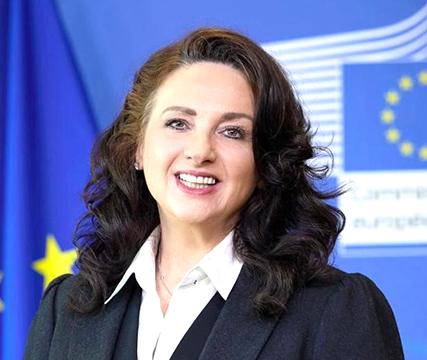
HHelena Dalli is a former EU Commissioner and former minister.