Watch: Crumbling Fort Campbell to be turned into family park
Robert Abela said this would be the third, large national park after Manoel Island and the White Rocks
Robert Abela has pledged to restore the heavily dilapidated Fort Campbell, transforming the crumbling military site in Mellieħa into a large-scale national park open to the public.
The Prime Minister announced the plans in an extensive interview published Sunday with Times of Malta editor-in-chief Herman Grech. He said the site will be restored and developed for the community after decades of neglect and calls for action.
"Many people ask why we must travel abroad to see huge national parks, and I have reflected deeply on it recently. That's why I feel we need a third, large site that people can truly enjoy," he said.
"I looked north, toward the Mellieħa and Selmun area, and Fort Campbell came to mind. Everyone knows its history - it has been in a dilapidated state for years. A tender will be issued there for the Selmun Palace to be commercialised for quality tourism."
Abela insisted, however, that the fort itself will be excluded from this investment.
 It is the last major fortification built by the British in Malta. Photo: Matthew Mirabelli
"While many suggested that Fort Campbell should be an integral part of that project, I believe part of it should be dedicated to investment and the other part must be for our people - a place where families can relax and enjoy the breathtaking views with their children," he said.
Earlier this year Abela also announced the government would transform Manoel Island and the entire area of Pembroke's White Rocks into two other national parks.
Survived the war but not neglect
Fort Campbell, also known as Il-Fortizza ta' Selmun, is a former British colonial-era structure of historical significance, but which has been abandoned and fallen into ruins through theft and vandalism for years.
Built just before World War II, the fort emerged unscathed from enemy action only to be gradually destroyed by human neglect and the elements after it was decommissioned.
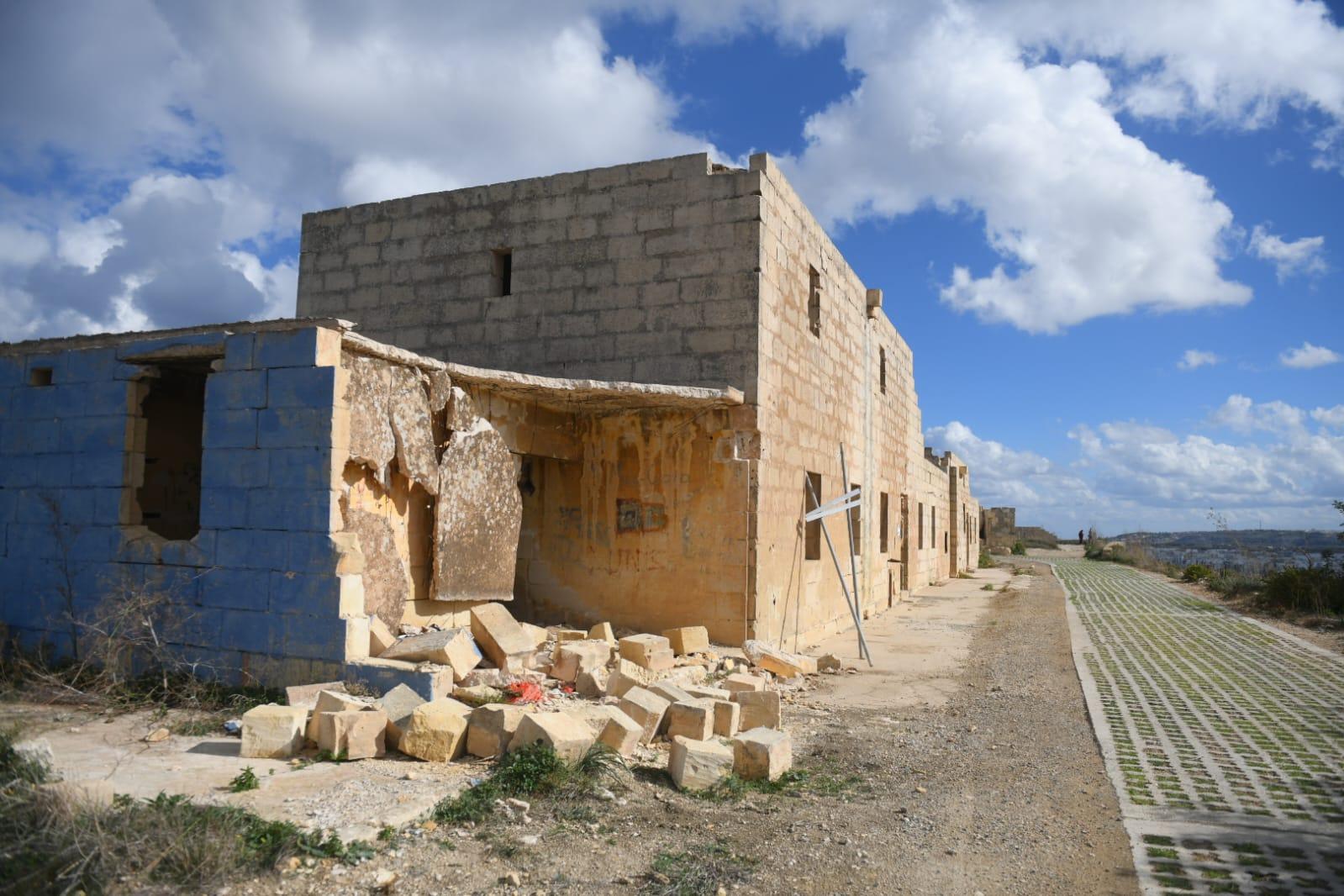 It is architecturally significant as it was designed to camouoflage against aerial attacks. Photo: Matthew Mirabelli
It is the last major fortification built by the British in Malta and is architecturally significant because its design marked a major shift towards camouflaging against aerial attack, using thin walls and scattered buildings to resemble the surrounding field walls.
The site has been repeatedly pillaged. Vandals stole the iron beams that supported the roofs of the barracks and other buildings, leading to the collapse of most roofs, leaving the remaining structures structurally unsound and posing a serious danger to visitors.
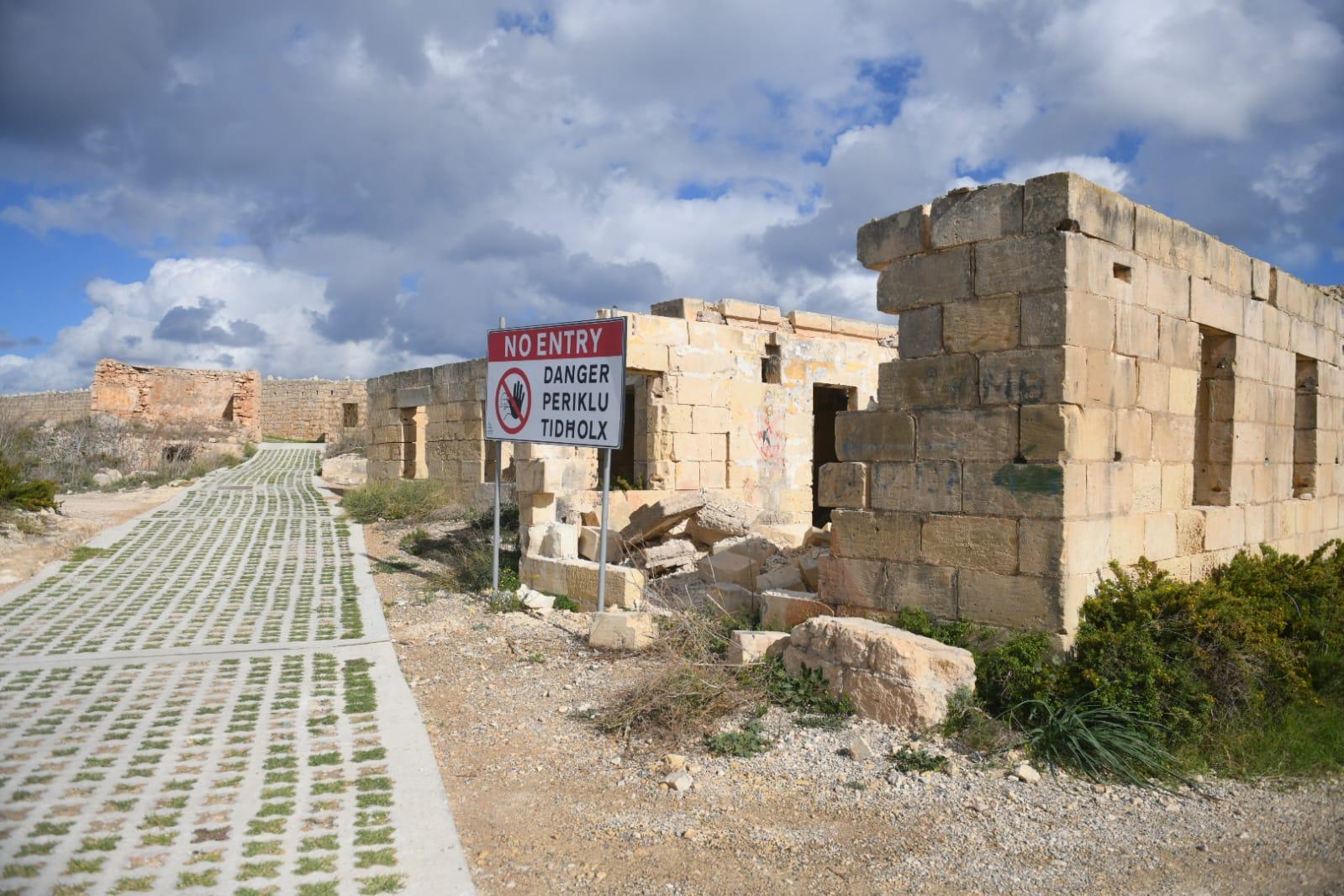 The fort is in the area of Selmun in Mellieħa. Photo: Matthew Mirabelli
The fort is open to the public but has been heavily vandalised with graffiti and is littered with rubbish. Many underground areas and passages are blocked with rubble and debris, and the entire site is considered dangerous.
Over the years, various government and local council initiatives to restore the fort, often with the intent of converting it into a heritage site, a museum, or a community space, failed to materialise.