Johann Grech talks up film sector's clout in PAC grilling
Film Commissioner says 74% of sector's historical growth came under his watch
Updated 6.36pm
Almost a fifth of the country’s economic growth over the past five years came from films, according to Malta’s Film Commissioner.
Johann Grech told parliament’s Public Accounts Committee on Wednesday that the “thriving” industry generated €1 billion in the economy in the last five years, contributing 18% to Malta's economic growth.
"In the past five years we generated €1 billion thanks to films. In five years we sustained 15,000 jobs. 18% of economic growth in our country came from films. That means that €18 of every €100 came from films," he said.
A film commission spokesperson later clarified that the 18% figure only referred to 2023, which was a record year.
Grech also claimed 1,017 job opportunities were created in 2025 alone, 917 of which were ongoing in May this year.
Grech, who became film commissioner in 2017, said that 74% of growth in the industry's history occurred during his time as commissioner.
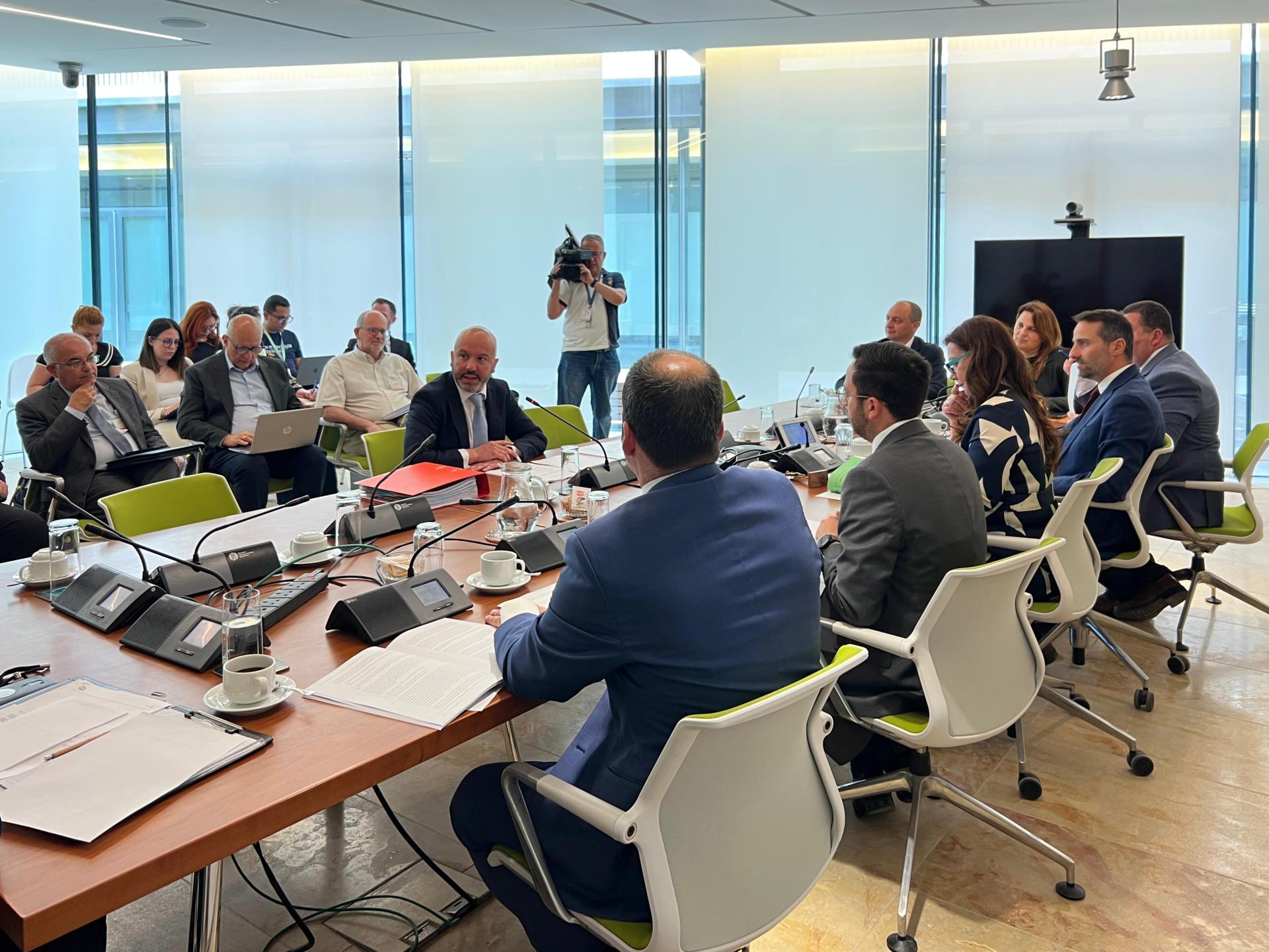 Photo: Chris Sant Fournier
But he was not able to accurately tell the PAC how much the 10-minute short film aired during last year’s Mediterrane Film Festival cost. That film earned Grech a public rebuke from his minister after it was revealed that he [Grech] was given a part in it.
Grech said it was not his decision to make that cameo appearance and that he was not paid for it. Industry experts had told Times of Malta at the time they believed the film cost "more than €500,000" to produce.
He also did not explain how the film commission’s recurring expenditure ballooned from the budget estimate to the actual spend last year, saying only that every request for more taxpayer money was justified. He did not elaborate on how it was justified, but promised the PAC he would send it to them in writing.
The hearing, which extended over two hours, frequently saw government MPs interjecting to support the film commissioner.
3,385 jobs in one year
Grech told MPs that Malta's film industry has undergone a dramatic transformation from a seasonal affair to a year-round powerhouse.
He highlighted 2023 as the "best year in history" for the sector, noting that in 2024, the industry created 3,385 job opportunities for Maltese citizens, with eight out of every ten workers now being Maltese.
169 productions filmed scenes in Malta throughout his tenure, he said, and in March and May of this year alone, eight productions were simultaneously filming in Malta.
"We turned that around and from a seasonal industry, it has now become all year round, even throughout the pandemic," he affirmed, emphasising the shift towards sustainable careers in the film industry.
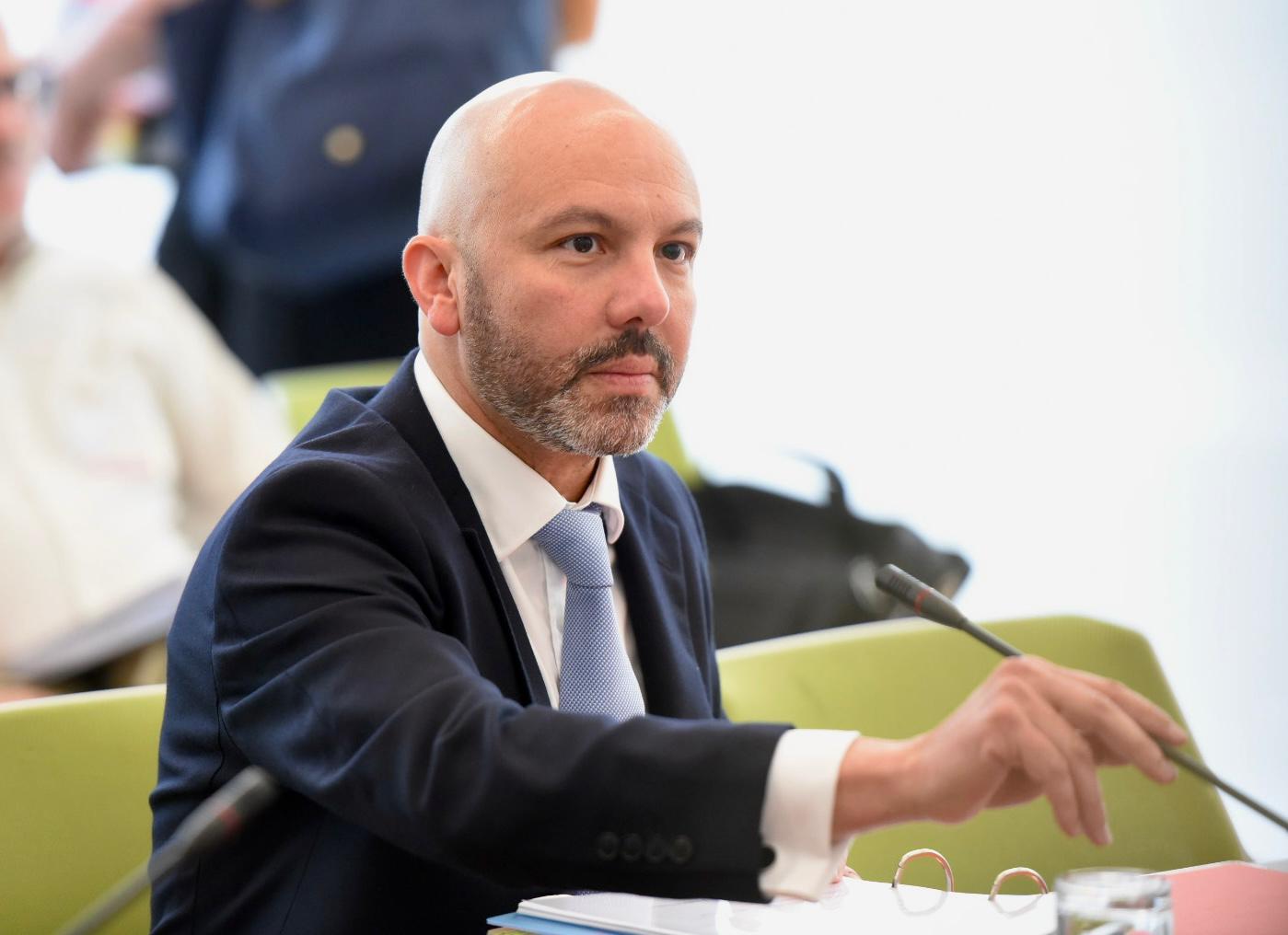 Photo: Chris Sant Fournier
He said that in 2024, foreign crews injected over €5 million into the local economy.
In the last two years more than 700 businesses serviced the industry – a total of 15,000 jobs, he said.
Furthermore, Grech pointed to the increase in daily wages for key roles, such as production managers (from €200 in 2014 to €400 today) and location managers (from €155 in 2013 to €250 today), with many of these positions held by Maltese nationals.
‘Sound stage will be envy of the world’
Grech also told the committee there was a significant development on the long-overdue building of an international-standard sound stage at the Kalkara Film Studios – a large, hangar-like, soundproof building specifically designed and equipped for the production of high-budget films, television shows, and other audiovisual content.
"Last week we finalised the detailed plans for the first sound stage. We now have a blueprint, along with the necessary Planning Authority permits. and we will issue a call for tenders," Grech announced, adding that this infrastructure will continue to guarantee careers in films.
The 4,000 square metre site will also include a state-of-the-art water tank which Grech said “will be the envy of the world”.
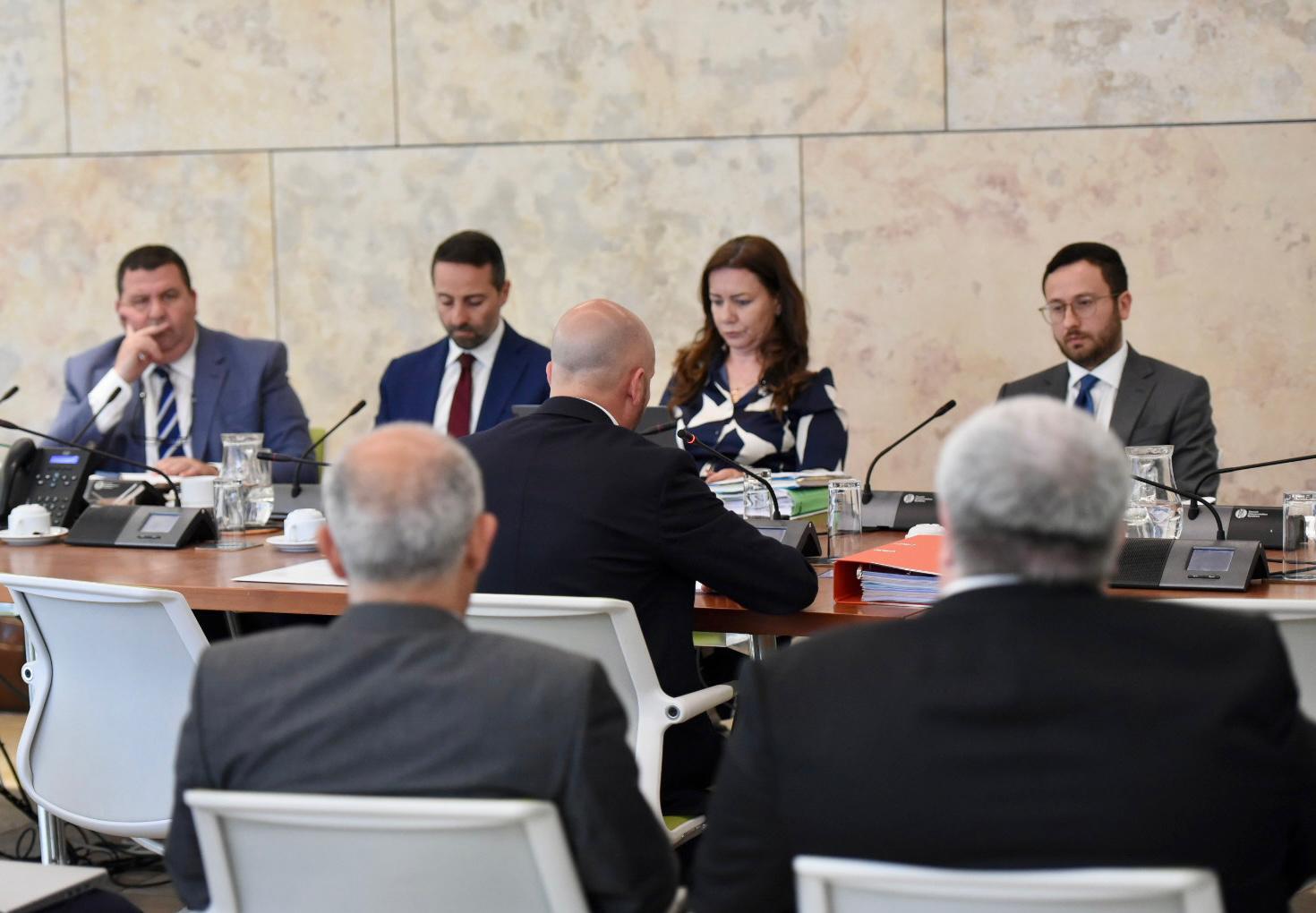 Photo: Chris Sant Fournier
While acknowledging the need for administrative improvements as suggested by the National Audit Office (NAO), Grech strongly defended the cash rebate programme – which gives productions 40% cash back on their Malta spend – stating that the NAO found no wrongdoing and confirmed it generates a "strong return on investment."
He reiterated that for every euro injected in the industry through the generous rebate, the economy sees a €3 return, a figure the NAO believes is even higher, he said.
‘2023 audit in advanced stage’
Addressing concerns raised by the NAO regarding late filing of audited accounts, Grech assured the committee that he has made his displeasure clear to the audit firms involved. He informed the committee that the 2023 audit is in an advanced stage and the 2024 audit will commence immediately, with a tender for account services to be issued.
However, the latter part of the hearing became increasingly tense as Opposition MPs grilled him on specific expenditures, including payments to British comedian David Walliams and the cost of the controversial Malta Film Awards and the Mediterrane Film Festival.
Grech defended Walliams’ €120,000 fee for hosting the Malta Film Awards in 2022, saying the comedian was engaged not just for a single night but for his valuable talent and network within the crucial UK market.
He argued that talent and connections are assets that attract further investment to Malta's film industry.
Committee chair Darren Carabott also pressed Grech on allegations of “spending that was irresponsible”. Grech firmly denied any such instances during his tenure, asserting that every investment had yielded positive results.
Carabott pointed out that there was a significant recurring expenditure increase from an estimated €1.8 million to an actual €8.9 million in 2024.
Grech said the actual figure was under €4 million according to his data and that any requests for additional funds were justified, though Carabott repeatedly sought clarity on the discrepancy and its justification.
‘Cameo not my decision’
The cost and purpose of the short film "Once Upon a Time in Malta," which reportedly cost half a million euros and featured a cameo appearance by Commissioner Grech himself, also drew considerable attention.
Grech stated that the details of the Mediterrane Film Festival during which the film was aired, would be released in a forthcoming impact assessment.
He would not say how much the production cost, but when pressed by PN MPs, he mentioned the figure of €560,000, only to clarify it was not the actual figure. He also could not provide a breakdown of the costs.
It remained unclear what that figure represented, even after multiple follow-up questions from government and opposition MPs.
When questioned about his cameo, Grech explained it was not his decision but a request from the writer and director, intended to present him as the "face of the film industry" to attract larger productions, particularly those focused on the Knights of Malta.
While Carabott questioned the appropriateness of this, government MPs on the committee defended Grech.
Grech defended the Mediterrane Film Festival as a key strategy to attract international filmmakers from the UK, US, Europe, Canada, and potentially Australia to Malta.
He also said the total budget of the 169 productions brought to Malta under his leadership amounts to €653 million.
The hearing grew increasingly fractious towards the end, with government MPs frequently interrupting Carabott's line of questioning and ultimately voting down his request for a follow-up hearing with the Film Commissioner next week.
Despite Carabott's insistence, Grech was not permitted to answer directly whether he would be willing to attend another session, with government members asserting that sufficient time had already been allocated for questioning.
The committee members were Andy Ellul, Amanda Spiteri Grech, Glenn Bedingfield and Alex Muscat on behalf of the government, and Darren Carabott, Graham Bencini and Claudette Buttigieg on behalf of the opposition.