Five takeaways from the leaders' Malta Chamber debate
Abela and Borg faced off for the fourth time this campaign on Monday morning
Robert Abela and Alex Borg kicked off the final week of the electoral campaign in each other’s company, as they faced off for the fourth time in a week.
The pair had clashed last week, first in front of a rowdy crowd at university, then in the presence of small businesses, and finally in the cold comforts of a TV studio.
On Monday, the pair were again standing in front of a crowd of Malta’s top business representatives, in a debate organised by the Malta Chamber, chaired by Rachel Attard.
Unsurprisingly, both leaders spent much of the debate focusing on their parties’ pro-business credentials, offering up a long list of measures they say will ease businesses’ concerns.
The debate was opened by Chamber president and CEO William Spiteri Bailey and Marthese Portelli, respectively, who called on both leaders to look beyond the sloganeering of an electoral campaign and focus on more realistic and “doable” narratives during the campaign’s final week.
Here are some key takeaways from the debate:
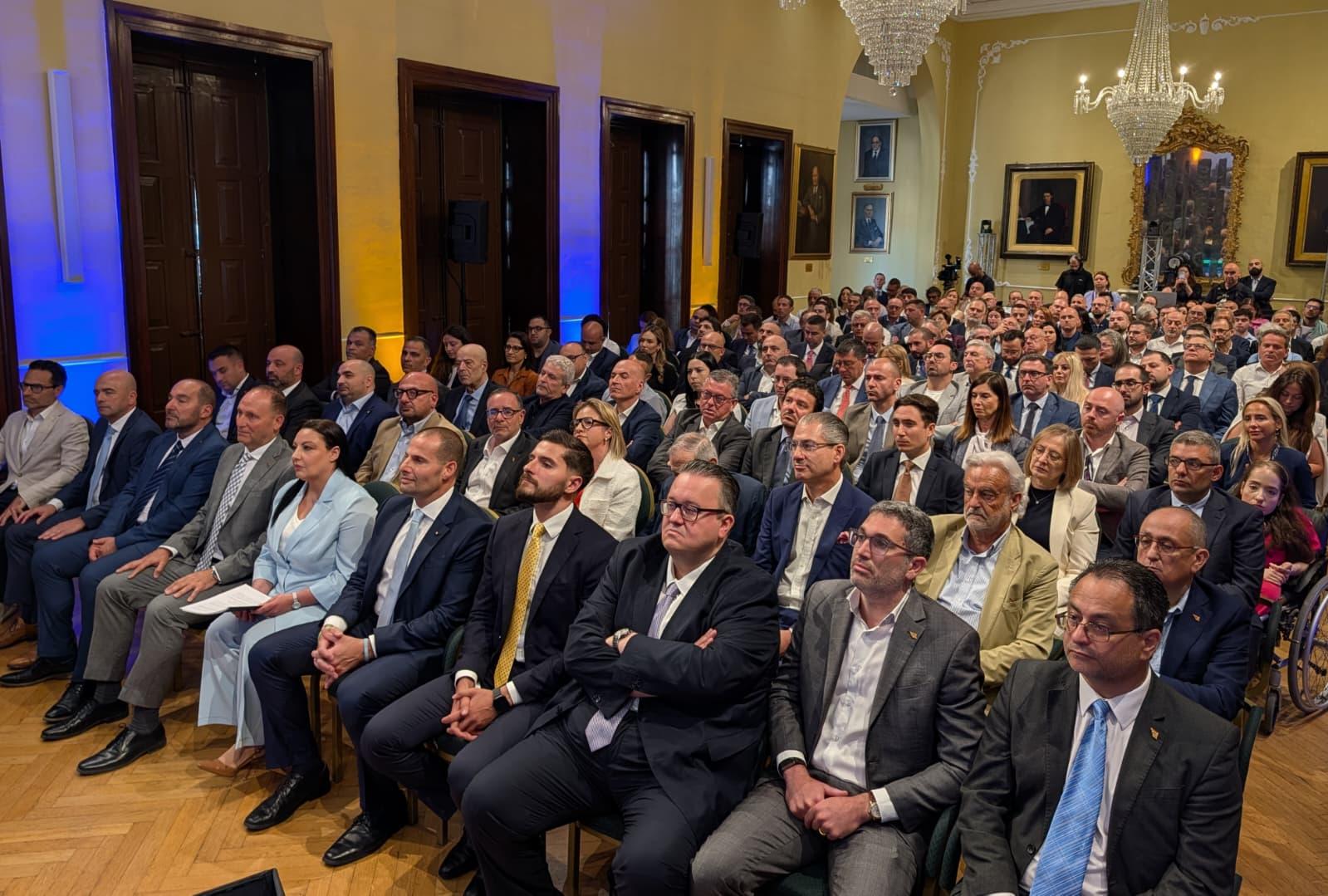 Several of Malta's top business representatives turned up for the debate. Photo: Chris Sant Fournier
- Labour manifesto to cost €6.3 billion over five years, PN’s cost still unknown
Much of the electoral campaign has been dominated by what moderator Rachel Attard aptly defined as “the shower of promises”, with voters left scratching their heads over quite how deep the government’s pockets are.
After Finance Minister Clyde Caruana dodged a question on the subject last week, we now have a figure – the Labour manifesto will cost €6.3 billion over the five year legislature, Abela said early in the debate.
The measures will be funded entirely by Malta’s economic growth, Abela promised, pointing to a glowing fiscal forecast issued by the European Commission last week.
“So no new taxes, even on businesses?” Attard ventured. “Absolutely not,” Abela promised.
Audience members hoping to hear a price tag put to the PN manifesto will have to wait a little longer.
In his initial reply, Borg pointed to the new economic niches being promised by PN which, he said, will fund the party’s manifesto pledges, prompting Abela to accuse him of dodging the question.
“I'd urge the prime minister to follow us this evening, as he always does, and he'll learn the cost of our electoral programme,” Borg replied.
- I don’t believe in an interventionist government but I know that you do.
Repeatedly through the debate, Borg pitched PN as the party that will steer clear of meddling with businesses, instead simply paving the way for them to succeed on their own steam.
On the other hand, Borg said, the government was making people reliant on handouts.
“We don’t want you to be dependent on the government,” Borg told the businesses in the audience. “We want you to remain autonomous and independent, we will give you the rod and leave you be”.
He repeated the point during his closing address, telling businesses that a PN government “will give you the necessary tools to be autonomous,” while slashing the red tape that sometimes prevents them from investing further.
“That’s the difference between us and them, they want you to be reliant,” Borg said of the Labour government.
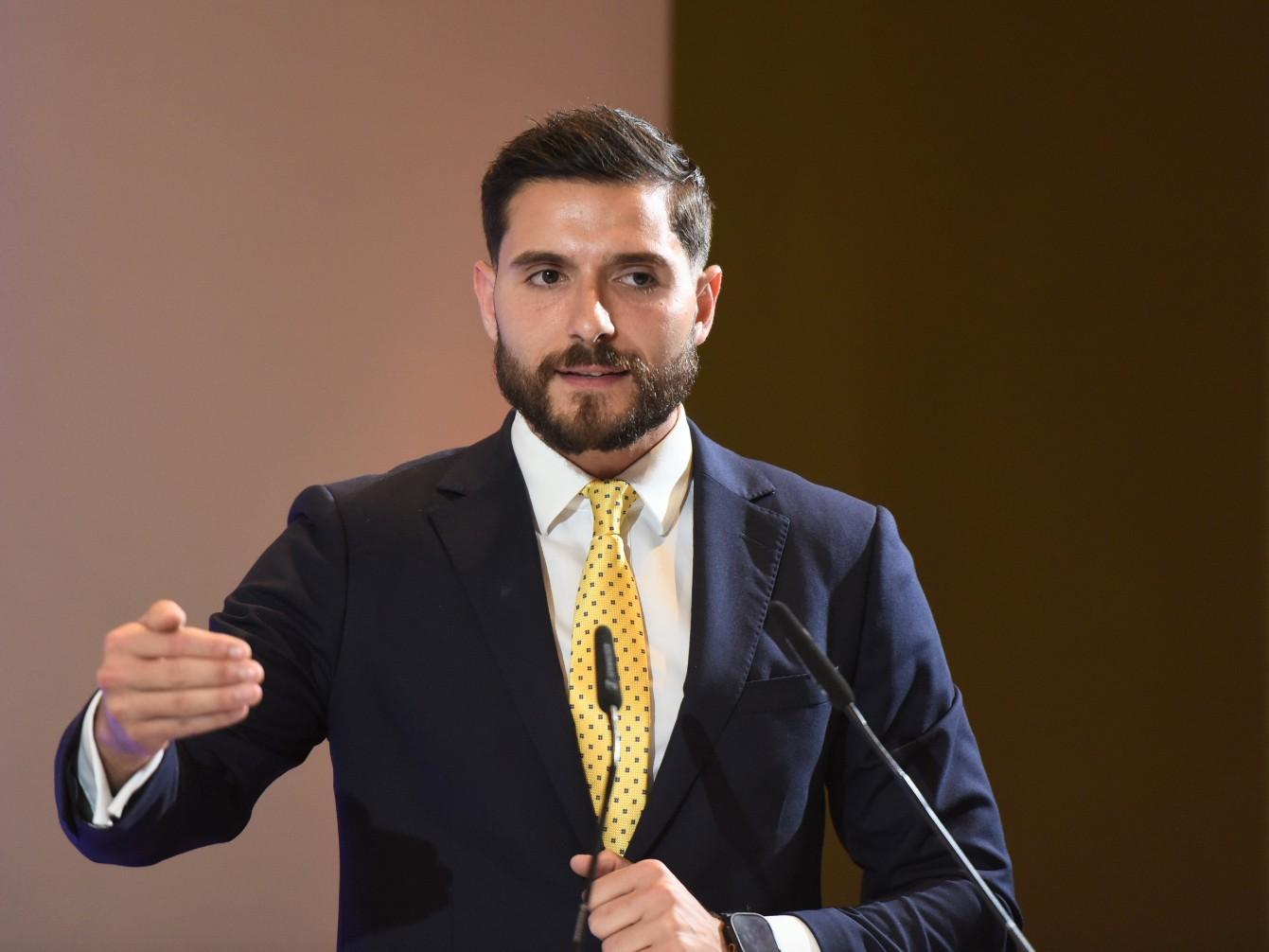 Alex Borg addressing the audience on Monday. Photo: Chris Sant Fournier
- Let’s be realistic.
In her opening address, Chamber CEO Marthese Portelli chided both parties for their seemingly unrealistic electoral promises, saying they should wisen up in this last week of the campaign.
Throughout the debate, both leaders adopted the same selective reading of Portelli’s warnings, describing their own proposals as grounded in reality, unlike those of their adversaries.
This was most evident when the topic of mass transport cropped up halfway through the debate.
Labour had launched its vision for the transport sector weeks ago, Abela said, describing it as “a realistic plan that is doable”.
This, in contrast to the opposition’s “AI-generated images,” he said.
“Look at other countries that carried out similar projects,” Abela said. “Do their timelines even approach what the opposition is promising?”
“Arup has devised 20 metro systems around Europe,” Abela said, of the experts engaged by the government to devise its Malta in Motion plans.
“Who are your experts? Did the person who created the AI images carry out a single project in this field?” he asked Borg.
Abela did not have to wait long for Borg’s rebuttal. Was it realistic, he asked, to propose a transport vision that his own finance minister refuses to sign off on?
“Shadow minister Adrian Delia has seen all our costings and is ready to sign off on it,” Borg said, adding that PN’s proposal had been endorsed by architect Konrad Xuereb.
“The choice is yours,” he told the audience. “Another five years of studies, or implementation from day one”.
- Economics jargon to the fore.
Both leaders had clearly brushed up on their economics lingo over the weekend, well aware of the business-oriented audience they would be facing first thing on Monday.
What followed were occasionally stilted references to “JVs” (joint ventures) and “CAPEX” (capital expenditure) from Abela, keen to reassure his audience that his government would continue to support them throughout tough times.
“We are going to keep our economic policy consistent as we have done in recent years,” Abela said, describing how the government had supported the business community throughout the recent turbulent years.
Borg, on the other hand, relied heavily on the “multiplier effect,” pointing to the trickle-down effect the party’s tax cuts will have on the economy.
“History shows us that whenever the government cut taxes, its revenue increased,” he argued, saying that the party’s promised cuts in corporate and personal tax, as well as in energy bills will help spike consumption and investment.
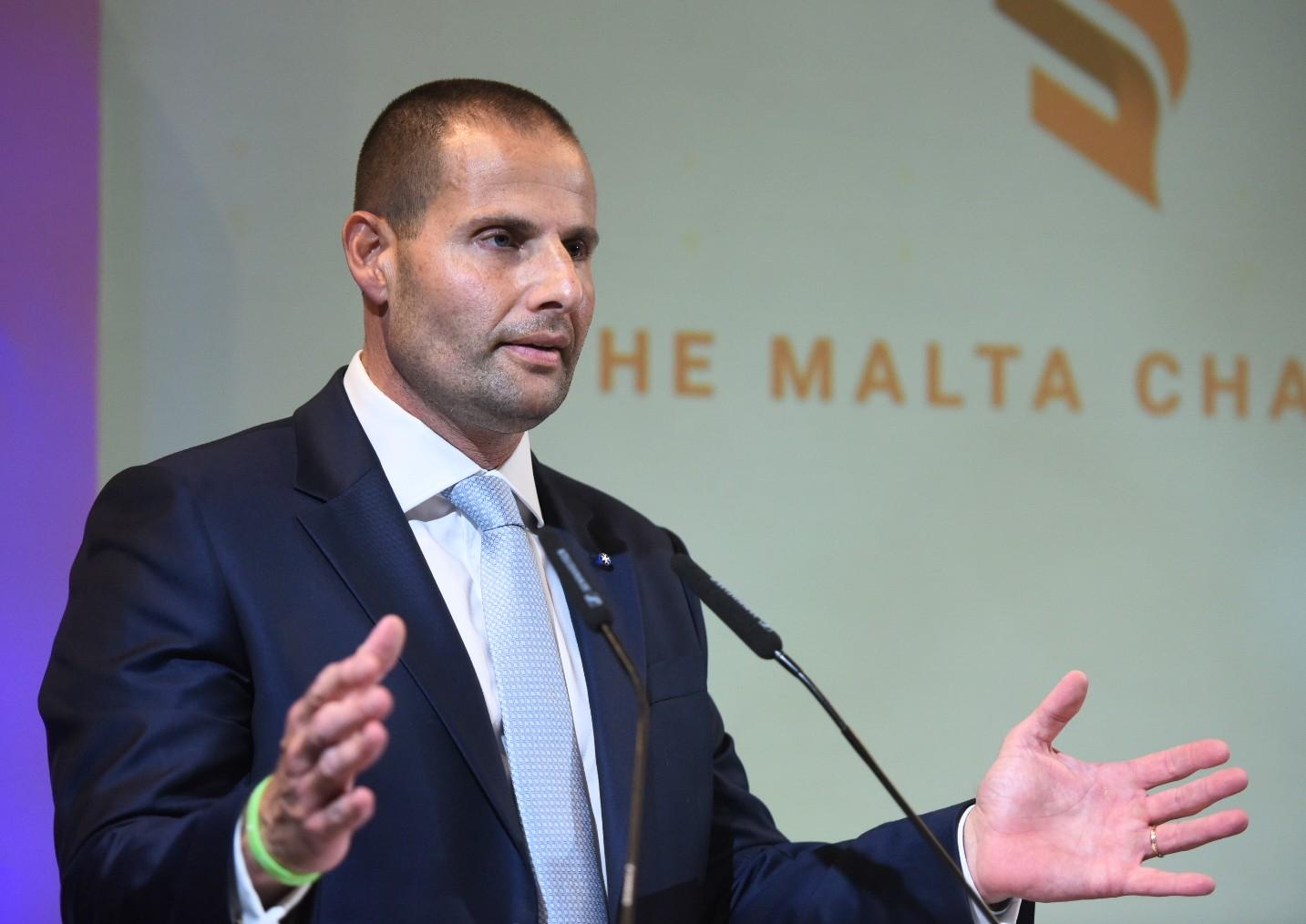 Robert Abela on stage on Monday. Photo: Chris Sant Fournier
- Who knows their EU funding best?
The spectre of Malta’s EU funding loomed over parts of the debate, with EU member states currently locked in negotiations over the next EU budget, which will cover the 2028-2034 period.
Responding to a claim that Abela had negotiated a budget with the EU that was double that obtained by his PN predecessors during the last round of negotiations, Borg went on the attack.
The Labour government had PN to thank for being in the position to receive any funding at all, Borg argued, harking back two decades to when Labour opposed EU membership.
Borg said he would have been worried had Abela not increased Malta’s EU funding since the PN’s days in power, given how much time had passed, saying he hoped Malta would “triple” its allocation next time around.
And it was thanks to the EU funding that Malta had made it through the pandemic, he said, echoing a claim made last week by MEP David Casa that funds had originated from the EU’s social fund.
“Don’t believe David Casa,” Abela promptly replied. “If our Covid support came through EU funds how did our deficit increase at the time?”.
And Borg was fundamentally misunderstanding the scope of EU budget negotiations, Abela argued.
“Nobody is going to triple their budget, that’s not anybody’s aim,” he said, arguing that the EU was trying to “square the circle” when it comes to its Ukraine aid.
“We are trying to address our co-financing rate and focus on the specificities of our country, not increase our allocation,” he added.
“He hasn’t even understood what our priorities for the EU budget is,” Abela said of Borg.