England flags are flying across Malta. But are old football rivalries fading?
Experts say Malta’s traditional football divide is giving way to more global and diverse allegiances
England flags are flying from Maltese balconies ahead of the World Cup semi-final with Argentina on Wednesday but experts say the country's once-fierce football divide is fading.
Many Maltese people remember a time when Italy football supporters would carcade in joy when England lost a match against any other country.
The England-Italy rivalry was so deeply ingrained that supporters did not simply back their own team - they also celebrated the other's defeat.
But that divide no longer feels as strong today. Italy's failure to qualify for the ongoing World Cup, coupled with England's run to the final, may have played a part.
But there is more to it.
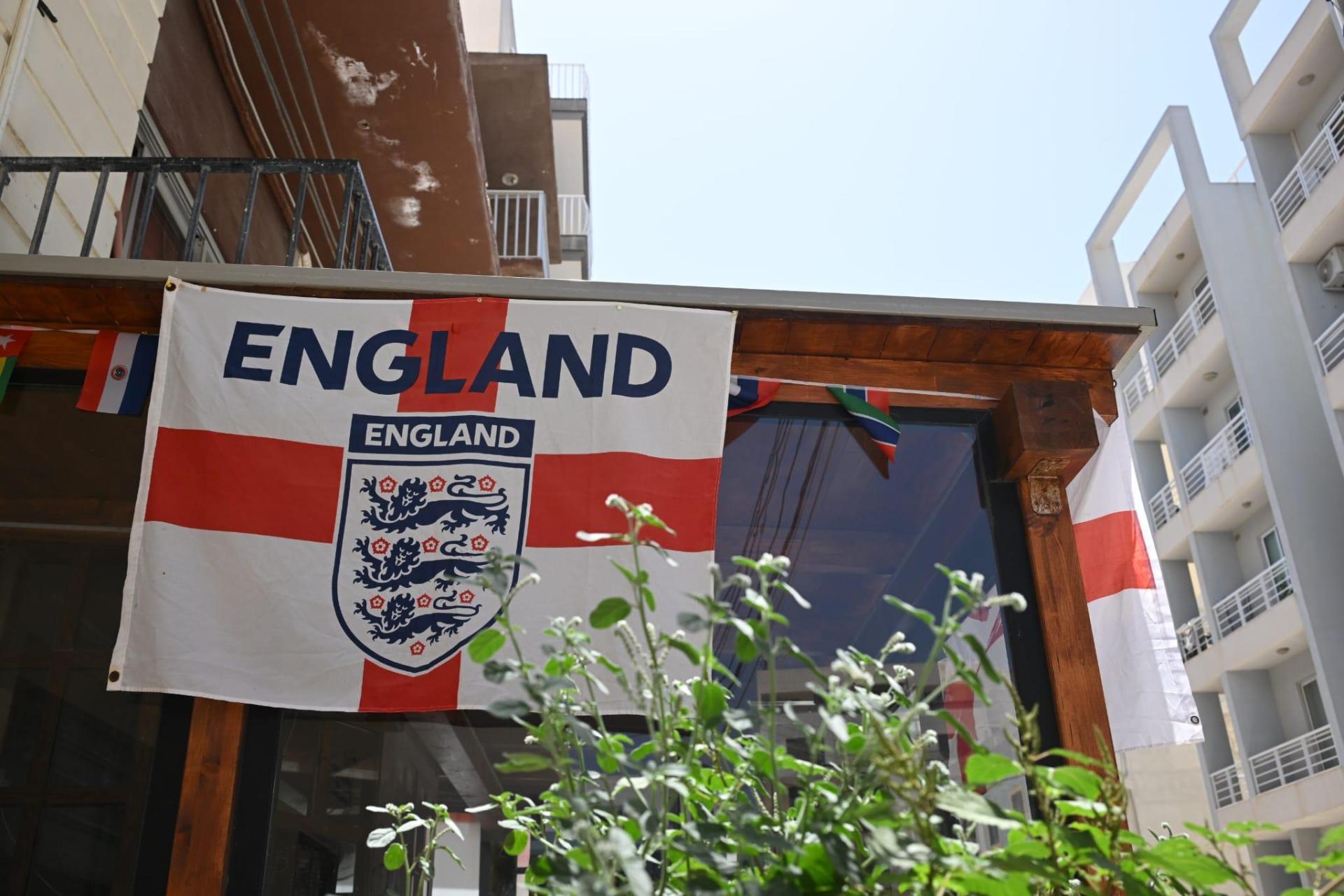 An England flag flies in Buġibba as England prepares to face Argentina in the World Cup semi finals. Photo: Matthew Mirabelli
Sociologist Michael Briguglio and anthropologist Mark-Anthony Falzon confirm that this is not merely a matter of perception. While support for Italy and England remains dominant among Maltese football fans, it has been diluted by a number of factors.
The changes in media access have influenced fan loyalties.
“In the past, audiences in Malta mainly had access to Italian television and football, while the English league was shown on the national broadcaster. Today, younger fans have access to a much wider range of leagues and competitions, giving them more choice,” Briguglio notes.
As a result, while many people continue to support teams based on family tradition, younger generations are more willing to explore different allegiances.
Falzon elaborates on the different routes by which people become supporters of one team or another. On one hand, these are profoundly personal, he says, giving an example: “I know someone who as a child found a scarf of a team he could scarcely pronounce. He hasn’t missed a single Aston Villa match since, and he is now in his fifties.”
He adds that, on the other hand, the making of football fandom is caught up in a tissue of social factors that include family, politics, access to technology, demography and more.
These two complementary sides of the story help explain why national football allegiance is no longer a strictly binary choice in Malta. There is, of course, the shifting nature of British and Italian cultural influence.
“It’s not a million years since Malta was awash with Colonial Stores, Coronation Bazaars and Jubilee Bars, and that Maltese children roamed a landscape of leafy lanes and thatched cottages conjured up by Enid Blyton. Television meant Italian television, and football commentary meant Bruno Pizzul’s drawl. That binary world is increasingly a thing of the past. Secondly, and going back to those special moments that turn into lifelong allegiance, there is a greater chance that they will happen outside the narrow ambit of English or Italian football,” Falzon says.
Both Briguglio and Falzon agree that the social media presence of celebrity footballers and fashionable clubs has played a key role.
Briguglio notes that there has also been a shift towards supporting clubs rather than national teams. "Some people support clubs such as Inter but do not necessarily follow Italy, while others support Italy because they follow the club. Clubs have become powerful global brands. There are also trends – at the moment, for example, Paris Saint-Germain has attracted significant attention because of its recent success."
Individual players have also become global brands, with many fans following footballers such as Cristiano Ronaldo and Lionel Messi rather than a particular national side.
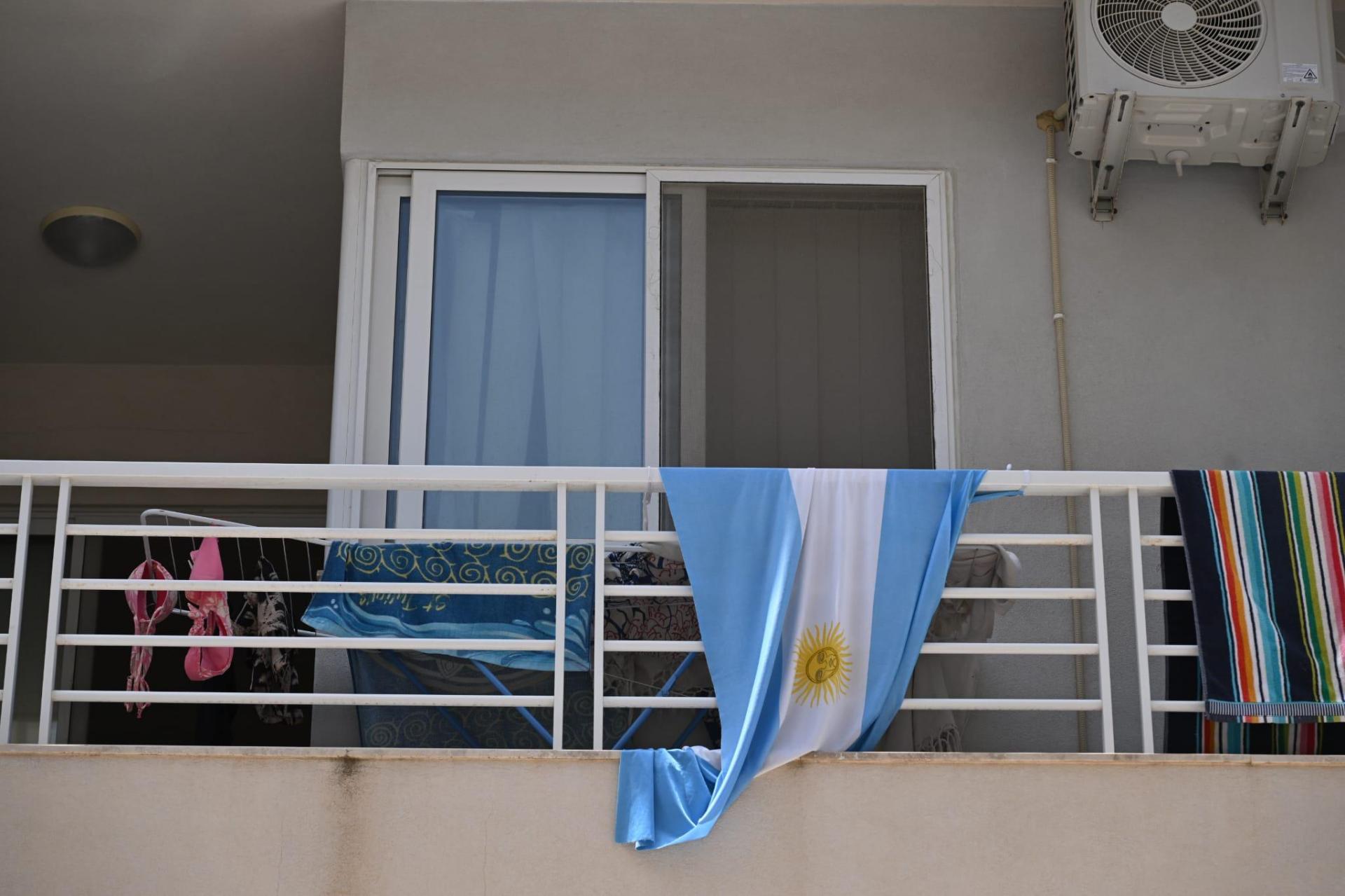 An Argentina flag flies amid the laundry. Photo: Matthew Mirabelli
Falzon adds: “The Ronaldos and the Messis have become peripatetic superstars, followed around zealously by hundreds of millions as they move from club to richer club. This means exposure to national football contexts other than those of England and Italy. When Neymar moved from FC Barcelona to PSG, his fans found themselves following the French league.”
Falzon also points out that the social settings in which football is enjoyed are becoming increasingly public and diverse in terms of national origin.
“I remember watching the 2014 World Cup final outside the aquarium complex in Qawra. I drifted in not caring less and marched out a Germany zealot, such was the presence of German nationals. More and more Maltese people watch football in social settings which are more diverse, certainly a world apart from the family livingroomfuls of screaming England or Italy fans,” he said.
Anthropologists of religion like to talk of the ‘collective effervescence’ that breathes life into religious congregations, he says, adding that “it’s fair to say that, with respect to football, this effervescence is no longer binary but rather comes in a range of colours.”
And with the number of foreigners moving to Malta on the increase, Briguglio notes that migration has had an impact, with migrant communities in Malta naturally supporting their own national teams. Colombian nationals, for example, back Colombia, while cultural ties may also lead them to support other Latin American countries competing in the tournament.
Politics, too, can sometimes influence football support.
Briguglio referred to the recent issue discussed in the media when United States striker Folarin Balogun's one-match ban was suspended by FIFA shortly before the country's World Cup last-16 match at the request of US President Donald Trump.
"This may urge more people to side with Belgium for political reasons. There are also Maltese people living abroad, such as those working for European institutions in Brussels, who may identify more closely with Belgium," he said.
There are other factors too.
Falzon says we cannot discount the top-down, commercially driven push to globalise football — and other sports, notably Formula 1. Twenty years ago, masses of people in India paying to catch a glimpse of Messi (whose prowess at cricket is not known) would have been unthinkable.
The roots of the rivalry
Malta’s England–Italy football “rivalry” is less about the two national teams themselves and more a local cultural split rooted in Malta’s colonial history, language politics, and class identity.
When Malta became a British colony, the presence of Italian culture and language remained strong. The Italian language was the official language in Malta for about four centuries – until the British took control and demanded “English and English only” in 1880.
As the years passed, Malta’s political landscape evolved to the one we recall in recent history.
Many were employed with the British services or the drydocks and supported integration with the UK. This produced a durable cultural divide: Pro‑English / anglophile camp: often linked to British‑employed workers, dockyard families, Labour supporters, and those who saw opportunity in the imperial connection; and the Pro‑Italian camp: often linked to traditional elites, the Church, Nationalist politics, and those who identified with Italian culture and resisted forced Anglicisation.
Eventually, Malta gained independence in 1964 and the British forces withdrew from Malta in 1979. But this did not spell the end of the Anglo-Italian rivalry that became ingrained in the blood of the nation.