What if a giant 3D printer could build your home?
University of Malta's research promotes sustainable building with 3DCP technology
Digital fabrication and additive manufacturing are transforming the global construction industry. 3D concrete printing (3DCP) provides design flexibility and the ability to create complex structures, moving away from traditional methods.
It enhances resource efficiency and reduces material waste by eliminating formwork and lowering labour needs. However, challenges remain, particularly regarding the higher cement content needed in 3D concrete mixtures compared to conventional concrete.
Cement-based materials are fundamental to construction globally, yet have a significant environmental impact, with cement production as a binder in concrete accounting for approximately 8% of global carbon dioxide emissions.
The construction industry is also a major consumer of natural resources and generates large quantities of solid waste, making the recycling of construction and demolition waste (CDW) increasingly important.
Incorporating CDW and industrial by-products into 3DCP mixes improves resource efficiency, reduces environmental impacts and supports more sustainable construction practices.
The Construction Materials Engineering and Structural Monitoring Research Group at the University of Malta (UM) is conducting research on 3D concrete printing, including the use of a large-scale 3D printer and high-performance concrete mixes incorporating waste materials and industrial byproducts.
The 3D Concrete Research Project, supported by Xjenza Malta, aims to create low-carbon concrete from construction waste and byproducts like globigerina limestone and recycled aggregate. The project promotes green building through optimised 3DCP elements, requiring advanced research to ensure pumpability, extrudability, and buildability for strong, durable prints.
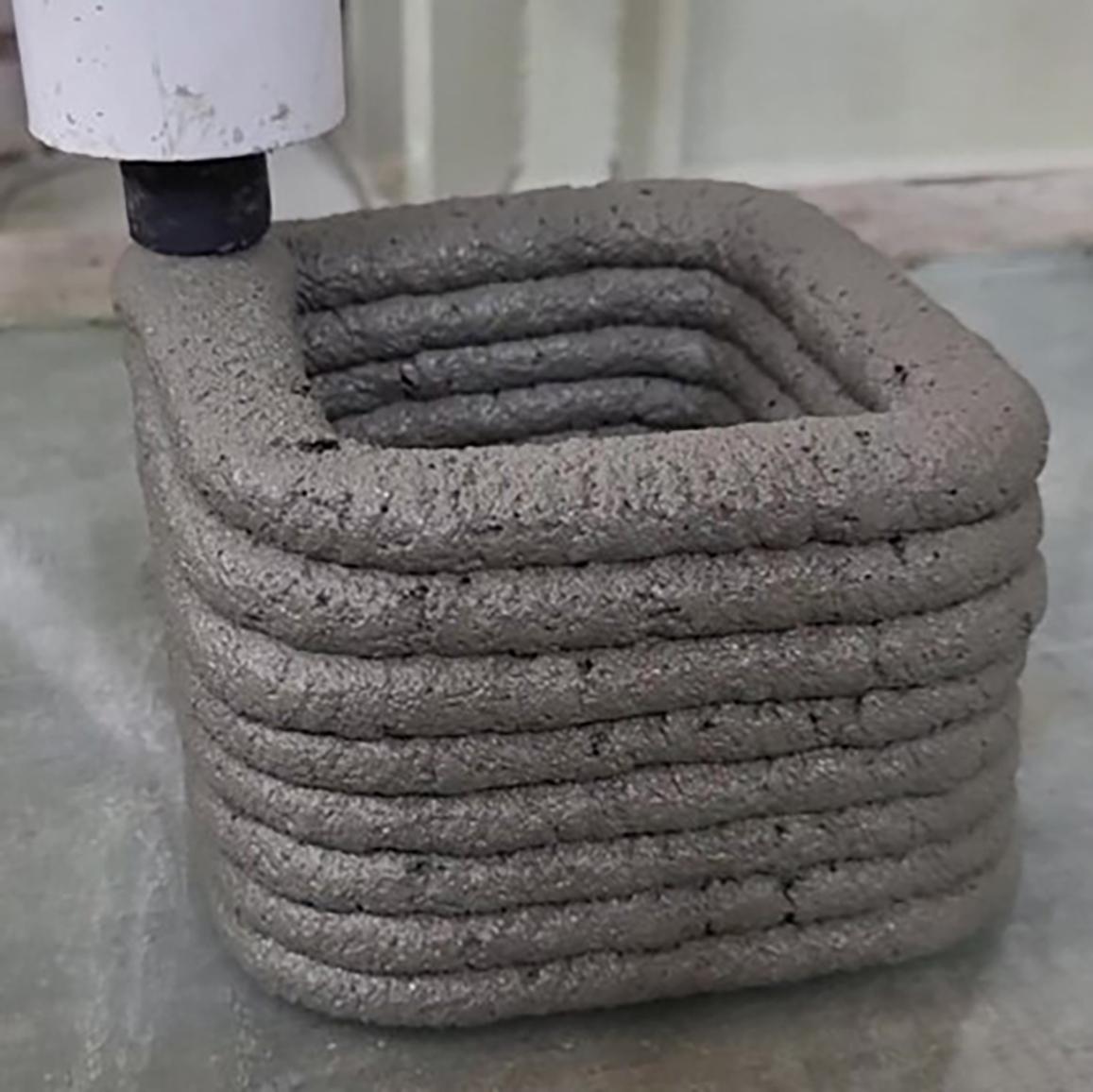 3D concrete printing based on low-carbon concrete. Photo: Ruben Paul Borg
Further studies led to the development of advanced Geopolymer 3D Concrete Printing (3DCP) within the SMACORT project, aimed at creating sustainable building materials for retrofitting and energy efficiency. Supported by Xjenza Malta, the initiative showcases the potential of 3D printing using recycled CDW. This process produces cement-free geopolymer mortars, cutting carbon dioxide emissions and promoting resource circularity.
The research has led to the development of low-carbon geopolymer concrete enhanced with lightweight aggregates and phase-change materials, thereby improving energy efficiency in buildings.
The research has led to the development of low-carbon geopolymer concrete enhanced with lightweight aggregates and phase-change materials, thereby improving energy efficiency in buildings
Modular façade cladding panels were designed, manufactured and successfully installed in a public building renovation at the Abattoir in Marsa, Malta. Equipped with a sensor system, the installation serves as a monitoring station for the UM’s research group, validating the long-term performance of 3DCP geopolymer concrete in industrial settings.
The UM is advancing 3DCP technologies by using CDW, limestone waste, recycled aggregate and industrial by-products in cement-based solutions, and by developing advanced geopolymer concrete. The research aims to improve material printability, mechanical performance, and durability for sustainable construction solutions.

Ruben Paul Borg is an academic in materials and structural engineering at the University of Malta. He is a professor, a principal investigator and project leader of various international research projects in sustainability of construction and climate resilience.
Did you know?
• The construction industry is one of the largest producers of waste, with construction and demolition waste accounting for about 30% – 40% of the solid waste produced worldwide.
• 3D concrete printing mixes require higher quantities of cement in the mix, when compared to conventional concrete, resulting in increased environmental impacts.
• Utilising construction and demolition waste and industrial by-products in concrete printing can mitigate the environmental impact, enabling sustainable construction practice.
• 3D concrete printing presents conflicting workability requirements: pumpability and extrudability requiring low dynamic yield stress to increase flow; and buildability, which requires high static yield stress to resist flow.
For more trivia see: www.um.edu.mt/think
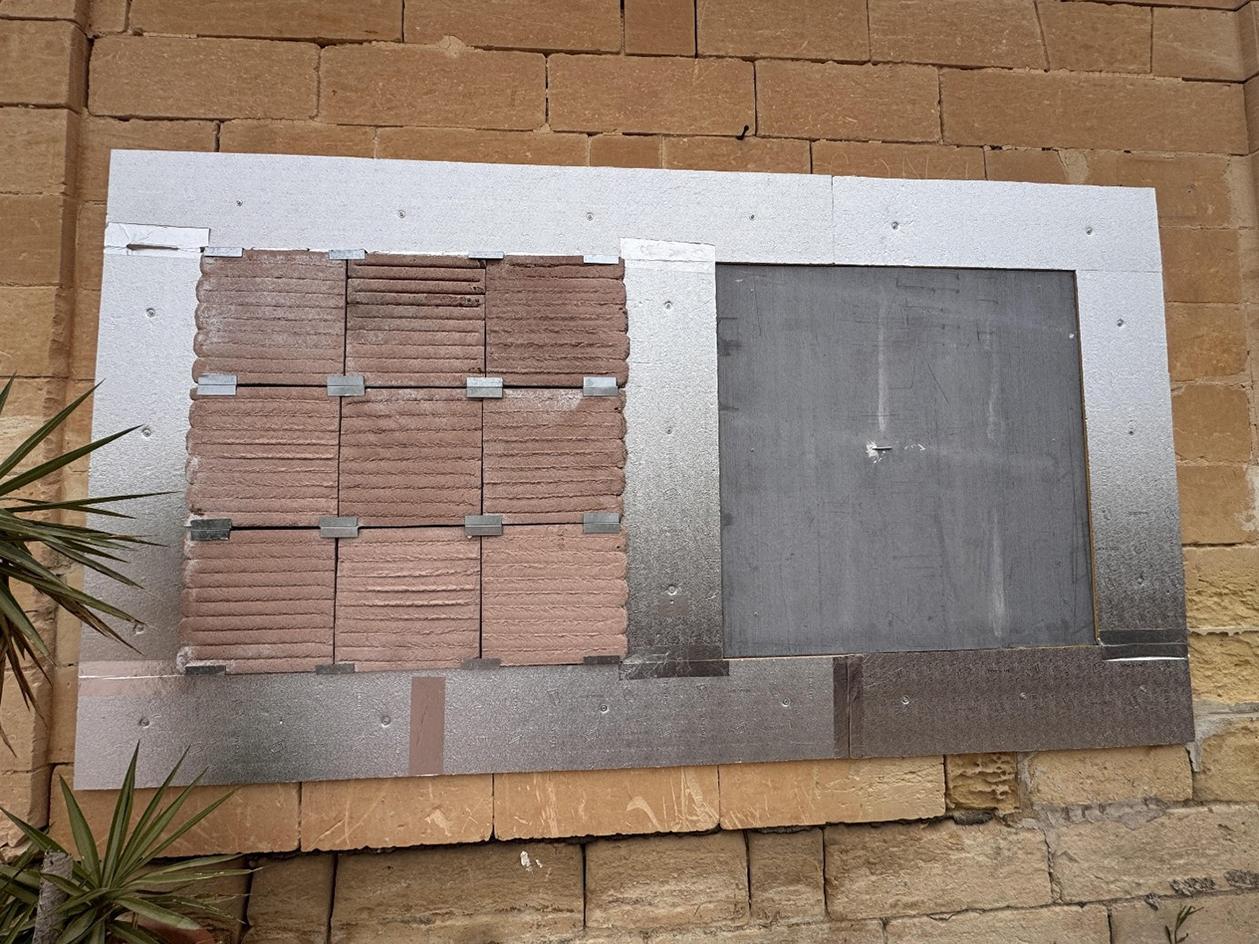 Photo: Ruben Paul Borg
Photo: Ruben Paul BorgPhoto of the week
Researchers have developed a new type of geopolymer concrete made from construction and demolition waste, used in the production of lightweight cladding panels to improve the thermal efficiency of buildings.
These innovative 3D-printed cladding panels have been installed on an industrial building in Marsa, Malta, where they are being monitored by the University of Malta to evaluate their environmental impact in a Mediterranean climate.
This project aims to advance 3D concrete technology, making it more applicable for building retrofits and enhancing architectural designs in existing structures.
Sound bites
• The first 3D-printed concrete in Malta was created at the University of Malta as a sustainable low-carbon material exploiting waste and industrial byproducts, including globigerina limestone and recycled aggregates. The 3D Concrete Project, funded by the Xjenza Malta ‘FUSION Research and Innovation’ programme, led to the development of Malta’s first 3D concrete printer and innovative construction engineering solutions.https://www.um.edu.mt/ben/constructmanage/ourresearch/3dconcrete/
• Construction and demolition waste were processed into fine powders and used to create a cement-free geopolymer mortar for 3D concrete printing at the Faculty for the Built Environment of the University of Malta, through the SMACORT project (3D manufacturing of developed sustainable coating materials for building retrofitting and energy efficiency). The SMACORT project is funded through the Xjenza Malta–TÜBİTAK 2023 joint call for R&I proposals.
https://www.um.edu.mt/newspoint/news/2024/04/3D-additive-manufacturing-promoting-energy-efficiency
For more sound bites, click on https://www.facebook.com/RadioMochaMalta.