Good Friday devotions and traditions in Valletta
Ta’ Ġieżu crucifix plays a central role in the Passion’s commemoration in the city
Holy Week activities are a cornerstone of Maltese culture, with scores of enthusiasts holding small exhibitions and several towns and villages hosting processions and pageants.
The processions and pageants are a direct influence of similar religious customs in Spain and Sicily. The first Good Friday procession in Malta is commonly believed to have been held by the lay confraternity of St Joseph attached to the Franciscan friary (Ta’ Ġieżu) in Rabat. It was probably first held in the late 16th century.
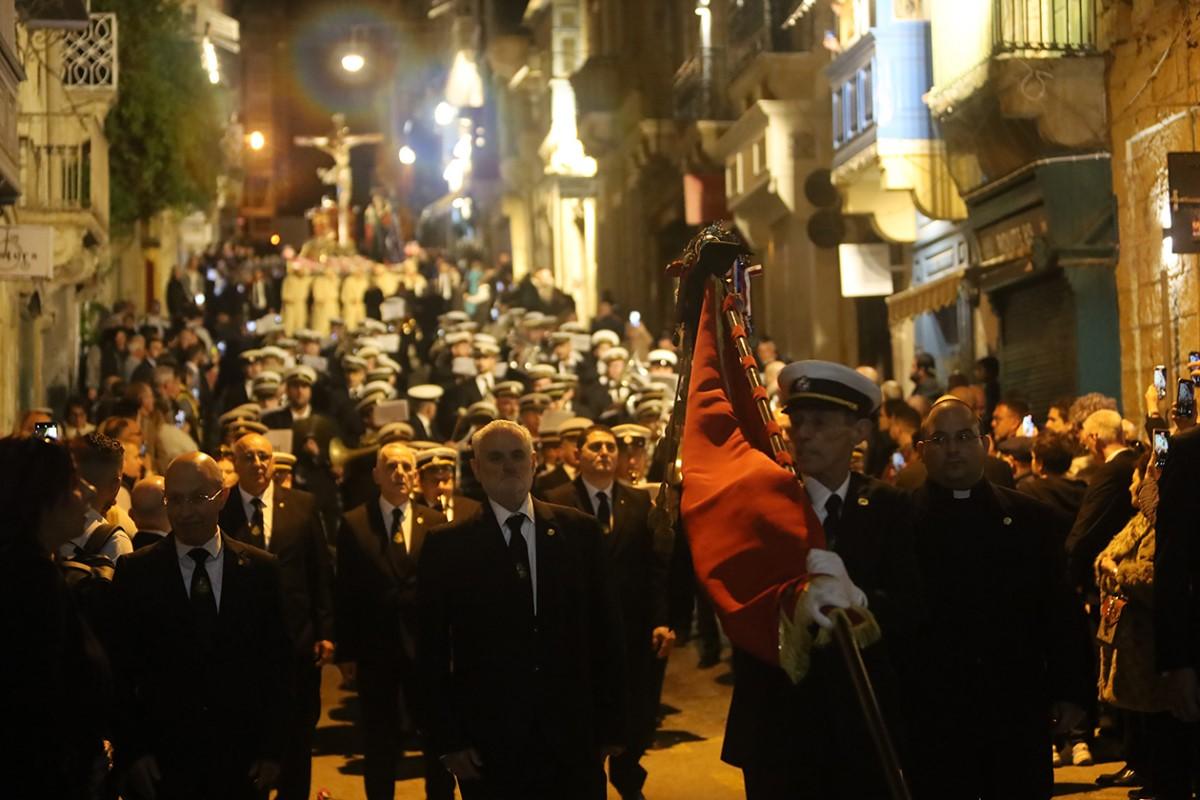 The crucifix being carried during a solemn Good Friday march through the streets of Valletta. Photo: Carl Farrugia
The Franciscan Minors have maintained a profound and historic bond with the Holy Land since the 13th century, when friars were entrusted with the care of Christian holy sites associated with the Passion of Christ, especially in Jerusalem. This presence deepened Franciscan devotion to the suffering and death of Christ, inspiring popular piety centred on the Passion, including the promotion of the Way of the Cross. Their spirituality emphasises humility, poverty and intimate meditation on Christ crucified, uniting their mission in the Holy Land with a heartfelt devotion to the mystery of the crucifixion.
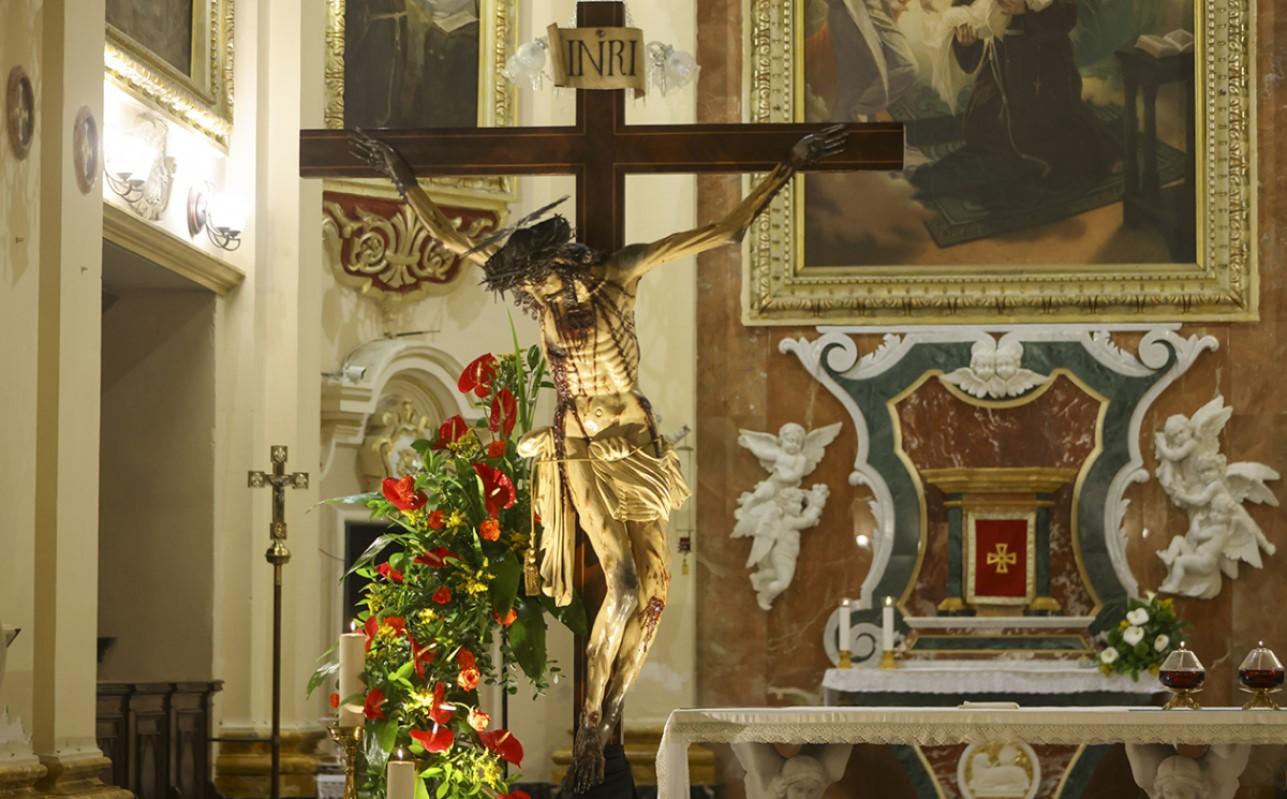 The crucifix is a remarkable work created over 300 years ago by Fra Innocenzo of Petralia in Sicily. Photo: Sebio Aquilina
After the Friars Minor of Ta’ Ġieżu established their first convent in Rabat, they were granted land to build a convent and church in Valletta. The Ta’ Ġieżu church in Valletta was completed in 1575 to a design by Girolamo Cassar. Within this church stands the first chapel dedicated to the crucifix, from which devotion to the Passion began to flourish in Valletta. Over the centuries, the chapel benefitted from the generosity of prominent figures, including grand masters Gregorio Carafa and Manuel Pinto da Fonseca.
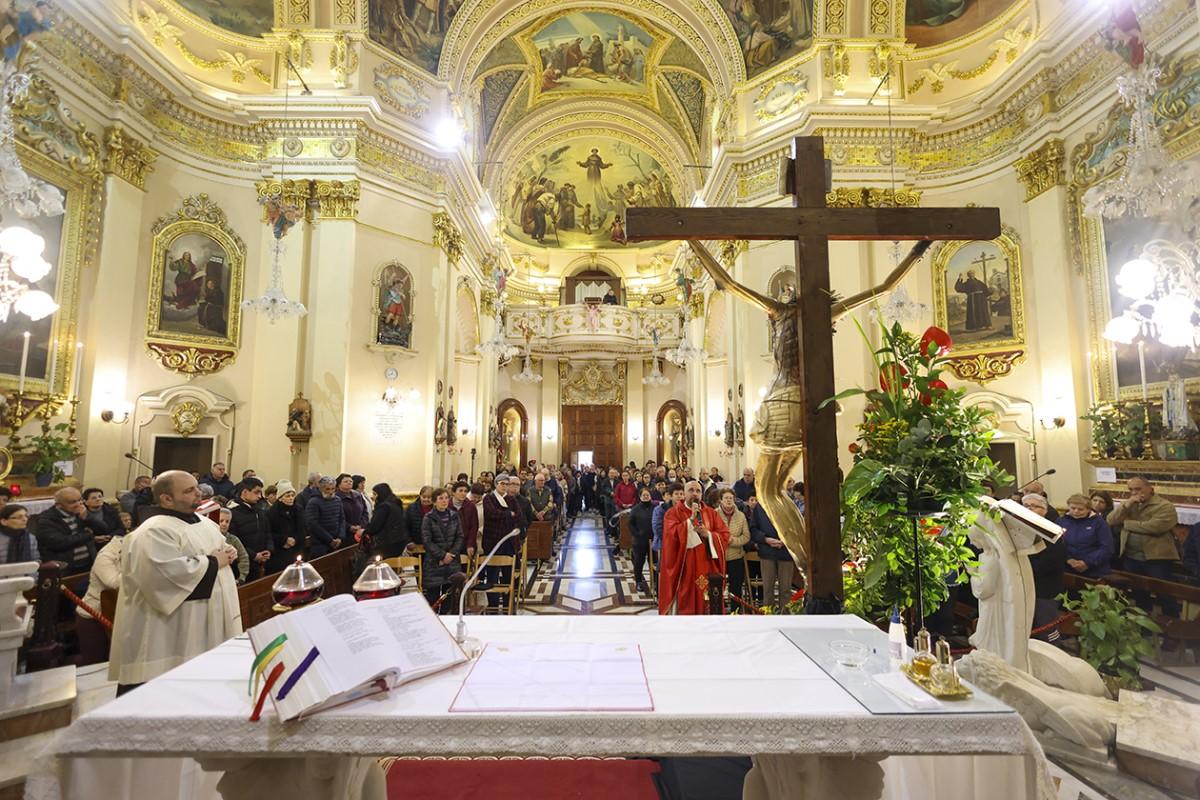
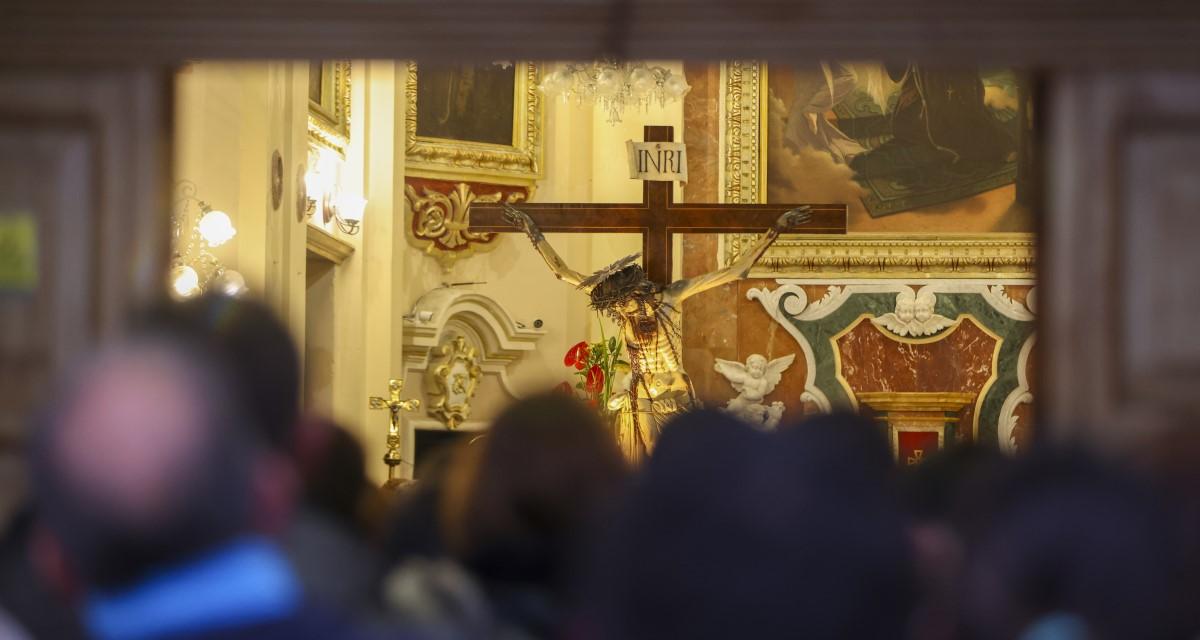
For over 300 years, the crucifix has been deeply venerated in the chapel dedicated to it at Ta’ Ġieżu church. Photos: Sebio Aquilina
.
The presence of the Knights played a crucial role in fostering public expressions of devotion, particularly the Lenten observances held every Friday. The Order regarded the cross as a symbol of strength and protection, and devotion to the crucifix quickly spread throughout Malta. The Knights had brought with them a relic of the True Cross and a thorn from the Crown of Thorns, both of which are still venerated today in the conventual church of the Order, now St John’s Co-Cathedral.
The profound devotion inspired by this crucifix led to the establishment of the archconfraternity
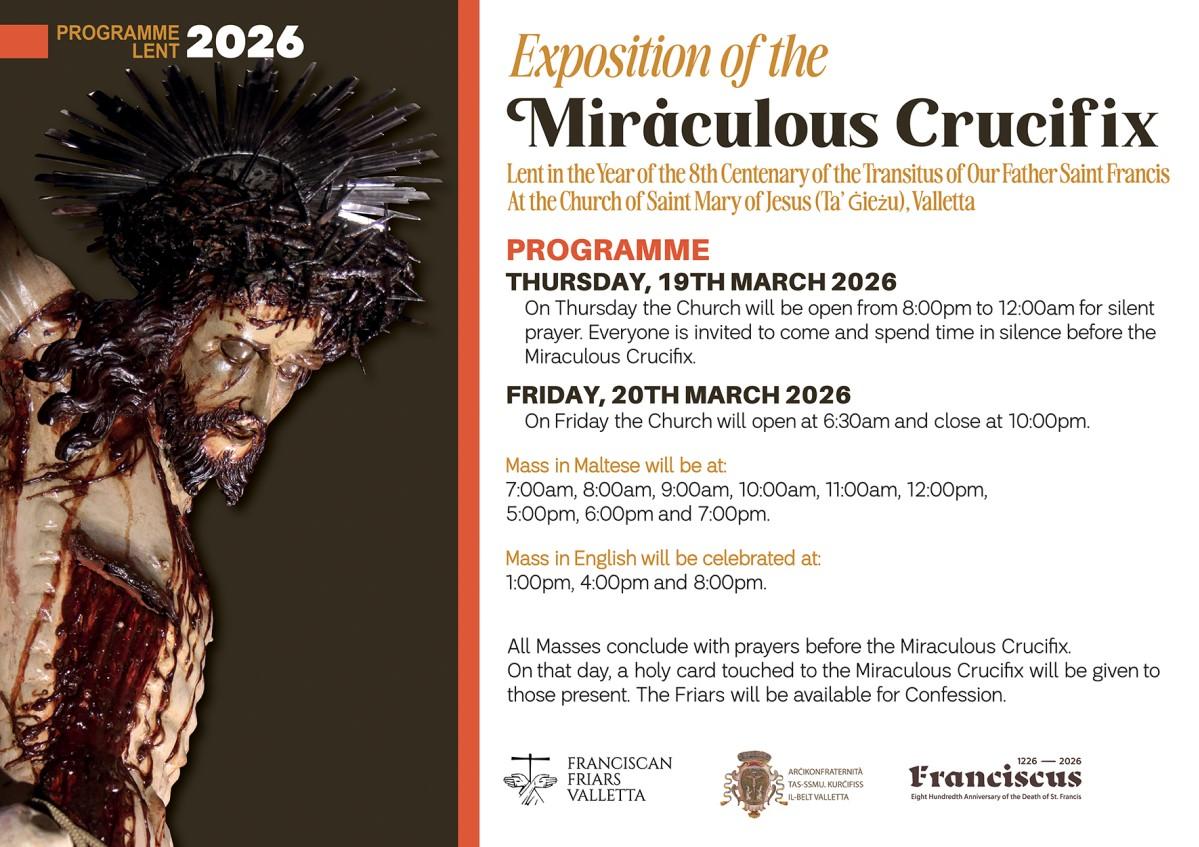
The true driving force behind the commemoration of the Passion in Valletta, however, was the crucifix at Ta’ Ġieżu. This remarkable work was created by Fra Innocenzo of Petralia. For over 300 years, it has been deeply venerated in the chapel dedicated to it at Ta’ Ġieżu church. Fra Innocenzo was widely renowned in his time for his crucifixes and depictions of the Ecce Homo, many examples of which can still be found in Sicily.
The profound devotion inspired by this crucifix led to the establishment of the Archconfraternity of the Most Holy Crucifix. Together with the Franciscan friars, the archconfraternity is entrusted with fostering devotion to the Passion of Christ and overseeing the liturgical and devotional activities associated with this sacred season.
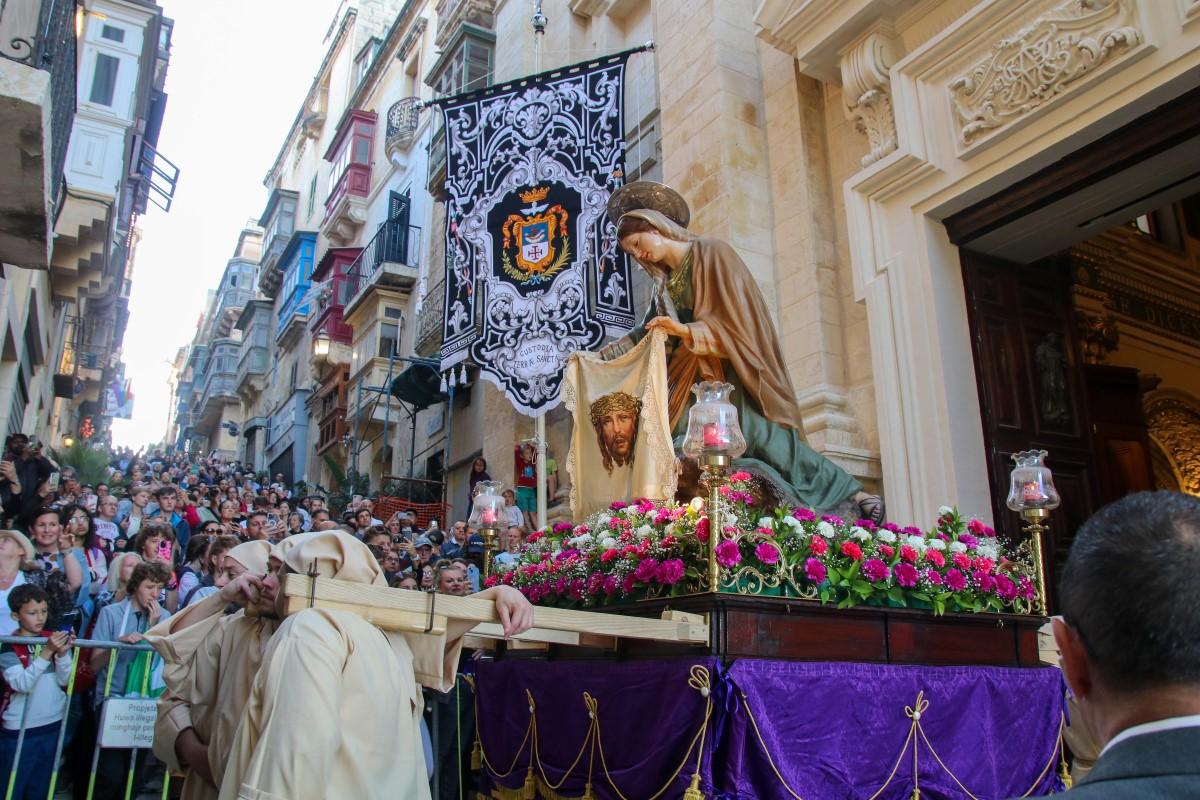
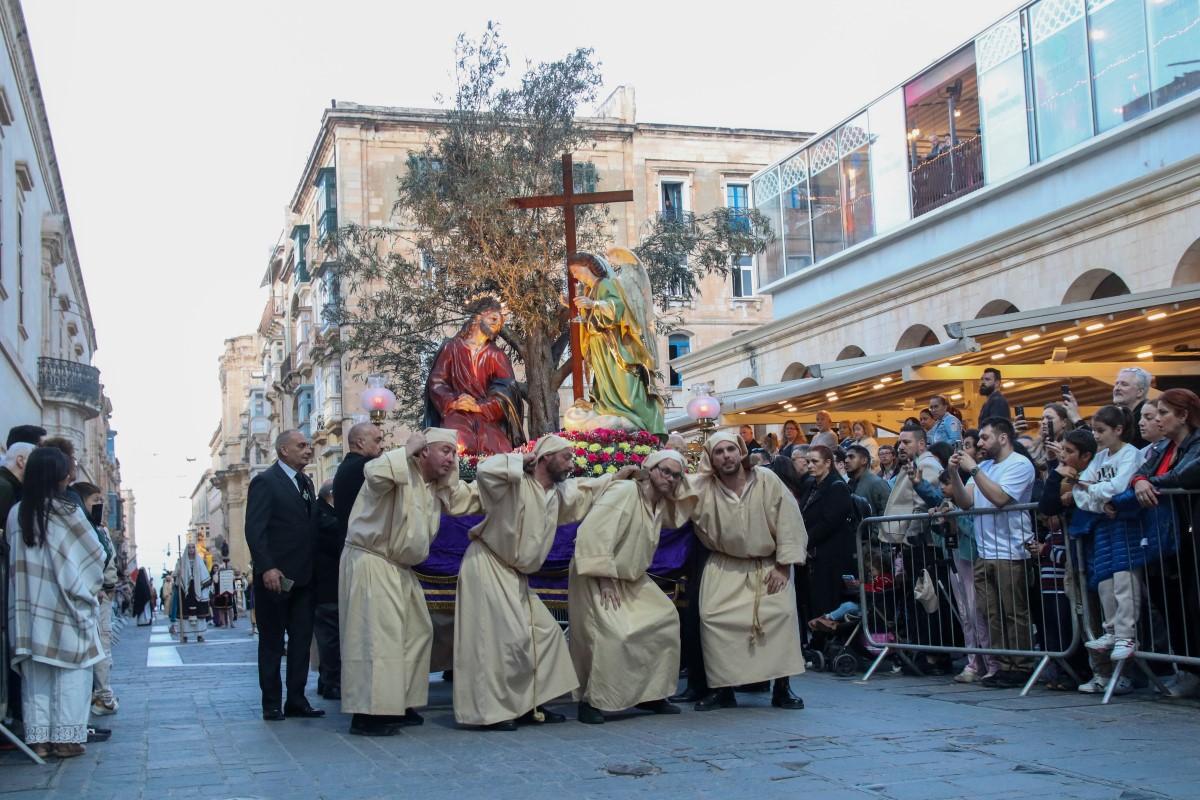
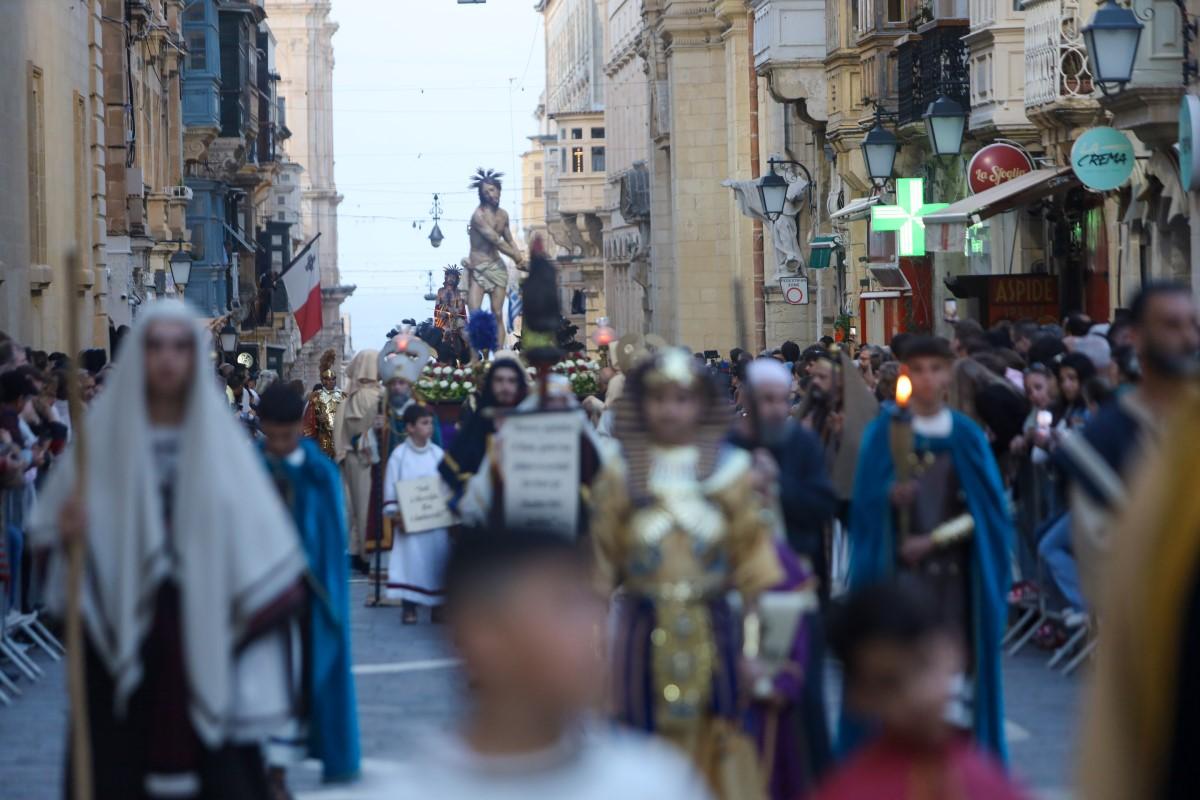
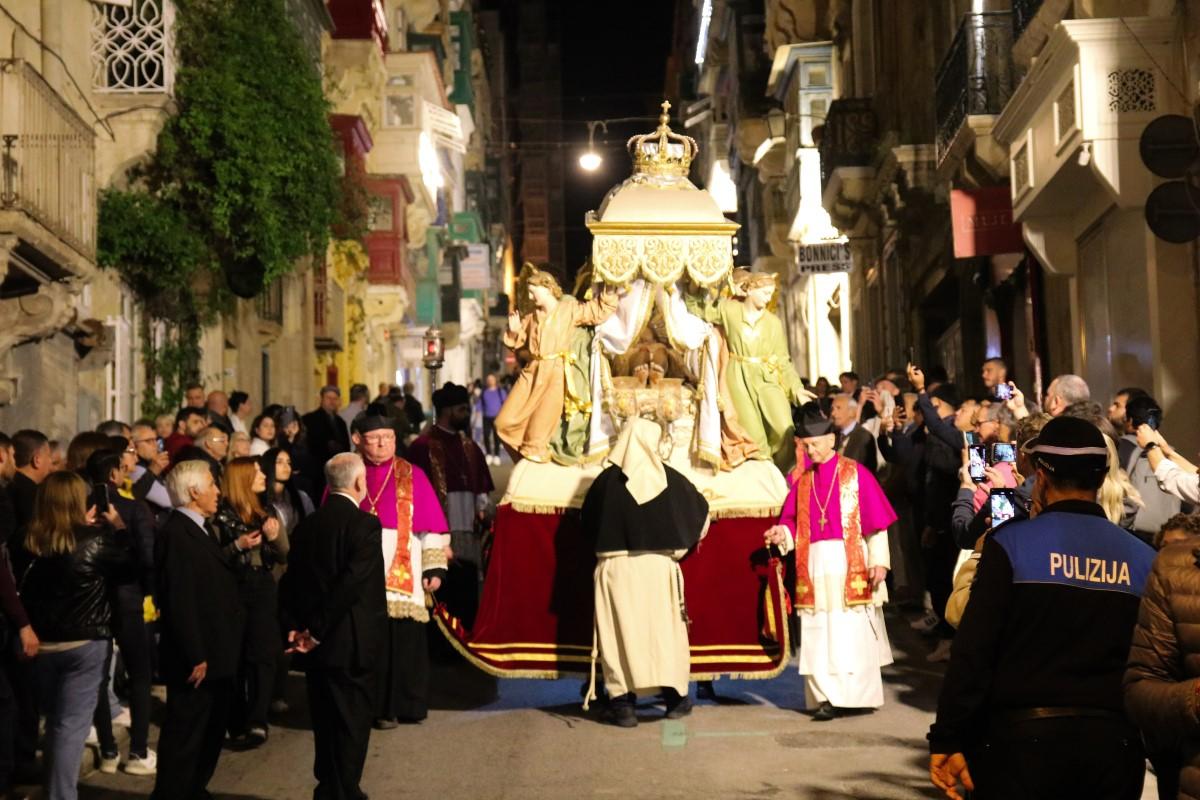
Scenes during the Good Friday procession in the streets of Valletta. Photos: Carl Farrugia
.
.
.
Over the years, the crucifix has embarked on numerous extraordinary pilgrimages, marking significant moments in the life of the Church and the faithful. It was carried during the Eucharistic Congress of 1913 and, again, for the Year of Redemption in 1933.
In 1940, amid the turmoil of war, it was transferred to the Franciscan convent in Għajnsielem for safekeeping. To celebrate the centenary of St Paul in 1960, it was brought to St Publius church in Floriana. Pilgrimages in 1982 and 1983 commemorated the beginning and conclusion of another Year of Redemption, when it was accompanied by the statue of Our Lady of Sorrows. Later, in 1987, it was displayed on the main altar of the Franciscan Minors church in Valletta.
The crucifix was again carried for the Jubilee Year in 2000 and 2001 and, in 2003, it formed part of an expiatory procession during a time of serious unrest in Jerusalem.
In April 2022, it was carried in a national pilgrimage to mark the end of the COVID-19 pandemic and also included in a national pilgrimage to Gozo last year.
Each year, the crucifix is solemnly displayed in the church on the fifth Friday of Lent, offering the faithful a dedicated day of prayer and reflection.
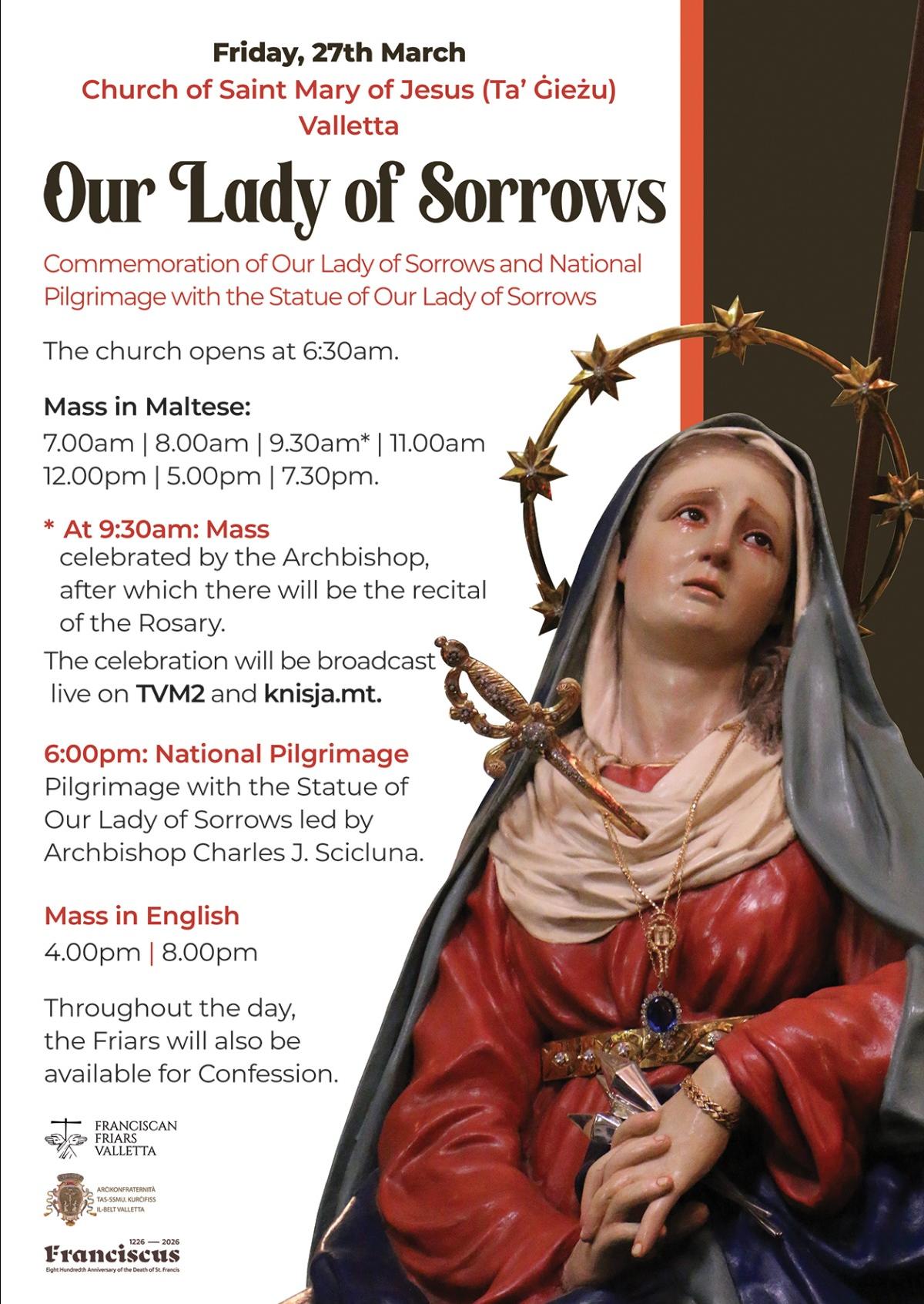
The archconfraternity is likewise responsible for organising the procession with the statue of Our Lady of Sorrows on the Friday preceding Good Friday. This national pilgrimage, led by the archbishop, draws large crowds not only from Valletta but from across Malta.
.
.
The confraternity’s most significant undertaking is the organisation of the Good Friday procession, featuring the statues depicting the Passion. Participants include the Società Filarmonica Nazionale La Valette, the Chapter of St Paul Shipwreck and the Franciscan community.
This year, the main theme of all the liturgical celebrations is centred on the motto ‘My God and my all’ (Deus meus et omnia), as the Franciscan Order commemorates the 800th anniversary of St Francis of Assisi receiving the stigmata on the hill of La Verna, in Assisi, Italy.