Grand Master’s Palace tapestries restored to former glory
The tapestries are more than 300 years old and underwent a two-year restoration programme
The Grand Master’s Palace tapestries have been returned to their former glory following a two-year restoration project in Belgium, alongside extensive works on the historic chamber that houses them.
The restored tapestries were unveiled at the Palace in Valletta on Thursday during an event presided over by President Myriam Spiteri Debono. They were restored at a cost of around €500,000.
The set of tapestries, one of the most prized treasures in Malta’s national collection, was commissioned by Grand Master Ramon Perellos y Roccaful in 1708 as his gift to the Order of St John following his election.
They depict exotic flora and fauna from lands that were being explored and colonised by Europeans at the time and are modelled on tapestries associated with Versailles. Malta is considered to have the only complete surviving set of these tapestries in such a well-preserved state.
The restoration was carried out by De Wit Royal Manufacturers in Belgium over a two-year period. Works were also carried out on the Tapestry Chamber itself, including its roof, ceiling, painted soffit and supporting structures.
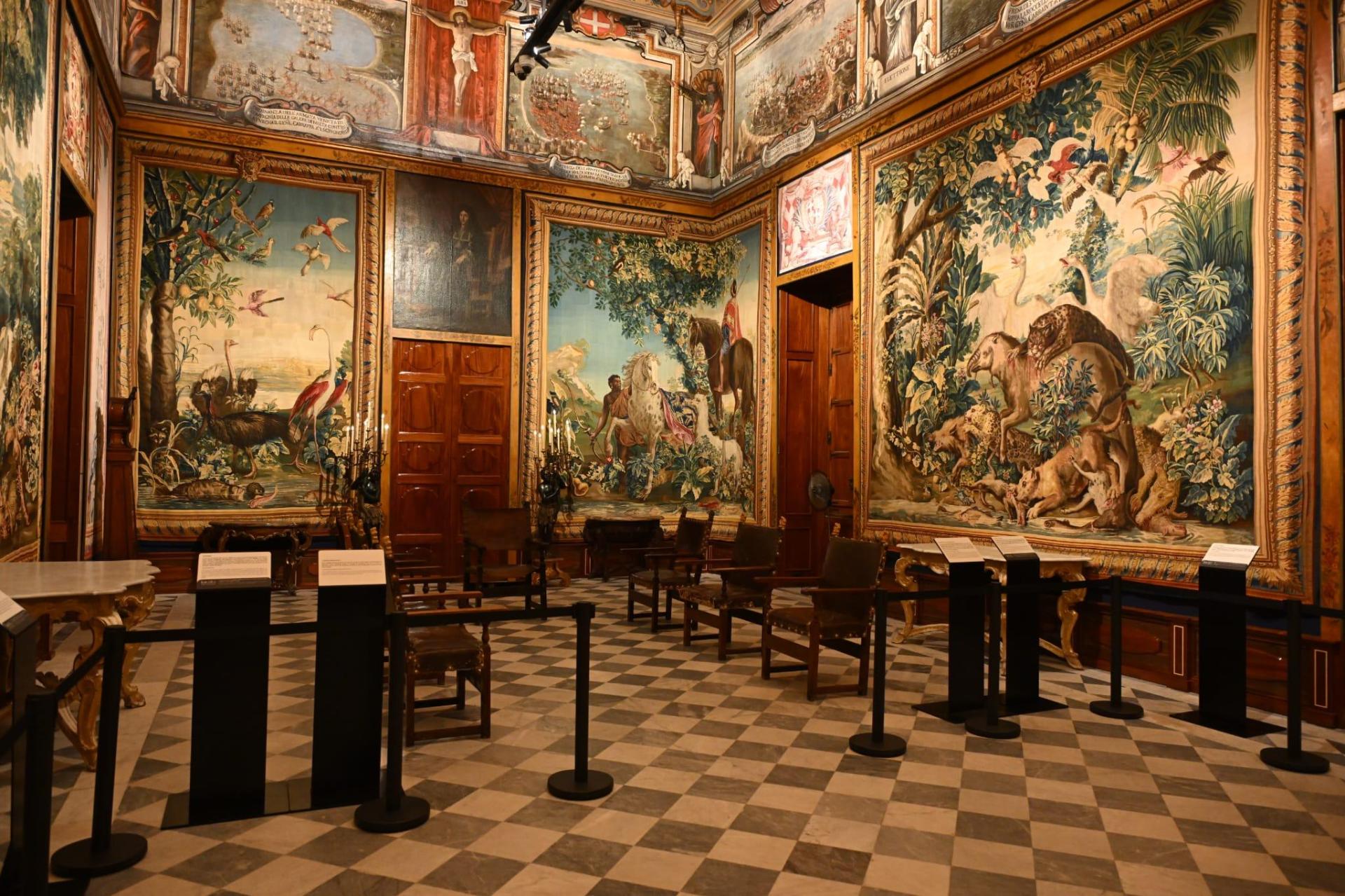 The chamber has been equipped with a new lighting system to both highlight and protect the tapestries.
A new hanging system has been installed to make it easier and safer to remove the tapestries when necessary, while a new lighting system has also been introduced to better display and protect them.
President Spiteri Debono said the Palace was central to Malta’s evolution into a republic and that the restoration of such works should make the country proud.
She said the tapestries were a symbol of Malta’s connection to European history, art and culture, and told a story of new worlds being discovered by Europeans, with their exotic flora and fauna.
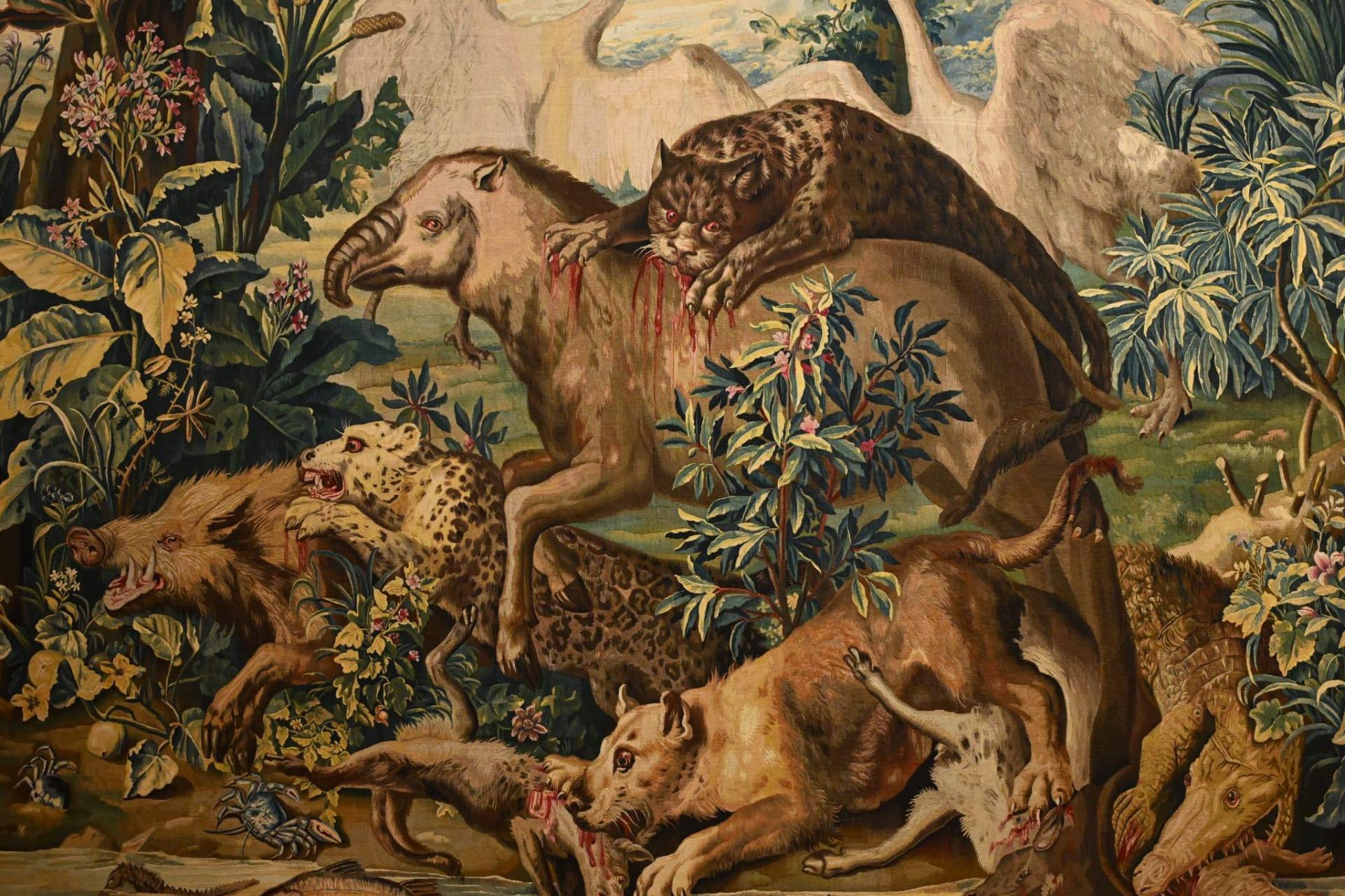 The tapestries depict exotic flora and fauna.
“It is our duty to restore such works for future generations,” she said.
The President also thanked the experts and restorers who had “given them new life”.
In a lighter moment, she said that whenever she heard an artefact had left Malta, her heart skipped a beat until she saw it back again. She recalled visiting the tapestries for the first time at the age of seven, when she was brought to Valletta on a school trip from Gozo.
She also joked that during the restoration of the Palace she would “skive off work” to visit the chamber and look at the tapestries, adding that staff had not let her in during the final two weeks of works.
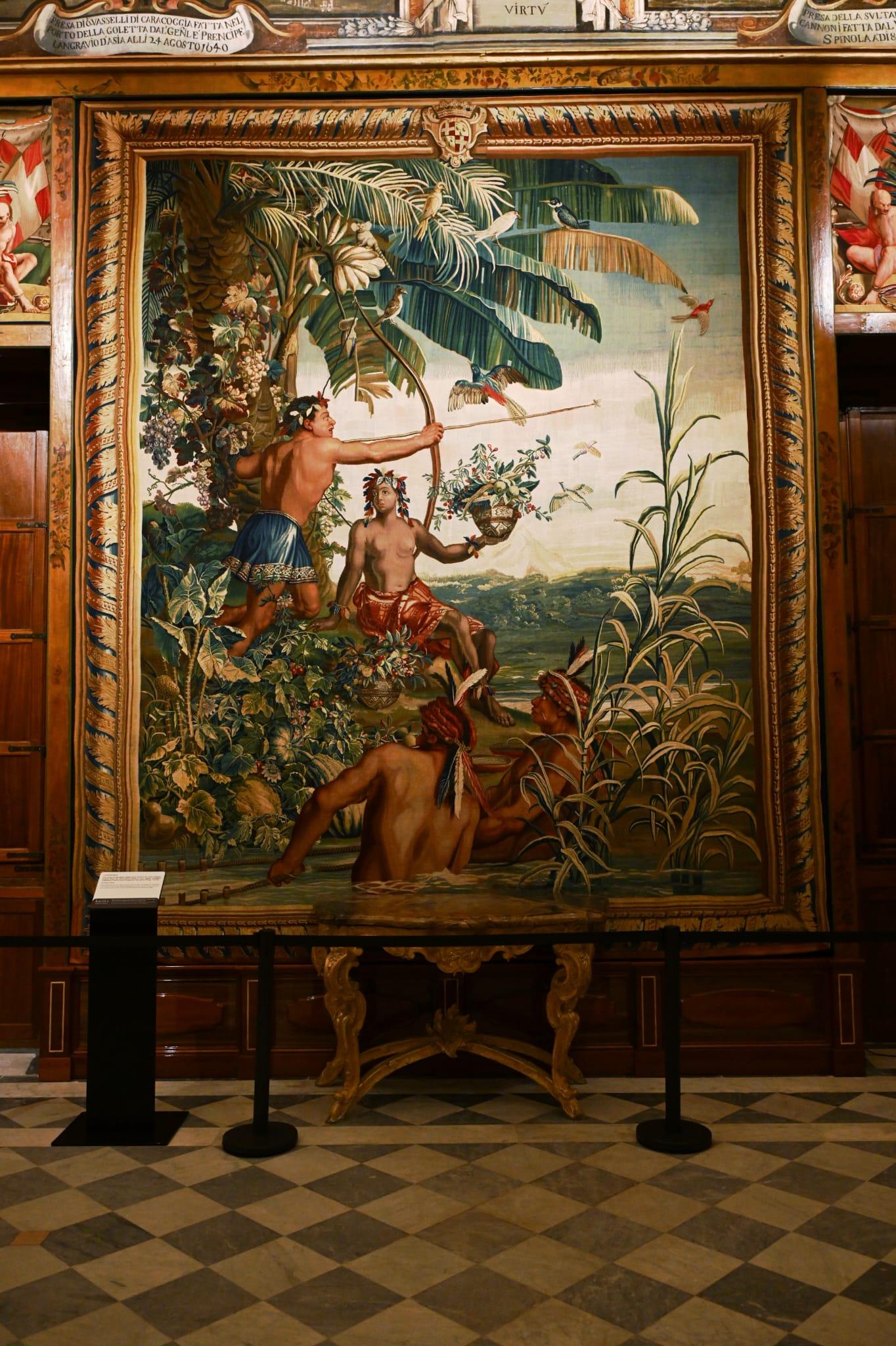 Scenes featuring indigenous people also feature prominently.
Heritage Malta CEO Noel Zammit described the occasion as “an emotional day” and “a new chapter in the long lives of these tapestries”, which he called one of the dearest treasures in Maltese heritage.
Zammit said the tapestries told the story of Malta, its leaders, the discovery of new lands and humanity’s artistic expression.
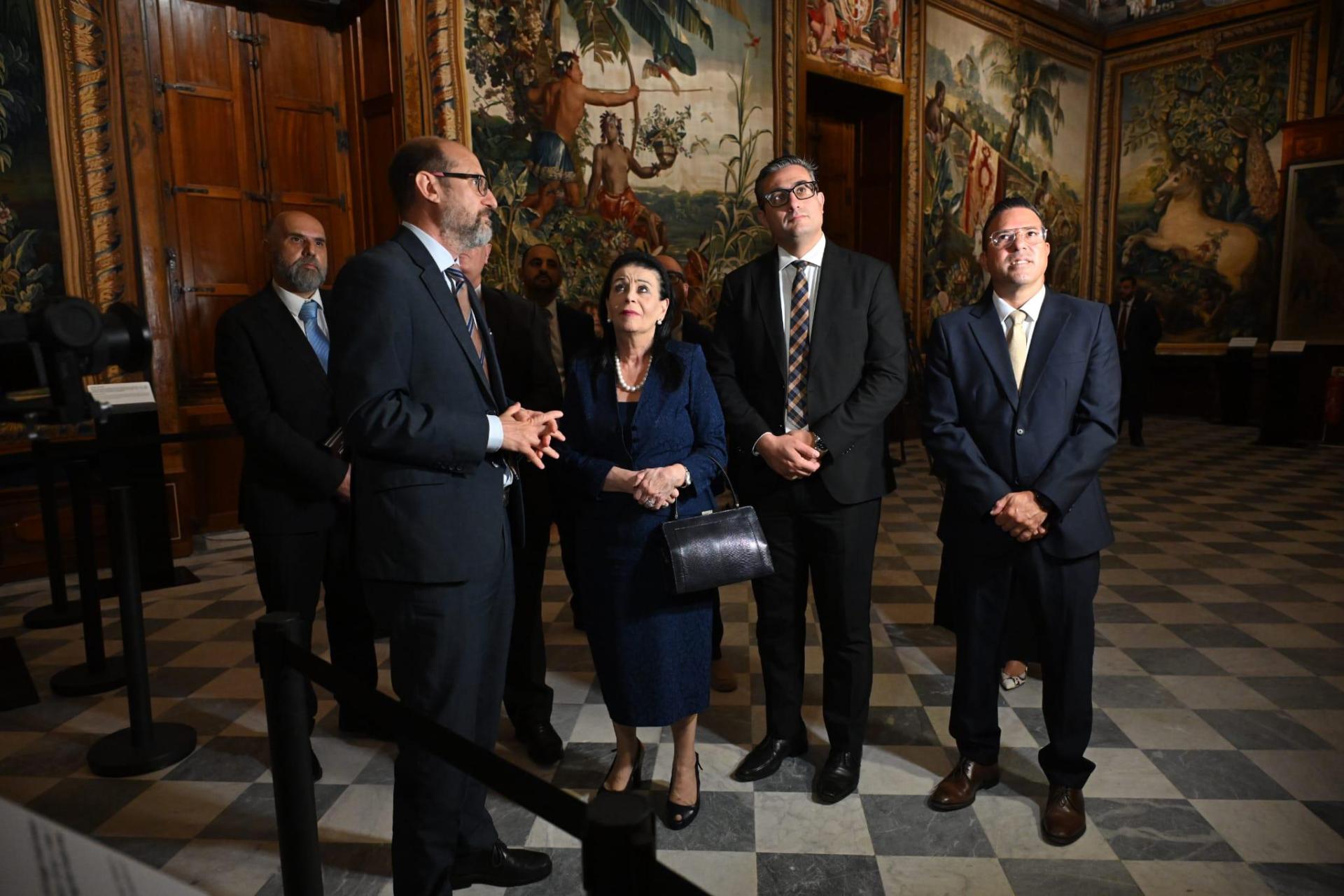 The unveiling was attended by President Myriam Debono (centre) and Culture Minister Malcolm Paul Agius Galea (2nd from right)
When they were created, he said, art built bridges between different cultures, spreading messages in ways now performed by modern forms of media.
The tapestries, he said, allowed people to see scenes from faraway lands and cultures and let their imagination wander. Today, those same places could be reached within a few hours.
Zammit said the event was not simply a celebration of their return, but a reminder of Heritage Malta’s commitment not only to safeguarding the country’s patrimony but to keeping it alive, fresh and relevant for present and future generations.
He said the restored chamber was now more open and accessible to the public than ever before.
Culture Minister Malcolm Paul Agius Galea said the tapestries reflected the richness of Malta’s history and the high level of artistic and cultural heritage the country possessed.
He said the restoration had been costly but worthwhile, adding that money should not be the deciding factor when the aim was to elevate the country and preserve its heritage.
The minister said Malta should now use the strength of its economy to preserve what the country had inherited and leave it for future generations.
He said children should be taught from a young age that such treasures were priceless.
Heritage Malta’s Chairman, Mario Cutajar, said the tapestries have come back to life as though they have only just been created. Behind every conservation project, he said, lies a profound respect for the past. He explained that these tapestries were originally brought to Malta to adorn the hall in which the Order of St John took its decisions. Over time, they also witnessed Malta’s constitutional journey, from the earliest and limited forms of Maltese representation to the moment when the Maltese people began to take their destiny into their own hands.
“When we visit these tapestries, we should listen to the stories they can tell us about what took place in that hall. Everything we have today began yesterday. If we understand that, we understand the present better. And perhaps we will be able to see tomorrow more clearly."
The tapestries are now open to the public and a documentary about them will be broadcast on TVM on July 3 at 6.15pm.