Health professions belong at the heart of University
Modern healthcare depends on science and research, writes Stephen Lungaro-Mifsud
The suggestion that nursing, teaching and other practice-based professions are “better suited to specialised, highly esteemed colleges” rather than universities deserves careful reflection. It is a statement that may have appeared reasonable decades ago but it no longer reflects the realities of modern healthcare, modern education or the needs of society.
Healthcare professions are not simply vocational occupations. They are scientific professions founded on rigorous academic inquiry and translated into highly skilled clinical practice. Their strength lies precisely in the integration of theory, research and professional competence.
Nursing provides perhaps the clearest example. Today’s nurse is not merely a caregiver performing delegated tasks. Nurses are autonomous practitioners who assess complex patients, interpret clinical data, make evidence-informed decisions, lead multidisciplinary teams, manage healthcare services, conduct research and contribute to health policy.
This breadth of responsibility cannot be separated from the university environment, where critical thinking, scientific reasoning and research capability are cultivated alongside clinical expertise.
The same principle applies across the Faculty of Health Sciences at the University of Malta. Physiotherapists, radiographers, occupational therapists, speech and language pathologists, podiatrists, midwives, dietitians, nutritionists, mental health nurses, audiologists, medical physicists and other allied health professionals all practise within increasingly complex healthcare systems driven by technological innovation, precision medicine, artificial intelligence, genomics, digital health and evidence-based practice. Their education must therefore extend well beyond technical competence.
The European Qualifications Framework clearly recognises this progression. Health professions span qualifications from undergraduate degrees through postgraduate specialisation, master’s programmes and doctoral education, culminating at EQF Level 8.
These highest qualifications prepare clinician-scientists, researchers, innovators, educators and leaders who advance healthcare rather than simply deliver it. Universities provide the ecosystem in which this progression flourishes.
Research is not an optional academic luxury detached from patient care. It is one of the principal mechanisms through which healthcare improves. Every
evidence-based clinical guideline, every rehabilitation protocol, every infection-control measure and every innovation in patient safety originates from rigorous scientific investigation. Removing health professions from universities would risk weakening the very research culture that continuously improves healthcare outcomes.
Healthcare professions are not simply vocational occupations- Stephen Lungaro-Mifsud
Nor is vocational education incompatible with university education. Medicine, dentistry, architecture and engineering all have vocational aspects in their professional education, yet no one seriously argues that they should leave universities because they prepare graduates for specific professions. Their vocational nature is enhanced, not diminished, by being embedded within research-intensive institutions.
Universities also foster something equally important: interdisciplinary collaboration. Modern healthcare depends upon teams of professionals learning, researching and innovating together. Interprofessional education, shared research projects and collaborative clinical innovation prepare graduates for the realities of contemporary patient-centred care. Separating health professions into isolated colleges risks fragmenting this collaborative culture.
The relationship between universities and the health professions is therefore mutually reinforcing. The university benefits from the applied research, societal impact and professional relevance that health disciplines bring, while health professions benefit from the scholarly environment of the university. Indeed, health professions are not peripheral to a university’s mission; they are central to it.
This is not an argument against excellent vocational colleges. They play an indispensable role in every advanced education system. Rather, it is an argument for recognising that modern health professions have evolved into knowledge-intensive disciplines requiring both professional competence and scientific excellence.
Patients deserve practitioners who can not only perform today’s best practice but also question it, improve it and create the way forward. That is precisely what universities are uniquely designed to achieve.
Far from being misplaced within universities, the health professions are among the strongest examples of why universities continue to matter: institutions where science, scholarship, innovation and professional practice come together in the service of society, Maltese society.
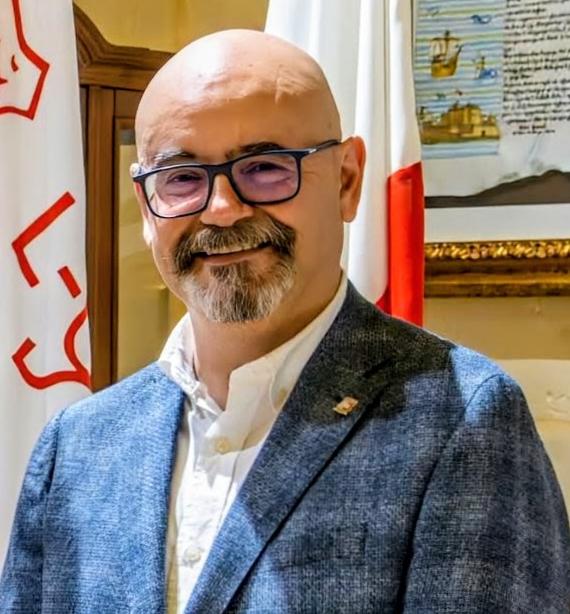
Stephen Lungaro-Mifsud is Dean of the Faculty of Health Sciences at the University of Malta.