Healthcare is an investment, not a cost
Healthcare is a strategic investment in human capital, productivity, resilience, and long-term prosperity, writes Adrian Delia
Whenever governments discuss healthcare spending, the debate often revolves around costs. How much should be invested in hospitals, medical equipment, technology and healthcare personnel? Can the country afford further expenditure in this area?
These are legitimate questions. Public resources are finite and every euro spent in one sector cannot be spent elsewhere. Yet, viewing healthcare primarily as a cost risks overlooking a fundamental economic reality.
The real question is not whether we can afford to invest in healthcare. The real question is whether we can afford not to.
From an accounting perspective, expenditure on healthcare appears as a cost on government balance sheets. Economically, however, healthcare is far more than that. It is an investment in human capital, productivity and national prosperity.
Just as investment in education develops skills and investment in infrastructure improves economic efficiency, investment in healthcare strengthens one of a nation’s most valuable assets: its people.
A healthy population is not only a social objective; it is an economic advantage.
Workers who enjoy good health are generally more productive, less likely to be absent from work and able to remain economically active for longer. Businesses benefit from a healthier workforce while governments benefit from stronger economic performance and reduced long-term healthcare burdens.
This relationship between health and economic success is well established. Countries with healthier populations tend to enjoy stronger productivity growth, higher labour force participation and greater economic resilience. This is particularly relevant for Malta.
Over the past decade, Malta’s economy has expanded significantly. Employment levels reached record highs and economic activity increased across multiple sectors. Yet, productivity growth has remained relatively modest.
The next phase of Malta’s economic development cannot depend solely on increasing the size of the workforce. It must increasingly focus on improving productivity. Health is a critical part of that equation.
A productive economy depends on productive workers. Productive workers depend on good health. Healthcare policy should, therefore, be viewed not only as a social responsibility but also as an economic strategy.
Consider the impact of chronic illness. Conditions such as diabetes, cardiovascular disease, obesity and mental health disorders generate costs that extend well beyond hospital budgets. They reduce workforce participation, lower productivity, increase pressure on social services and affect the wellbeing of entire families. The economic consequences can be substantial and long-lasting. This is why preventative healthcare deserves greater attention.
Encouraging healthier lifestyles, investing in screening programmes, reducing smoking rates and strengthening mental health services all generate long-term economic returns. Every illness prevented is a future cost avoided. Every early diagnosis reduces the likelihood of more expensive treatment later. Every healthy worker represents productive capacity preserved.
Investment in healthcare infrastructure is equally important. Modern healthcare depends on advanced technology, digital systems, specialised facilities and highly trained professionals. Such investments require significant capital expenditure but postponing them often creates larger costs in the future.
Outdated infrastructure leads to inefficiencies. Insufficient capacity creates waiting lists and delays. Ageing equipment can reduce effectiveness and increase operational costs.
Forward-looking investment helps avoid these problems while ensuring that healthcare systems remain capable of meeting future demand.
This challenge becomes even more important in light of Malta’s demographic trends. Like much of Europe, Malta is experiencing an ageing population. People are living longer, which is a positive development, but longevity inevitably increases demand for healthcare services. Planning for this reality requires strategic investment today rather than emergency solutions tomorrow.
Healthcare contributes directly to social stability- Adrian Delia
The same principle applies to healthcare professionals. Doctors, nurses, pharmacists, therapists, technicians, carers and support staff form the backbone of the healthcare system. Recruiting, training and retaining these professionals should be seen as an investment in national capacity.
Buildings alone do not deliver healthcare. People do. Without sufficient healthcare personnel, even the best facilities cannot operate effectively.
Healthcare also contributes directly to social stability. Families who trust that quality healthcare will be available when needed experience greater security and peace of mind. Accessible healthcare strengthens communities and reduces uncertainty during difficult periods. In this sense, healthcare is also an investment in national resilience.
The COVID-19 pandemic provided a powerful reminder of this reality. The crisis demonstrated that healthcare systems are not merely public services but critical components of national preparedness.
Of course, recognising healthcare as an investment does not mean abandoning fiscal discipline. Public money must always be spent responsibly. Capital projects should be carefully evaluated, procurement processes should be transparent and investments should deliver measurable outcomes.
Good investment is not simply about spending more money. It is about spending wisely. Healthcare systems can absorb significant resources without necessarily improving outcomes if investments are poorly designed or badly managed. Accountability and efficiency remain essential. However, these principles strengthen the case for healthcare investment rather than weaken it. The objective should be to maximise the return on healthcare expenditure, not simply minimise expenditure itself.
Many of the world’s most successful healthcare systems understand this distinction. They view healthcare spending through a long-term investment lens rather than as a short-term budgetary burden. They recognise that healthier populations support stronger economies, that prevention often costs less than treatment and that healthcare quality contributes directly to national competitiveness.
For Malta, this conversation is becoming increasingly important. As we seek to build a more productive and sustainable economy, healthcare must be recognised as part of the solution. We often discuss innovation, education, technology and infrastructure as drivers of economic growth. Health belongs in exactly the same category. No country can reach its full economic potential if the wellbeing of its people is neglected.
Healthcare should not be viewed simply as an unavoidable public expense. It should be recognised for what it truly is: a strategic investment in human capital, productivity, resilience and long-term prosperity.
The debate should no longer be framed as cost versus affordability. It should be framed as investment versus neglect. When viewed from that perspective, the conclusion becomes clear. Investment in healthcare is not merely a cost of government. It is one of the wisest investments a nation can make.
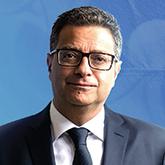
Adrian Delia is a Nationalist Party MP.