Time for a Maltese coming of age?
Malta’s political discourse exposes an unresolved question of identity, says Mario Gerada
On June 11, Pope Leo XIV visited the Canary Islands as part of his apostolic visit to Spain. After staying in Madrid, he marked the completion of Barcelona’s Sagrada Familia’s Christ Tower, reflecting on the philosophy and work of Antoni Gaudí, the architect on the path to sainthood.
Gaudí chose to respect the limits set by the Creator through nature as the guiding principle of his designs. Those limits are also set for us in our relationships, particularly in how we treat one another and the planet we inhabit.
The Canary Islands, part of Spain, are an Atlantic hotspot for irregular crossings, much like those in the Mediterranean. Pope Leo’s statement that “human dignity has no passport” went viral. Human dignity is neither limited by nor defined through national borders. His words became even more relevant when one considers that the EU’s New Migration Pact came into force the very next day.
Should politicians inspired by the Christian faith take the words of the Gospel seriously? Because if the answer is yes, much of today’s political discourse and many national policies are clearly not speaking that language.
Jesus himself had an antipathy towards claims rooted in ethnicity or blood ties. And when, as a man, he momentarily fell into that same logic, he was willing to be challenged, as the story of his encounter with the Syrophoenician woman shows.
Pope Leo’s words refuse to frame migration as a problem to be solved. Instead, he points to its root causes and the need to create conditions for peace so that people are not forced to flee violence and certain death. Smuggling, human trafficking and exploitation are invariably woven into the stories of asylum seekers. After all, possessing a passport, or even having access to one, is neither straightforward nor possible for many.
Meanwhile, European countries sign bilateral agreements to recruit more migrant labour while sustaining a political rhetoric that dehumanises migrants and mismanages conversations about national identity. That conversation has become ridiculously over-simplified.
Integration is identified as a key pillar of the European Union’s New Migration Pact. We have our own policies on integration, yet, no one really knows what the term means anymore. For us, it often translates into learning English, fitting into our economic model and getting on with it. It has become a gentler word for assimilation, deployed morally by the state to offer belonging to those deemed ‘deserving’ while deporting those who are not.
But justice demands that we have a frank conversation about citizenship if we are serious about talking about integration; a process that, in Malta, is neither transparent nor equitable.
We need a serious conversation about what makes one Maltese- Mario Gerada
I am referring here to the messy narratives we heard during the election campaign, where nationality, ethnicity, faith, religious belief, cultural belonging and citizenship – the right to participate in the political life of this country – were repeatedly conflated.
While these categories often overlap, they are not the same. Yet, they are too often weaponised to define national identity through exclusion, reinforcing a hierarchy among peoples, especially in such a confined geographical space. What we have become is closer to an ancient polis, distinguishing between those who are free and those who are not, than to a sophisticated democracy in tune with today’s realities.
Clearly, we need a serious conversation about what makes one Maltese. That conversation must also include our shared symbols: those signs through which Maltese identity, or identities, are expressed. Some symbols once defined us but no longer do, such as the stone spirals, the Venus of Malta, and other female figurines, and dolphins. As Eduardo Kohn reminds us, “we all live with and through signs”.
Perhaps one of the narratives we must confront is that, for years, we have equated Maltese-ness with isolation and uniqueness. Beyond the separation of Church and state, we must begin questioning that equation. Ours remains an insular view of life that often denies significant chapters of our own history, including family stories of movement within and across the Mediterranean.
We need to ask more questions about who our ancestors were. Identity is forged through remembering and, ultimately, reconciling with what happened to us, what we did to others and what we continue to do to one another. Our entanglement with the history of the slave trade is one example. These legacies remain with us.
Last month, the Council of Europe’s Group of Experts on Action against Trafficking in Human Beings (GRETA) published its fourth evaluation report on Malta.
If Pope Leo’s words carry any weight, then we must propose policies that foster life and human dignity for all those living here: on a Mediterranean island shaped by the sea, the land and the sky, whose neighbours are Sicily, Tunisia and Libya.
After all, what really defines us as Maltese?
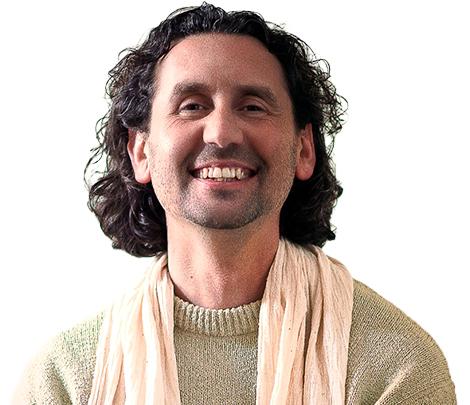
Mario Gerada is the Head of Advocacy, Outreach and Pastoral at the Migrants Commission.