The storms that left their mark on Malta
A look back at some of the island’s most devastating storms
Storm Harry brought Malta to a standstill last week, causing widespread damage across the islands. With winds exceeding 100 kilometres per hour, the country experienced scenes many had never imagined.
Għar Lapsi bay was transformed beyond recognition, part of the historic Chalet in Sliema was stripped away, a piece of Filfla broke off, Malta’s tallest tree toppled, and both air and sea travel were disrupted. Valletta’s Ta’ Ġieżu church was flooded, while several coastal businesses were left decimated.
In an effort to contextualise the scale of the recent storm, Times of Malta, with the help of the Met Office, the National Archives and its own records, looked back at some of the island’s most devastating storms.
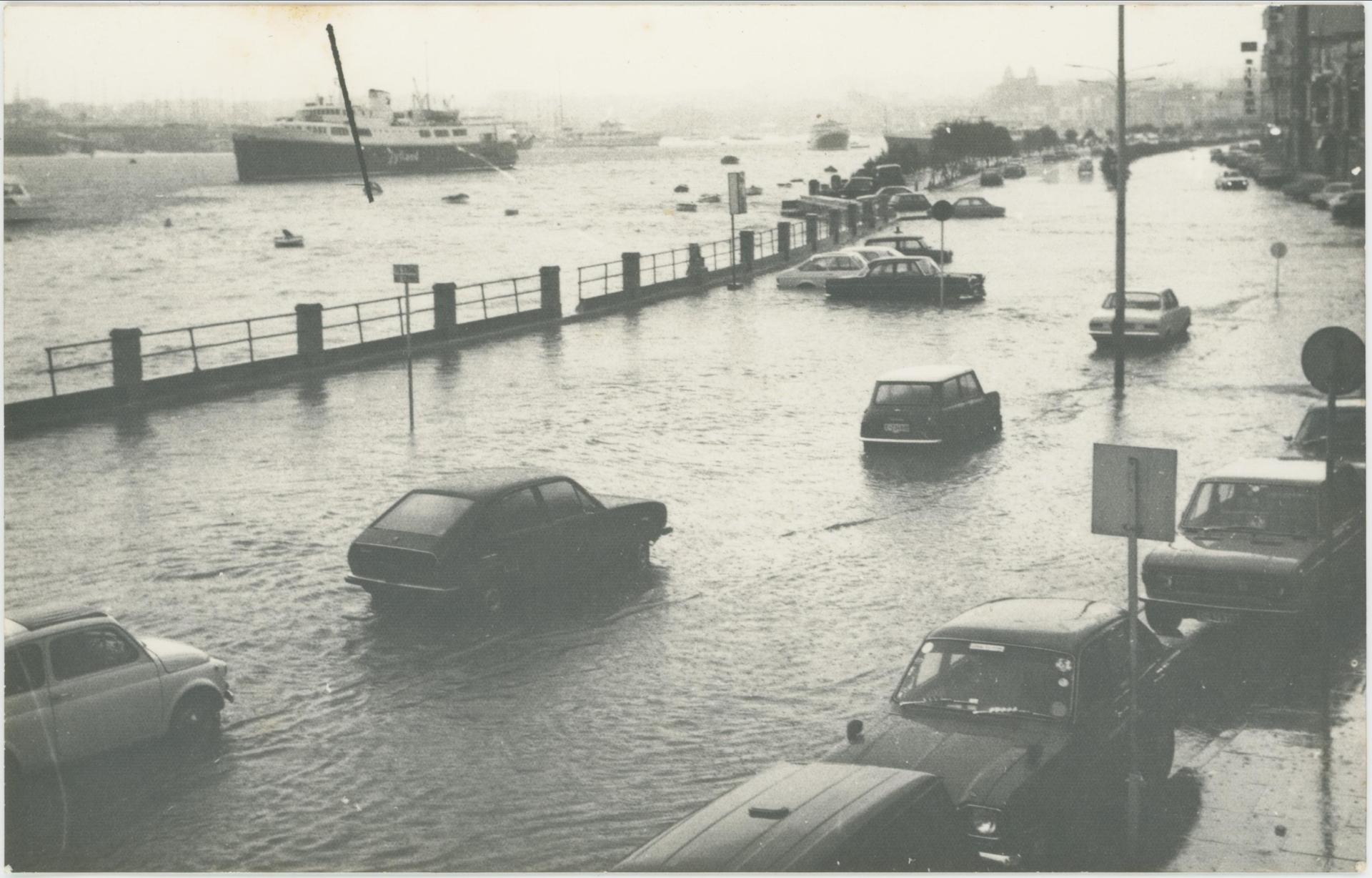 October 25, 1979: Sliema flooded. Photo: The National Archives of Malta
The 1950s
October 1951 was marked by extreme weather that turned fatal. On October 4, a sudden rainstorm flooded parts of Birkirkara and Msida, contributing to the death of 51-year-old Ugo Galea.
He had disembarked from a bus on Valley Road, but could not reboard after realising the danger he was in. While two other passengers managed to get back on, Galea did not. His body was later recovered in Msida.
Less than two weeks later, a thunderstorm ripped across the islands, claiming the lives of three people, all from the same family.
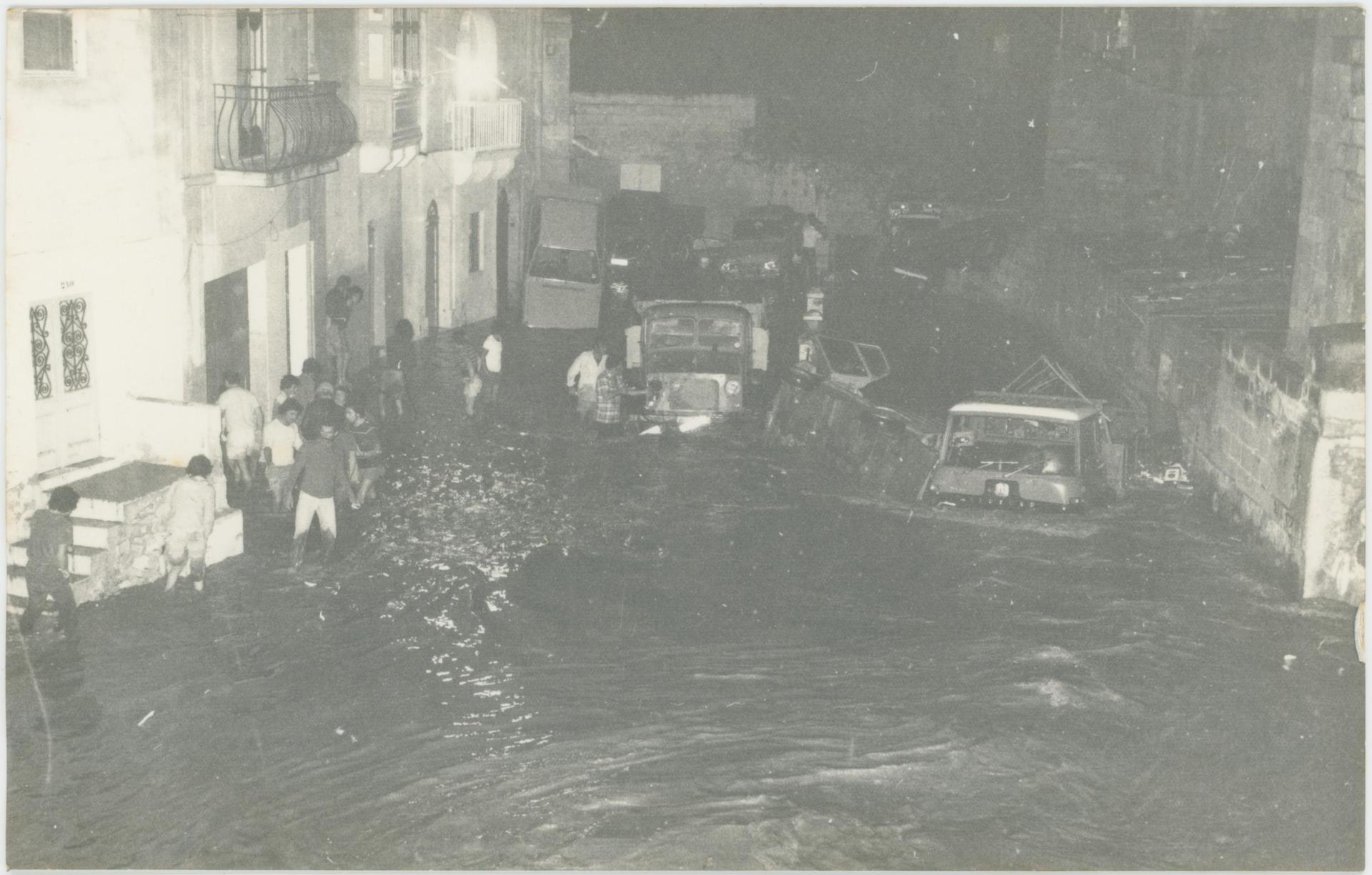 October 25, 1979: Birkirkara scene of cars and trucks in the flood. Photo: The National Archives of Malta
In Tarxien, Anthony Cini, his wife Mary and their eldest son Joseph died after lightning struck their home.
The upper storey collapsed, dragging the lower ceiling with it and “buried the 11 persons under a mass of debris and bedsteads.” Joseph had just returned from the UK. The couple’s remaining eight children survived.
At the time, the Public Works Department, then under the control of George Borg Olivier, evacuated around 28 families, particularly in the Mandraġġ area of Valletta.
A temporary church in Kalkara was also severely affected and “was flooded by 10 feet of dirty swirling waters”.
In January 1957, a savage south-westerly gale, with winds reaching Force 10, caused chaos. The Banċinu, Gozo’s ferry at the time, broke its moorings in Mġarr Harbour and was driven ashore during the night.
According to a Times report from the following day, “the watchman was heard shouting for help at about 5am… but after a while there were no more calls.” Ġużeppi Xuereb, the ship’s watchman, died despite the dangerous rescue efforts of five men.
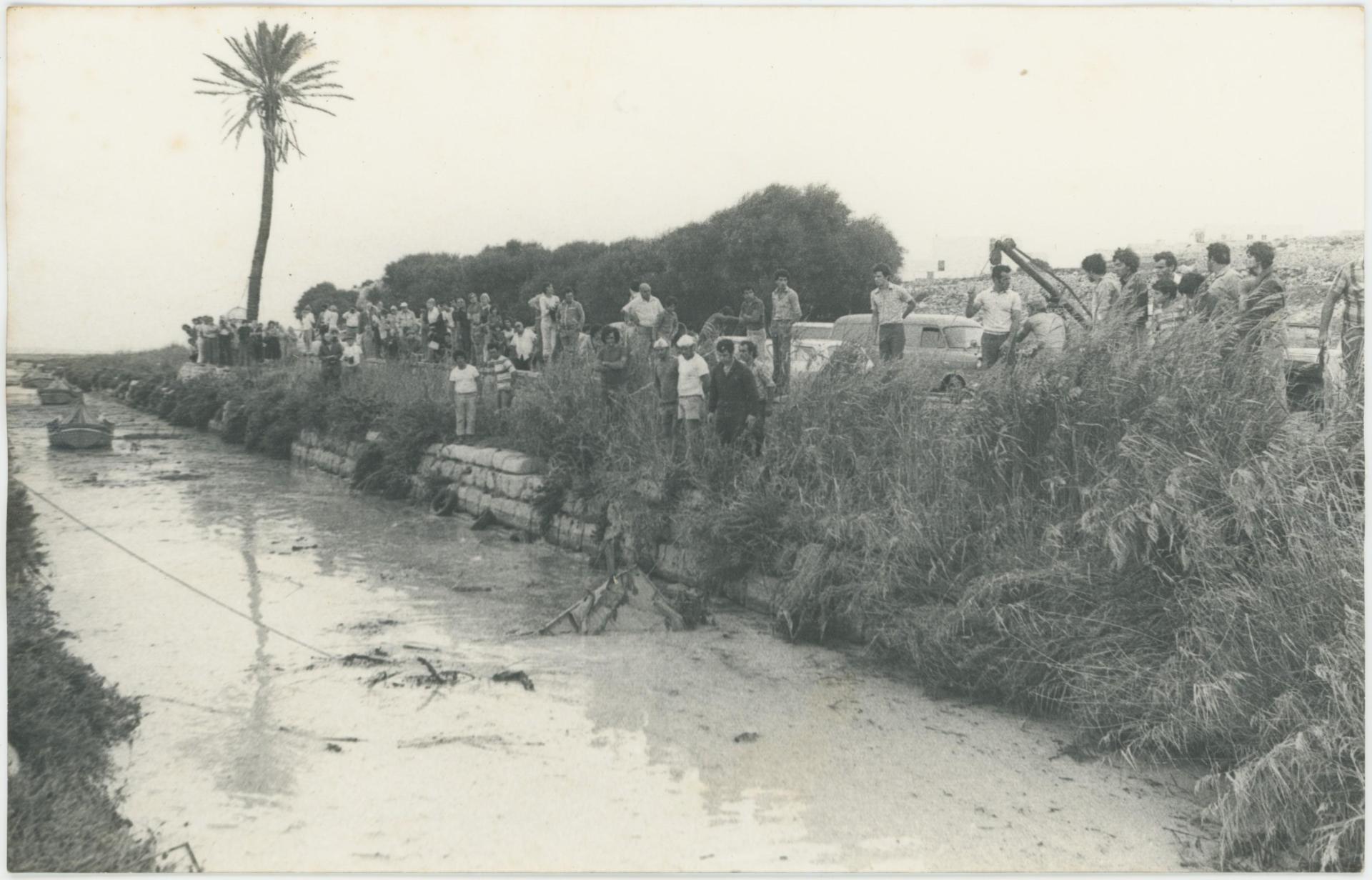 October 25, 1979: The scene in Salini where a tourist was found dead. Photo: The National Archives of Malta
Later that year, on October 13, two apartments in St Sebastian Street, Valletta, suffered major damage when their upper roof collapsed due to heavy rainfall.
The collapse buried Mary Tonna, her children Rose and Twanny, and their upstairs neighbour, Alice Talkington. All died despite Mary’s husband Emmanuele’s efforts to warn Talkington of the roof’s instability.
That same day, in Marsa, nine-year-old Spiridione Zahra lost his life while playing in the flooded polo grounds, where water levels were reported to have exceeded 30 inches.
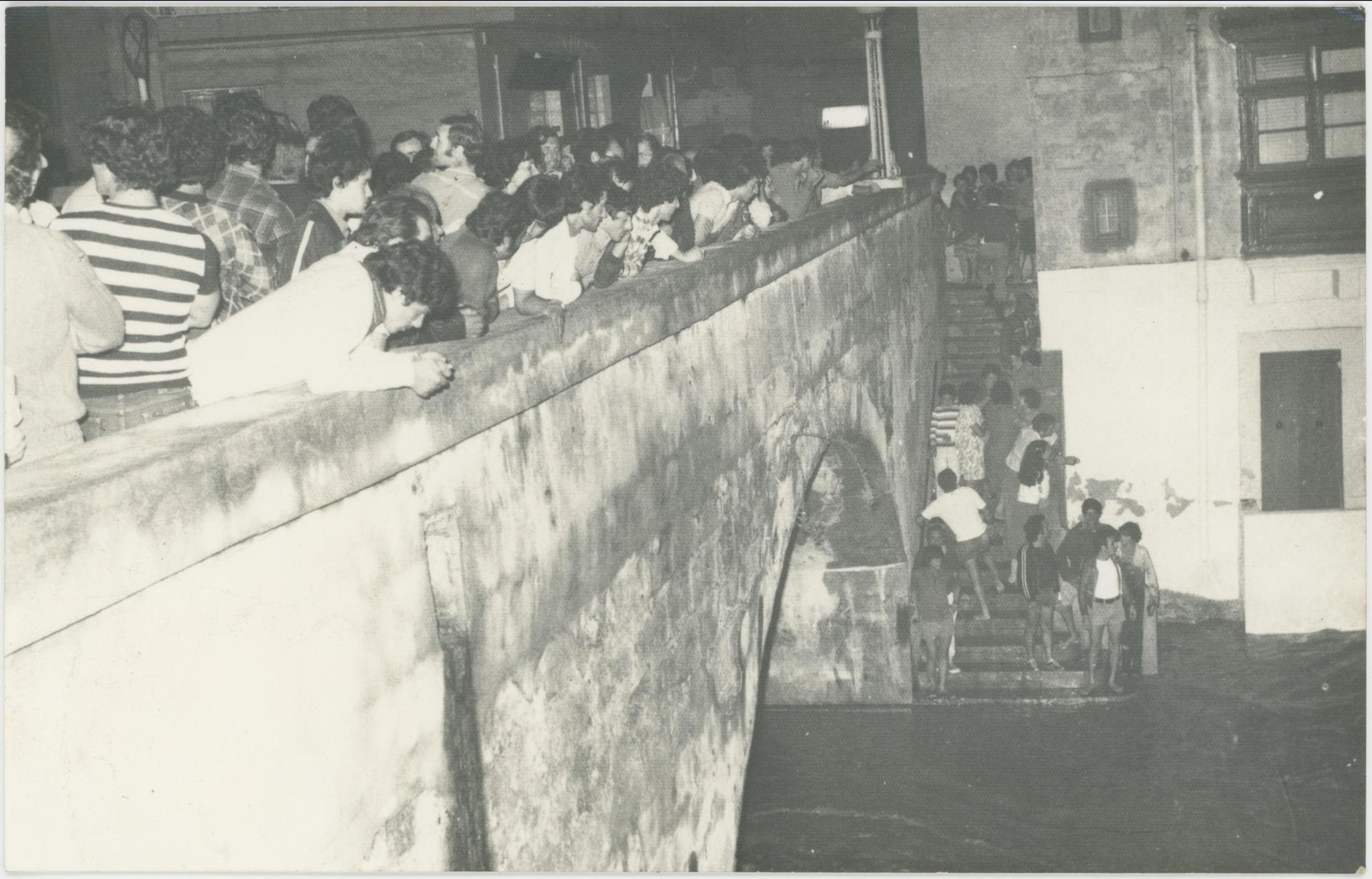 October 25, 1979: People looking over a bridge in Birkirkara seeing the flooded area. Photo: The National Archives of Malta
The 1970s
From January 16 to 17, 1978, a violent thunderstorm accompanied by gale-force winds battered the islands.
The storm caused widespread infrastructural and aviation damage, including fallen trees at the Addolorata Cemetery, a gaping hole in a Floriana flat’s ceiling, and a Singapore Airlines aircraft being pushed sideways, bursting two tyres.
A statue from the Luqa church also went missing in the chaos.
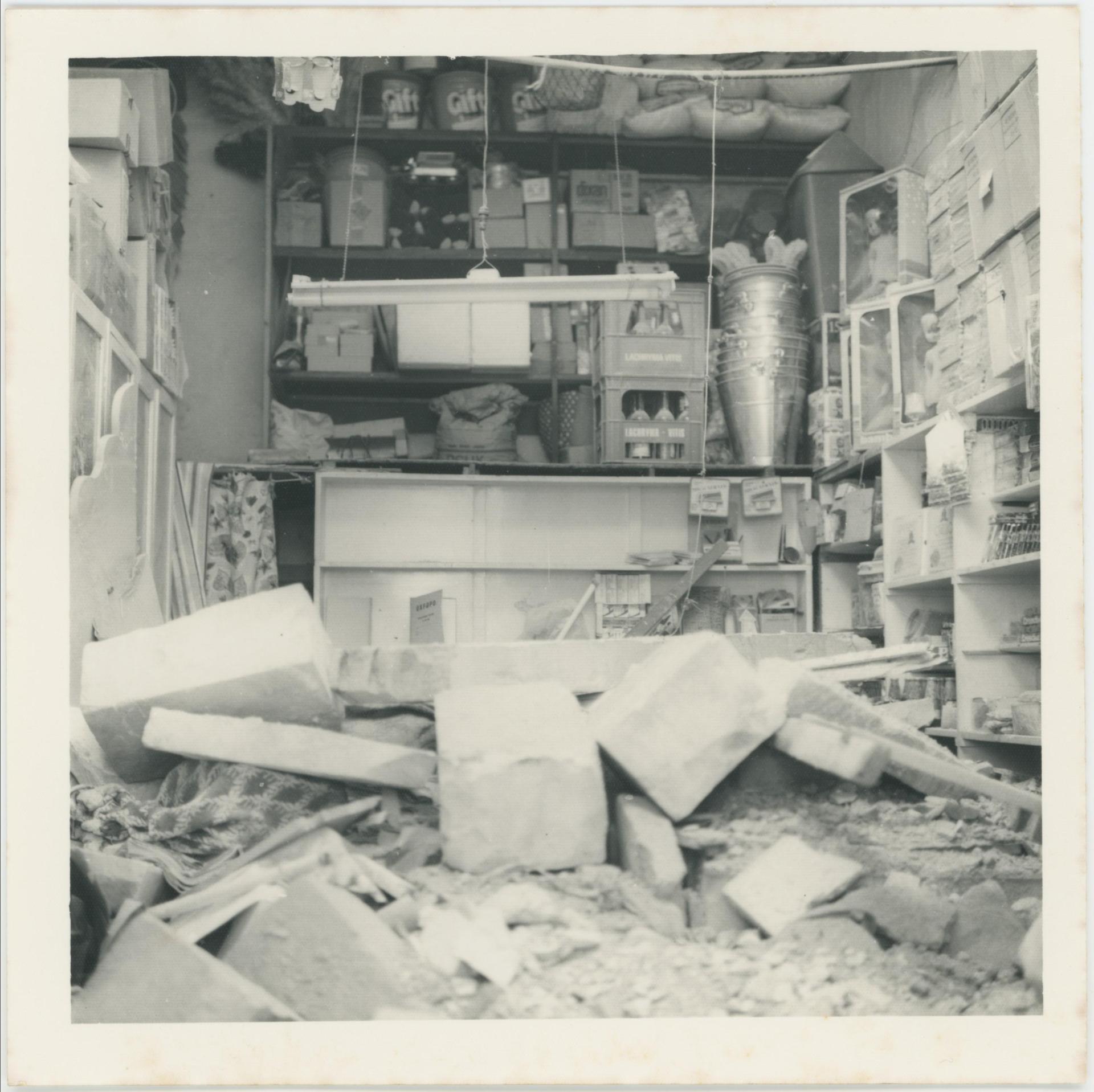 October 11, 1982: The site where the Bianco couple died in Paola. Photo: The National Archives of Malta
But the storm of 1978 was eclipsed by the devastation of the following year.
On October 25, 1979, another storm swept across Malta and Gozo, causing extensive flooding. Many still recall images of vehicles being washed away on Valley Road in Birkirkara.
Two days later, The Times described it as “the most severe, most freakish storm for several years”.
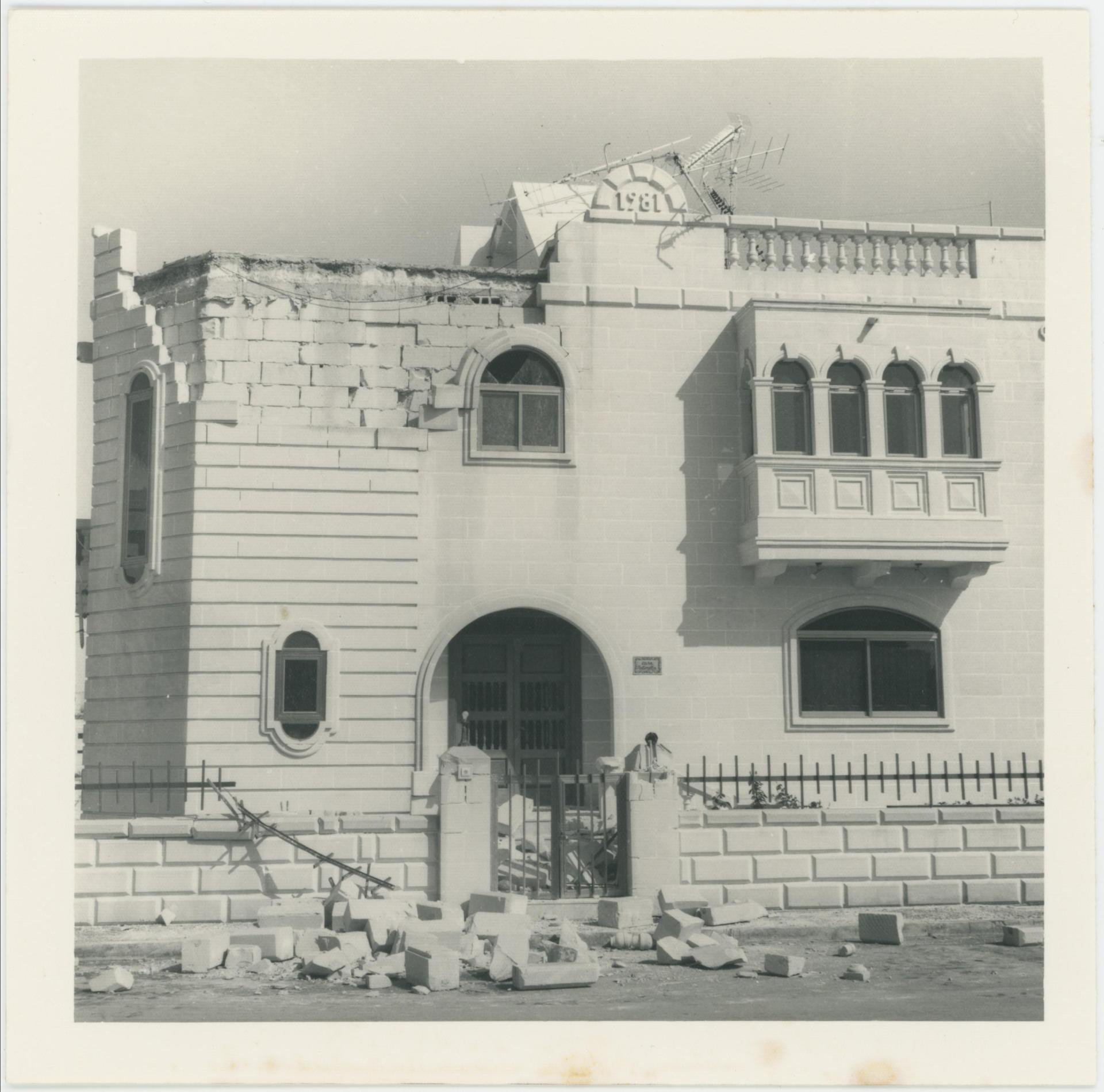 October 11, 1982: A home affected by the storm in Wignacourt Street, Birkirkara. It was built the year before. Photo: The National Archives of Malta
The storm claimed four lives.
Vivienne Huntingford, from Attard, drowned after getting trapped in the flooded basement of her home. Anthony Galea of Qormi died after visiting a relative at St Vincent de Paul Hospital. He became caught in the floodwaters in Qormi, abandoned his vehicle, and was swept away.
John Moore, an English tourist, was the third victim. He was reported missing after floodwaters sank his car. His body was found in Marsa the next day. His wife survived by clinging to a tree branch until she was rescued. The fourth victim, Louvain Margaret Wales, another English tourist, was found dead at Salina.
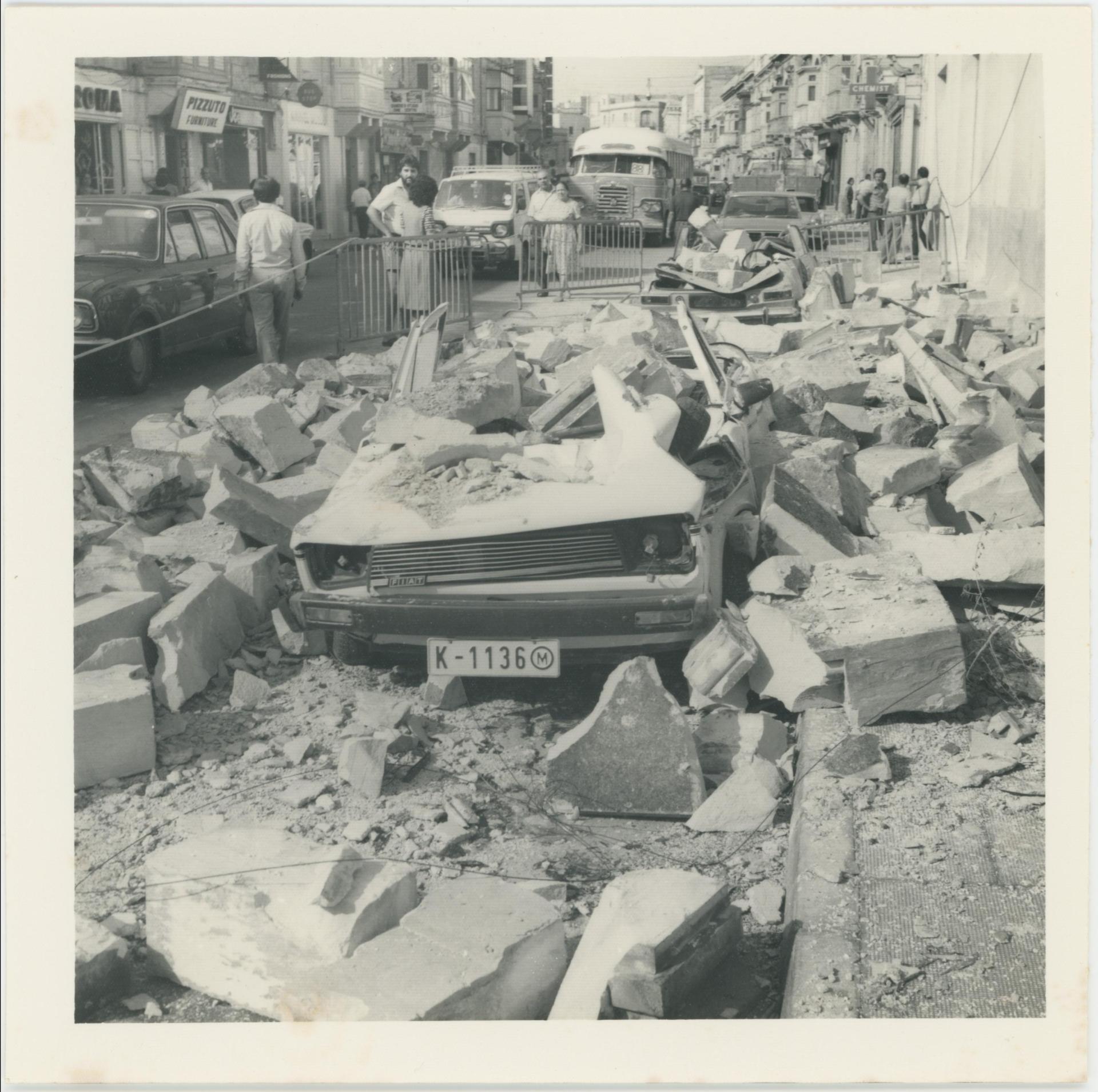 October 11, 1982: A flattened car in Ħamrun. Photo: The National Archives of Malta
The 1980s
On October 11, 1982, a new national wind record was set when gusts reached 72 knots. The storm wreaked havoc across Malta.
“The winds carried everything before them. Trees snapped like matchsticks, anything loose in the streets or on rooftops took to the air, window panes got smashed and TV aerials were twisted into the oddest shapes,” The Times reported.
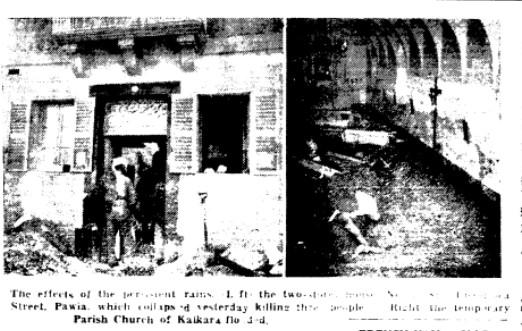 The temporary church in Kalkara that was flooded in the 1951 storm. Photo: Times of Malta
The storm caused multiple buildings to collapse, leaving several families homeless. Four people died and 19 others were injured.
In Paola, Tony Bianco and his wife Carmela died when their roof caved in under the weight of a boundary wall. In Sliema, Catherine Cutajar, from Żurrieq, died under rubble in the house where she worked as a maid.
In Ħamrun, Joseph Mangion was killed when his home’s roof gave way.
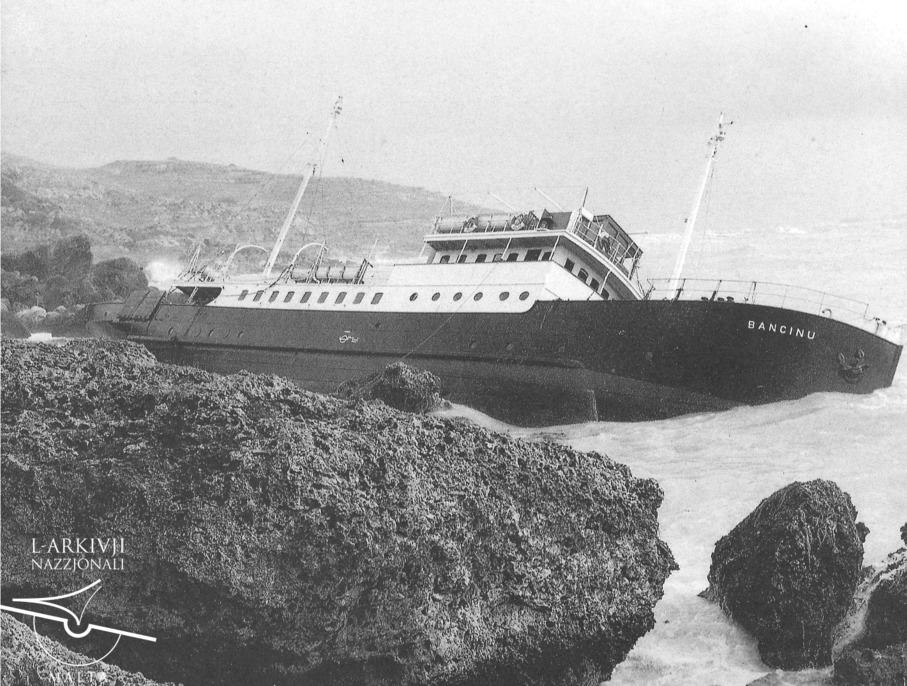 The Banċinu that went ashore in 1957. Photo: The National Archives of Malta
Other families narrowly escaped similar fates. In Mġarr, John Gauci, his wife Lucia, and their one-month-old baby Ronnie were buried under rubble in their single-storey home, but miraculously survived.
Elsewhere, a Fiat 127 Sport and a beige Ford Escort were reported as “practically flattened”.
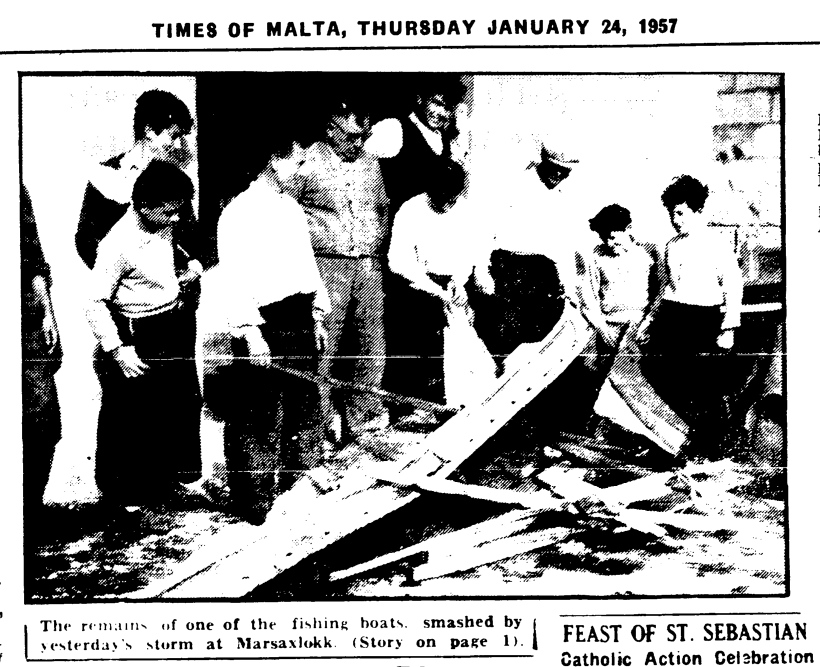 The remains of a fishing boat that was battered in the storm of 1957. Photo: Times of Malta
The 2000s
In more recent years, improvements in technology and communication have made it easier to prepare for storms. Yet, several incidents remain etched in memory.
In October 2010, 102.2mm of rainfall was recorded in Luqa, far exceeding the monthly average of 77.6mm. Flooding in Qormi was particularly severe, with images of coffins floating out of a warehouse leaving a lasting impression.
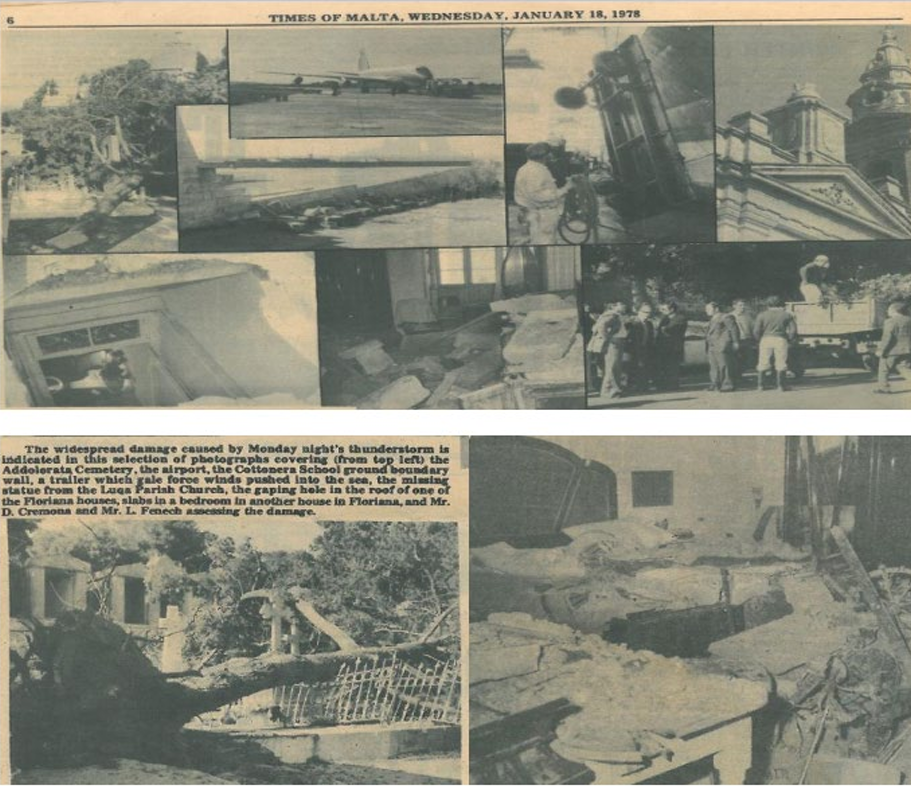 Scenes of the 1978 storm. Photo: Times of Malta
Another memorable storm occurred in February 2019, when Malta and Gozo were hit by what the Met Office described as “a severe Gregal”.
Wind gusts reached 71.9 knots, or 133 kilometres per hour. No injuries were reported, but the storm uprooted trees, demolished walls and damaged power lines.
The most iconic scene from that storm came from Xemxija, where residents were spotted picking up fish flung ashore by the crashing waves.
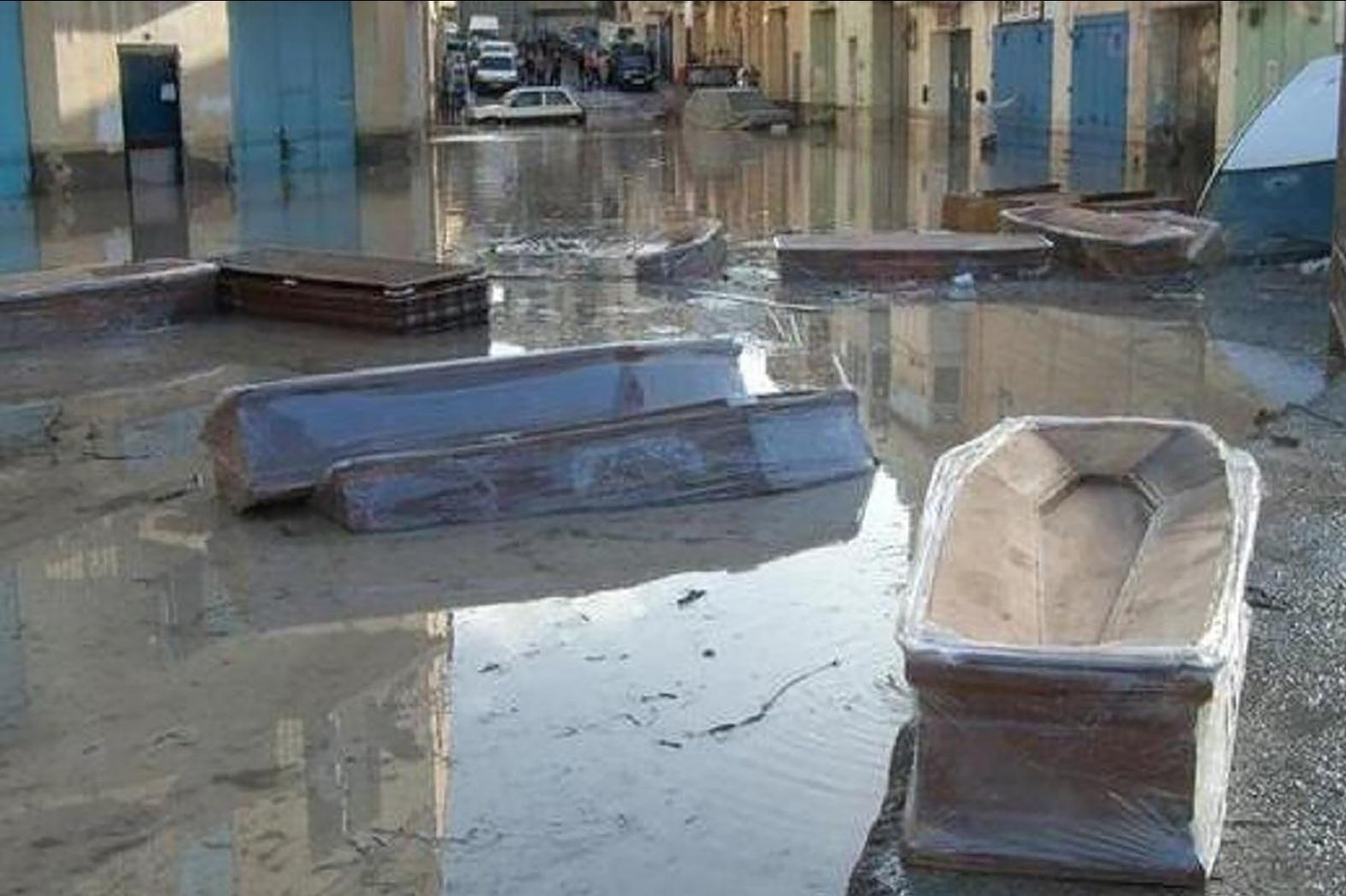 Coffins floating in Qormi after the 2010 storm. Photo: Richard Hili