This is what Labour envisions for planning and construction
Labour's manifesto makes some bold pitches for planning but makes few construction promises
Updated May 16 with ministry reply
Labour would like to revise Malta’s contested local plans, overhaul the planning appeals tribunal and make it easier for “non-starter” development applications to be thrown out.
The proposals feature in the party’s electoral manifesto for the 2026 general election, which provides some insight into the ruling party’s vision for the planning and construction sector over the next five years.
The 263-page document proposes various changes to planning laws, some of which could prove highly consequential, but it also commits to very little when it comes to construction sector reform: there are just four points focused on "a regulated construction sector" in a document that features over 1,000 points.
Local plan revision
Arguably the most controversial proposal is a proposal to launch “extensive consultation” to revise the 2006 local plans, which form the spinal cord of Malta’s planning and zoning rules.
The manifesto states that the consultation “must safeguard land that has not yet been developed but must address contradictions in existing local plans.” The ultimate aim, the manifesto says, is to “ensure greater building uniformity and certainty throughout the planning process.”
Citizens regularly cite over-construction as one of Malta’s biggest problems: an April 2026 poll by Esprimi commissioned by Times of Malta ranked it as people’s second-biggest national concern.
Labour sought to revise planning laws through two separate parliamentary bills (Bills 143 and 144) in the past legislature, but put a stop to that process following massive public backlash.
 PA executive chairman Johann Buttigieg presents bills to revise planning laws to journalists, flanked by Planning Minister Clint Camilleri. Photo: Chris Sant Fournier
Robert Abela said earlier this month that those reforms would only proceed if a consensus is found, but also argued that a revision of local plans was long overdue. A 2021 pledge to review the plans went nowhere.
Both Labour and the Nationalist Party have made it clear that they will not reclassify any land that was rendered developable in the 2006 rationalisation exercise, saying that would be unfair to landowners.
Freeze during appeals
Labour’s manifesto does not make any explicit reference to Bills 143 and 144. However, it pledges to table a bill that will freeze development for any permits that are being appealed within “months”.
That pledge is the key provision of one of the two contested bills and is largely backed by activists and civil society groups, who have repeatedly warned that developers are weaponising existing laws to wrap up construction before appeals are decided.
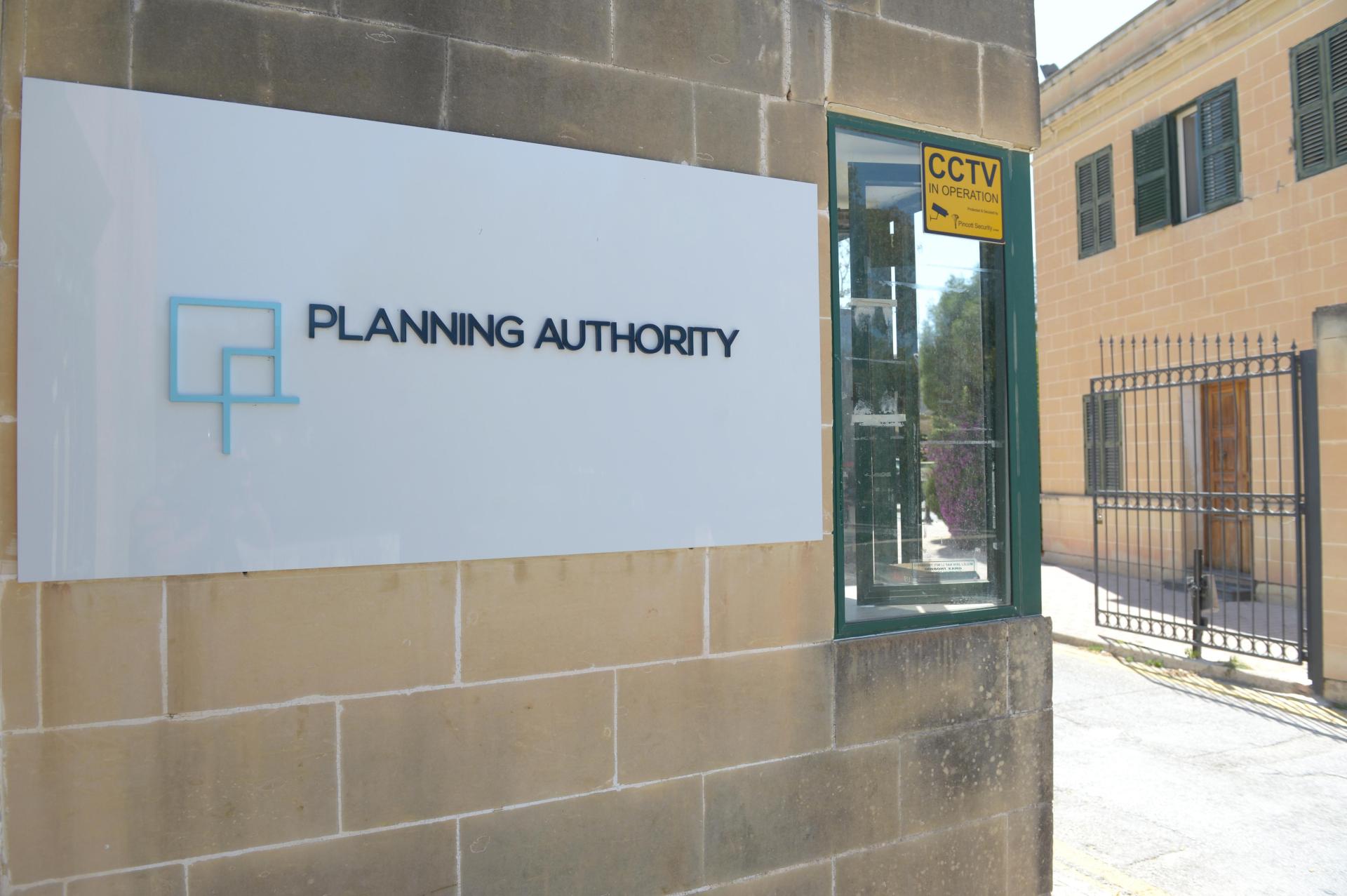 Planning Authority offices in Floriana. Photo: Matthew Mirabelli
An EPRT split
Labour also intends to split the body that hears those appeals, the Environment and Planning Review Tribunal, into two. Under its proposal, one tribunal will focus exclusively on planning-related appeals while another will focus on environment-related ones.
That proposal would effectively mirror administrative work done a decade ago to split planning and environment regulation into two separate entities, the Planning Authority (PA) and Environment and Resources Authority (ERA).
Stricter ODZ rules
Labour says it intends to tighten the PA’s Rural Policy provisions to restrict the size and scope of development in Outside Development Zones.
ODZ-related decisions will be based on the “categorisation of farmers, agricultural activity and other factors to determine if existing buildings can be used as residences, among others,” the manifesto states.
The PA's rural policy was last revised over a decade ago. An attempt to amend it in 2020 was effectively frozen following heavy criticism. Legislators have since amended it piecemeal.
Revising DC2015
The party is also proposing a revision of the much-contested DC2015 planning policy.
That document serves as the Planning Authority’s key set of regulations governing building designs, heights, layouts, and streetscapes. An annex within it had effectively allowed developers to squeeze more floors into the same building height, fundamentally altering streetscapes and urban building volumes.
Labour’s manifesto states it wants to update the policy “to ensure higher building and planning quality, especially when it comes to aesthetics, building context and volume.”
Stopping 'non-starter' applications
It also proposes revising Planning Authority procedures to make it faster and easier to dismiss applications that are deemed legislative “non-starters”.
To do that, it proposes a change to the initial vetting process an application undergoes. If an application appears to be blatantly in breach of planning laws, it will be referred directly to the Planning Commission for refusal instead of going into the months-long queue for standard planning applications.
“This will turn a process that usually takes several months into one taking a few weeks, avoiding the needless anxiety among councils and neighbouring residents,” the manifesto states.
Developers whose applications are fast-tracked for refusal may object and request a full vetting of their application. In such cases, the Planning Commission’s formal objection to the proposal will form part of the case file.
A register of tower cranes
There is much less ambition when it comes to regulating the construction sector: the only real proposals within that ambit are to create a national register of tower cranes and a fund to fast-track compensation for people whose properties are damaged by third-party developers.
The manifesto states that work to draft national building codes will be concluded in the coming legislature, but stops short of committing to implementing those codes into law.
A spokesperson at the ministry for construction sector reform said the intention is to pass laws that render those codes legally enforceable.
"The building code process does not only entail writing the codes but, as stated in the manifesto, also concludes with their implementation through enforceable legislative tools," the spokesperson said.
This past legislature was marked by a series of building collapses and near-misses. One of those collapses led to the death of a young man, Jean Paul Sofia, and forced the government to fast-track various reforms and beef up sectoral regulators.
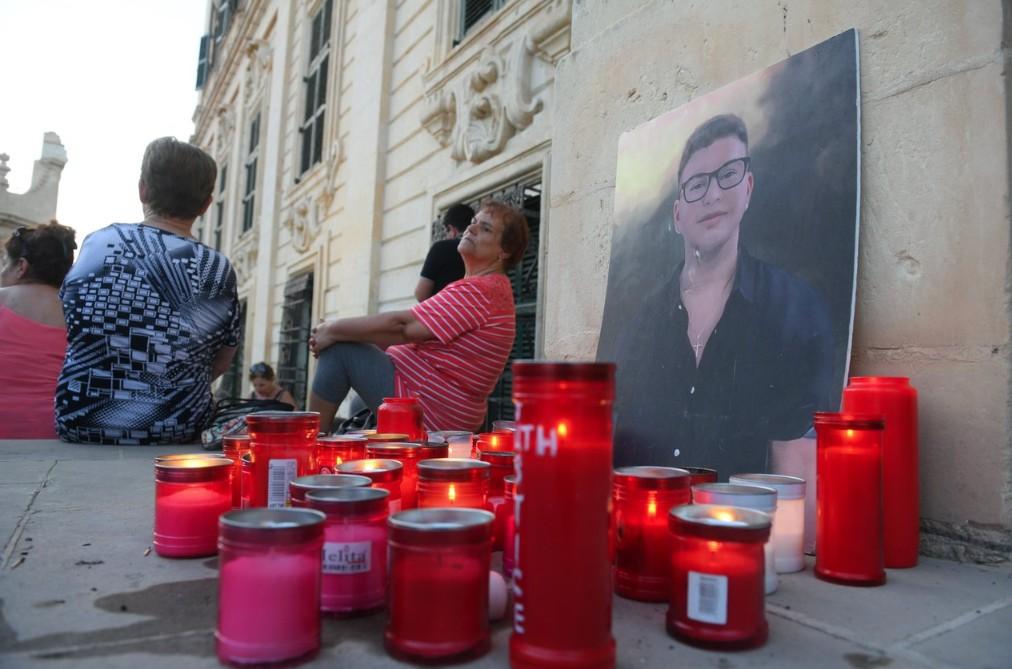 Candles are lit in front of a portrait of Jean Paul Sofia, who died in a construction site collapse in 2023. Photo: Matthew Mirabelli
When asked earlier this week how the party intends to ease concerns about over-development in areas subject to intense construction, such as Gżira and Sliema, Robert Abela pointed to Labour's drive to develop major national parks in places like Manoel Island and the White Rocks complex in Pembroke.
Those major greening projects helped address the "balance" between the need for development to proceed and people's need for recreational space, he said.
Policy protection for Manoel Island
Labour’s manifesto also includes the planning-related pledges party leader Robert Abela has made throughout the campaign trail so far.
Public land that is within rationalisation zones will not be used for speculative development, the manifesto pledges, and local plans will be amended to ensure no development is permitted on Manoel Island.
Similarly, the manifesto pledges “legal amendments” to protect parks and green areas developed in the past years from future speculation.
Labour is also pledging clearer rules for outdoor tables and chairs. Restaurants and cafes will have floor markings to make their restrictions publicly visible, with repeat offenders at risk of losing their outdoor seating licences, the manifesto pledges.