Latnija cave discovery hailed as ‘world class’ by leading archaeologist
The discovery showed that Malta’s human history is at least 1,000 years older than previously thought
A leading archaeologist from the University of Cambridge has described the recent discovery of Latnija cave as “world-class research” that manifests the extraordinary talent of Maltese scientists and their international collaborators.
Cyprian Broodbank, a professor who has been studying the archaeology of islands for 35 years, told Times of Malta the discovery is highly significant in understanding what people in antiquity were capable of doing, especially since Malta lies in the middle of one of history’s most crucial seafaring routes.
“I’ve been coming to Malta for 25 years and I’ve always been impressed by the quality of research here,” he said.
“This is the latest manifestation of world-class research, and it shows the talent of the Maltese nation is able to draw in an extraordinary range of collaboration with some of the best scholars in the world.”
Broodbank was in Malta last week for a conference that explored several archaeological discoveries and how they can inform solutions to the climate crisis in the future.
The groundbreaking discovery at Latnija, in the limits of Mellieħa, led by Maltese professors Eleanor Scerri and Nicholas Vella, and published in leading international scientific journal Nature in April, revealed that Malta’s human history is at least 1,000 years older than previously thought.
The evidence was excavated and analysed abroad over the past six years. It also established that the first people to ever descend on the islands were hunter-gatherers, not the farmers described in school textbooks and museums.
The discovery also challenges the global scientific community’s belief that hunter-gatherers did not reach small and remote islands and changes the understanding of what these primitive communities were capable of.
‘Very smart, inventive people’
Broodbank said the discovery highlights not only the incredible ingenuity of ancient seafarers but also provides crucial insights into past climates and potential solutions for future environmental challenges.
The Latnija findings are particularly exciting because they reveal a completely different way of life in the Maltese environment, one that thrived without agriculture, he said. This suggests a sophisticated understanding of navigation and maritime life at an incredibly early stage of human history.
“They had much less technology than we do, but they were very clever people. They were smart and individually far more tested than we are in their environments, and their way of reaching Malta must have been cutting-edge seafaring technology at the time,” he said.
Extracting human DNA from soil
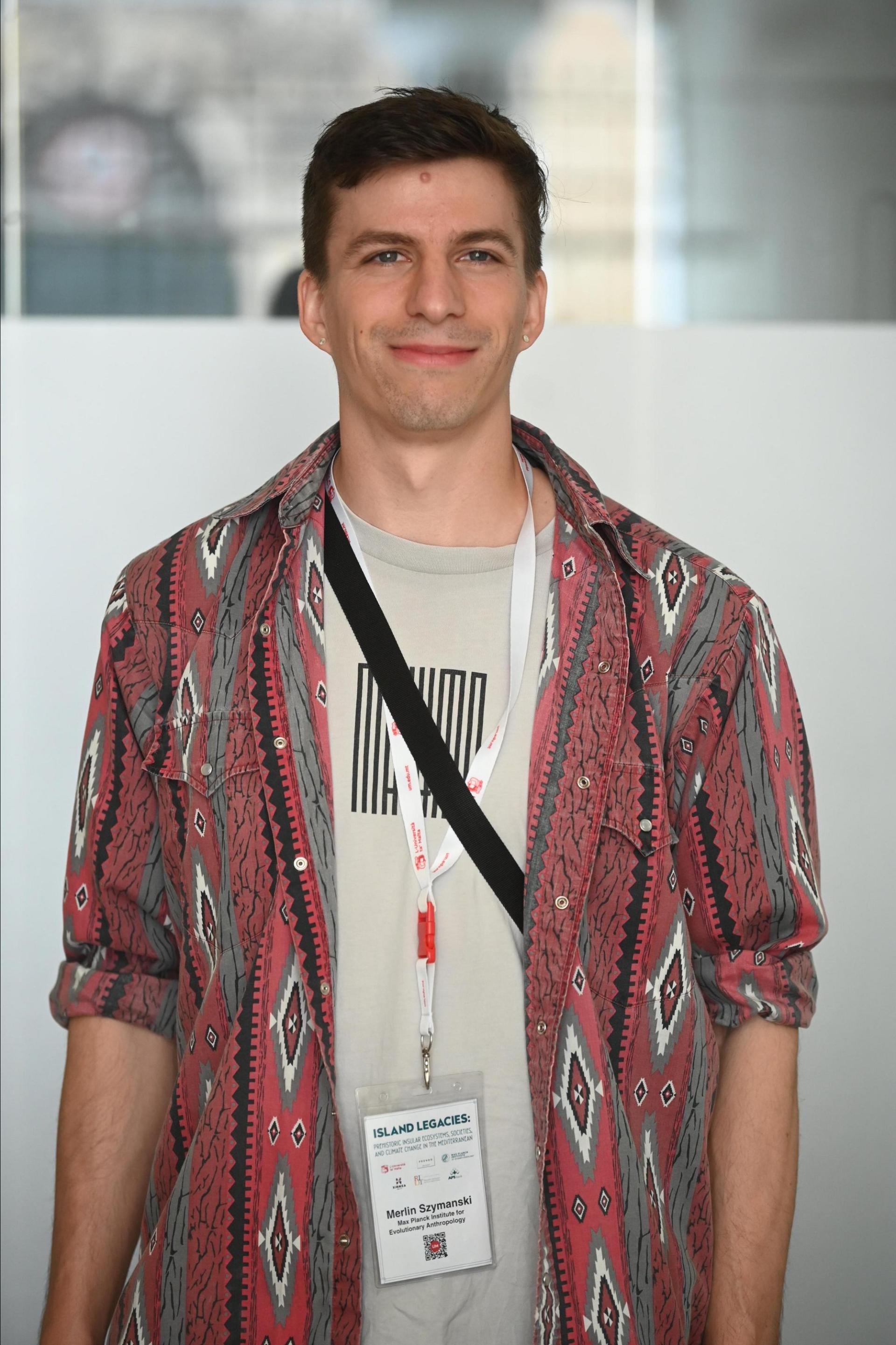 Merlin Szymanski is piecing together human DNA from soil. Photo: Jonathan Borg
Only two months after the discovery was published, scientists are already piecing together more pieces of the puzzle.
Among those scientists is Merlin Szymanski, a 30-year-old biologist and PhD student of the Max Planck Institute for Evolutionary Anthropology.
Szymanski’s team has successfully extracted ancient human DNA from sediment samples found at the Latnija site. This is a significant achievement, as finding ancient DNA in southern European sediments is notoriously difficult.
“It’s a puzzle, it’s like finding the needle in the haystack,” Szymanski explained, detailing the meticulous process of isolating human DNA from a multitude of other organisms.
“From half a million DNA sequences, we might find that 500 to 1,000 are human.”
Crucially, they have authenticated that the DNA is indeed ancient and are now working to identify the specific human populations present in Malta during that period, distinguishing between hunter-gatherers and later Neolithic farmers.
‘People were in Malta all year round’
So far, scientists knew hunter-gatherers settled in Malta at some point around 8,500 years ago, but they were not yet sure whether they remained on the islands all year round or merely visited in months when the weather was favourable.
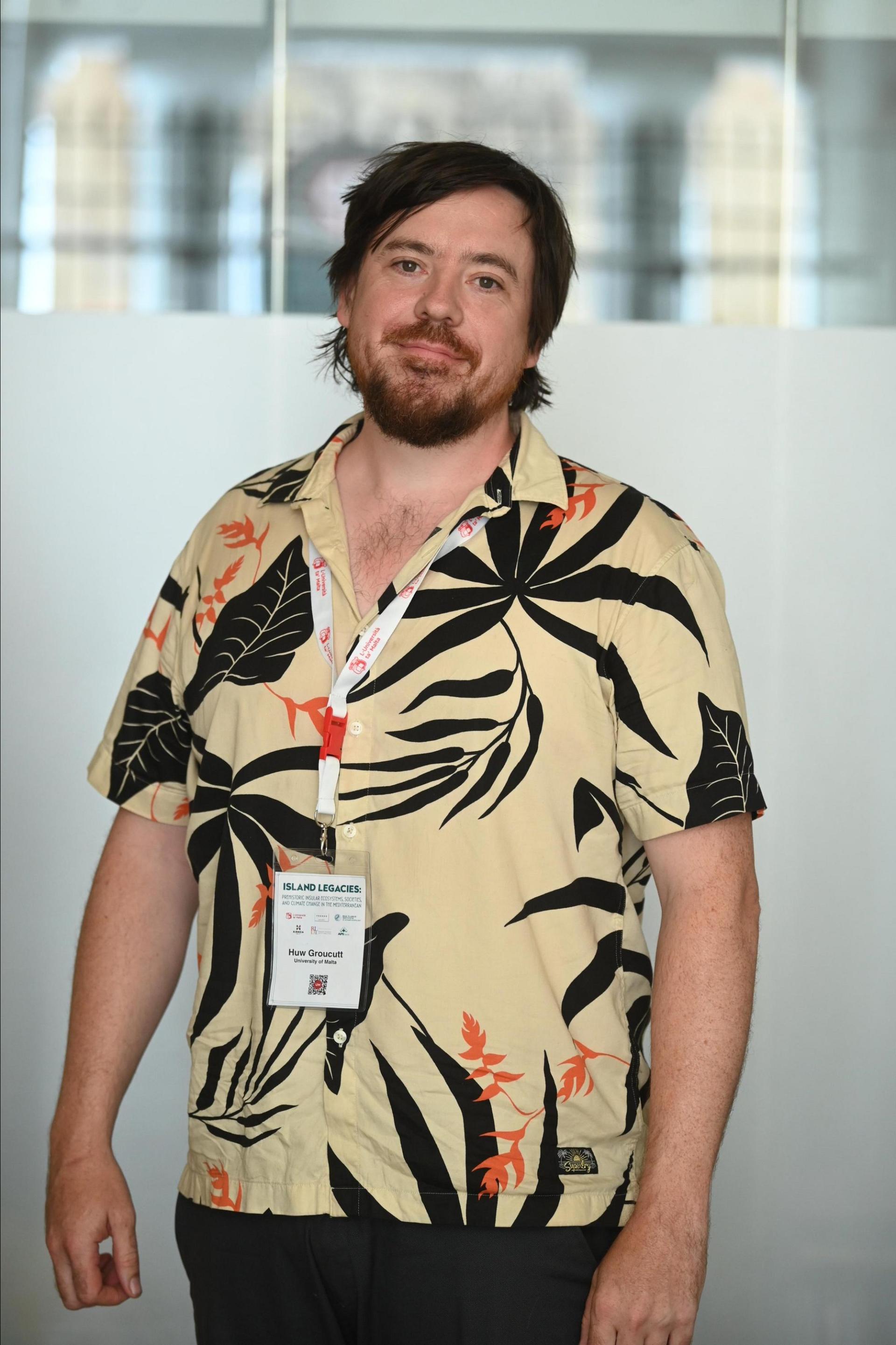 Huw Groucutt says the seashells he is studying are a time capsule into life in antiquity. Photo: Jonathan Borg
These insights are coming from Huw Groucutt, an archaeologist studying the seashells found at the site.
“We’re trying to understand whether they were here seasonally or all year round. Did a group come and set up shop or were there repeated trips with different people?” he told Times of Malta.
Initial tests suggest a continuous presence at Latnija for a remarkable thousand years.
“As far as we can tell, there were people on Malta every season for a thousand years,” Groucutt said.
While it’s not yet clear if they were direct descendants or if there were ongoing migrations, the sheer duration of their presence suggests they were not completely isolated.
Beyond understanding ancient human behaviour, the seashells also provide crucial data on past climate conditions, particularly sea temperature.
“We’re reconstructing the climate of that age,” Groucutt explained.
“This historical climate data is invaluable for understanding current climate change.
By studying the past, we can understand what will happen in the future.”
Piecing together information about ancient plants, animals and climate, the research is poised to guide future decisions on climate change solutions for Malta, including what plant species might thrive in a changing environment.
The three scientists were among a wide range of archaeologists, palaeontologists, biologists, geneticists, climate scientists and earth scientists who congregated in Valletta last week for a conference titled Island Legacies: Prehistoric Insular Ecosystems and Climate Change in the Mediterranean.
They shared research and insights by looking back in time at Mediterranean islands to see how ancient people and their surroundings changed together.
They explored everything from the very first humans in Malta to how farming and early societies developed.
The main goal is to use these lessons from the past to help with today’s big problems, like climate change and losing animal and plant species. By understanding how islands and people adapted long ago, the scientists hope to find better ways to protect these special places for the future.
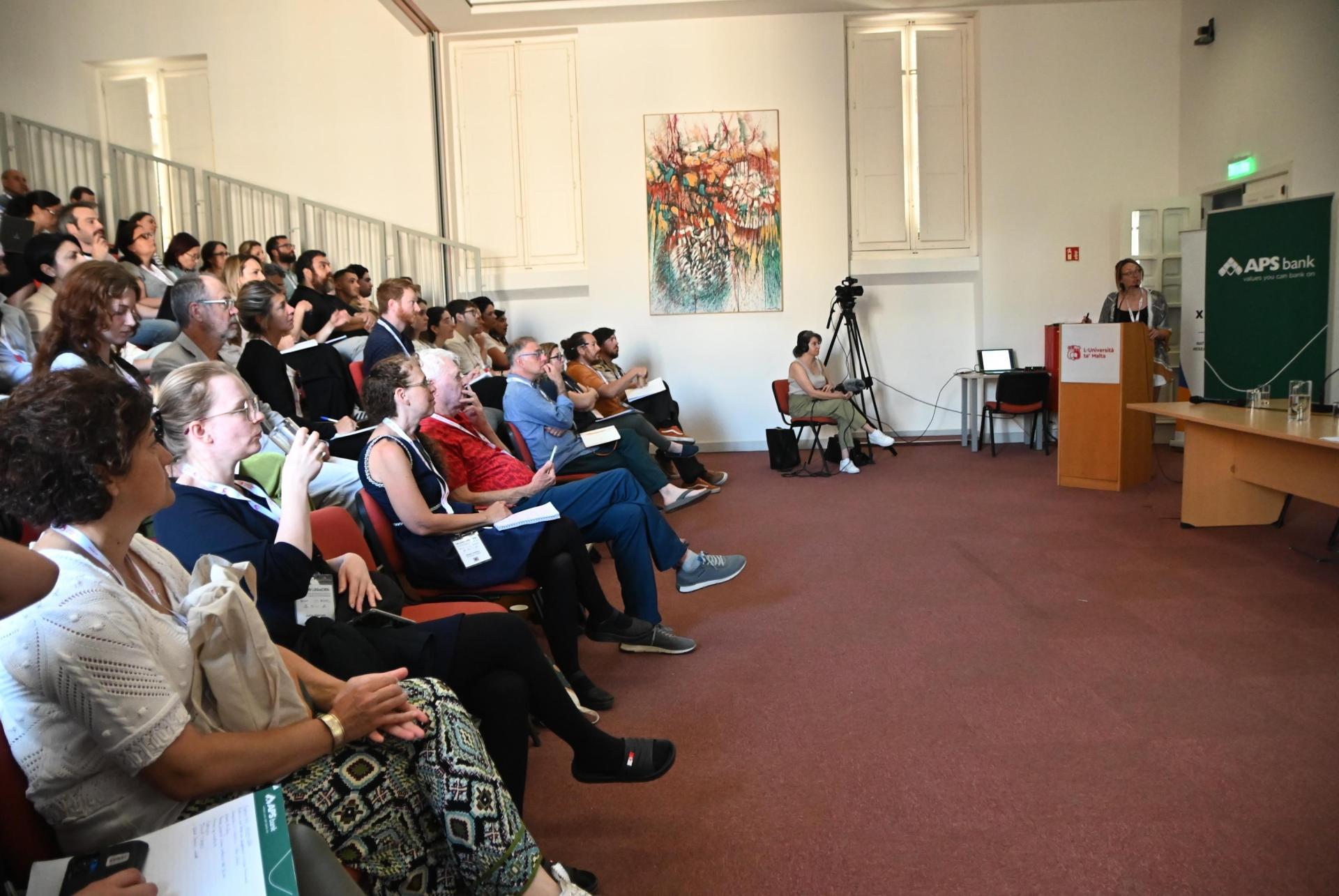 The scientists were in Malta for a conference which explored several archaeological discoveries. Photo: Jonathan Borg