Letters to the editor – March 20, 2026
Today’s letters by Times of Malta readers
Barriera Wharf
Michael Cassar of Valletta writes:
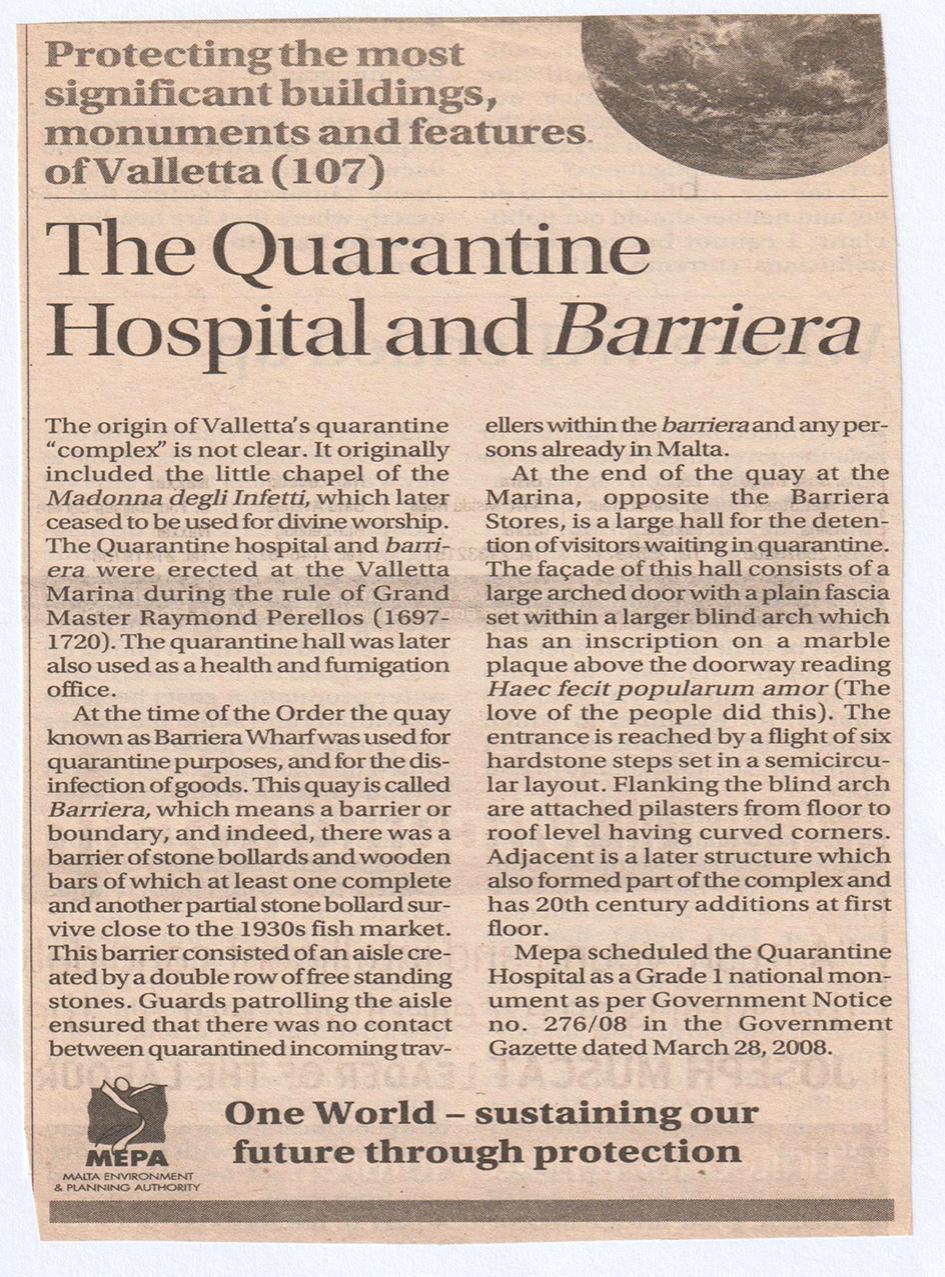 A cutting with MEPA’s information on Barriera Wharf.
Enclosed is the MEPA description of the Barriera and the Quarantine Hospital - a Grade 1 National monument.
Calling Barriera Wharf ‘Quarry Wharf’ is a gross distortion of history and callous disservice to Malta’s widely acknowledged role in maritime health.
Beyond the numbers
Mark Said of Msida writes:
Based on information tabled in parliament, 30 people died of suicide in 2025, with the youngest being 21 years old and the oldest being 76. In 2024, 28 people died of suicide, with only one being female.
In 2023, 27 people died of suicide, with 24 people being men and three being women.
These statistics show that, year after year, the number of individuals committing suicide for some reason or other keeps on growing.
What are the implications of such a worrying trend?
Suicide is probably the most personal act anyone can perform, as few acts have such deep roots in social and human conditions or have such far-reaching consequences, including economic ones.
Suicide and attempted suicide are major public health problems.
Better evidence-based programmes of action directed at preventing suicide and attempted suicide are greatly needed.
However, a comprehensive review of knowledge on the burden of suicidal behaviour is needed before such programmes can be developed and subsequently evaluated.
The impacts of suicide are often overlooked in public discourse, research, or policy, despite high risk and significant mortality rates.
Risk factors include “the 4 Ds”: depression, debility, disconnectedness and deadliness of means.
It transpires that most suicides occur in the age group 25 to 64 years, which are the most productive years from a socio-economic point of view.
Deaths in this interval of life often involve economically crucial members of families and those individuals from whom the yield of investments in education and training has not yet been fully realised.
These deaths pose great economic burdens to society due to lost future productivity.
Suicides claim substantially more life years and more personal income during the age interval from 20 to 64 years than either of the two major killers: cardiovascular disease and cancer. The average number of years of lost productivity due to suicide is twice the number due to cerebrovascular disease and ischaemic heart disease.
How much does society lose because of one person’s death? From the economic point of view, that would mean lost future productivity and loss of earnings. How much is society prepared to pay to reduce mortality from suicide? What is the value of human life?
Even though several mental disorders represent risk factors for suicide and pose great burdens of disability per se, we must not ignore the fact that the majority of these disorders could, if only detected early enough, have been treated.