Wrap: 'My mother is in the car': Officer recalls Daphne's son after blast
Day 9 of the trial of the man accused of ordering the assassination of a journalist
Updated 5.40pm
A police officer who was among the first to the Daphne Caruana Galizia murder scene testified on Friday about seeing the journalist's barefoot son Matthew at the site of burning wreckage and telling officers: "My mother is in the car."
Jurors heard that harrowing testimony as part of the prosecution’s case against Yorgen Fenech, the businessman accused of complicity in Caruana Galizia’s murder.
They heard a succession of witnesses explain how investigators painstakingly reconstructed the crime scene, retrieved evidence and ultimately confirmed the victim’s identity by matching DNA from her corpse to that of one of her sons.
A succession of forensic experts, scene-of-crime officers and police witnesses retraced the investigation into the October 2017 car bomb, explaining how they concluded the explosive device had been concealed beneath the driver's seat, recovered evidence from locations linked to the hitmen and tracked the movements of the cabin cruiser Maya on the day of the murder.
Fenech denies commissioning Caruana Galizia's murder. Prosecutors allege he paid €150,000 through middleman Melvin Theuma to have the journalist assassinated. Five men are already serving prison sentences for carrying out the killing and supplying the bomb.
Crime scene officer Darren Debattista explained how investigators reconstructed the explosion by inserting ballistic trajectory rods through holes in the wreckage of Caruana Galizia's Peugeot 108.
"The rods met under the driver's seat," he told jurors, saying this demonstrated that the explosive device had been placed beneath the seat rather than outside the vehicle.
Investigators also compared the destroyed Peugeot with an identical rental vehicle to distinguish original components from foreign material left behind by the bomb. They recovered wiring, ball bearings and other items they believed formed part of the explosive device. A damaged mobile phone recovered near the wreckage was later sent to the Netherlands Forensic Institute for specialist examination.
The jury also heard evidence about a series of searches carried out weeks after the murder at locations linked to the alleged hitmen and bomb suppliers.
Scene-of-crime officers described searches at a Marsa potato shed, an apartment in St Paul's Bay, garages in Żebbuġ and Mosta, and other locations, where they recovered communications equipment, GPS devices, SIM cards, binoculars, firearms, ammunition and hundreds of other exhibits.
Among the locations searched was the cabin cruiser Maya, where officers recovered SIM cards and cigarette butts. Prosecutors allege one of the hitmen was aboard the vessel when the text message that detonated the bomb was sent.
Former police sergeant Emanuel Saliba later presented CCTV footage tracking the boat's movements on October 16, 2017 – the day of the murder. The footage showed Maya leaving Grand Harbour shortly after 8am before returning at 2.43pm, stopping near the Marsa potato shed before berthing.
Armed Forces officers who assisted the investigation also described spending almost a week diving in murky waters around the potato shed, eventually recovering six mobile phones discarded underwater after the arrests.
The day's most emotional testimony came from police sergeant Charles Azzopardi Refalo, one of the first officers to reach Bidnija after the explosion.
He told jurors he arrived to find "three balls of fire" before being approached by an agitated Matthew Caruana Galizia.
"I lowered my head and saw part of a human body."
The officer said police attempted to open the burning vehicle, called for medical assistance and tried to persuade Matthew Caruana Galizia to move away from the scene after telling him there was no sign of life.
Later in the afternoon, forensic pathologist Mario Scerri described carrying out Caruana Galizia's autopsy.
He told jurors the force of the explosion had amputated the right-hand side of her body from the hip and described how the remains were recovered from the scene before being transferred to Mater Dei Hospital's mortuary.
Jurors also heard that Caruana Galizia was formally identified through DNA comparison with a sample provided by her son Paul.
Proceedings continue on Saturday, when FBI experts and court IT expert Martin Bajada are expected to testify.
As it happened
FBI to testify tomorrow
5.30pm We are told (in open court) that tomorrow's witnesses will be experts from the United States' FBI. Court IT expert Martin Bajada will also testify, the court says.
Thank you for joining us. We will have a summary of the key points of testimony available at the top of this article soon.
Chemist testifies
5.25pm Daniel Vella is a chemist who was tasked with identifying the bomb residue to identify chemicals within it. He tells the court that he worked with Dutch forensic experts to do that: both he and NFI experts collected samples from each part of the bomb site and then examined them.
Vella says he received samples on December 8, 2017. His testimony is highly technical. The defence reserves cross-examination to a later date.
That’s all for today – the court is adjourned.
Poor visibility
4.55pm The court hearing resumes with the testimony of two other AFM divers – Mario Ciantar and Ivan Falzon. Like the others, they describe finding phones underwater in an area with very bad visibility. The sea there was full of clutter (imbarazz).
Diving for mobiles
4.12pm Another witness – Matthew Sant, an AFM officer within its bomb disposal unit, was one of the officials involved in a raid on the Marsa potato shed that led to the hitmen being arrested. He and other officers dived underwater to look for any IEDs (Improved Explosive Devices) in the area.
Under cross-examination, he says officers found six mobile phones underwater across several days (he first says the searches were done across four days, then corrects to say it was over a week).
Another AFM diver involved in the searches, Stephen Said, testifies. He confirms searches lasted “between five days and a week”.
The court orders 30-minute pause.
Chief rescue officer testifies
3.50pm The defence reserves its cross-examination of Scerri to a later point. Chief rescue officer Frederick Sammut takes the stand. He was also among the first to reach the scene of the explosion.
DNA comparison used to identify victim
3.31pm The victim was positively identified as Daphne Caruana Galizia thanks for a DNA comparison with a sample taken from one of her sons, Paul.
GRAPHIC WARNING: Doctors describes scene
3.25pm Scerri describes the murder scene, in forensic – and somewhat graphic – detail.
“There was a body in the car. The victim’s right hand was in the field, on the ground. There was an exploded cranium between the door and front seat. The body showed sign of muscular contractions.”
The right-hand side of the victim's body "was amputated from the hip," he says.
Scerri describes the process of placing the body and head in body bags. Everything was taken to the Mater Dei Hospital mortuary.
Autopsy doctor testifies
3.15pm Mario Scerri, a doctor and forensic expert who led Caruana Galizia's autopsy, takes the witness stand.
Court hearing resumes
3.10pm The judge is back in court. She warns everyone present that some graphic photos are to be displayed in court this afternoon.
The jury returns, and the today's hearing can continue.
Lunch break
1.08pm The jurors have been sent on a lunch break. Proceedings are due to resume at 3pm, and we'll be back with live updates when the hearing resumes.
'My mother is in the car'
12.58pm The police sergeant continues.
“I went to check the car to see if there was anyone inside," he says. "A man approached and said he was Matthew Caruana Galizia. He was agitated and barefoot. He said, 'my mother is in the car'.
"At that moment, as a sign of respect, I lowered my head and saw part of a human body."
The sergeant says they tried to open the still-burning car door and called for help from additional police officers and medical assistance.
“I tried to calm him down. I told him there was no sign of life and it was in his interest and safety to move away from the car”, he said.
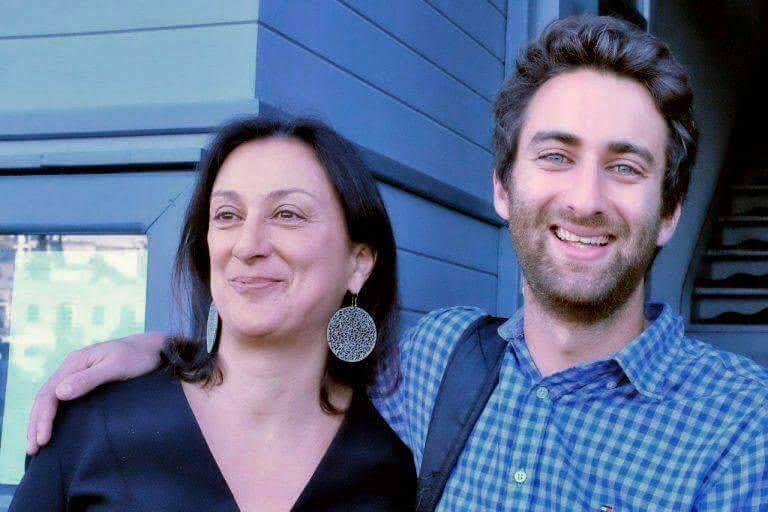 Daphne Caruana Galizia and her son, Matthew. Photo: Matthew Caruana Galizia
Three balls of fire
12.54pm The court's focus has returned to the murder scene.
Police Sergeant Charles Azzopardi Refalo tells jurors he was on duty at Mosta police station when he was informed, at around 2.55pm on October 16, 2017, that an explosion had occurred in Bidnija.
He says he and other officers rushed to the scene, where they saw "three balls of fire". A car was on fire and there were another two areas where there was fire. They closed the road to traffic.
Maya boat movements
12.50pm The boat captured on CCTV was the Maya. The footage shows it leaving at around 8.12am and returning at 2.43pm, stopping near the Marsa potato shed before berthing.
CCTV footage of a boat on the day of the murder
12.46pm Former police sergeant Emanuel Saliba was tasked with reviewing CCTV footage from the Grand Harbour area. The footage covered October 16, 2017, the day Daphne Caruana Galizia was murdered, and captured the movements of a boat in the Grand Harbour.
More searches
12.40pm Police officers Patrick Farrugia and Emanuel Saliba have taken the stand. Farrugia was tasked with searching an apartment in St Paul's Bay on December 1, 2017. Saliba was tasked with collecting evidence from the Bidnija area and any other areas of interest that emerged through the investigation.
Ballistic experts take the stand
12.30pm Prosecutors call the final experts in this phase of the evidence: Jesmond Cassar, Jonathan Attard and Gloria Alamango, who were appointed as ballistic experts.
They examined a number of firearms and cartridges recovered during the investigation. Their findings showed that some of the ammunition matched the pistols examined, while other rounds did not.
Their reports have been exhibited and will be available to the jurors, but were not read out in court.
No fingerprints found
12.25pm Police Sergeant Clinton Vella is back on the witness stand, describing the painstaking process of trying to recover fingerprints from items sealed in evidence bags. Despite using specialist techniques, including a superglue-like chemical to develop prints, investigators were unable to recover any usable fingerprints.
Festive sounds punctuate testimony
12.11pm More scenes of crimes officers are testifying. They describe searches carried out at a factory and car in Marsa, a residence and garage in Żebbuġ and a residence in Swieqi.
The jury listens intently. But inside the courtroom, the testimony is punctuated by sounds drifting in from Republic Street, where singing, band music and cheers can be heard from outside.
We're back
12.04pm The court is back in session.
Court takes a break
11.35am The defence lawyer asks whether suspects in custody, such as Alfred Degiorgio, told police what evidence to lift.
"Definitely not," the two crime scene officers reply in unison.
With no further questions, the court breaks until noon.
Binoculars on a rooftop overlooking Bidnija
11.33am The crime scene officers also say binoculars were found in a van near a Żebbuġ garage and in a room in Mosta. This room was located above a garage and the room overlooked all of Bidnija, where the murder happened.
Cross-examination
11.27am Lawyer Gianella de Marco begins her cross-examination.
She asks the officers about the people who were present during the searches and in which locations guns were found.
[The guns may have featured in the photos projected in court, which are not always cearly visible from the gallery where the press, including our court reporter Claudia Calleja, is sitting].
He said they found a pistol in Adrian Agius' garage and spent ammunition in a Mosta site searched in the presence of Jamie Vella.
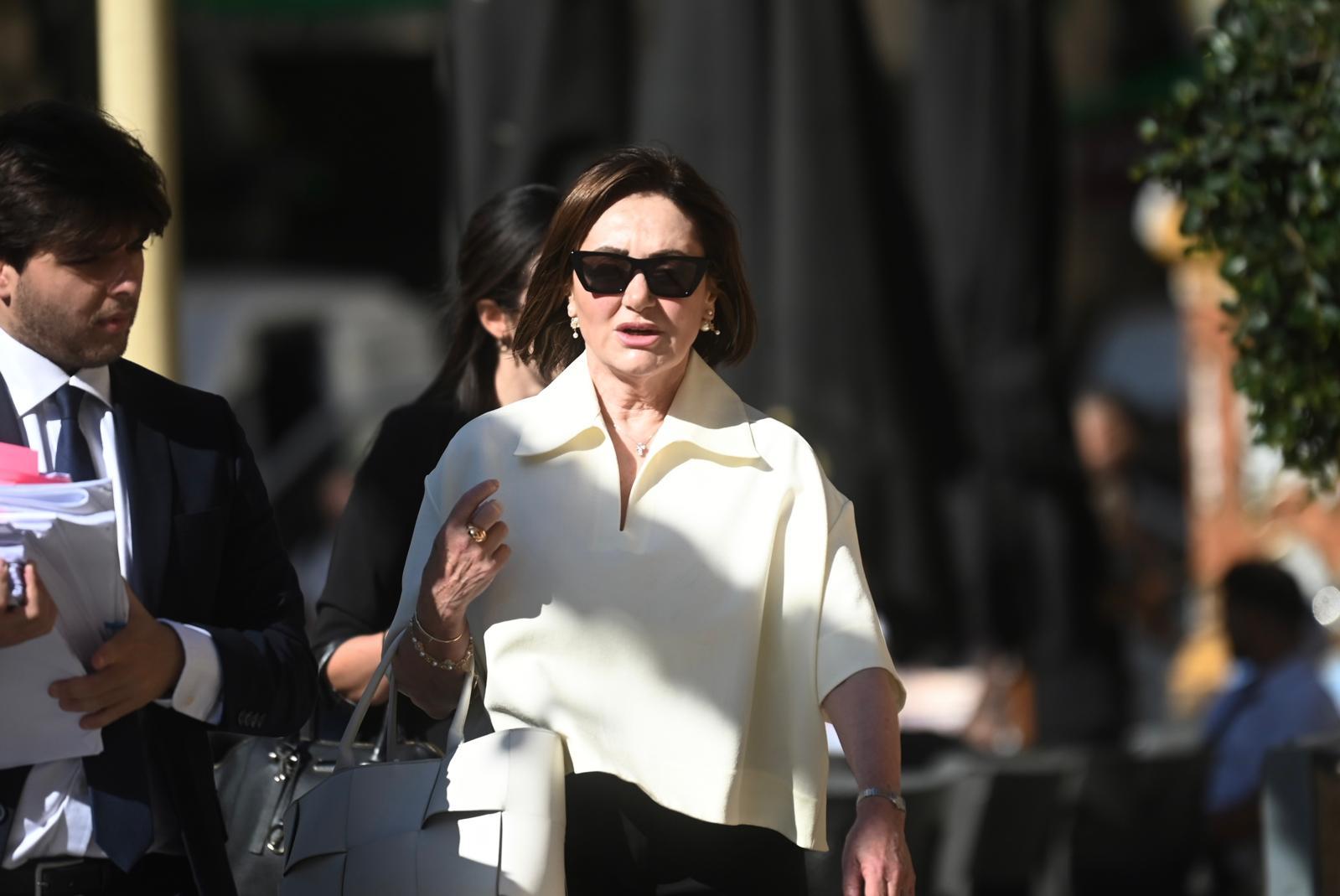 Defence lawyer Gianella De Marco arrives in court on Friday. Photo: Jonathan Borg
Bomb supplier's Mosta place searched
11.16am On December 5 and 6, 2017 the officers searched a place in Mosta in the presence of Jamie Vella, who was in police custody at the time.
The site was used to store skips and garbage trucks and also included a garage and an abandoned building. Over 300 exhibits were lifted from this place.
[Vella, a member of the Maksar gang, was convicted last year of supplying the bomb used to kill Daphne Caruana Galizia and is serving a life sentence].
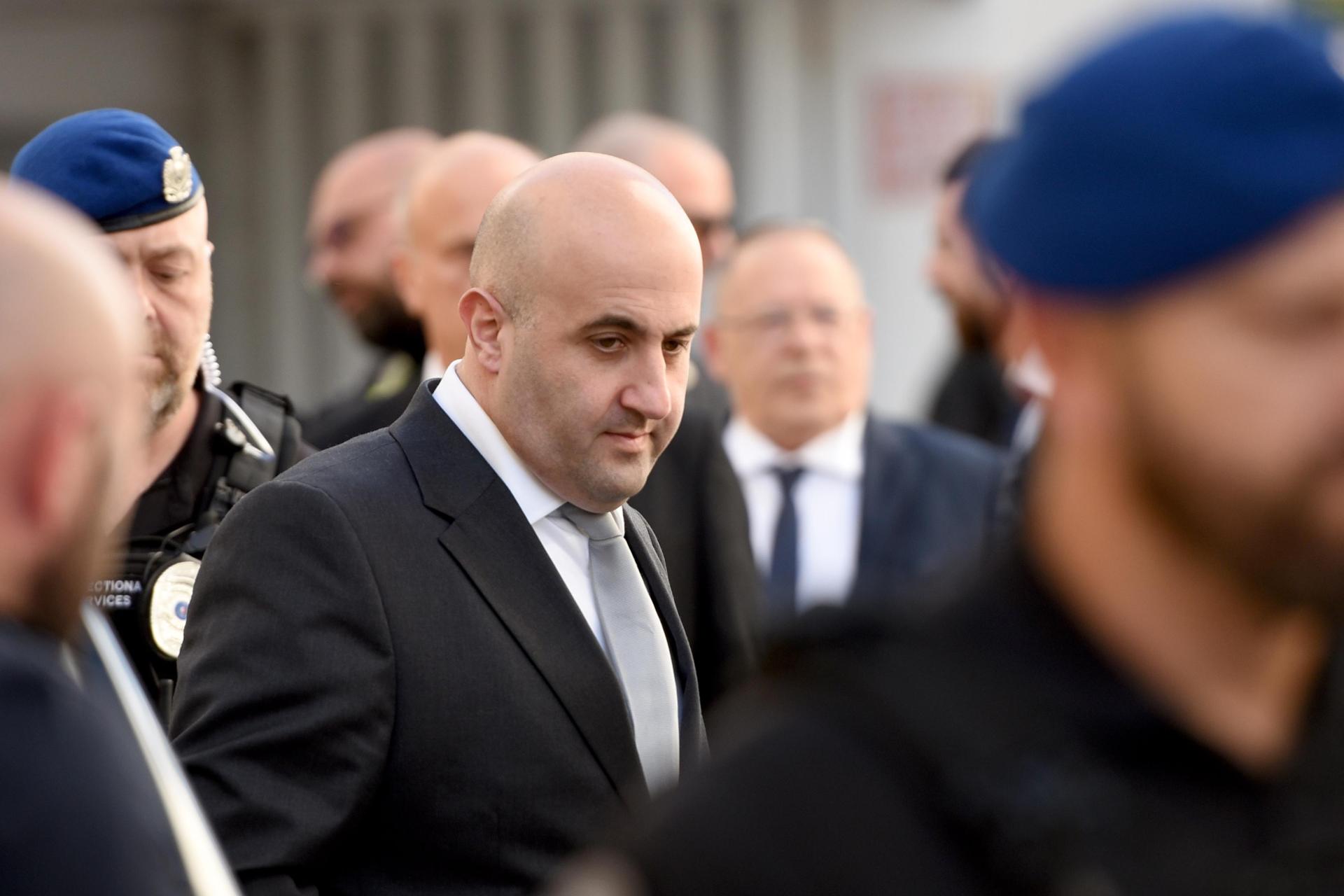 Jamie Vella, pictured during his trial last year. Photo: Times of Malta
Hitman's flat searched
11.09am The officers also describe searching a flat in St Paul's Bay in the presence of Alfred Degiorgio, who was under police custody [He later admitted to being one of Daphne Caruana Galizia's killers and is serving a 40-year prison sentence.]
Among the items recovered were communications equipment and a GPS device that was used at sea.
The Maksar gang
10.57am We're hearing from more scenes of crime officers. This time Arthur Borg and Antoine Fenech. They tell jurors they were appointed on December 4, 2017, to carry out a forensic search of a garage in Żebbuġ. There were instructed to search for the hardware and electronic devices.
More than 200 photos documenting the search are being shown in court. Among the items recovered were Visa cards and an Air Malta ticket bearing the name Adrian Agius. They also found binoculars and took a DNA swab from them.
[Adrian Agius was one of the leaders of the Maksar gang, who were convicted last year for their roles in the murders of Caruana Galizia and lawyer, Carmel Chircop. Jacob Borg has prevously written about the downfall of the notorious gang.]
The Marsa potato shed
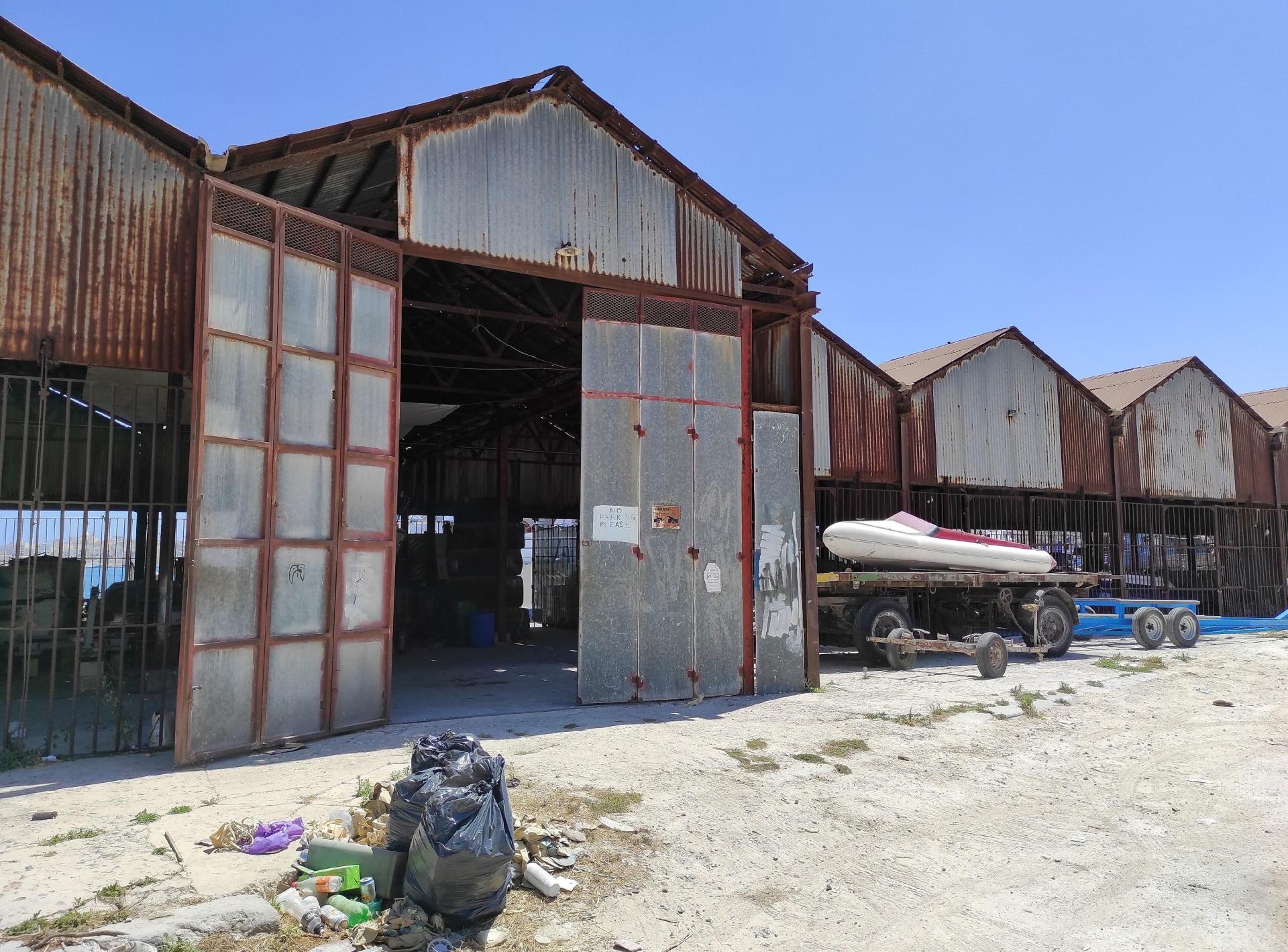 The Marsa potato shed was searched by officers two months after the murder. Photo: Matthew Mirabelli
Fingerprints from Marsa potato shed
10.33am Scene of crime officers (SOCO) Darren Debattista and Michelle Camilleri are describing searches carried out as part of the murder investigation.
At 3am on December 4, 2017, they went to a potato shed in Marsa, where they lifted fingerprints and recovered mobile phones. Members of the Armed Forces of Malta also carried out dives in the area and found several mobile phones.
The officers also examined a BMW parked near the Marsa Regatta Club, a Mercedes and Audi near the potato shed and they searched a boat named Maya. In the boat they found SIM cards and cigarette butts.
In total, they collected 39 exhibits from the potato shed.
A property in Marsa and a place in Msida were also searched.
[The Marsa potato shed was used as a hideout and meeting point by the bombers and their associates to plan the assassination. Maya was the name of the cabin cruiser, used by one of the hitmen, who was aboard when he sent a text message that detonated the bomb.]
Wailing echoes through courtroom
10.25am The courtroom falls silent as exhibits relating to the damaged mobile phone are presented. During the proceedings, the sound of someone wailing outside carries into the courtroom.
From the gallery, where we are sitting, it is not clear who is distressed. Much of the evidence presented in this trial has been deeply distressing for Daphne Caruana Galizia's relatives.
Extensively damaged mobile phone
10.16am Sergeant Clinton Vella tells jurors that a mobile phone was recovered near the tyre of Daphne Caruana Galizia's destroyed car. It was sent abroad to the Netherlands Forensic Institute so that some of its components could be preserved before being returned to Malta the following month, along with a report.
800 photos of evidence
10.07am Two scenes of crimes officers are describing how they cleaned, catalogued, examined, photographed and re-sealed evidence according to the instructions of a court expert. The painstaking process lasted five days. There were 800 photos in all.
Investigators compare vehicles
9.56am Next up is Police Sergeant Clinton Vella. He tells jurors that investigators rented a Peugeot 108 identical to Daphne Caruana Galizia's so they could compare it with the wreckage and look out for differences.
"For example, if I found a blue wire of that size and thickness in the damaged car but not in the rented car, it would then be classified as ‘foreign’ and as part of the explosive,” he told jurors.
No questions for this witness
9.53am Debattista has concluded his testimony. Neither the defence nor the jurors have any questions for him.
Bomb under driver's seat
9.46am The officer explains how investigators inserted ballistic trajectory rods through holes in the wreckage to trace the direction of the blast. The point where the rods met indicated the seat of the explosion.
"The rods met under the driver's seat," Debattista tells the court, explaining that this showed the explosive device had been placed beneath the driver's seat.
The handbreak of the car was found pulled up, suggesting it was pushed up by the force of the blast. The hole at the botom of the car was bursting outwards, again suggesting that the bomb was inside the car.
Car seats moved out of their place
9.41am Debattista says investigators isolated and preserved any material that did not originate from the car. Among the items recovered were lengths of thick wiring and ball bearings.
Photographs shown to jurors also illustrate the force of the explosion, with the car seats visibly displaced from their original positions by the blast.
The destroyed car
9.28am Crime scene officer Darren Debattista, who was part of the team that examined the destroyed Peugeot 108, is giving evidence.
He tells jurors the team photographed the wreckage, documented the damage and collected swabs for forensic testing. All findings were catalogued in a report available to the jury.
Debattista says the vehicle was kept in a sealed compound and could only be accessed by court-appointed experts. It was opened and resealed each time examinations were carried out over three days.
Photographs shown in court depict the car wrapped in plastic before being uncovered for examination. The images reveal extensive fire damage. Debattista says the pattern of damage to the driver's door indicated the blast originated from inside the vehicle, while a hole in the floor beneath the driver's seat was consistent with the bomb having been placed inside.
Family in court
9.25am Members of Daphne Caruana Galizia's family have attended every day of the trial. Before entering the Valletta law courts this morning, her sister, Helene Axiak, paused briefly at the makeshift memorial to the journalist outside the building.
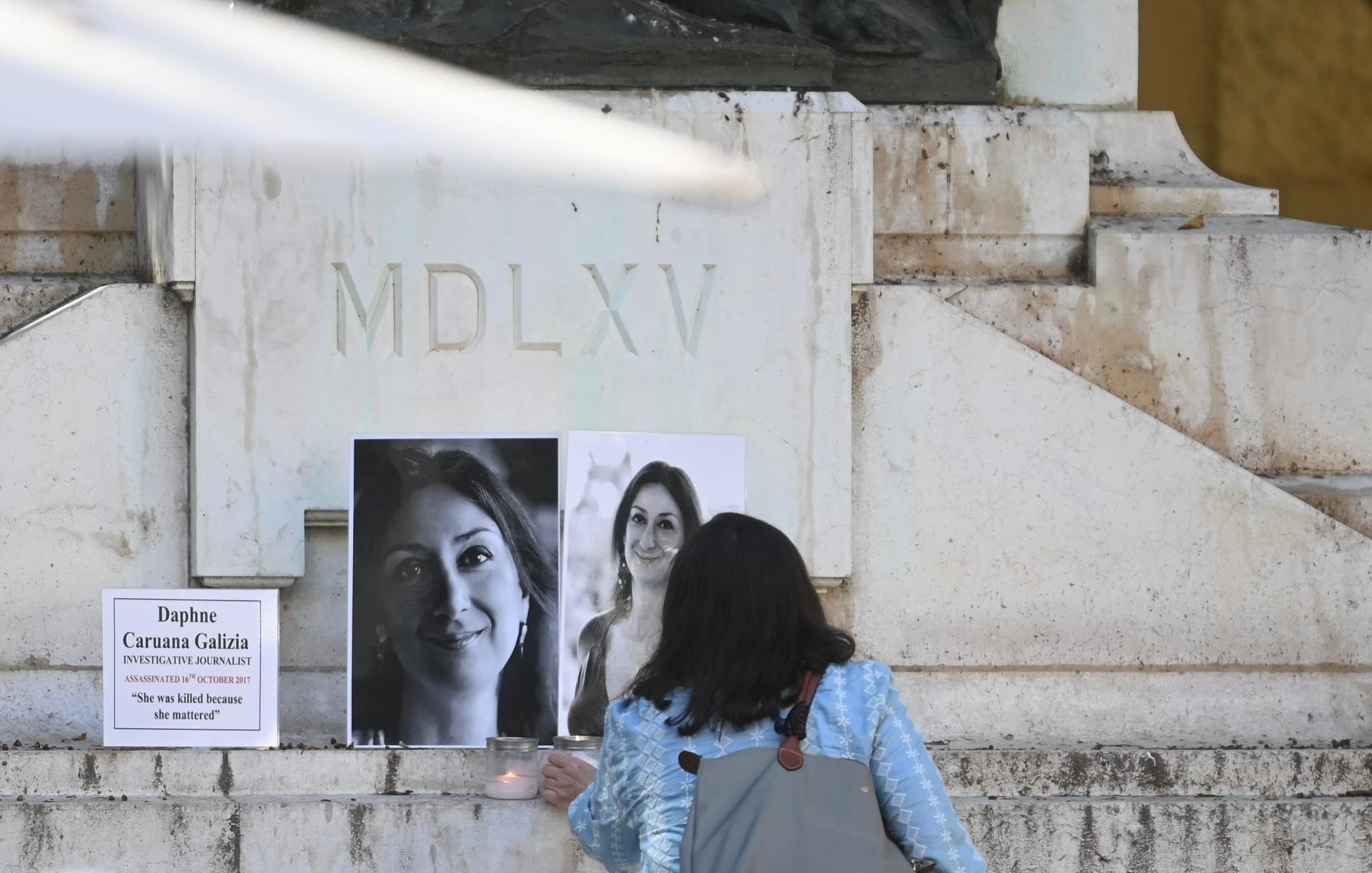 Helene Axiak, the sister of Daphne Caruana Galizia, visits her makeshift memorial outside the law courts. Photo: Jonathan Borg
Crime scene experts take the stand
9.19am A succession of scenes of crime officers (SOCO) take the stand. They are discussing how they preserved evidence after the bomb.
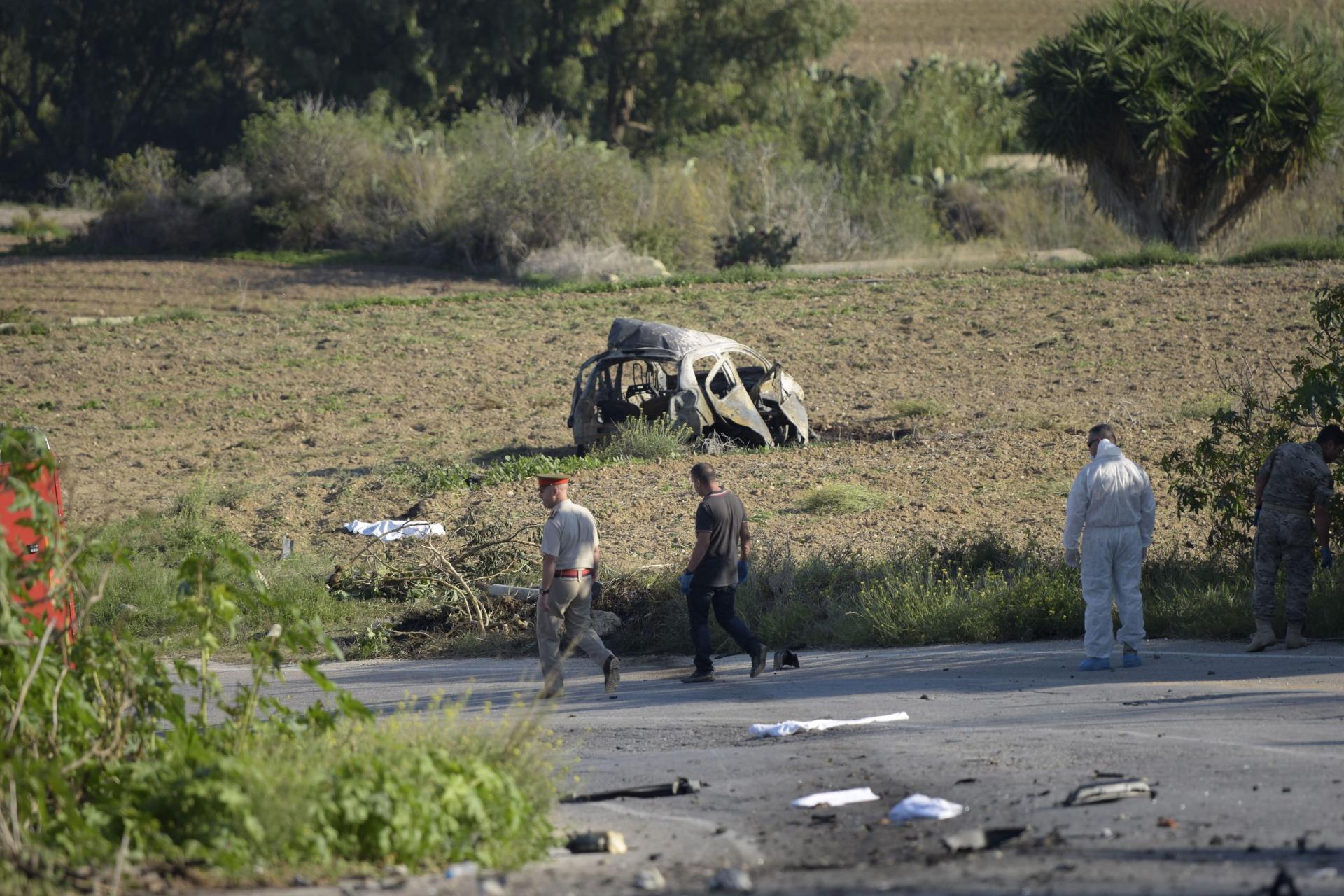 The aftermath of the bomb that killed Daphne Caruana Galizia on October 16, 2017. Photo: Mark Zammit Cordina
Court is in session
9.12am Five knocks on the courtroom's wooden door signal the start of proceedings. Everyone rises as the judge and the jurors, who will decide this case, enter the courtoom.
Courtroom begins to fill up
8.58am People are beginning to file into the hall. The prosecution team is gathered around its table, while journalists and law students take their seats in the public gallery. Court staff are arranging documents on the central table, where evidence is placed once it is formally exhibited.
The jurors' area remains empty for now. Orange highlighters lie on the jurors' desks, ready to mark evidence as it is presented to them.
Daphne's sister reflects on harrowing testimony
8.50am On Thursday, the jury heard graphic testimony of the car bomb that killed Daphne Caruana Galizia.
Her sister has described what it was like for the family hearing repeated references in court to "a leg", "a foot", "a hand", "the body", "the bomb" and "the explosion".
While many people in court sat in silence, Mandy Mallia said some cried, others remained composed, and a few even laughed during the day's proceedings.
The testimony also brought back memories of October 16, 2017, when she and her father watched television coverage of the assassination at their family home.
She said it was the first time she had seen her father cry, as television footage showed white sheets covering different parts of the journalist's body after the explosion.
Recalling that Daphne had been with her parents in the same room just two days before she was killed, her sister said there should have been many more family gatherings and that "justice, with the full force allowed at law, is the least she deserves. It is already long overdue."
Welcome
8.40am Good morning and welcome to our live coverage of the ninth day of the trial of Yorgen Fenech.
Today's hearing is due to begin at 9am and we expect it to run until around 6pm, with a break at lunchtime.