Wrap: 'I heard her screaming': Daphne Caruana Galizia's final moments
Jury in Yorgen Fenech trial hears how journalist panicked before fatal blast that killed her
Warning: This article contains graphic descriptions
Daphne Caruana Galizia was conscious and visibly panicked in the seconds between the first spark beneath her car and the explosion that killed her, an eyewitness told jurors during the trial of Yorgen Fenech.
Francis Sant told the court he was driving towards Bidnija on October 16, 2017 when he noticed a car coming in the opposite direction, and its driver looking panicked.
“The woman seemed really panicked. She was not in a position to move. A few seconds passed, and I saw the first big spark from under the car. She was conscious at the time, jammed to the steering wheel. After another few seconds, I heard her screaming,” he said.
Shortly after, the fatal blast happened. Sant recalled seeing body parts flung through the windscreen as the car veered off the road into a nearby field and turned into “a ball of fire”.
“I knew there was no point in trying to help. I panicked,” he said.
Moments later, the journalist’s son Matthew Caruana Galizia appeared on the street. “From his behaviour I noticed he realised it was his mother," Sant said, describing how he watched him run towards the burning car.
Fenech, a businessman, is charged with complicity in the wilful homicide of Caruana Galizia and with criminal association for the purpose of committing a crime. The journalist was killed when a bomb placed under the driver's seat of her car was detonated remotely.
Five people - the hitmen and those who supplied the bomb - are already serving sentences for their role in the assassination.
Suspicious cars in the weeks before the murder
Jurors also heard from Bidnija residents, who described unusual activity in the area weeks before the killing.
Carmel Wallace Sammut, who lives near the scouts' camping area at the Victoria Lines, said he repeatedly saw a white rental car parked for long stretches of time in the weeks before the murder, and a silver Peugeot parked awkwardly across the narrow road in the week before.
He saw the white car in the same spot hours before the bomb went off, and never saw either car again afterwards.
His wife, Maria Sammut Grech, gave a similar account, telling jurors it was not normal to see cars parked in the area for no reason. The white car was still there when she left home at 2.30pm on the day of the murder - roughly half an hour before the explosion.
No sign of Fenech in Caruana Galizia’s phone
The morning session was dominated by forensic experts. Three specialists from the Netherlands Forensic Institute testified through a video link and confirmed reports on the crime scene reconstruction and the explosives used.
Court IT expert Martin Bajada presented a partially redacted report on the data extracted from Caruana Galizia’s mobile phone. The redacts were made to protect her journalistic sources.
Europol explosives analyst Marius van der Meer, appointed in March 2018 to analyse the phone and SIM card data, told jurors that Caruana Galizia had been investigating seven 'scenarios' at the time of her murder. "She was an active journalist, there was a lot of data to analyse," he said, though he stressed his job was not to identify suspects.
Under cross-examination, the expert confirmed that Yorgen Fenech did not feature in any of the scenarios identified in his report.
"No one person was identified or mentioned by me as a possible instigator through the possible scenarios," he said.
Graphic images shown to jurors
Several scene-of-crime officers testified in the afternoon. Police Constable Clinton Vella testified on behalf of a team of around ten officers appointed as court experts to preserve the scene, collect evidence and assist the Netherlands Forensic Institute.
Vella described a methodical grid search, with the scene divided into sectors and a team of six or seven officers moving through each one in formation, filming as evidence was collected and signing receipts at every handover. Aerial photos shown to jurors revealed a crater in the road marking the spot of the explosion.
SOCO inspector Kevin Manicolo described the condition of the victim's remains in graphic detail, telling jurors the head and upper body were found between the passenger seat and door, with extensive burning to one side of the body.
The case continues on Friday.
The prosecution was led by Attorney General lawyers Anthony Vella, Godwin Cini and Danika Vella.
Fenech was represented by lawyers Giannella de Marco, Charles Mercieca and Gianluca Caruana Curran.
Lawyers Jason Azzopardi and Therese Comodini Cachia appeared on the victim’s behalf.
Judge Edwina Grima presided over proceedings.
Trial day 1: Jury selected
Trial day 2: Prosecutors make their case
Trial day 3: How police homed in on the hitmen
Trial day 4: A murder middleman names Yorgen Fenech
Trial day 5: Fenech, Keith Schembri and Joseph Muscat
Trial day 6: Arnaud cross-examined by defence
Trial day 7: Forensic evidence
Live Blog
Sitting over
6.35pm Today's session is over, and we'll be wrapping up our live blog here. Thank you for following the proceedings with us. We'll have a wrap-up of the day's key points of testimony available at the top of this article shortly.
Evidence-submission records
6.31pm A scene-of-crime officer who was in charge of videography testifies next. He tells jurors his job was to film all the sectors of the crime scene. The footage was saved onto CDs, with everything documented according to the inspectors' instructions and the work carried out on the specific days.
The next witness explains the annexes, documents and receipts related to the evidence submission forms. This sets out each police officer who collected evidence and the code tied to each item they gathered.
Car parts exhibited in court
6.21pm The witness is now exhibiting pieces of the car that the forensic team managed to salvage from the site. These include a piece of the dashboard and a headrest.
Car removed by crane from site
6.18pm We're back in session. More photos are being shown of the interior of the car and the damage caused by the explosion. Other photos show the process of removing the car from the scene.
In one of the photos, the car is seen being lifted by crane, with a hole in its underside.
Another photo shows the blackened, burned vegetation beneath the vehicle. This is where Caruana Galizia's mobile was found, near the rear wheel.
Witness reads out exhibit references
5.39pm The session turns to the formal, procedural part of the evidence, with the witness reading out the reference numbers under which each photograph and item was catalogued, sealed and documented.
The court is now taking a short break. We will continue our coverage once the court is in session again.
Autopsy images shown, jurors show little reaction
5.18pm More photos are shown of the body sealed in the body bag, followed by images from the autopsy showing the head, the upper part of the body, and the lower parts in pieces.
The images are unrecognisable and macabre, but the jurors are showing no visible reaction to the photos of the body.
Jurors shown photos of the victim's body being recovered
Warning: Graphic descriptions
4.48pm Jurors are shown a highly graphic photo of the victim's burnt body, showing how it was removed from the vehicle and placed on a white sheet, together with the part of the foot found outside the vehicle.
A further photo shows the body sealed in a body bag.
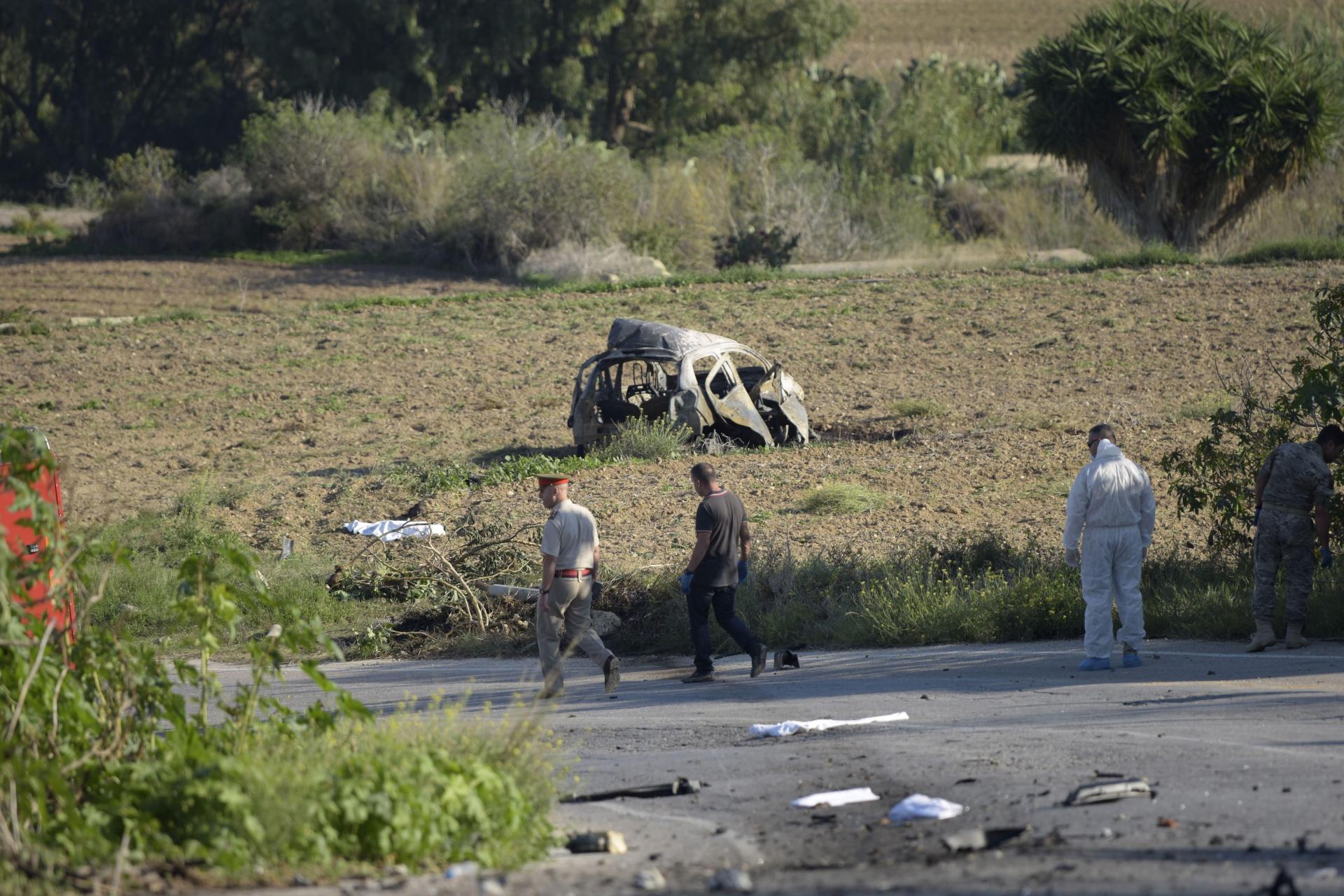 Daphne Caruana Galizia's burnt out car in the aftermath of the bomb explosion that killed her. Photo: Mark Zammit Cordina
Victim's remains described in court
Warning: Graphic descriptions
4.13pm Manicolo is going into detail about the condition of the victim's corpse.
He notes extensive burning to one side of the body. He tells jurors that the head and upper body were found between the passenger seat and the door on that side, while the lower body was between the driver's seat and the steering wheel.
He explains that the left leg was passing, and although the right leg was in the car, part of the foot was missing.
Barbed wire, human waste
3.47pm Jurors are now shown a photo of barbed wire along a rubble wall with a piece of material or cloth from some clothing caught on it. Other photos show the cigarette butt and human waste with tissues. A report on the stones from the rubble wall lying on the ground are also presented.
SOCO inspector Kevin Manicolo testifies next, confirming the account given by the officers from the Rapid Intervention Unit. He describes the scene at the site and how the team divided its responsibilities, with some officers handling administration, others photography, and so on.
Team of officers searched in formation
3.32pm Vella tells jurors how the scene was photographed from multiple angles, including shots of the burnt-out vehicle, an aerial image of the victim's house, and the spots where the cigarette butts were found.
He also explains the forensic methodology behind the evidence collection. He says they used a gridding system, which involved dividing the scene into sectors. Each sector was filmed while evidence was being collected and preserved.
With each handover, evidence was checked, and a receipt was signed by the exhibits officer.
Describing the search itself, the witness says a team of around six or seven officers moved through each sector in formation, with one person walking the line and another following behind. When someone spotted an item, the officer behind them would collect it. The team would stop and wait until the item had been gathered before moving on.
A crater in the ground
3.11pm Jurors are now being shown aerial photos of the site. From the photos, a crater can be seen in the road, marking where the explosion took place.
Police officers found out that the victim's car was parked on the side of the road minutes before the explosion, near her home. Because of this, police officers decided to preserve the victim's home as a secondary crime scene.
Later, police identified an area overlooking Bidnija and the crime scene. Here, police found a cigarette and cigarette butts. This area was also cordoned off and investigated as a secondary crime scene.
Jurors are also being shown photos of the burnt car from different angles.
Body parts strewn across the area
3.07pm Vella explains that the team took precautions to make sure the crime scene could be preserved as much as possible.
Once the area was deemed safe from explosives, they entered the site wearing protective gear.
The jurors are being shown photos from the crime scene. In one of the photos, the remains of a human body can be seen in the car. In the other photos, body parts are strewn around the place, as are scraps from the car.
A paramedic used white sheets to cover the body parts, while soldiers and police officers were stationed around the area and at the victim's home.
Team of officers assigned to the case
2.49pm About 10 police officers have been brought as witnesses, but Police Constable Clinton Vella is testifying on behalf of everyone.
He tells the jurors that in 2017 they were appointed as court experts to the case to preserve the scene of the crime, collect evidence and help the Netherlands Forensic Institute with their investigations.
Court is in session again
2.34pm The jurors are in their seats and ready to hear more testimony.
Break till 2.30pm
12.19pm The court is taking its lunch break a little earlier than usual. Proceedings will continue at 2.30pm.
Spare key collected from car rental company
12.18pm The next witness is Superintendent James Grech. At the time, he was stationed at the Criminal Investigations Department. At 3pm that day, he received a call from the Mosta Police Station about a bomb that went off in Bidnija. He was informed that the victim was Daphne Caruana Galizia.
He went on site with Keith Arnaud and Kurt Zahra and saw the burning car. After, he went to the car hire company, from where Caruana Galizia rented the car, to pick up the spare key. He passed this on to Arnaud and Zahra.
Victim's son ran to the burning car
12.14pm Shortly after, Matthew Caruana Galizia appeared on the street too. In the moment, Sammut asked him if he knew who the car belonged to. "From his behaviour I noticed he realised it was his mother."
He saw Matthew run to the burning car. "I was under massive shock. Later, the police came, and I had to explain what I saw. I spoke to them that evening at home."
The moment the bomb went off
Warning: Graphic descriptions
12.11pm Sant continues describing the moment of the explosion. After the first explosion, Caruana Galizia was alive but looked panicked. He says it seemed that she knew something had gone wrong.
Then, the big explosion happened. Sant recalls seeing body parts flying out through the windscreen. The car lost control and ended up in a nearby field. Then, it turned into "a ball of fire".
"I knew there was no point in trying to help. I panicked," he said.
Another car appeared, driving in the opposite direction. The driver also stopped in a panic, thinking that there had been an accident. "The driver was a woman with a child in the car, a young girl who she had just picked up from school. I told her to call an ambulance. In the confusion of it all, I didn't know what I was supposed to do."
Eyewitness saw first spark and a panicked driver
12.02pm The next witness is Francis Sant. On the day of the crime, he was driving from Mosta when he turned towards Bidnija. He had just driven across the bridge and started driving upwards when he noticed a car driving in the opposite direction, and the driver inside looking panicked. The car stopped, and he stopped his car too.
"The woman seemed really panicked. She was not in a position to move. A few seconds passed, and I saw the first big spark from under the car - like a petard used in the festa. She was conscious at the time, jammed to the steering wheel. After another few seconds, I heard her screaming," he said.
Court is back in session
11.54am The jurors are back in the courtroom to continue hearing witness testimony.
Keith Schembri spotted
11.44am Earlier in the day, our photographer Matthew Mirabelli spotted Keith Schembri leaving the court building.
However, his presence has nothing to do with the jury. He was simply filing an application to the court to have some of his frozen assets released.
People subject to an asset freeze are allowed €21,000 a year to be released from the court to cover their day-to-day needs.
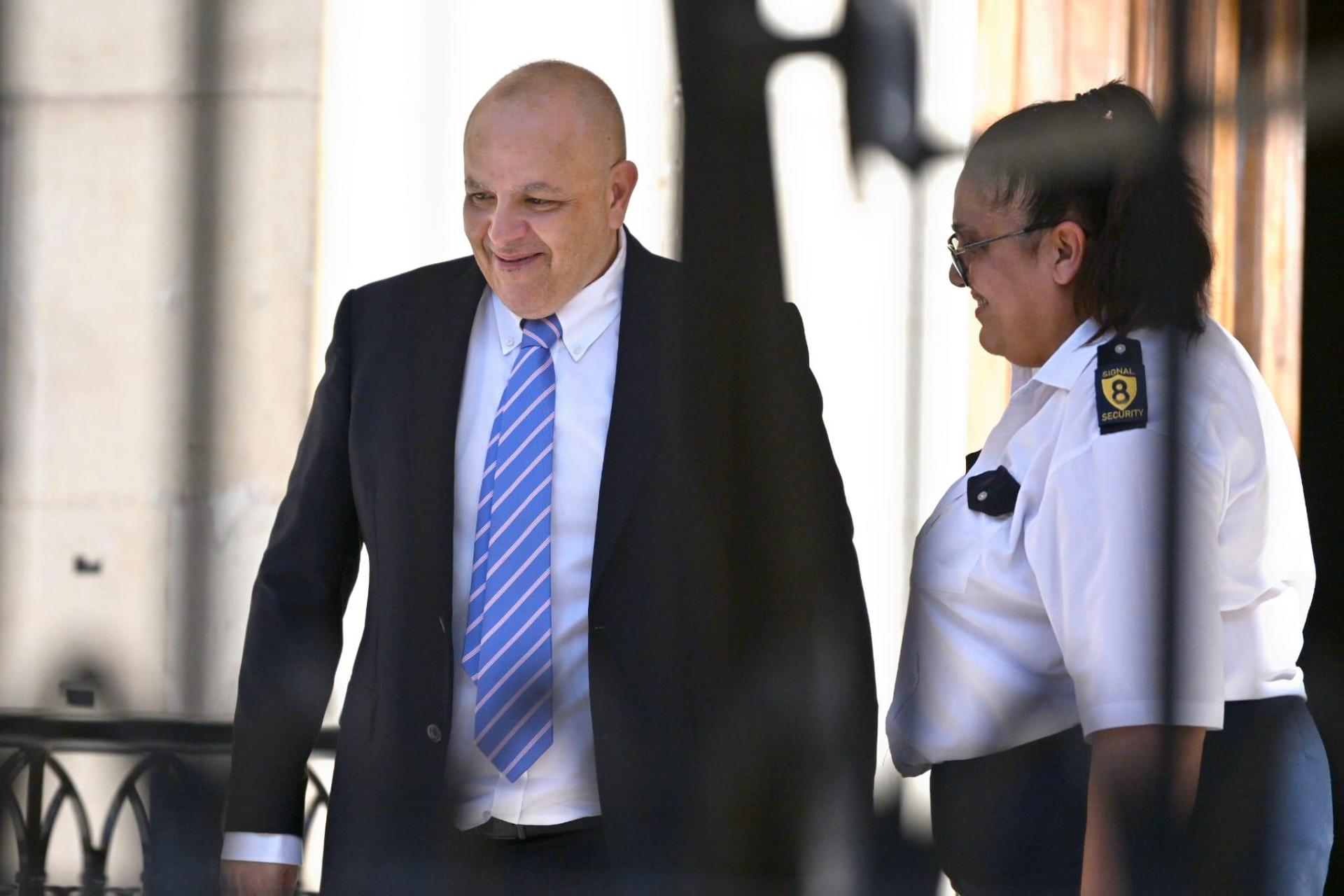 Keith Schembri exiting court on Thursday. Photo: Matthew Mirabelli.
Break
11.16am The court is taking a 30-minute break from proceedings. We will continue our reporting when the jury is in session again.
White car spotted on day of the crime
11.15am Another witness, Maria Sammut Grech, testifies next. She is the wife of the previous witness.
Similarly, she says she noticed two cars frequenting the area in the days before the murder.
She says she used to see the white car often but only saw the silver car once, with two men inside. It was dark at the time, so she could not see their faces properly.
She tells the jurors that it was not normal to see cars parked in the area for no reason. The cars would also be parked in the area for long stretches of time.
"On the day of the crime, I left the house and saw the white car. I arrived back home at 1pm and left again at 2.30pm - the white car was still there."
A 'rigid' driver inside the car
11.06am Sammut tells the jurors how he saw the suspicious car in the same spot hours before the crime. He never saw these cars again after the murder.
Under cross-examination, the witness says he started seeing the silver car a few weeks before the murder. "It used to be parked in such a way that it would block the road, but no one would be inside it," he says.
De Marco asks about an adjective he used earlier to describe the man he saw inside the car. "You said he looked rigid ['Illamtat']?"
"He kept looking straight ahead. I don't know, go figure. Everyone's wiser after the fact," he says.
Suspicious behaviour in the weeks before the crime
10.52am Carmel Wallace Sammut testifies next. He tells the court that he lives near the scouts camping area at the Victoria lines, and in the weeks before the murder, he kept seeing a white rental car parked in the area for long stretches of time. He said this seemed out of place.
"The first time I saw the car, it was parked near the barriers. There was a person inside. Then I started seeing it more frequently," he says.
He also recalls seeing a silver Peugeot car parked awkwardly in the narrow road, blocking access for other motorists. He only started seeing this car in the week before the murder.
Body parts strewn across the road
10.42am Police Sergeant Suzanne Mifsud is the next witness. On the day of the crime, she was on shift at the Mosta Police Station. At around 3.10pm, she received a phone call from her colleague informing her of a burning car in Bidnija.
A chauffeur picked her up and drove her to the scene. She arrived at around 3.20pm and immediately made her way to the police tape, where she saw the burning car in a field on the left of the road.
She describes seeing the roof of the car pushed upwards, which made her realise this was the result of a bomb. CPD officers surrounded the car.
As she walked down the road, she saw body parts strewn across the place. She spoke to one of the witnesses who had been driving down the road at the moment of the crime. He explained to her that he had been running errands when he passed by the road and saw the burning car. At this moment, Matthew Caruana Galizia ran out of the house and, in the heat of the moment, broke the witness's phone.
The next day, she focused on setting up fixed police points at the residence and the field.
Two more police officers testify, providing similar details about the crime scene.
An argument at the scene of the crime
10.30am Police constable Mario Farrugia testifies next. He had been stationed at the police's rapid intervention unit at the time of the crime.
He recalls the events of that day. At 3pm, the unit received a call about a burning car in a Bidnija field. They made their way to the site and found the Civil Protection Department putting out the fire.
He says he saw what remained of the car in the middle of the road, but could not get too close. Further up the road, it appeared that two men were arguing with each other, but things calmed down quickly.
A pick-up van drove through the road before the police tape could be set up. He stopped the van, but the driver told him he owned a field in the area. He searched the van and found nothing illegal or suspicious.
No mention of Fenech in the report
10.25am Gianella De Marco turns to Chris Cardona. She points out that the former minister is mentioned in the report in connection with the golden passports scheme and the brothel scandal. The expert confirms this.
"Am I correct that Yorgen Fenech does not feature in any scenarios?" she asks.
"Correct."
His testimony concludes.
Defence team lists Keith Schembri scandals
10.20am Under cross-examination, the expert confirms that someone else was tasked with cloning the mobile phone. "I was given the extracted data from the cloud environment on the English data," he says.
"Were you at any time contacted to put together the Maltese data?" De Marco asks.
"No."
De Marco also asks about the scenarios that Caruana Galizia was looking into and whether Keith Schembri's name cropped up anywhere. She starts listing scandals: the Panama Papers, alleged passport kickbacks, "investment scandals".
"No one person was identified or mentioned by me as a possible instigator through the possible scenarios."
Seven 'scenarios' being looked into
10.07am Based on the contacts and communications analysed, the expert says that Caruana Galizia had been investigating seven 'scenarios' at the time of her murder.
"She was an active journalist, there was a lot of data to analyse," he says, but he also clarifies that his job was not to identify any suspects.
The report had been finalised on May 22, 2018.
Phone analysis conducted
10.01am Van der Meer, who works as an explosives analyst, says he was appointed on March 1, 2018 by the inquiring magistrate to investigate the content of the data extracted from Daphne Caruana Galizia's phone and SIM card.
He explains that he analysed the data stored in the hard drive of the phone and the cloud. Some of the data he found consisted of emails, videos, documents and WhatsApp.
Redacted report presented in court
9.49am Martin Bajada, a court expert on IT, is presenting a report detailing the extraction that was carried out on Caruana Galizia's mobile. However, the report is partially redacted to protect her journalistic sources.
A Europol expert, Marius van der Meer, testifies next about the same report.
Caruana Galizia's phone was sent back to Malta
9.41am Prosecuting lawyer Godwin Cini asks the experts to go through the various reports drafted about the scene of the crime, including forensic evidence related to electronic devices and human remains found on site.
The judge asks about Daphne Caruana Galizia's phone. One of the experts says it was analysed and then sent back to the Malta Police Force.
With no cross-examination from the defence, the testimony of the foreign forensic experts concludes.
Experts confirm forensic reports
9.30am So far, the experts have just been confirming their signatures on the report, which investigated the Bidnija crime scene and reconstructed it based on what they found.
They were also presented with another report by their colleague, which focused on the explosives related to the car bombing.
Due to the poor sound quality, everyone is struggling to follow what the experts are saying. The prosecution keeps asking the experts to repeat themselves, and even the jurors seem to be discussing with each other to figure out what is being said.
Forensic experts testify first
9.18am Three experts from the Netherlands Forensic Institute are first to testify, and they will be doing so through a video call. They are all testifying together, although our journalist Clara Farrugia reports that the sound quality from the stranger's gallery is not the best.
They will be testifying about a report written up by Marcel van Beest, who testified on Wednesday.
Court is in session
9.16am The jurors have started entering the courtroom. The trial is in session.
People trickling in
9.06am People are slowly trickling into the courtroom. The prosecution and defence lawyers are all in the room, while the stranger's gallery is filled with journalists, sketch artists and law students.
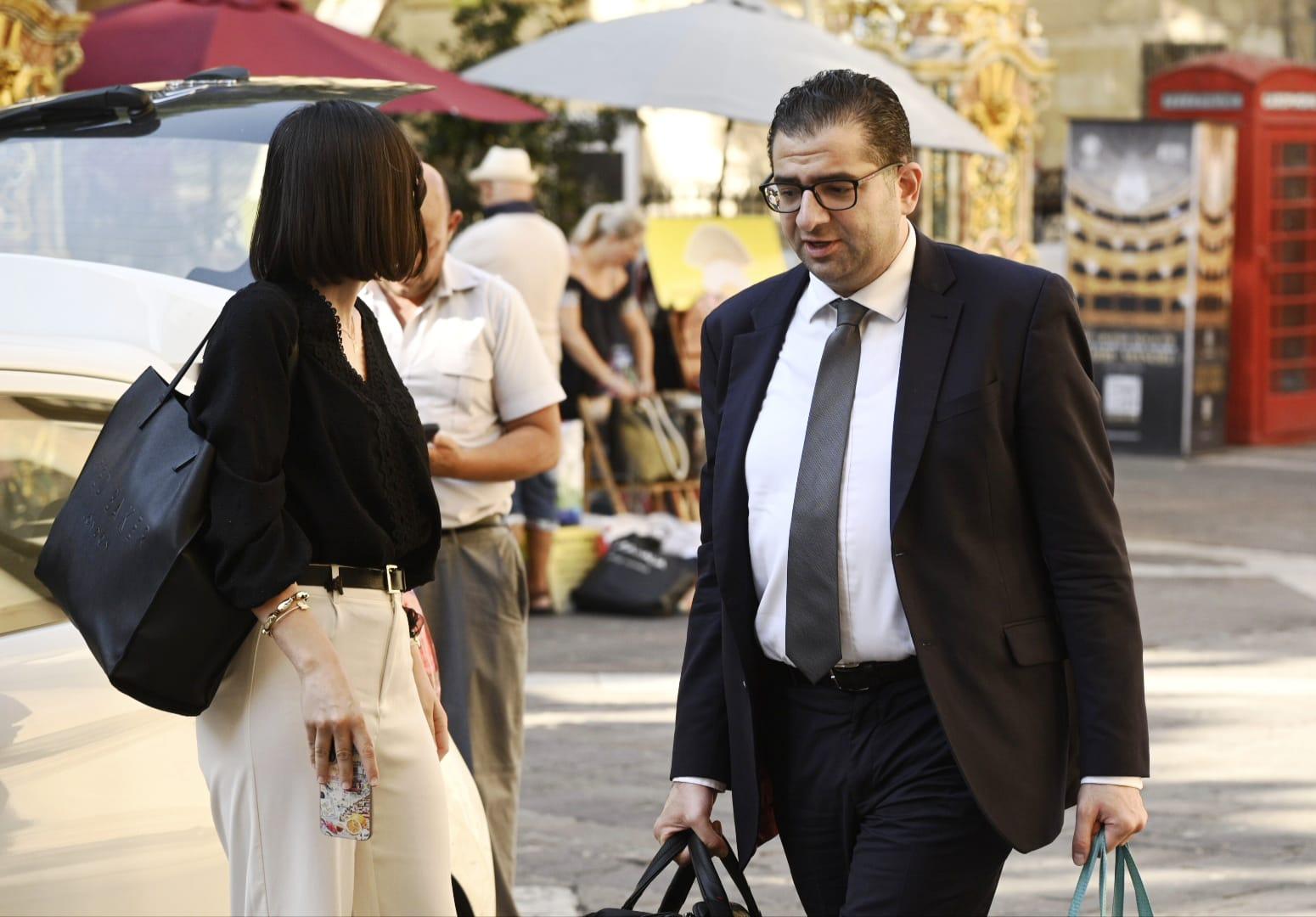 AG lawyers Danika Vella and Anthony Vella entering the court on Thursday. Photo: Matthew Mirabelli.
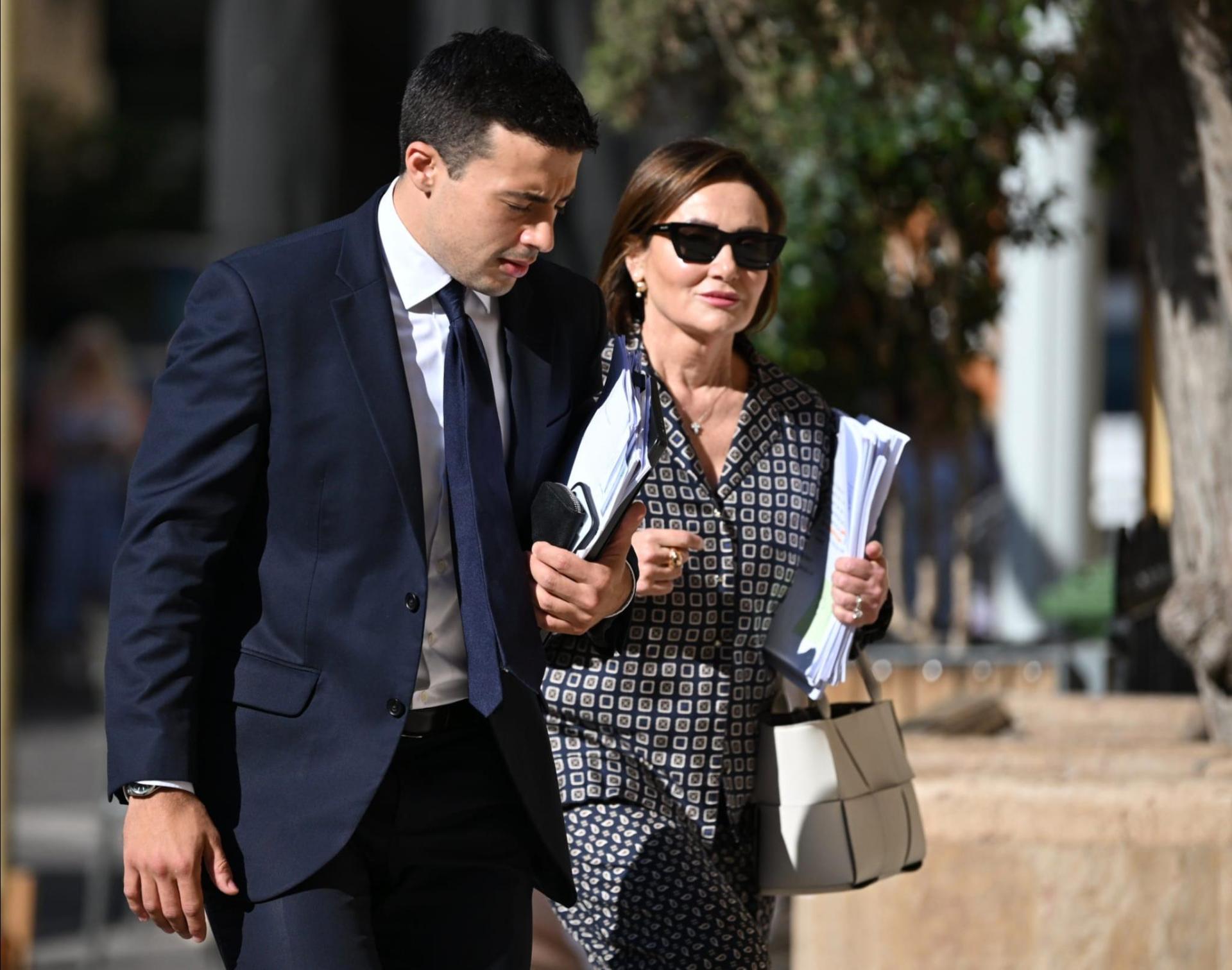 Defence lawyers Charles Mercieca and Gianella De Marco entering the court on Thursday. Photo: Matthew Mirabelli.
Welcome
8.53am Good morning and welcome to today's live blog. You'll be able to follow the latest updates from the courtroom by refreshing this space.
Right now, all the key players are making their way to the courthouse - although it seems that one of the security scanners at the entrance is not working today, causing long queues to enter the building.
Today's session is scheduled for 9am.