As it happened: After seven years, Fenech on trial over Caruana Galizia murder
After five hours, jury sworn in for long-awaited trial
The trial by jury of Yorgen Fenech over the murder of journalist Daphne Caruana Galizia kicked off on Wednesday, almost seven years since the businessman was arrested.
Fenech has pleaded not guilty to charges of complicity in the assassination, which rocked Malta's recent political history.
Caruana Galizia was killed outside her Bidnija home on October 16, 2017. Five men have already been convicted in connection with the murder, but the case of Fenech, who was arrested in November 2019 while attempting to leave Malta aboard his yacht, has been beset with delays.
If convicted, he faces life imprisonment.
The murder triggered one of the country's deepest political crises. Mass protests followed Fenech's arrest, ultimately leading to the resignation of then prime minister Joseph Muscat, with a public inquiry later concluding that the state had created an atmosphere of impunity that enabled the assassination.
The long-awaited trial has attracted intense international interest, with foreign journalists, diplomats and media freedom organisations filling the courtroom on Wednesday as proceedings finally began after years of constitutional challenges and legal delays.
Jurors were handed copies of the bill of indictment, which accuses Fenech of complicity in Caruana Galizia's murder and criminal association.
Prosecutors say he recruited Melvin Theuma to find someone to kill the journalist, agreed to pay €150,000 for the assassination and repeatedly pressed for the plot to be carried out before Caruana Galizia published information concerning him.
They further say he financed the murder, settled the final payment afterwards and later helped fund the legal defence of the men accused of carrying it out. Fenech denies the accusations.
Proceedings began with a lengthy jury selection process that lasted almost five hours. The parties eventually agreed on the nine jurors and six reserve jurors. At one stage, a reserve juror passed out, prompting court officials to call for assistance.
Because the jury had not yet been formally empanelled, the media was prohibited from reporting on the case until the process was complete. Once the jurors were sworn in, reporting restrictions were lifted.
The jurors will remain isolated from media coverage and without access to electronic devices until they deliver their verdict. No witnesses testified on the opening day.
Defence lawyers raised concerns about live reporting from the courtroom, arguing it could influence future witnesses or affect applications for some testimony to be heard behind closed doors.
Judge Edwina Grima said any such requests would be decided on a case-by-case basis.
Addressing the jury, the judge reminded jurors that the case must be decided solely on the evidence presented in court. They were instructed to ignore media reports and public discussion of the case and to refrain from discussing the proceedings with anyone throughout the trial.
"You are to decide whether Yorgen Fenech is guilty or not," the judge told them.
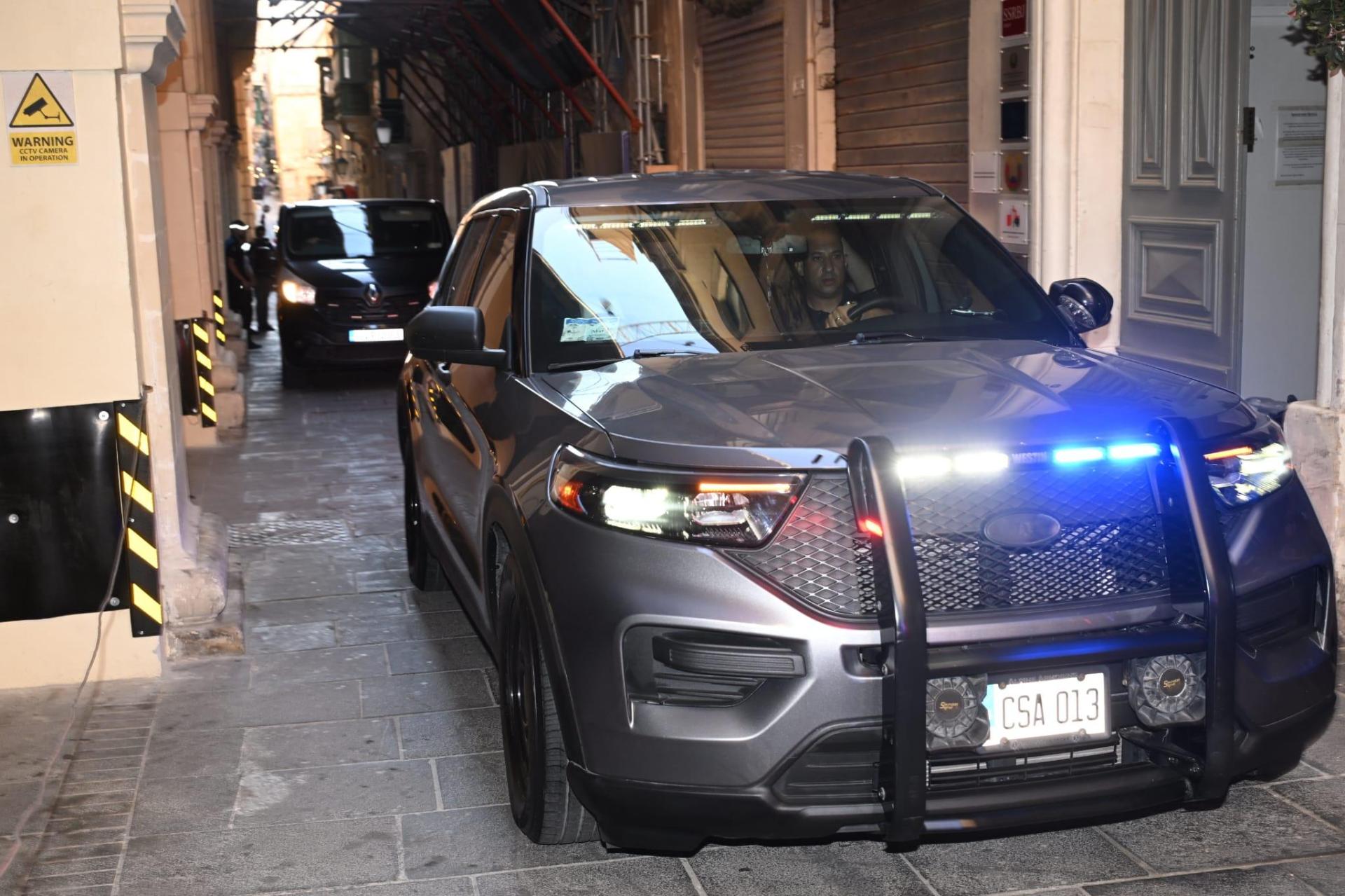 Yorgen Fenech being driven away from the court.
LIVE BLOG
Session over
6.15pm The first day of Fenech's long-awaited trial is over. We will be back with a live blog tomorrow, Thursday, where the first witnesses are expected to be heard.
Meanwhile, Mark Laurence Zammit has just explained the nine-year road leading to this trial in this video.
9am - 6pm
6.10pm Judge Grima concludes her address to the jury and adjourns the case until 9am on Thursday, when the prosecution is expected to begin presenting its evidence.
Sittings will generally run until 6pm each day, excluding Sundays. Wednesdays will be the exception, with proceedings ending earlier to allow jurors to meet family members under supervision.
'Beyond reasonable doubt'
5.55pm Judge Grima is still addressing jurors. She says that Fenech is presumed innocent unless and until the jury returns a guilty verdict. Jurors were told they cannot look at the accused and assume he is guilty, and that he has the right to remain silent throughout the proceedings.
The judge stresses that the burden of proof rests entirely with the prosecution. To convict, the jury must be satisfied of Fenech's guilt beyond reasonable doubt. If there is reasonable doubt, it must be resolved in favour of the accused.
'Historic trial must expose the truth' - RSF
5.35pm Meanwhile, Reporters Without Borders, which has a representative present for the trial, has issued a statement.
It says: "Nearly nine years after the assassination of Daphne Caruana Galizia, hope has been renewed today that justice will finally be served. This historic trial must expose the truth about the despicable criminal plot and the deadly chain of events that led to the execution of a journalist within the European Union. Ending impunity in this emblematic European case would give a boost to the fight for justice everywhere else in the world."
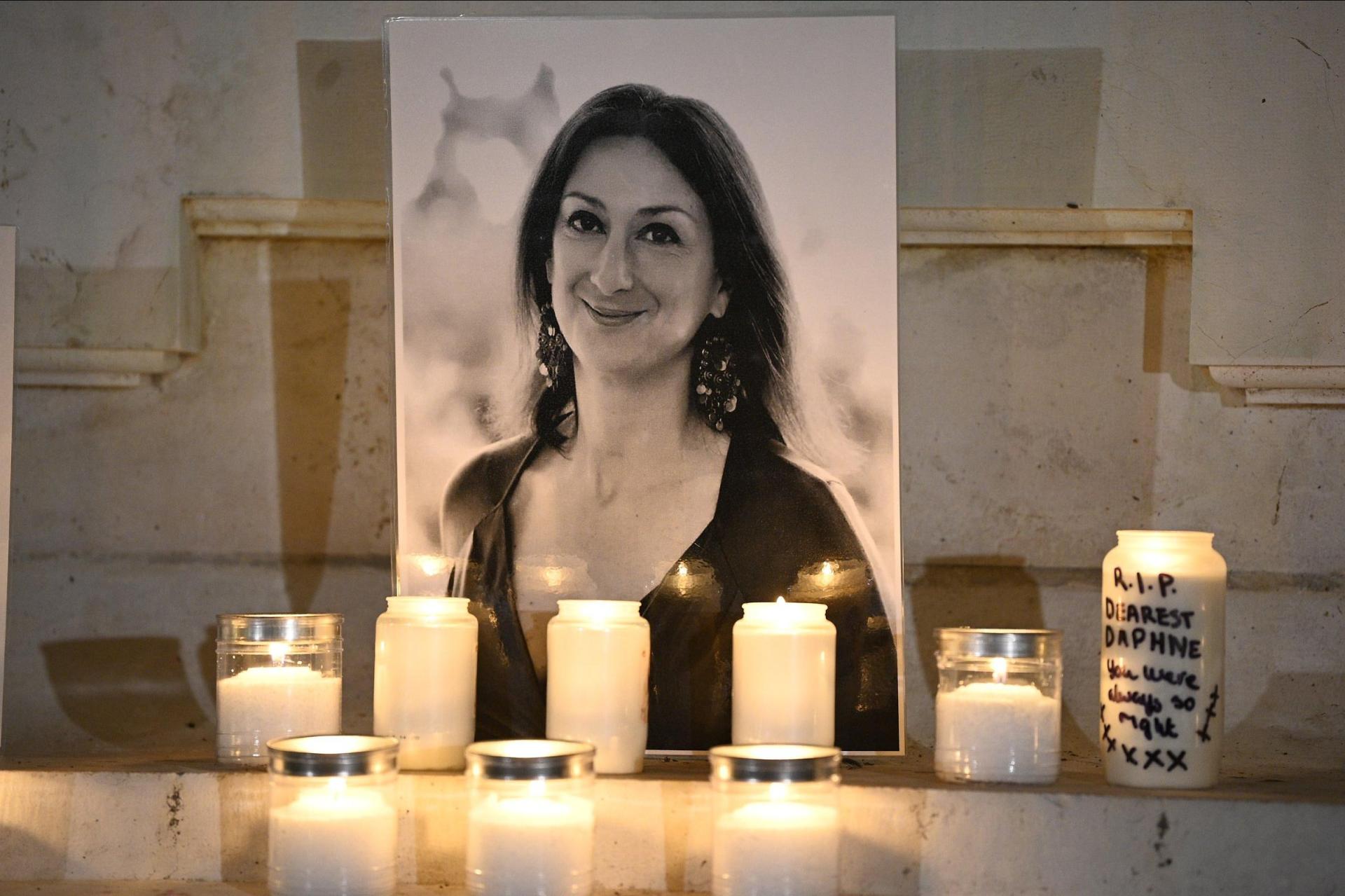 Activists have retained a memorial in front of the law courts.
'You decide if Fenech is guilty or not'
5.25pm Judge Edwina Grima is now addressing the jurors. She gives them a handbook and tells them what is expected of them. She tells the nine jurors and six supplementary ones that they are to judge only by the facts presented during the trial.
Jurors must not be influenced by the judge's questions to the witness or during the sittings.
She urges them to ignore any media reports, public discussions and anything they might have heard about the case before. The judge warns the jurors that they cannot talk to anyone about the case, not even during the odd family visits, which will be supervised.
"We should operate as though we are literally in a bubble," the judge says, stressing that the case cannot be decided based on sympathy or fear.
She says: "You are to decide whether Yorgen Fenech is guilty or not."
Judge Grima also explains in detail the court process which led to the trial.
The prosecution's case
5pm Jurors have been given a copy of the bill of indictment, which contains two counts:
- Complicity in the wilful homicide of Caruana Galizia.
- Criminal association for the purpose of committing the murder.
The prosecution says Fenech initiated the plot in April 2017, when he summoned Melvin Theuma to a meeting near the Blue Elephant restaurant at Portomaso and asked him to find someone to kill Caruana Galizia.
According to the indictment, Fenech specifically suggested approaching George Degiorgio. The indictment says Fenech initially told Theuma he wanted Caruana Galizia killed because she was about to publish stories concerning his uncle.
Prosecutors say Fenech became increasingly anxious because the journalist was instead about to publish information concerning him personally.
According to prosecutors, the agreed price was €150,000, €30,000 was paid upfront, €120,000 was to be paid after the murder.
The indictment alleges Fenech personally handed Theuma a brown package containing the cash shortly after the 2017 general election.
The prosecution says Fenech ordered the plan put on hold after the 2017 snap election was announced, before allegedly giving the go-ahead again after Labour's victory.
The prosecution says Fenech repeatedly pressed Theuma to hurry the hitmen because he feared Caruana Galizia was about to publish damaging information about him.
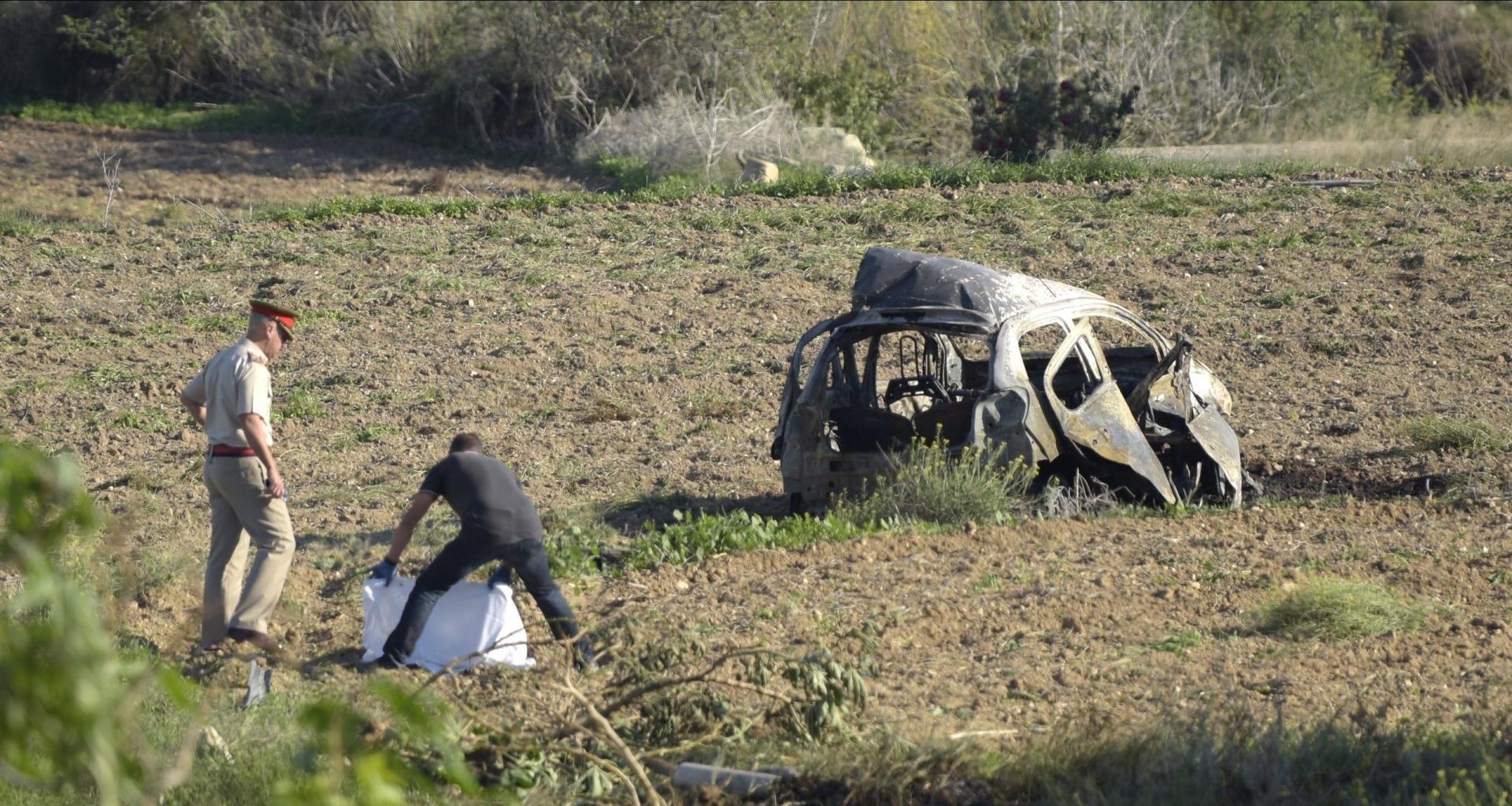 The scene of the crime in 2017. Photo: Mark Zammit Cordina
The indictment says that, after the assassination, Fenech's €120,000 balance was passed to Alfred Degiorgio, together with an additional €5,000 allegedly requested to cover expenses, including binoculars used in preparing the murder.
It says Fenech later paid tens of thousands of euros to help finance the legal defence of the three men accused of carrying out the murder. The indictment repeatedly describes Fenech as the person who ordered, paid for and shared the intention to kill Caruana Galizia, acting through Theuma as intermediary. That is the prosecution's central theory of the case.
Fenech denies the accusations.
Jacob Borg and Clara Farrugia have the case explained in detail here.
Live blogs questioned
4.50pm It appears no witnesses will testify today. Proceedings are expected to be limited to the judge's address to the jury and the reading of the bill of indictment, before the court adjourns.
Defence lawyers have raised concerns about live reporting from the courtroom, arguing it could influence witnesses who are yet to testify and ask whether certain evidence can be heard behind closed doors.
The judge said any such requests would be decided on a case-by-case basis, depending on the witness concerned.
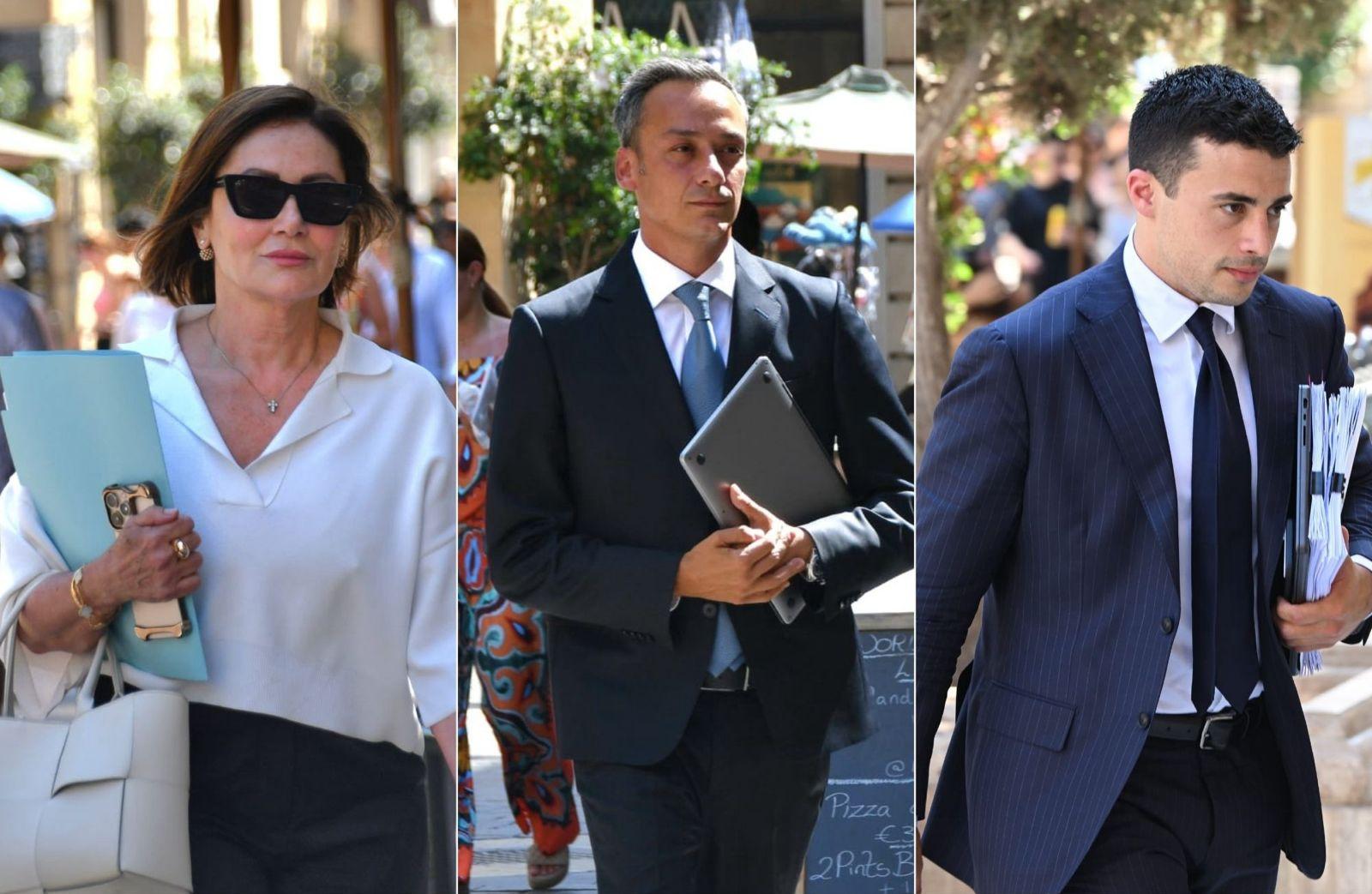 The defence lawyers: Giannella de Marco, Gianluca Caruana Curran and Charles Mercieca. Photos: Emma Borg, Matthew Mirabelli
All set
4.40pm We are in Hall 22. The room is packed. The case is about to start.
Family back in court
4.10pm The victim's family members - three sons, two sisters and her husband - have just entered court to witness the start of the trial.
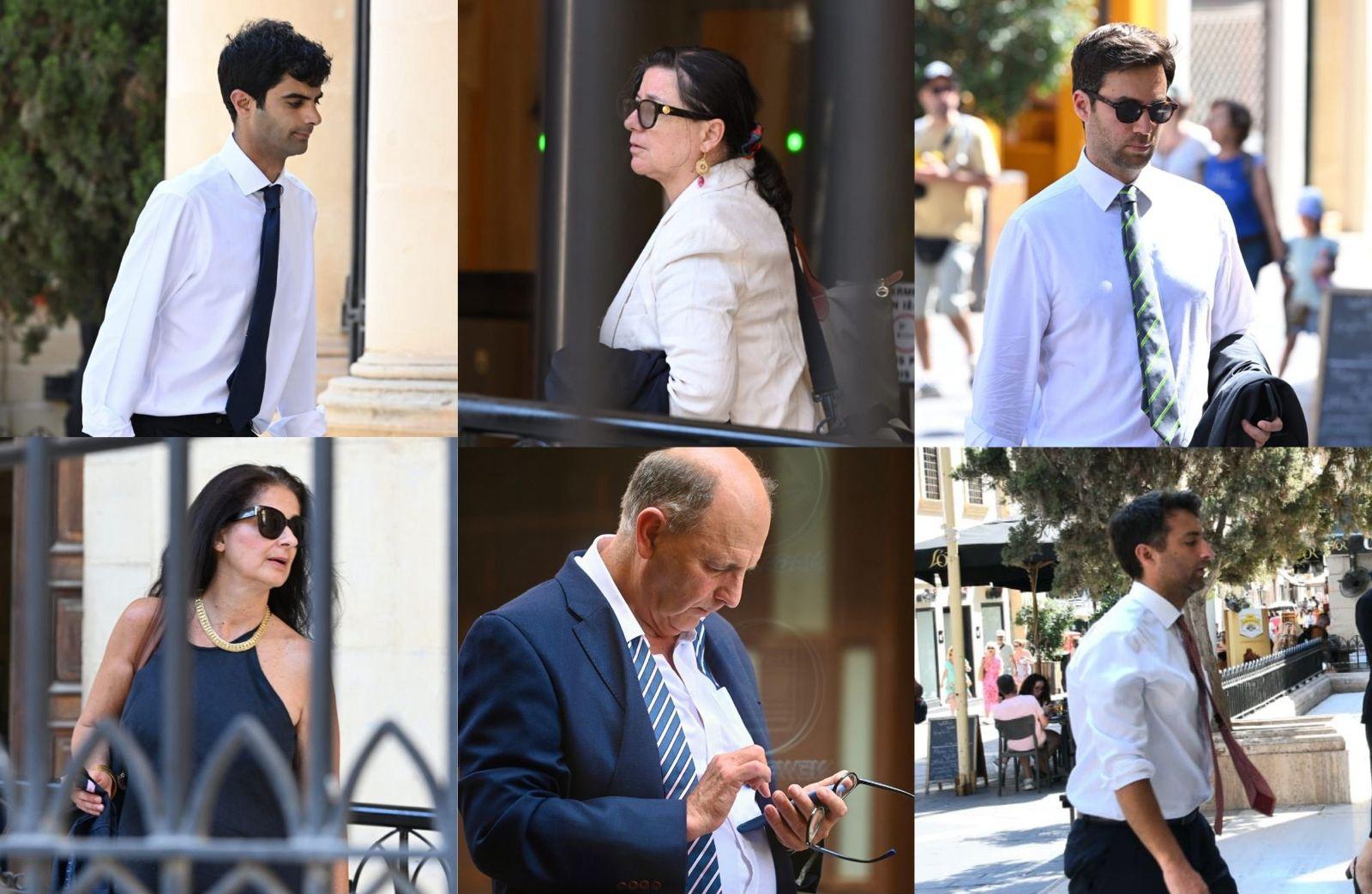 Clockwise from left: Paul Caruana Galizia, Helene Asciak, Andrew Caruana Galizia, Matthew Caruana Galizia, Peter Caruana Galizia and Corinne Vella.
As we wait...
3.50pm The bill of indictment is expected to be read out at around 4pm, marking the formal start of the prosecution's case against Yorgen Fenech.
This case has drawn intense interest both in Malta and abroad. While five men have already been convicted in connection with Caruana Galizia's murder, proceedings against the businessman have been repeatedly delayed by years of legal challenges. We'll continue bringing you live updates from the courtroom throughout the trial.
Who's who?
3.30pm The murder of the journalist in 2017 was the result of a complex web. Here Jacob Borg provides an explainer of the key players.
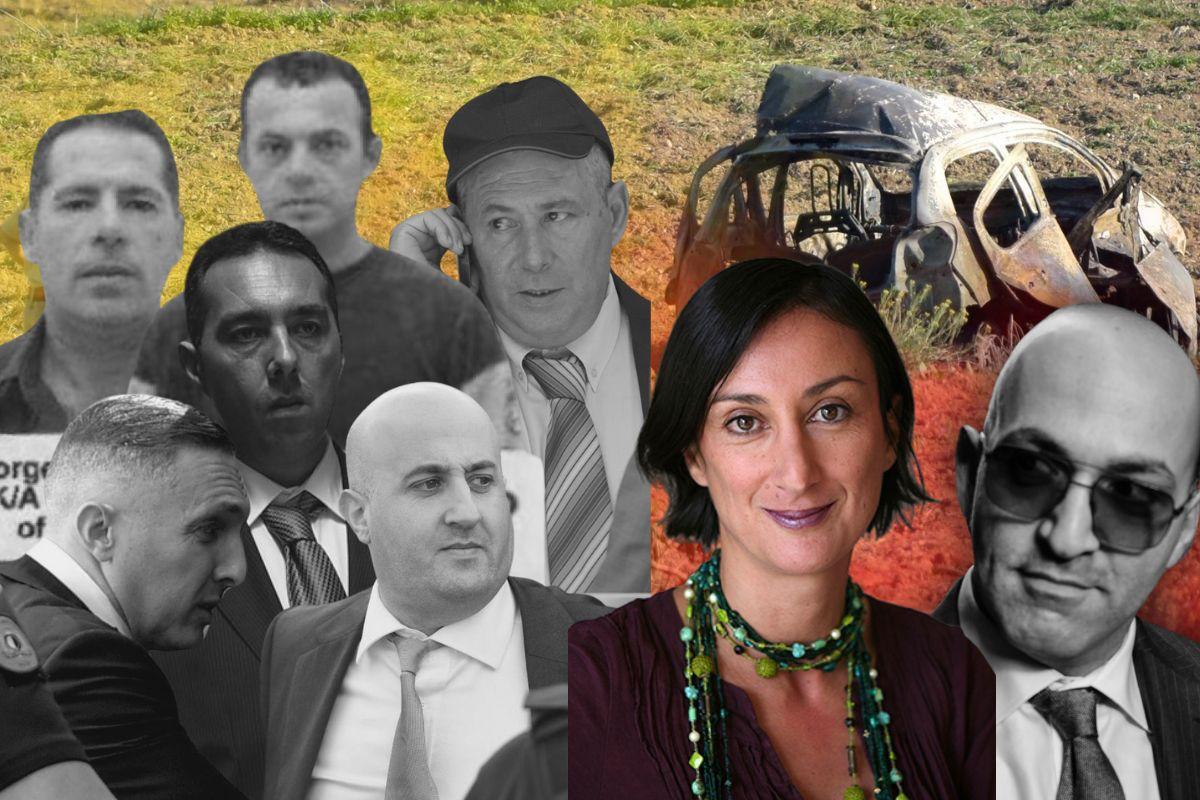 All the players implicated or convicted in the murder of Daphne Caruana Galizia. Image: Kristina Vella
The silence explained
3.10pm If you're wondering why our first update is time-stamped 8.15am but only appeared now, here's why: the media was barred from reporting on the proceedings until the jury was formally empanelled.
That process took almost five hours. With the nine jurors now sworn in, reporting restrictions have been lifted. The jurors will remain shielded from media coverage and will not have access to electronic devices until they deliver their verdict.
Trial could take weeks
2.55pm We are told the bill of indictment will be read around 4pm, kicking off the start of a process which could take weeks. Meanwhile, some of the witnesses who have been called in since this morning have been sent home.
Why this trial matters
2.30pm While the jury selection process was under way, Mark Laurence Zammit explained why Yorgen Fenech's trial marks a pivotal moment in one of Malta's most consequential criminal cases, nearly nine years after Caruana Galizia's assassination.
Jurors selected... and some drama
1.15pm It took the parties around five hours to agree on the nine jurors who will decide the case, as well as six reserve jurors. The selection process took place behind closed doors, with prosecutors, defence lawyers and lawyers representing the parte civile present.
At one point, court officials called for help after a reserve juror passed out.
Meanwhile, dozens of journalists, court observers and family members waited outside the courtroom for proceedings to begin.
Global media interest
9.30am The long-awaited trial has attracted significant international attention. Foreign journalists from several news organisations, along with representatives of media freedom groups, are among those packed into the courtroom for the start of proceedings. Diplomats are also present.
Family members in court
9am Jury members are being empanelled. Dozens of other witnesses are in court.
Also present are Caruana Galizia's husband, two of her sons and her sister. Fenech's mother is also seen in court.
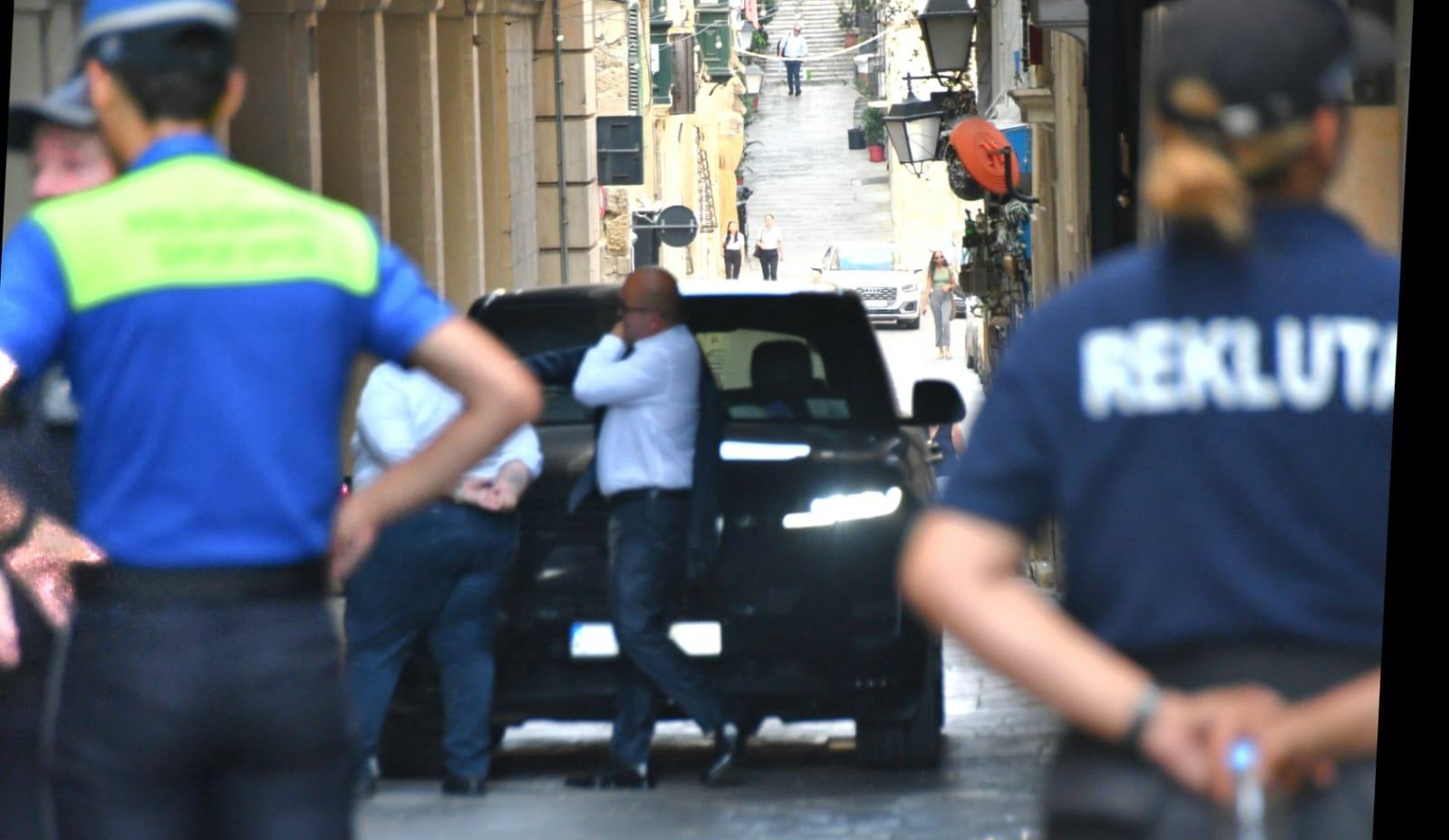 Yorgen Fenech (centre) walking into court. Photo: Emma Borg
Who are the main players?
8.30am Let's take a look at the key figures in this complex case.
Yorgen Fenech: a business tycoon and heir to a family fortune, and the man in the dock: Fenech is accused of complicity in Caruana Galizia's murder;
Melvin Theuma: a taxi driver who worked for Fenech and who has testified that he served as a middleman between Fenech and the alleged hitmen;
Vince Muscat, Alfred Degiorgio, George Degiorgio: the convicted hitmen;
Keith Schembri: a friend of Fenech's and the chief of staff to Joseph Muscat when he was prime minister;
Edwina Grima: the presiding judge;
Keith Arnaud, Kurt Zahra: the lead police investigators and prosecutors;
Godwin Cini, Anthony Vella, and Danika Vella: the lawyers leading the Attorney General's office prosecution;
Giannella de Marco, Gianluca Caruana Curran, Charles Mercieca: Yorgen Fenech's legal team;
Jason Azzopardi, Therese Comodini Cachia: lawyers appearing for the Caruana Galizia family.
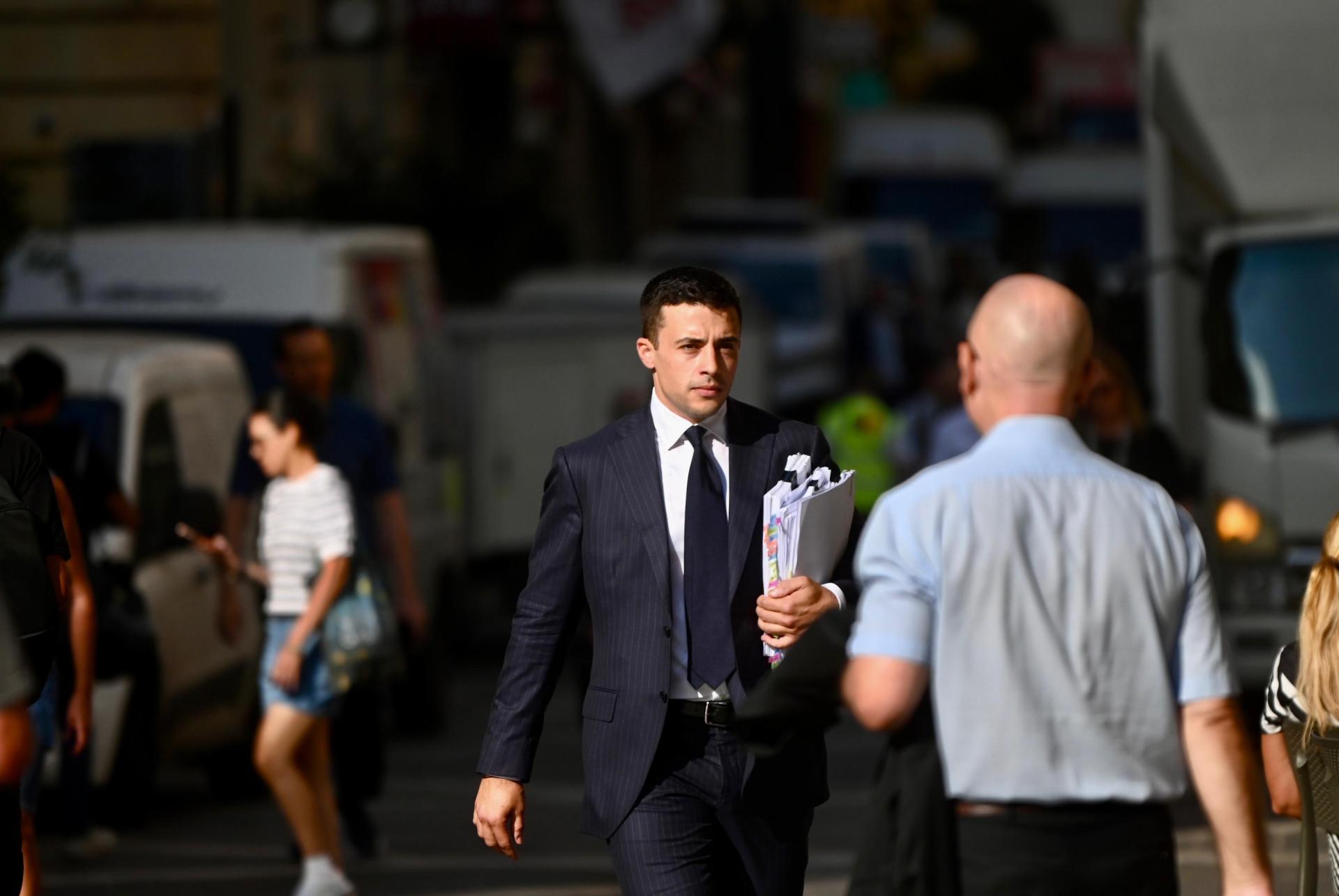 Defence lawyer Charles Mercieca walking to court on Wednesday. Photo: Jonathan Borg
Welcome
8.15am Welcome to Times of Malta's live coverage of the trial by jury of Yorgen Fenech.
The trial has been years in the making. Journalist Daphne Caruana Galizia was assassinated in a car bomb attack in October 2017. Fenech was arrested two years later, in November 2019, and spent more than five years in custody before being granted bail in February 2025.
Following a series of constitutional challenges and other court proceedings, Judge Edwina Grima eventually set today, July 1, as the start date for the jury trial.
Throughout the next days, we'll bring you the latest developments from inside the courtroom, key testimony and important moments as they happen.